
U.S. Seizure of Russia-Venezuela Tankers: In-Depth Analysis of Global Energy Market Impacts
Unlock More Features
Login to access AI-powered analysis, deep research reports and more advanced features
About us: Ginlix AI is the AI Investment Copilot powered by real data, bridging advanced AI with professional financial databases to provide verifiable, truth-based answers. Please use the chat box below to ask any financial question.
Related Stocks
I have now gathered comprehensive information and will conduct a systematic analysis for you.
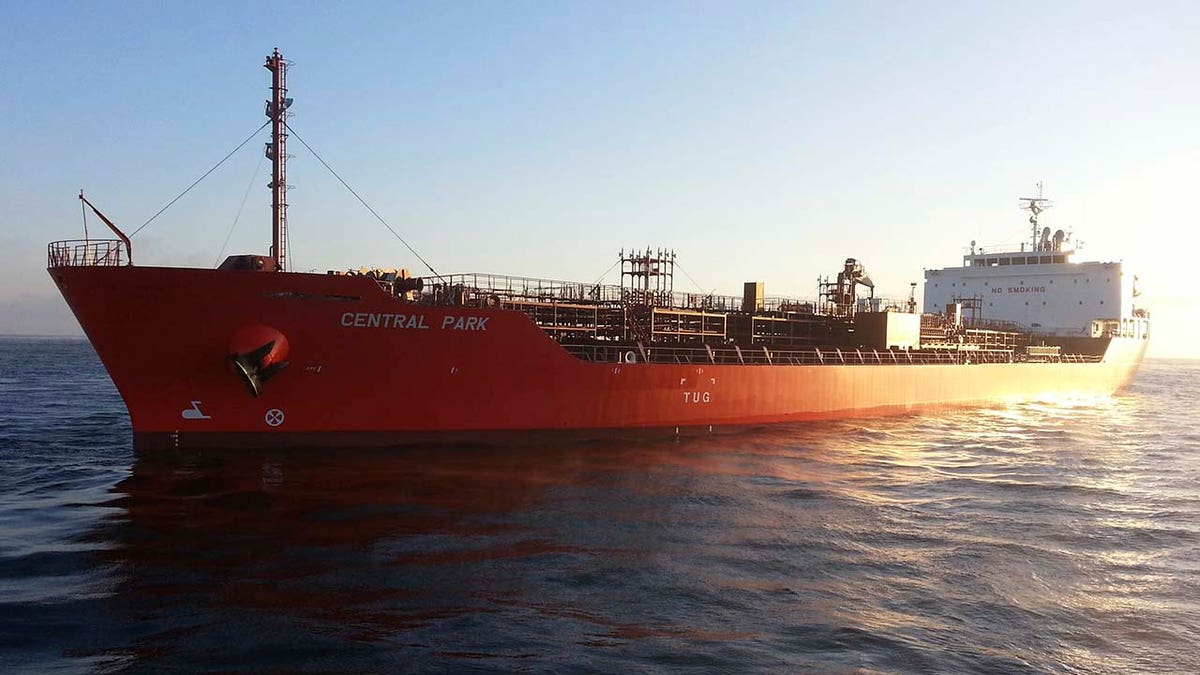
On January 7, 2026, the U.S. military seized two Venezuela-linked tankers in the North Atlantic and international waters [1][2]:
-
Tanker “Sailor” (ex-“Bella 1”): Flying the Russian flag, it was seized in the waters between Iceland and Scotland. The tanker switched to the Russian flag during the pursuit, and the crew even painted the Russian tricolor on the hull [1]. According to a Russian Ministry of Transport announcement, the ship obtained temporary permission to fly the Russian flag on December 24, 2025, and was intercepted and boarded by the U.S. Coast Guard Cutter “Munro” on the high seas [3].
-
Tanker “Sophia”: Qualified as a “stateless, sanctioned ‘shadow fleet’ tanker”, it was seized during a U.S. Southern Command operation [2].
Since December 2025, the U.S. has seized a total of four related tankers [4]. U.S. Secretary of Defense Hegseth explicitly stated: “The blockade on sanctioned and illegal Venezuelan oil remains fully effective — anywhere in the world” [5].
Russia has strongly condemned the seizure:
-
Andrey Klishas, Chairman of the Federation Council’s Constitutional Committee: Called the U.S. actions on the high seas “blatant piracy” that violates international law norms [6]
-
Russian Ministry of Transport: According to the UN Convention on the Law of the Sea, no country has the right to use force against a ship formally registered under the jurisdiction of another country [3]
-
Russian Ministry of Foreign Affairs: Demanded that the U.S. ensure humane treatment of Russian crew members and unimpeded repatriation to their home countries as soon as possible [3]
Reports indicate that Russia had deployed naval forces including submarines to escort the tanker prior to the incident [1]. Craig Kennedy, a researcher at Harvard University’s Davis Center for Russian and Eurasian Studies, stated: “Seizing a Russian-flagged ship on the high seas means disregarding Russia’s claim of exclusive jurisdiction over the vessel” [7].
Despite the significant geopolitical implications of the incident, oil prices reacted relatively mildly [8][9]:
| Indicator | Change Range |
|---|---|
| Brent Crude | -0.5% (closed at approximately $76/bbl) |
| WTI Crude | -1.8% (closed at approximately $72/bbl) |
This stands in stark contrast to historical precedents: the 1979 Iranian Islamic Revolution caused oil prices to surge nearly 150%, while the 2002 Venezuelan coup led to a 40% increase in oil prices [10]. The limited impact of this incident is mainly due to:
- Minimal global share of Venezuela’s output: Current daily output is approximately 1 million barrels, accounting for less than 1% of global production [11]
- Global oversupply pattern: Supply growth far outpaces demand, and the International Energy Agency (IEA) predicts a global supply surplus of 3.8 million barrels per day in 2026 [12]
- Limited impact of the “shadow fleet”: The oil carried by the seized tankers (approximately 2 million barrels) has minimal impact on global supply [13]
Multiple institutions hold cautious outlooks on 2026 oil price trends [14][15]:
- JPMorgan: Predicts an average Brent crude price of $58/bbl and WTI at $54/bbl in 2026
- Sinopec Economic and Technological Research Institute: In the base case, the average Brent crude price will range between $60-65/bbl in 2026
- IEA: The 2026 supply surplus will reach 3.8 million barrels per day, accounting for nearly 4% of global demand
Technical analysis shows [16]:
- WTI crude oil finds support near $55-56/bbl
- A downward trend line forms resistance near $58.5/bbl
- If key support levels are broken, prices could drop to $50/bbl
The current oil market exhibits the following supply dynamics [17]:
| Factor | Description |
|---|---|
| OPEC+ | Maintains existing production levels without implementing large-scale production cuts |
| U.S. Production | Surpassed 13.8 million barrels per day in 2025, hitting an all-time high |
| Non-OPEC+ Supply | Continued production increases in countries such as Brazil and Guyana |
| Demand Growth | Grew by only 900,000 barrels per day in 2025, with similar growth expected in 2026 |
Overall, the geopolitical risk premium has significantly declined from oil pricing, and oil is returning from a tool of political games to its essence as an ordinary commodity [14].
U.S. energy stocks saw significant gains following the incident [18][19]:
| Company | Stock Price Gain | Reason Analysis |
|---|---|---|
Schlumberger (SLB) |
+9.0% | Expectations of oilfield service infrastructure reconstruction |
Halliburton (HAL) |
+7.8% | Expectations of oilfield service infrastructure reconstruction |
Chevron (CVX) |
+5.1% | The only U.S. oil company with operations in Venezuela |
ConocoPhillips (COP) |
+3.0% | Boost from overall sector sentiment |
ExxonMobil (XOM) |
+2.5% | Expectations of potential business expansion |
The S&P 500 Energy Index hit its highest level since March 2025 [18].
The main drivers of the energy stock rally include:
-
Chevron’s unique position: As the only U.S. oil company with sanctions exemption in Venezuela, the market expects it to expand its operations in the country [20]
-
Expectations of infrastructure reconstruction: U.S. Energy Secretary Wright stated that the U.S. will “indefinitely control Venezuelan oil sales” and plans to convene executives of major U.S. oil companies to discuss increasing Venezuelan oil production [21]
-
JPMorgan’s estimate: The U.S. could theoretically control approximately 30% of global oil reserves (including those in Venezuela), a prospect that has boosted investor confidence [22]
-
Oilfield service providers benefit first: Halliburton and Schlumberger led the gains due to potential infrastructure reconstruction contracts [23]
Despite the strong short-term performance of energy stocks, the following risks require attention [24]:
- Production increases take time: Venezuela’s oil facilities are severely aged, and meaningful production growth requires massive capital investment, over a decade of infrastructure reconstruction, and stable governance
- Profit outlook under pressure: Long-term low oil prices amid oversupply may erode the profits of energy companies
- Geopolitical uncertainty: U.S.-Russia relations may further deteriorate due to the seizure incident
Major stock indices performed relatively stable during the incident [25]:
| Index | January 6 | January 7 |
|---|---|---|
| Dow Jones Industrial Average | +0.97% | -1.04% (pullback after hitting a record high) |
| S&P 500 Index | +0.53% | -0.35% |
| Nasdaq Composite Index | +0.43% | +0.17% |
The market viewed the U.S. military intervention as a “one-off event”, with Treasury yields and credit spreads remaining stable, indicating no panic among investors [26].
| Asset | Gain | Reason |
|---|---|---|
| Gold | +2.7% | Safe-haven demand |
| Silver | +5.4% | Safe-haven demand |
| Bitcoin | +4.5% | Dual attributes of safe-haven and risk asset |
Bonds issued by the Venezuelan government and state-owned oil company PDVSA surged by up to 10 cents from extremely depressed levels, as the market expects potential regime change could eventually lead to debt restructuring [25].
The seizure occurred amid ongoing diplomatic negotiations between the U.S. and Russia on a Ukraine peace agreement, potentially creating new tensions in bilateral relations [27]. Analysts believe:
- Significant symbolic meaning: Seizing a Russian-flagged ship outside U.S. territorial waters is an extremely rare provocative act
- Precedent for maritime law enforcement: By refusing to recognize the tanker’s new name and Russian registration, the U.S. attempted to strengthen the legal basis for the seizure
- Signal of expanded sanctions: The U.S. explicitly stated that it will continue to implement a global ban on all “illegal oil shipments” [28]
S&P Global data shows that the “shadow fleet” grew by approximately 45% between May 2024 and May 2025 [29]. These ships typically:
- Have opaque ownership structures
- Often shut down their positioning transponders
- Hide their routes through forgery and spoofing of positioning signals
- Conduct ship-to-ship transfers at sea, increasing tracking difficulty
The new round of sanctions imposed by the U.S. Treasury in 2024 was a key driver of the expansion of the “shadow fleet” [29].
The incident may accelerate the following long-term trends:
- Oil returns to commodity attributes: A fundamental reversal in the logic of geopolitical risk premium
- Supply chain restructuring: If Venezuelan oil resumes exports to the U.S., it will change regional shipping patterns
- U.S. energy dominance: Control of Venezuelan oil resources will strengthen the U.S.'s position in the global energy landscape
- Oilfield service providers: Companies such as Schlumberger and Halliburton are expected to benefit from expectations of Venezuelan infrastructure reconstruction
- Integrated oil majors: Chevron has unique advantages due to its operations in Venezuela
- Tanker transportation stocks: Short-term tight shipping capacity may push up freight rates
- Further decline in oil prices: If oversupply worsens, WTI crude oil may fall below $50/bbl
- Sanction enforcement risks: The seizure may trigger retaliation from Russia
- Execution uncertainty: Venezuela’s oil production recovery faces technical and governance challenges
- Energy security concept: The strategic significance of the U.S. controlling 30% of global oil reserves
- Repricing of geopolitical risks: This incident may change the market’s reaction mode to similar conflicts in the future
The U.S. seizure of Russia-Venezuela tankers is of great significance at the geopolitical level, but its immediate impact on the global energy market is relatively limited. The mild reaction of oil prices is mainly due to:
- Venezuela’s extremely small share of global oil supply
- The global oversupply pattern dominates market pricing
- Investors view the incident as a one-off event rather than a systemic risk
U.S. energy stocks benefited significantly in the short term, particularly Chevron, which has business ties to Venezuela, and oilfield service providers that may participate in infrastructure reconstruction. However, investors need to remain vigilant against risks posed by long-term low oil prices and geopolitical uncertainty.
In the long run, this incident may mark the end of the era of geopolitical premium in the energy market, as oil returns to its essence as a commodity. Meanwhile, the U.S.'s expanded sanctions against Russia and Venezuela may reshape the global energy trade pattern, and its far-reaching impacts require further observation.
[1] The Paper - “Flag Change, Pursuit, Forcible Boarding: U.S. Military Seizes Russian Tanker Amid Transatlantic Game” (https://www.thepaper.cn/newsDetail_forward_32341494)
[2] CNN - “January 7, 2026 - US seizes Venezuela-linked tankers” (https://www.cnn.com/world/live-news/trump-venezuela-oil-greenland-07-01-26)
[3] Xinhua News Agency - “Hot Topic Q&A: What Is the U.S.'s Motive in Seizing the Russian Tanker?” (https://www.news.cn/world/20260108/f277e25ad7464e9d99369558e22a5d02/c.html)
[4] Yahoo Finance Hong Kong - “Trump Tightens Venezuela Oil Blockade, Chases Tankers Across Oceans, 4 Seized So Far” (https://hk.finance.yahoo.com/news/川普收緊對委石油封鎖不惜跨洋追截油輪-迄今已扣押四艘-134314927.html)
[5] Deutsche Welle - “Venezuela: Rodriguez ‘open’ to oil deal as US seizes tankers” (https://www.dw.com/en/venezuela-rodriguez-open-to-oil-deal-as-us-seizes-tankers/live-75423216)
[6] Wall Street CN - “White House Says U.S. Begins Global Sale of Venezuelan Oil” (https://wallstreetcn.com/articles/3762784)
[7] Xinhua Finance - “Flag Change, Pursuit, Forcible Boarding: U.S. Military Seizes Russian Tanker Amid Transatlantic Game” (https://finance.sina.com.cn/jjxw/2026-01-08/doc-inhfqpst6712041.shtml)
[8] Sina Finance - “Seizing Russian Tankers! U.S. ‘Will Indefinitely Control Venezuelan Oil Sales’!” (https://finance.sina.com.cn/money/future/fmnews/2026-01-08/doc-inhfpwuz6898936.shtml)
[9] IG Markets - “U.S. Military Action in Venezuela: Implications for Oil Prices and Geopolitics” (https://www.ig.com/cn/news-and-trade-ideas/Intervention-Venezuela-implications-260106)
[10] Jiemian News - “From Venezuela to Iran: Why Is the International Crude Oil Market Immune to Geopolitical Conflicts?” (https://www.jiemian.com/article/13858312.html)
[11] Caijing Mobile - “Venezuela’s Political Change: What Impacts Will It Have on the Oil Market?” (https://news.caijingmobile.com/article/detail/561857)
[12] Reuters - “Five energy market trends to track in 2026, the year of the glut” (https://www.reuters.com/markets/commodities/five-energy-market-trends-track-2026-year-glut-2025-12-29/)
[13] NPR - “U.S. seizes Russian-flagged oil tanker with ties to Venezuela” (https://www.npr.org/2026/01/07/nx-s1-5669384/u-s-seizes-russian-flagged-oil-tanker-with-ties-to-venezuela)
[14] Jiemian News - “From Venezuela to Iran: Why Is the International Crude Oil Market Immune to Geopolitical Conflicts?” (https://www.jiemian.com/article/13858312.html)
[15] Fortune - “Energy stocks rip as JP Morgan estimates the U.S. could hold 30% of all the world’s oil” (https://fortune.com/2026/01/05/how-much-oil-will-us-have-with-venezuela-30-percent-jpmorgan/)
[16] IG Markets - “U.S. Military Action in Venezuela: Implications for Oil Prices and Geopolitics” (https://www.ig.com/cn/news-and-trade-ideas/Intervention-Venezuela-implications-260106)
[17] Yahoo Finance - “Big Oil Prepares for Leaner Prices and Harder Choices in 2026” (https://finance.yahoo.com/news/big-oil-prepares-leaner-prices-220000463.html)
[18] MintPress News - “US energy stocks and broader markets rallied following the January 3, 2026 abduction” (https://www.facebook.com/MintpressNews/posts/us-energy-stocks-and-broader-markets-rallied-following-the-january-3-2026-abduct/1174381114890191/)
[19] ABC News - “Oil stocks sharply higher after US action in Venezuela” (https://abcnews.go.com/Business/wireStory/oil-stocks-sharply-higher-after-us-action-venezuela-128911586)
[20] MarketBeat - “CVX Stock: Why Venezuela News Is a Catalyst for Chevron” (https://www.marketbeat.com/originals/why-chevrons-venezuela-exposure-puts-cvx-stock-in-play-for-2026/)
[21] Xinde Marine News - “After U.S. Military Takes Control of Venezuela, 16 Tankers Break Through Blockade, Chevron Resumes Production” (https://www.xindemarinenews.com/world/62460.html)
[22] Fortune - “Energy stocks rip as JP Morgan estimates the U.S. could hold 30% of all the world’s oil” (https://fortune.com/2026/01/05/how-much-oil-will-us-have-with-venezuela-30-percent-jpmorgan/)
[23] IG Markets - “U.S. Military Action in Venezuela: Implications for Oil Prices and Geopolitics” (https://www.ig.com/cn/news-and-trade-ideas/Intervention-Venezuela-implications-260106)
[24] IG Markets - “U.S. Military Action in Venezuela: Implications for Oil Prices and Geopolitics” (https://www.ig.com/cn/news-and-trade-ideas/Intervention-Venezuela-implications-260106)
[25] IG Markets - “U.S. Military Action in Venezuela: Implications for Oil Prices and Geopolitics” (https://www.ig.com/cn/news-and-trade-ideas/Intervention-Venezuela-implications-260106)
[26] IG Markets - “U.S. Military Action in Venezuela: Implications for Oil Prices and Geopolitics” (https://www.ig.com/cn/news-and-trade-ideas/Intervention-Venezuela-implications-260106)
[27] Xinhua News Agency - “Hot Topic Q&A: What Is the U.S.'s Motive in Seizing the Russian Tanker?” (https://www.news.cn/world/20260108/f277e25ad7464e9d99369558e22a5d02/c.html)
[28] White House Press Secretary Statement - “The United States Will Implement Policies That Are in the Best Interest of the United States” (https://www.whitehouse.gov/briefings)
[29] The Paper - “Flag Change, Pursuit, Forcible Boarding: U.S. Military Seizes Russian Tanker Amid Transatlantic Game” (https://www.thepaper.cn/newsDetail_forward_32341494)
Insights are generated using AI models and historical data for informational purposes only. They do not constitute investment advice or recommendations. Past performance is not indicative of future results.
About us: Ginlix AI is the AI Investment Copilot powered by real data, bridging advanced AI with professional financial databases to provide verifiable, truth-based answers. Please use the chat box below to ask any financial question.