
Paslin (600215) Limit-Up Analysis: Short-Term Strength Driven by Policies vs. Fundamental Pressures
Unlock More Features
Login to access AI-powered analysis, deep research reports and more advanced features
About us: Ginlix AI is the AI Investment Copilot powered by real data, bridging advanced AI with professional financial databases to provide verifiable, truth-based answers. Please use the chat box below to ask any financial question.
Related Stocks
On January 8, 2026, the share price of Paslin (600215.SH) surged to a limit-up, closing at RMB 7.69, and entered the day’s limit-up stock pool. As a general equipment target in the machinery and equipment sector, the company benefited from the overall strong performance of the intelligent manufacturing sector. The direct catalyst for the limit-up is the “Implementation Opinions on the “AI + Manufacturing” Special Action” jointly released by the Ministry of Industry and Information Technology and seven other ministries and commissions on January 7. The policy proposes to promote in-depth application of 3 to 5 general large models in the manufacturing industry by 2027, and cultivate 2 to 3 ecologically leading enterprises with global influence[1][2]. With its layout in the field of industrial automation system integration, Paslin is categorized by the market as an intelligent manufacturing concept stock, directly benefiting from this policy dividend.
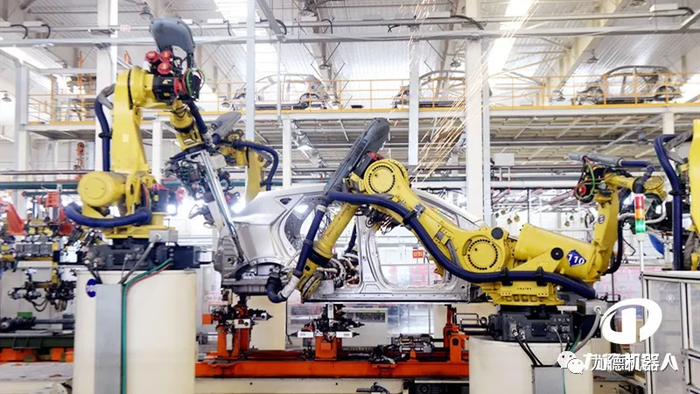
The core driving force behind Paslin’s this limit-up comes from major policy benefits. The “Implementation Opinions on the “AI + Manufacturing” Special Action” released on January 7 clearly put forward a number of quantitative targets, including building 100 high-quality datasets in the industrial field and promoting 500 typical application scenarios. These policy measures directly meet the market demand for intelligent transformation of the manufacturing industry[1]. As an industrial automation system integration service provider, Paslin’s main business covers body welding automated production lines, new energy vehicle automated production lines, intelligent warehousing automated production lines, and digital operation systems, which are highly aligned with the development direction of intelligent manufacturing supported by policies.
From the perspective of sector linkage, the AI sector continued its strong performance on January 8, with 21 related stocks hitting limit-ups, 8 of which achieved a “4-consecutive limit-up”[1]. The machinery and equipment sector had 24 stocks hitting limit-ups on the day, making it the industry sector with the most limit-up stocks. As an intelligent manufacturing concept stock, Paslin benefited from the capital chasing and market sentiment euphoria of the entire sector. The company has global leading advantages in the field of robot connection technology and new energy vehicle white body welding, and has cooperated with AI company Mindtrace to promote comprehensive collaboration in manufacturing fields such as artificial intelligence, visual inspection, and asset inspection[3].
It is highly noteworthy that there is a significant divergence between Paslin’s fundamental conditions and its stock price performance. According to the third quarterly report of 2025, the company achieved operating revenue of RMB 685.7 million in the first three quarters, a year-on-year decrease of 52.31%; the net loss was RMB 84.6 million, a year-on-year decrease of 198.57%[4]. The company’s gross profit margin and net profit margin rank low in the general equipment industry, and its price-to-book ratio ranks 8th among 213 peer companies, falling into the high valuation tier[4]. This combination of “declining performance + high valuation” indicates that the current stock price is driven more by policy expectations and short-term market sentiment rather than fundamental improvement.
In addition, the company’s major asset restructuring involves risks of fund recovery. After the company reorganized and acquired the U.S. Paslin Company in 2021, only RMB 10 million of the third installment has been received so far. The remaining funds were originally scheduled to be settled by the end of 2025 but have been extended twice, with the latest deadline set to the end of June 2026[4]. This uncertainty may affect the company’s cash flow and financial status, constituting a fundamental risk factor.
Judging from the market data, when Paslin hit the limit-up on January 8, the turnover rate was 3.93%, the transaction volume was RMB 246 million, and the closing order amount was approximately RMB 31.94 million[5]. The turnover rate and closing order amount are at a medium level among limit-up stocks, indicating that market participation is relatively moderate but capital willingness is relatively firm. The company’s stock price is currently in a short-term upward channel. If it can break through the previous high-density area of the RMB 8.00-8.50 range, it may open up further upward space; conversely, if sector sentiment fades, the ranges of RMB 7.20-7.35 (near the 5-day moving average) and RMB 6.80-7.00 will provide important support.
The limit-up event of Paslin reveals several notable structural characteristics of the current A-share market. First, policy-driven speculation is still the main preference of short-term capital. The policy jointly issued by eight ministries and commissions triggered a sector limit-up wave on the next day, indicating that the market’s response to policy expectations is highly sensitive and rapid. Second, the phenomenon of “concept labeling” is obvious—although the company clearly stated that it is not currently involved in the most popular concepts such as humanoid robots and commercial aerospace[4], it is chased by capital only because it is categorized into the “intelligent manufacturing” and “industrial automation” sectors, reflecting the market’s logic of chasing pan-concept targets in periods of scarce hot spots. Third, the divergence between fundamentals and stock prices is common among small and medium-cap stocks, and investors need to be alert to the risk of compensatory decline after sentiment fades.
From an industry perspective, the industrial automation track represented by Paslin has long-term growth logic. The company’s customers include mainstream OEMs such as GM, Ford, Honda, Toyota, Tesla, BYD, Li Auto, and Seres[3], with high-quality and extensive customer resources. If the policy’s efforts to promote the intelligent transformation of the manufacturing industry continue to increase, coupled with the company’s own technical accumulation and global layout, it is expected to benefit from the industry’s penetration rate improvement in the medium and long term. However, the performance inflection point has not yet emerged in the short term, and investors need to distinguish between short-term gaming opportunities and long-term investment value.
Comprehensive assessment shows that Paslin’s current risk level is
Paslin (600215) hit a limit-up on January 8, 2026, closing at RMB 7.69, mainly benefiting from the policy dividend of the “Implementation Opinions on the “AI + Manufacturing” Special Action” issued by eight ministries and commissions and the overall strong performance of the intelligent manufacturing sector. The company’s main business is industrial automation system integration, with global leading advantages in robot connection technology and new energy vehicle white body welding, serving OEMs such as GM, Tesla, BYD, and Li Auto. However, the company’s performance in the first three quarters of 2025 declined significantly, with revenue falling 52.31% year-on-year to RMB 685.7 million and a net loss of RMB 84.6 million, and there is a delay in the recovery of major asset restructuring payments. The current stock price is driven by policy expectations and short-term sentiment, with weak fundamental support and a price-to-book ratio ranking high in the industry. Short-term attention should be paid to the sustainability of sector sentiment, while medium- to long-term investors should wait for confirmation of a performance inflection point before making layout decisions.
Insights are generated using AI models and historical data for informational purposes only. They do not constitute investment advice or recommendations. Past performance is not indicative of future results.
About us: Ginlix AI is the AI Investment Copilot powered by real data, bridging advanced AI with professional financial databases to provide verifiable, truth-based answers. Please use the chat box below to ask any financial question.