
In-Depth Analysis of Major Restructuring at Hongsheng Beverage
Unlock More Features
Login to access AI-powered analysis, deep research reports and more advanced features
About us: Ginlix AI is the AI Investment Copilot powered by real data, bridging advanced AI with professional financial databases to provide verifiable, truth-based answers. Please use the chat box below to ask any financial question.
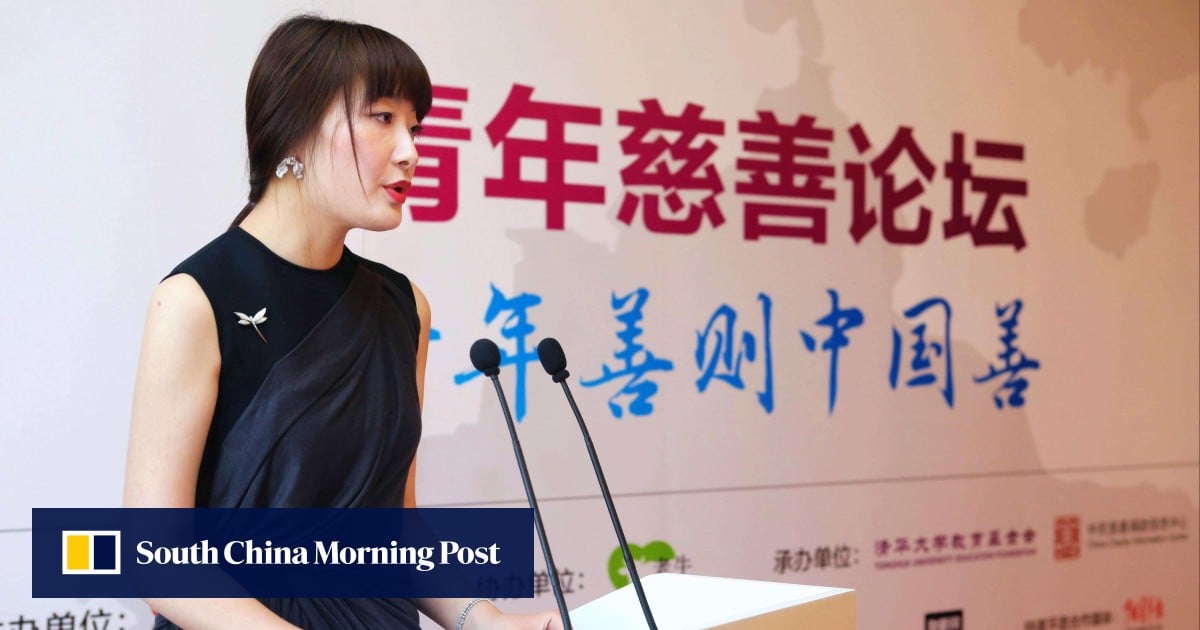
On December 26, 2025, Zong Fuli officially resumed her position as legal representative of Hongsheng Beverage Group Co., Ltd., just approximately two months after her last position adjustment[1][2]. Notably, Hongsheng had just completed a legal representative change from Zhu Lidan to Zheng Qundi on November 5, 2025, and has now achieved a full concentration of core authority in Zong Fuli through a series of actions[1].
In the 11th day after retaking control of Hongsheng, in early January 2026, Hongsheng rapidly launched a cross-regional market structure restructuring and major personnel reshuffle, issuing the Notice on Partial Market Adjustments and Personnel Appointments and Removals[1][3]. This document marks the official start of a new chapter in strategic upgrading for Hongsheng Beverage Group.
Hongsheng adopted a differentiated regional integration strategy for this restructuring[1][2][3]:
| Restructuring Type | Specific Details | Strategic Intent |
|---|---|---|
Market Merger |
Merged the Shanghai Division of the former Shanghai-Jiangsu Market with the Northern Zhejiang Market to form the Zhejiang-Shanghai Market | Integrate resources and reduce management costs |
Market Merger |
Merged Eastern Guizhou and Western Guizhou into the Guizhou Market | Optimize regional management efficiency |
Market Merger |
Integrated the Southern Xinjiang Special Zone into the Xinjiang Market for unified management | Streamline organizational structure and concentrate resources |
Market Split |
Elevated the Southern Jiangsu Division to an independent core market | Focus on the Yangtze River Delta consumption highland |
Personnel Adjustment |
7 provincial-level leaders assumed new posts | Performance-oriented, survival of the fittest |
Personnel Adjustment |
3 senior executives were directly dismissed | Eliminate redundancies and improve operational efficiency |
Special Arrangement |
A 6-month probation period was set for the Southern Jiangsu Market Manager | Send a clear signal of performance orientation |
This strategy embodies the operational philosophy of “reducing management radius and focusing on core resources”[1]. By merging smaller regions with higher management costs, Hongsheng achieves concentrated resource allocation; meanwhile, independent layout of core consumption regions such as the Yangtze River Delta paves the way for the future launch of its own brands.
As a core affiliated enterprise within the Wahaha ecosystem, Hongsheng controls the production of 42% of Wahaha’s core products, including contract manufacturing for classic categories such as AD Calcium Milk[1]. The stability of this business relationship is crucial for both parties.
-
Equity Linkages
- Zong Fuli remains Wahaha’s second-largest shareholder, holding significant voting rights at the equity level[3]
- Hongsheng is 100% controlled by Hengfeng Trading Co., Ltd., which is actually controlled by Zong Fuli[1]
- The interests of both parties are deeply intertwined, forming a “prosper and decline together” dynamic
-
Industrial Ecosystem Complementarity
- Zong Fuli has clearly stated: “Viewing Hongsheng and Wahaha as opposing parties is a misunderstanding. Wahaha has profound brand accumulation and consumer foundations, while Hongsheng’s layout across the entire industrial chain and intelligent manufacturing is future-oriented. The two are not in a zero-sum relationship, but rather complement and empower each other”[3]
-
Continuous Investment in Production Capacity
- Hongsheng has invested RMB 1 billion in Heyuan to build an intelligent production base[1]
- The “Super Chain Intelligent Manufacturing Base” has reduced product turnover time from 45 days to 7 days[1]
- Xi’an Hengfeng Beverage Co., Ltd. has invested RMB 1 billion to build a new base, producing purified water, tea drinks, coffee, fruit juice, milk-containing beverages, etc.[3]
-
Brand and Trademark Reservations
- The “Wa Xiaozong” trademark has been registered[3]
- The “KAIYI KELLYONE” trademark has also been approved[3]
- These brand layouts are more for future preparation rather than immediate replacement
-
Accelerated Independence Process
- Since 2025, over ten Wahaha-affiliated companies have completed name changes, replacing “Wahaha” with “Hongsheng”[1][3]
- Yanbian Wahaha Qili Beverage Co., Ltd. was renamed Yanbian Hongsheng Beverage Co., Ltd.
- Baishan Wahaha Qili Beverage Co., Ltd. was renamed Baishan Hongsheng Hengfeng Beverage Co., Ltd.
-
Risks of Management Team Adjustments
- Large-scale personnel changes will inevitably lead to a management adaptation period[1]
- Regional mergers and splits involve complex channel integration work[1]
-
Challenges in Interest Balance
- The long-established “Wahaha Brand + Hongsheng Manufacturing” model is deeply intertwined in areas such as production and channels[1]
- As Hongsheng advances independent restructuring, how it balances its interests with Wahaha will directly affect the stability of its fundamental business[1]
- The earlier case where Zong Fuli’s plan to transfer the “Wahaha” trademark to Hongsheng was rejected by state-owned shareholders has highlighted the importance of clarifying interest boundaries[1]
This restructuring led by Zong Fuli after retaking control of Hongsheng has further clarified market boundaries and management responsibilities, reducing reliance on the Wahaha ecosystem[1]. This strategic adjustment can be understood from the following dimensions:
-
Reduce Single-Customer Dependency Risk
- Optimize market structure to enhance Hongsheng’s own market development capabilities and channel control
- Lay the foundation for future expansion into contract manufacturing for other brands or development of its own brands
-
Build Independent Operational Capabilities
- Zong Fuli has resigned from positions such as Chairman of Wahaha Group, and is almost fully dedicated to Hongsheng’s operations[3]
- Zong Fuli did not attend Wahaha’s 2025 Sales Conference held in November 2025[3]
- This indicates her work focus has clearly shifted to Hongsheng
-
Brand Asset Reserves
- The registration of the “Wa Xiaozong” trademark reflects Zong Fuli’s long-term layout considerations for her own brand[3]
- However, this does not mean Hongsheng will immediately fully shift to its own brand; it is more of a strategic preparation[3]
Zong Fuli once clearly stated: “An enterprise cannot stop progressing because of fear of controversy; instead, it must maintain resolve amid challenges”[1]. This strategic resolve is reflected in:
- Gradual adjustments rather than radical changes
- Maintaining equity and business ties with Wahaha
- Seeking a balance between independent development and collaborative cooperation
| Risk Type | Specific Performance | Potential Impact |
|---|---|---|
| Team Integration Risk | Large-scale personnel changes lead to management adaptation period | Short-term decline in operational efficiency |
| Market Synergy Risk | Channel integration involved in multi-regional mergers and splits | Gaps in market coverage |
| Customer Relationship Risk | High proportion of contract manufacturing business; independence may raise concerns | Impact on order stability |
| Legal Dispute Risk | Wahaha inheritance dispute has not been resolved | Uncertainty in equity structure |
-
Intelligent Manufacturing Upgrade
- Investment in production bases in Heyuan, Xi’an, etc. will significantly improve production capacity efficiency
- Reduction of product turnover time will enhance supply chain competitiveness
-
Focus on Core Markets
- Independent layout of consumption highlands such as the Yangtze River Delta provides a high-quality platform for new product promotion
- Improved regional management efficiency helps accelerate market response speed
-
Brand Image Building
- Enhance organizational efficiency through performance-oriented personnel reforms
- Establish a more market-oriented operational mechanism
This early-year restructuring is an important attempt by Zong Fuli to step out of the family shadow and build her own business territory[1]. From resigning from core positions at Wahaha to retaking full control of Hongsheng, she has used this series of actions to lock in core assets[1].
Whether Hongsheng’s restructuring can achieve its expected goals not only concerns the enterprise’s own future, but will also provide important practical references for industry transformation[1]. Against the backdrop of increasingly fierce stock competition in the beverage industry, its strategy of “reducing management radius and focusing on core resources” reflects the industry’s current response to the shift from “incremental expansion” to “stock competition”[1].
Based on comprehensive analysis, this major restructuring at Hongsheng Beverage will have
- Interests Remain Deeply Intertwined— Zong Fuli’s equity position in Wahaha and the industrial complementarity between the two parties mean they will not become adversaries
- Gradual Restructuring Strategy— Hongsheng is adopting a gradual “develop while becoming independent” path rather than radical severance
- Contract Manufacturing Remains the Cornerstone— Until its own brand achieves scale, Wahaha’s contract manufacturing business will remain Hongsheng’s most important revenue source
- Continuous Capacity Investment— Hongsheng’s sustained investment in intelligent manufacturing demonstrates its long-term commitment to contract manufacturing
- Renewal status of contract manufacturing agreements between Wahaha and Hongsheng
- Progress of Hongsheng’s new customer development
- Market performance of Hongsheng’s own brands
- Changes in Zong Fuli’s equity voting rights at Wahaha
[1] Sohu - “Zong Fuli’s 11-Day Lightning Restructuring After Retaking Hongsheng: Dual Game of Efficiency Revolution and Independence” (https://m.sohu.com/a/973918326_211762)
[2] Sina Finance - “Zong Fuli Launches Sudden Major Restructuring, This Will Be Interesting” (https://finance.sina.com.cn/roll/2026-01-08/doc-inhfreqf5126778.shtml)
[3] Sina Finance - “Zong Fuli Launches Sudden Major Restructuring, This Will Be Interesting” (https://news.sina.com.cn/zx/ds/2026-01-08/doc-inhfqtyt1350030.shtml)
Insights are generated using AI models and historical data for informational purposes only. They do not constitute investment advice or recommendations. Past performance is not indicative of future results.
About us: Ginlix AI is the AI Investment Copilot powered by real data, bridging advanced AI with professional financial databases to provide verifiable, truth-based answers. Please use the chat box below to ask any financial question.