
In-Depth Analysis of Transsion Holdings' Hong Kong Listing and Decline in African Market Share
Unlock More Features
Login to access AI-powered analysis, deep research reports and more advanced features

About us: Ginlix AI is the AI Investment Copilot powered by real data, bridging advanced AI with professional financial databases to provide verifiable, truth-based answers. Please use the chat box below to ask any financial question.
Related Stocks
I have now gathered comprehensive information, and I will provide you with a systematic and professional analysis report.
| Indicator | 2024 Data | 2025 Data | Change Magnitude |
|---|---|---|---|
| African Mobile Phone Market Share | 61.5% | 51% | -10.5 percentage points [1][3] |
| Global Mobile Phone Sales Ranking | 3rd | 3rd | Remained Unchanged |
| 2025 First Three Quarters Revenue | - | RMB 49.543 billion | YoY -3.33% |
| 2025 First Three Quarters Net Profit | - | RMB 2.148 billion | YoY -44.97% |
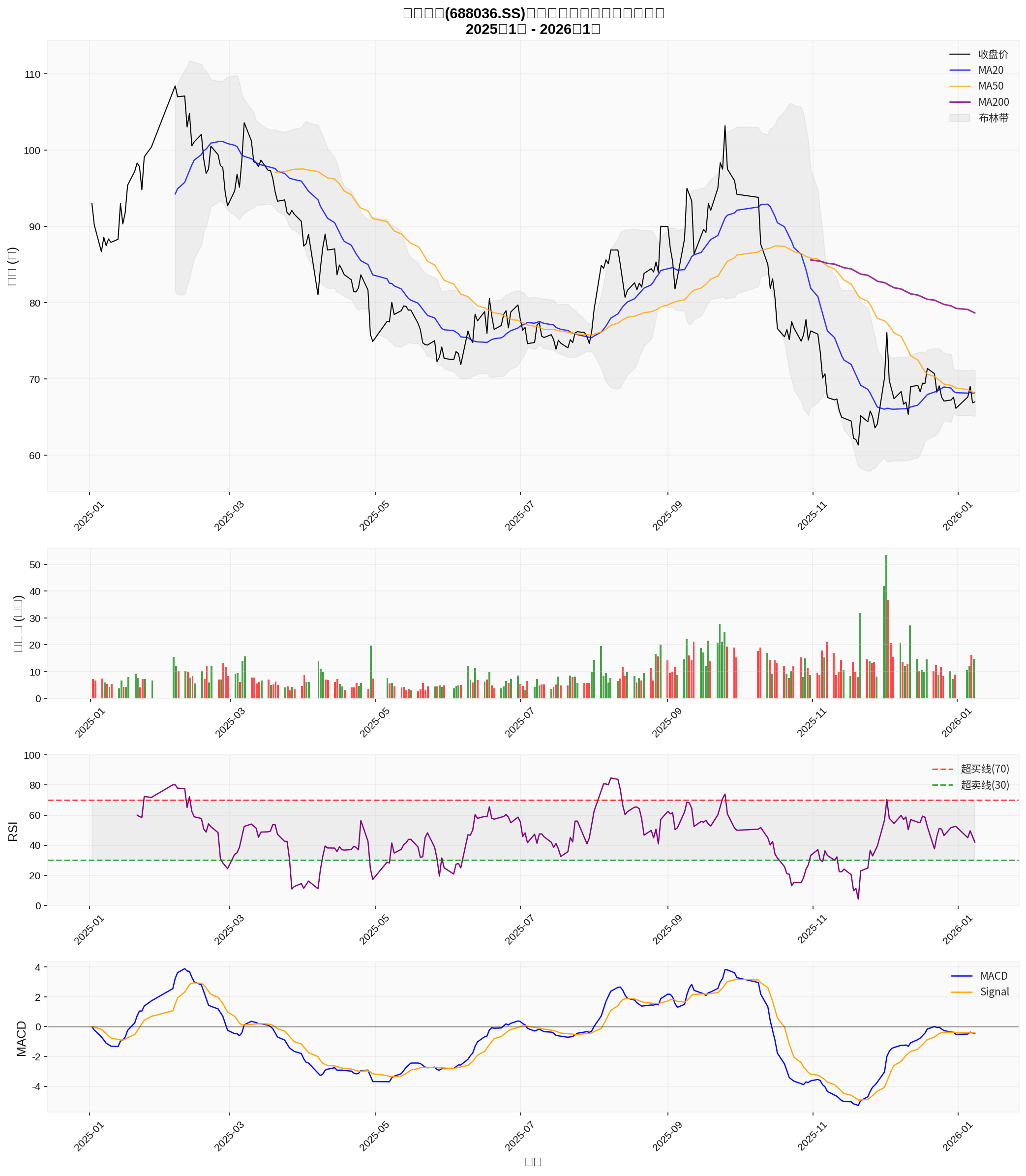
| Share Price (January 8, 2026) | - | RMB 67.01 | Nearly 60% drop from peak |
Transsion Holdings’ dominant position in the African market is facing unprecedented challenges. According to Omdia data, in Q3 2025, Transsion’s smartphone market share in Africa plummeted from over 60% at the start of the year to 51% [1][3]. This change signals:
- Rapid Rise of Competitors: Xiaomi’s market share in Africa reached 13%, with a year-on-year increase of 2.6 percentage points; Honor achieved an even higher 158% year-on-year growth, with a market share of approximately 4% [2][3]
- Shift in Competitive Strategies: Xiaomi has adopted a “new approach” – direct online sales, partnerships with large supermarkets, and targeted launch of cost-effective models, directly reaching young and urban consumer groups [3]
- Under Attack on Both Ends: The low-end market is being encroached by competitors in the sub-$100 segment, while the high-end market is being targeted in the $150-$200 price range [2]
Transsion Holdings’ business model has deep-seated issues:
| Business Structure | Proportion | Current Status |
|---|---|---|
| Mobile Phone Sales Revenue | ~90% | In H1 2025, the decline in mobile phone revenue (-18.4%) outpaced the decline in total revenue (-15.9%) [3] |
| African Market Contribution | 33.2% (Revenue) | African revenue declined 4.45% year-on-year in H1 2025 [1] |
| Internet Services | 1.4% (H1 2025) | Growth rate is only 3.5%, and the scale is too small to offset the decline in hardware business [3] |
This “hardware-focused + Africa-centric” business structure was an advantage during the period of rapid market growth, but once the market enters the stock competition stage, it exposes the fatal weakness of insufficient risk resistance [3].
The performance in the first three quarters of 2025 shows the characteristic of “slight revenue decline with sharp profit drop”:
- Revenue: RMB 49.543 billion, down 3.33% year-on-year
- Net Profit: RMB 2.148 billion,plunged 44.97% year-on-year[2]
- Gross Profit Margin: Has dropped to 19.47%, a decrease of nearly 5 percentage points compared to early 2024 [1]
- Net Profit Margin: Fell from 7.7% to 4.5% [3]
The core reasons for the profit decline include:
- Sliding Sales Volume: In H1 2025, smartphone sales volume decreased by 16.11% year-on-year, while feature phone sales volume dropped by 26.30% [1]
- Rigid Costs: For every RMB 1 decrease in revenue, costs can only shrink by RMB 0.22 [3]
- Rising Supply Chain Costs: Price increases for components such as memory chips have squeezed profit margins [2]
Transsion attempted to replicate its “Africa Model” in other emerging markets, but the results have been poor:
| Regional Market | YoY Revenue Change in H1 2025 |
|---|---|
| Emerging Asia-Pacific | -19.56% |
| Middle East | -19.79% |
| Latin America | -27% |
| Central and Eastern Europe | -59.59% |
The regional diversification strategy not only failed to convert into growth momentum, but also exposed the problem that the “cost-effective + incremental innovation” model lacks competitive barriers in markets outside Africa [1][3].
Choosing to list in Hong Kong against the backdrop of underperforming results, lost market share, and sluggish share price is rather awkward [3]:
- Share Price Performance: From September to December 2025, the share price dropped nearly 30%; it has fallen nearly 60% from its historical peak, with market capitalization evaporating approximately RMB 110 billion [1]
- Institutional Exit: In Q3 2025, the number of holding institutions plummeted from 941 to 153, with over 100 million shares sold off [3]
- Insider Selling: Controlling shareholder Transsion Investment reduced its holdings twice, cashing out RMB 2.879 billion, with the transfer price dropping from RMB 125.55 to RMB 81.81 [1]
According to the 2025 Q3 report, Transsion has RMB 15.6 billion in monetary funds plus RMB 9.6 billion in wealth management products, totaling RMB 25.2 billion, and has no shortage of funds in the short term [3]. The real motivations for this Hong Kong listing are:
- Seek a New Growth Narrative: New businesses such as IoT and edge AI require capital support
- Diversify Financing Channels: Reduce dependence on a single capital platform
- Enhance International Brand Image: Endorse subsequent overseas expansion
According to the prospectus, the raised funds will be used for [4]:
- R&D of AI-related technologies to accelerate product iteration
- Marketing and brand building
- Strengthen mobile internet services and IoT products
- Supplement working capital
- Emerging markets are still in the development trend of “feature phone to smartphone transition”, with a solid fundamental market
- Adequate cash on hand (RMB 25.2 billion), with the ability to withstand the industry downturn
- Maintains leading market positions in multiple regions such as Africa, Asia-Pacific, and the Middle East
- Operating cash flow has improved (+164.66% year-on-year in the first three quarters), indicating improved operational efficiency [2]
- Risk of Continuous Market Share Loss: Competitors such as Xiaomi and Honor are aggressively expanding, and the downward trend in market share is difficult to reverse in the short term
- Risk of Profitability Pressure: Gross profit margin continues to decline, and rigid costs compress profit margins
- Risk of Business Model Transformation: Difficulty in monetizing internet services, and the “African version of Xiaomi” narrative is difficult to deliver
- Risk of Valuation Downgrade: Sluggish performance combined with intensified competition may lead to a reshaping of the valuation system
The current share price is in a medium-term downward trend, with an important support level around RMB 65.83 and a resistance level at RMB 68.19 [0]. The KDJ indicator suggests short-term rebound demand, but the medium-term trend remains weak.
The plummet of Transsion Holdings’ African market share from 61.5% to 51% is a dangerous signal of the weakening of its “King of Africa” status. Behind this change lies:
- Deteriorating Competitive Landscape: Manufacturers such as Xiaomi and Honor are accelerating their entry into the African market, and competition has shifted from a “blue ocean” to a “red ocean”
- Business Model Bottlenecks: Structural problems of over-reliance on hardware sales and a single market have been fully exposed
- Failure of Growth Logic: The “volume for profit” growth model is unsustainable when sales volume declines
Whether the Hong Kong listing can bring a turnaround for Transsion depends on its ability to tell a compelling new story about IoT and AI, as well as its ability to hold its fundamental market share amid fierce competition. In the short term, the company still faces severe challenges, and investors need to closely monitor changes in its market share and progress in profitability recovery.
[1] Sohu Finance - “From ‘King of Africa’ to ‘Seeking Survival in Hong Kong’: The Dual Narrative of Transsion Holdings” (https://m.sohu.com/a/973926760_250147)
[2] Southern Plus - “Mobile Phone Manufacturers Battle in Africa: Transsion’s Net Profit Declines in First Three Quarters, Xiaomi and Others Accelerate Market Seizure” (https://www.nfnews.com/content/EynG14JD3Z.html)
[3] CBNData - “‘King of Africa’ Transsion’s Hong Kong IPO: No Shortage of Money, but Shortage of a Growth Narrative” (https://www.cbndata.com/information/294781)
[4] Sina Finance - “Behind Transsion Holdings’ Hong Kong Listing: Significant Performance Pressure, Criticized for Sharp Short-Term Share Price Drop” (https://finance.sina.com.cn/stock/hkstock/2025-12-16/doc-inhaxzmp1225095.shtml)
[0] Gilin AI Financial Analysis Database (Real-time Market Quotes, Technical Indicators, Financial Data)
Insights are generated using AI models and historical data for informational purposes only. They do not constitute investment advice or recommendations. Past performance is not indicative of future results.
About us: Ginlix AI is the AI Investment Copilot powered by real data, bridging advanced AI with professional financial databases to provide verifiable, truth-based answers. Please use the chat box below to ask any financial question.