
NVIDIA Corporation (NVDA) Stock Analysis: CES 2026 Catalysts and Valuation Assessment
Unlock More Features
Login to access AI-powered analysis, deep research reports and more advanced features
About us: Ginlix AI is the AI Investment Copilot powered by real data, bridging advanced AI with professional financial databases to provide verifiable, truth-based answers. Please use the chat box below to ask any financial question.
Related Stocks
NVIDIA Corporation maintains its position as the dominant player in the AI semiconductor ecosystem, with CES 2026 serving as a significant catalyst for investor attention and strategic expansion. The company’s announcements at the consumer electronics event demonstrate a calculated diversification strategy beyond traditional data center applications into industrial AI, robotics, and physical AI systems, while simultaneously reinforcing its core AI inference and training platform leadership [1][2][3].
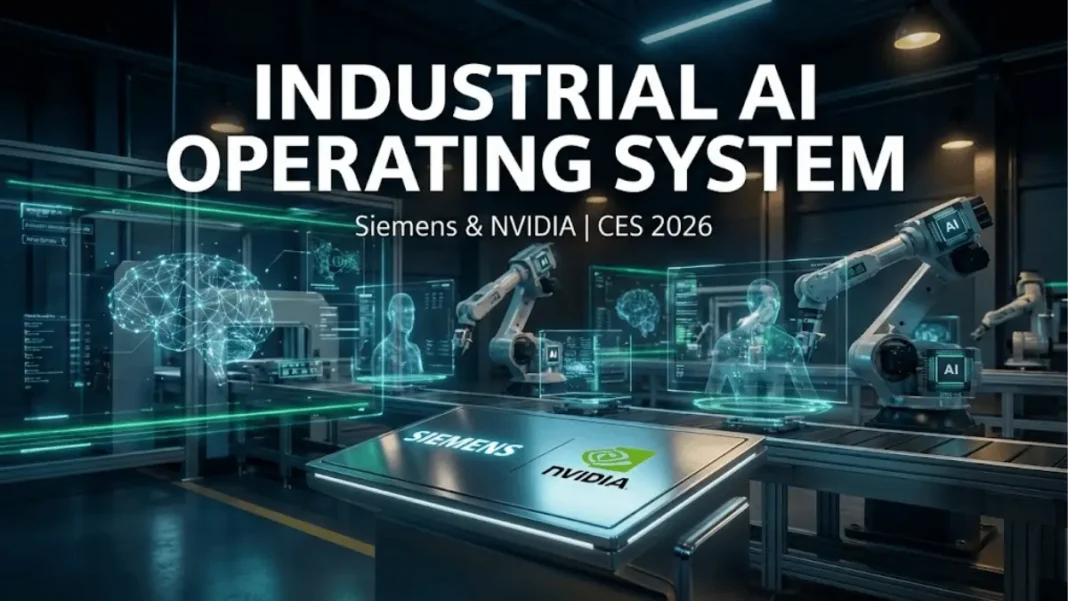
The Siemens partnership represents NVIDIA’s most ambitious industrial AI initiative to date, with plans to transform the Erlangen, Germany facility into the world’s first fully AI-driven adaptive manufacturing facility. This collaboration establishes an “Industrial AI Operating System” spanning the complete manufacturing value chain from design through production, creating a blueprint for future “AI factories” that could significantly expand NVIDIA’s addressable market [3][4]. The strategic timing of this announcement, combined with the Vera Rubin platform confirmation and Physical AI strategy unveiling, positions NVIDIA to capture emerging opportunities in industrial automation and robotics markets valued at hundreds of billions of dollars globally.
From a financial perspective, NVIDIA’s Q2 FY2026 results reveal exceptional profitability with a 53.01% profit margin and operating margin of 58.84%, substantially outperforming most technology peers [0]. However, the revenue concentration risk remains pronounced, with the Data Center segment accounting for 87.9% of total revenue ($41.10 billion of $46.74 billion quarterly revenue). This concentration creates vulnerability to any disruption in AI infrastructure spending or competitive displacement in the AI chip market.
The valuation disconnect between market price and traditional metrics presents the most significant analytical challenge. The probability-weighted DCF valuation of $87.98 represents a 52.5% discount to the current stock price, indicating that market expectations embed substantial growth assumptions not captured in conventional valuation frameworks [0]. This disconnect reflects the market’s recognition of NVIDIA’s structural competitive advantages, ecosystem moat, and position at the center of the AI infrastructure buildout, factors that traditional DCF models struggle to quantify accurately.
NVIDIA Corporation trades at $185.04 with a market capitalization of $4.51 trillion, reflecting exceptional investor confidence in the company’s AI infrastructure leadership position. The CES 2026 announcements, including the Siemens industrial AI partnership, Vera Rubin platform production confirmation, and Physical AI strategy, reinforce the company’s strategic positioning across multiple high-growth market segments [1][2][3][4][5][6].
Analyst sentiment remains overwhelmingly positive, with 73.4% of analysts rating the stock a Buy and consensus price target of $257.50 representing 39.2% upside from current levels [0]. Notable bull cases include Evercore ISI’s $352.00 target based on the view that NVIDIA can capture 70-80% of AI infrastructure market value creation [12]. However, fundamental valuation metrics present a more cautious picture, with DCF analysis indicating the stock may be significantly overvalued by traditional measures.
The February 25, 2026 earnings report will serve as a critical test of market expectations, with NVIDIA needing to demonstrate continued growth acceleration to justify current valuation levels. Key metrics to monitor include Data Center segment revenue trends, gross margin trajectory, guidance for FY2027, and progress on Vera Rubin platform shipments. Investors should also monitor competitive developments from AMD, custom silicon efforts by hyperscalers, and geopolitical risks affecting international market access.
Insights are generated using AI models and historical data for informational purposes only. They do not constitute investment advice or recommendations. Past performance is not indicative of future results.
About us: Ginlix AI is the AI Investment Copilot powered by real data, bridging advanced AI with professional financial databases to provide verifiable, truth-based answers. Please use the chat box below to ask any financial question.