
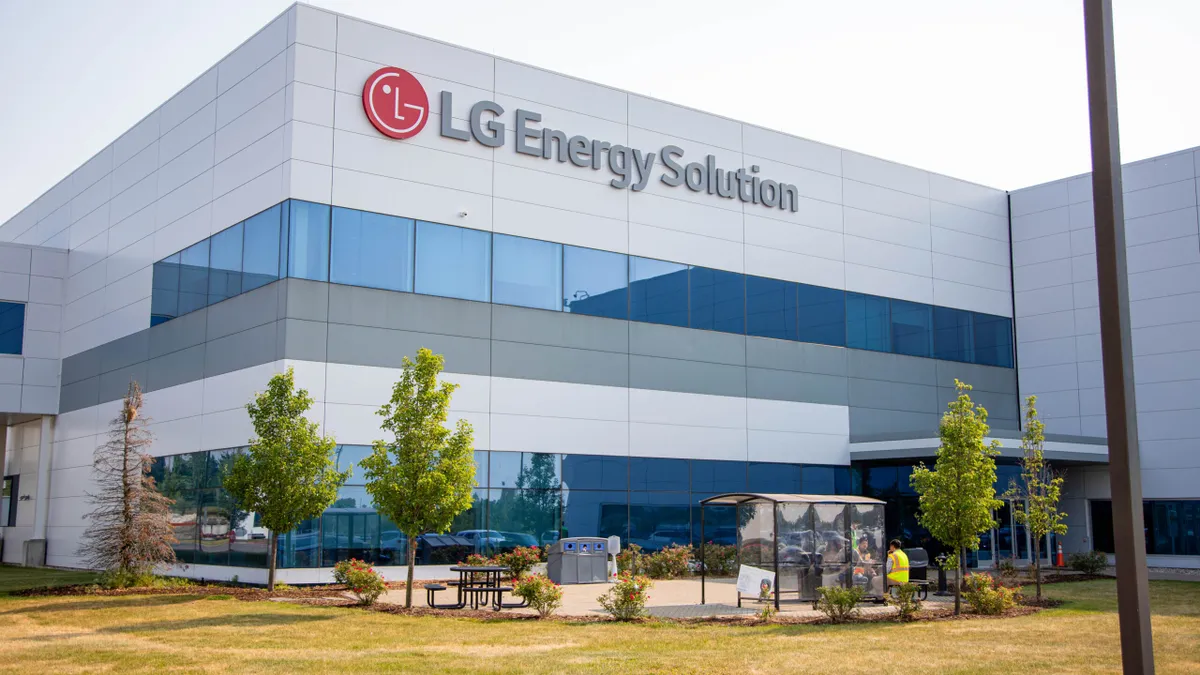
Analysis of the Impact of LG Energy Solution's Q4 Severe Losses on the Global Power Battery Competitive Landscape and Industrial Chain Investments
Unlock More Features
Login to access AI-powered analysis, deep research reports and more advanced features
About us: Ginlix AI is the AI Investment Copilot powered by real data, bridging advanced AI with professional financial databases to provide verifiable, truth-based answers. Please use the chat box below to ask any financial question.
Related Stocks
Based on the in-depth research and data collection above, I now provide you with a systematic and comprehensive analysis report.
According to the latest financial data, LG Energy Solution recorded an
| Impact Factor | Details |
|---|---|
| Sharp Revenue Decline | 2025 revenue reached approximately KRW 11.2 trillion, down 11.3% YoY |
| Increasing Cost Pressures | Fluctuating raw material prices and insufficient capacity utilization led to rising unit costs |
| Customer Order Losses | Strategic adjustments by key customers such as Ford directly hit revenue expectations |
| Increased R&D Investment | Funds are consumed by the technical transition to lithium iron phosphate (LFP) batteries and the development of solid-state batteries |
From mid to late December 2025, LG Energy Solution suffered an
- Ford Motor Order Cancellation: The KRW 9.6 trillion contract to supply 75GWh of power batteries starting in 2027 was terminated, with only 34GWh of orders retained and delivery dates postponed [2]
- Freudenberg Group Order Cancellation: The KRW 3.9 trillion contract for standardized battery module supply was terminated due to the customer’s decision to exit the battery industry [2]
This chain reaction directly exposed LG Energy Solution’s vulnerability of high dependence on a single customer: Ford once contributed 15% of its North American market revenue.
Facing cash flow pressures, LG Energy Solution adopted a
- Sold assets of the L-H Battery Company in Ohio to Honda’s U.S. subsidiary for KRW 4.2 trillion(approximately USD 2.86 billion) [3]
- Continued to use facilities through a leasing model to reduce fixed asset occupation
- Accelerated the transition to energy storage business, shifting new production lines in Arizona and Michigan to energy storage battery production
According to data from South Korea’s SNE Research, global power battery installations reached

| Rank | Enterprise | Installations (GWh) | YoY Growth Rate | Market Share |
|---|---|---|---|---|
| 1 | CATL | 400 | 34.5% | 38.2% |
| 2 | BYD | 175.2 | 31.3% | 16.7% |
| 3 | LG Energy Solution | 96.9 | 11.1% | 9.3% |
| 4 | CALB | 50.9 | 42% | 4.9% |
| 5 | Gotion High-Tech | 44.9 | 77.8% | 4.3% |
| 6 | SK On | 40.6 | 14.1% | 3.9% |
| 7 | Panasonic | 38.5 | 23.1% | 3.7% |
| 8 | Samsung SDI | 27.1 | -5.1% | 2.6% |
Three South Korean enterprises, LG Energy Solution, SK On, and Samsung SDI, are seeing a
- LG Energy Solution: Fell from 13.5% in 2022 to 9.3% in 2025, a 4.2 percentage point drop over four years [4]
- SK On: Fell from 7.0% in 2022 to 3.9% in 2025 [4]
- Samsung SDI: Fell from 7.5% in 2022 to 2.6% in 2025, with installations recording negative growth [4]

- Misjudgment of Technical Route: Bet on the ternary lithium battery (NCM) route, while lithium iron phosphate (LFP) batteries, with a 15% cost advantage, saw their market share rise from 38% in 2023 to 52% in 2025 [5]
- Competition from Chinese Players: 6 Chinese enterprises occupy 6 spots in the Top 10, with a combined market share of 55%
- Weak Demand in Europe and the U.S.: The growth rate of the U.S. electric vehicle market has slowed, and subsidy policies are uncertain
The global power battery market is undergoing a

| Technical Route | 2023 | 2024 | 2025 | Trend |
|---|---|---|---|---|
| Lithium Iron Phosphate (LFP) | 38% | 52% | 60% | ↑ Continued Growth |
| Ternary Lithium Battery (NCM) | 55% | 42% | 35% | ↓ Rapid Decline |
LG Energy Solution previously focused mainly on ternary lithium battery technology, lagging behind in the layout of lithium iron phosphate (LFP) batteries, and was forced to accelerate its technical transition. The company launched the construction of domestic LFP battery production lines in 2025, with plans to officially put them into operation in 2027 [5].
Investments in China’s lithium battery industrial chain in 2025 showed

| Segment | Investment Amount (CNY 100 million) | YoY Growth Rate | Characteristics |
|---|---|---|---|
| Total Industrial Chain | 8,200 | +74% | Growth Driven by Energy Storage |
| Lithium Battery Manufacturing | 3,485 | +92% | Led by Leading Enterprises |
| Cathode Materials | 821 | +127% | LFP Becomes the Focus |
| Anode Materials | 614 | +100% | Silicon-Carbon Anodes Emerge |
| Electrolyte | 186 | +85% | Increased Concentration of Leading Players |
| Separator | 113 | +60% | Wet-Process Separators Dominate |
- Sharp Drop in Billion-Yuan Projects: There were 29 billion-yuan projects in 2023, dropping to 10 in 2024, and only 7 in 2025 [6]
- Decline in Average Investment per Project: The industry has shifted from “rapid large-scale expansion” to precise layout
- Favor for Niche Segments: Sodium-ion batteries, solid-state batteries, and energy storage batteries have become new investment hotspots
- CATL invested CNY 2.56 billion to increase capital in Jiangxi Shenghua, holding 51% of the shares [7]
- CATL invested CNY 2.6 billion to acquire shares in Tianhua New Energy, becoming the second-largest shareholder [7]
- CALB strategically acquired shares in Shengxin Lithium Energy, locking in 200,000 tons of lithium salt supply until 2030 [7]
The global energy storage market is experiencing
| Year | New Energy Storage Installations (GW) | YoY Growth Rate |
|---|---|---|
| 2024 | 70 | - |
| 2025 | 94 | +35% |
| 2026E | 120 | +28% |
| 2030E | 220 | +17% |
LG Energy Solution has regarded the energy storage business as a “lifeline”, planning to increase its energy storage battery production capacity to 50GWh in 2025, a 60% increase from the original target, with approximately 80% produced in North America [2].
Driven by the U.S. Inflation Reduction Act (IRA), the battery industrial chain is undergoing
- Southeast Asia: Thailand, Malaysia, and Indonesia have become the top choices for Chinese enterprises going overseas, including Sunwoda’s Thailand plant (CNY 10.9 billion) and EVE Energy’s Malaysia plant (CNY 8.6 billion) [6]
- Europe: Faces localization pressure, but has obvious cost disadvantages
- North America: LG Energy Solution’s asset sale to Honda reflects a new “asset-light + technology licensing” model
| Risk Type | Impact Level | Specific Performance |
|---|---|---|
| Slowing Demand Growth | High (75) | Slowing growth rate of electric vehicle penetration in Europe and the U.S. |
| Policy Subsidy Reduction | High (70) | U.S. cancellation of electric vehicle tax credits |
| Overcapacity Risk | Medium (65) | Intensified differentiation in industry capacity utilization |
| Fluctuating Raw Material Prices | Medium (60) | Fluctuations in lithium, cobalt, and nickel prices |
| Opportunity Areas | Impact Level | Investment Logic |
|---|---|---|
| Strong Demand for Energy Storage | +45 | Surge in demand for AI data centers and grid peak regulation |
| Demand for Technical Upgrading | +35 | Opportunities for iteration of solid-state batteries and sodium-ion batteries |
| Supply Chain Restructuring | +30 | Regionalized production creates new opportunities |
-
LG Energy Solution’s Dilemma is a Microcosm of the Industry: Q4 losses and order cancellations reflect the growing pains of the global power battery industry’s transition from “wild growth” to “meticulous cultivation”
-
Strengthened Dominance of Chinese Players: CATL + BYD hold a combined 55% market share, forming a “duopoly” pattern, while Japanese and Korean enterprises see their shares continue to shrink
-
Technical Route Determines Competitiveness: LFP batteries have risen comprehensively, while the share of ternary lithium batteries has shrunk; the choice of technical route has become a watershed for enterprises
-
Energy Storage Track Becomes a Must-Compete Area: Battery giants are transitioning to energy storage, and the industry presents a “power + energy storage” dual-drive pattern
-
In-depth Reshaping of Investment Logic: Shifting from scale competition to efficiency priority, the “equity + long-term agreement” model has become a new paradigm for supply chain cooperation
| Investment Direction | Recommendation Level | Logic |
|---|---|---|
| Energy Storage Batteries | ★★★★★ | Demand grows by over 30% annually, driven by both policies and AI |
| LFP Materials | ★★★★☆ | Continuous increase in market share, improved capacity utilization |
| Leading Battery Enterprises | ★★★★☆ | Increased concentration, strengthened leading enterprise advantages |
| Solid-State Battery Technology | ★★★☆☆ | Long-term track, but commercialization still takes time |
| Japanese and Korean Battery Enterprises | ★★☆☆☆ | Downward share trend continues, watch cautiously |
[1] Analysis of LG Energy Solution’s Q4 Financial Report - Sina Finance
[2] Battery Giant Suffers Heavy Blow! CNY 65 Billion in Orders Cancelled - EET-china
[4] Global Power Battery Installations (Jan-Nov 2025) - NetEase Finance
[5] Top 10 International News in the Battery New Energy Industry 2025 - Gasgoo Auto
[8] Power Battery Installations (Jan-Nov 2025): CATL and BYD Lead - Sohu Auto
Insights are generated using AI models and historical data for informational purposes only. They do not constitute investment advice or recommendations. Past performance is not indicative of future results.
About us: Ginlix AI is the AI Investment Copilot powered by real data, bridging advanced AI with professional financial databases to provide verifiable, truth-based answers. Please use the chat box below to ask any financial question.