Analysis of Kweichow Moutai's Price Falling Below 1,499 Yuan and the Trend of the Baijiu Sector
Unlock More Features
Login to access AI-powered analysis, deep research reports and more advanced features
About us: Ginlix AI is the AI Investment Copilot powered by real data, bridging advanced AI with professional financial databases to provide verifiable, truth-based answers. Please use the chat box below to ask any financial question.
Related Stocks
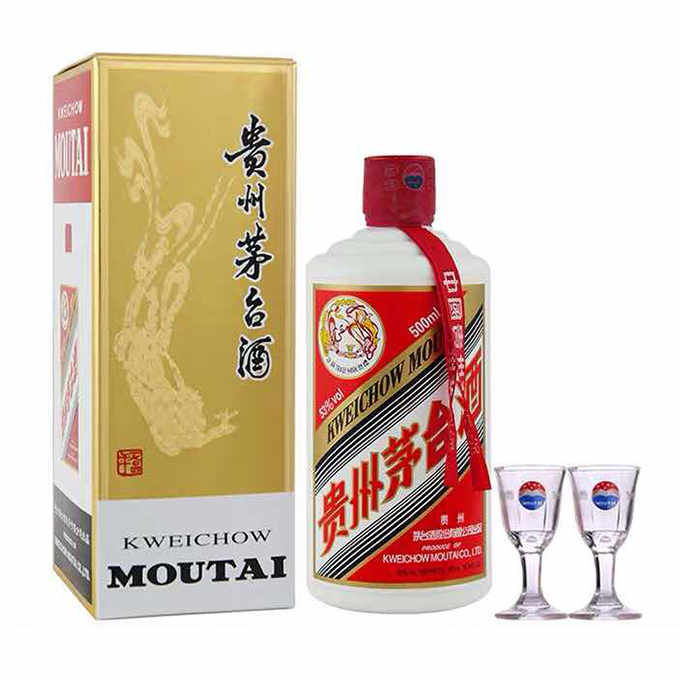
This analysis is based on market reports in early January 2026 [1][2][3]. Since Kweichow Moutai’s official app “iMoutai” launched sales of 53% ABV 500ml Feitian Moutai at the official guided price of 1,499 yuan per bottle on January 1, 2026, there have been consecutive “instant sell-out” occurrences for multiple days, yet the market wholesale price has again fallen below the 1,499 yuan threshold, reflecting a divergence between channel prices and official pricing. Kweichow Moutai’s stock price dropped from 1,451 yuan in early December 2025 to 1,418 yuan on January 9, 2026, with a decline of approximately 2.27%, and the entire Baijiu sector is under pressure [0]. Institutions generally believe that the industry is approaching the bottom range, valuations are at an extremely low historical level, and medium- to long-term allocation value is gradually emerging, but in the short term, attention should be paid to the verification of Spring Festival sales momentum and the progress of channel inventory digestion [4][5][6].
Starting from January 1, 2026, Kweichow Moutai’s official app “iMoutai” officially launched sales of 53% ABV 500ml Feitian Moutai at the official guided price of 1,499 yuan per bottle [1][2]. After the implementation of this measure, significant structural changes have emerged in the market: on one hand, the iMoutai platform has seen consecutive “instant sell-out” days, with over 100,000 users successfully purchasing the product between January 1 and 3 [1]; on the other hand, the wholesale price of loose bottles of 2025-vintage Feitian Moutai fell below the 1,499 yuan threshold again on January 4, dropping by approximately 100 yuan per bottle compared to a week prior [2][3]. Currently, the scalper recycling price remains in the range of 1,400-1,450 yuan per bottle, and arbitrage space has basically disappeared.
From the price trend, Moutai’s price experienced a sharp decline in early December 2025, then rebounded briefly to 1,600 yuan per bottle due to market news of supply control, and remained around 1,565 yuan per bottle on December 31. However, after entering January 2026, against the backdrop of continuous volume increase on iMoutai, the wholesale price declined again [2]. This situation, where the official channel sees “instant sell-out” while the wholesale market is under price pressure, reflects the market’s re-pricing of Moutai’s real supply and demand relationship. The increase in direct sales channels has directly impacted the original channel profit margin, suppressing the arbitrage behavior of scalpers and distributors, and the terminal price discovery function is being reshaped.
From the perspective of stock performance, Kweichow Moutai has faced significant pressure in the recent market environment. According to market data, within the 28 trading days from December 1, 2025, to January 9, 2026, Kweichow Moutai’s stock price dropped from 1,451.00 yuan to 1,418.03 yuan, with a cumulative decline of 2.27%, and hit an intraday low of 1,377.17 yuan during the period [0]. From a longer-term perspective, Kweichow Moutai has seen a cumulative decline of 32.46% over 5 years, reflecting the systematic adjustment of market valuations for high-end baijiu over the past few years.
| Indicator | Value |
|---|---|
| Stock Price (January 9, 2026) | 1,418.07 yuan |
| 1-Month Price Change | +1.22% |
| 3-Month Price Change | -1.30% |
| 1-Year Price Change | -1.80% |
| Price-to-Earnings Ratio (TTM) | 19.73x |
| Price-to-Book Ratio | 6.91x |
| Net Profit Margin | 51.51% |
| Return on Equity (ROE) | 36.48% |
Fundamentally, Kweichow Moutai’s earnings per share (EPS) in Q3 2025 was $15.37, which was lower than the market expectation of $16.23, representing a negative surprise of 5.30%; operating revenue was $39.81 billion, lower than the expected $40.83 billion, with a decline of 2.50% [0]. Nevertheless, the company still maintains extremely high profitability, with a net profit margin exceeding 51% and ROE reaching 36.48%, demonstrating strong brand barriers and pricing power.
The Baijiu sector has generally been under pressure recently, with stock prices of major liquor companies falling to varying degrees [0]:
| Stock Code | Stock Name | Period Price Change | Period Low Price | Period High Price |
|---|---|---|---|---|
| 600519 | Kweichow Moutai | -2.27% | 1,377.17 yuan | 1,462.27 yuan |
| 000858 | Wuliangye | -3.25% | 105.61 yuan | 113.75 yuan |
| 000568 | Luzhou Laojiao | -4.19% | 115.52 yuan | 125.68 yuan |
From the full-year performance in 2025, the Baijiu sector has experienced a more in-depth adjustment: Kweichow Moutai fell by 6.47% cumulatively, Wuliangye fell by 19.57% cumulatively, and Yanghe Co., Ltd., Gujing Gongjiu, Jinzishui Wine, Shuijingfang, etc., all fell by over 20% [6]. This sector-wide decline reflects the market’s full pricing of the downward cycle of the baijiu industry.
Currently, the fundamentals of the baijiu industry are in a period of in-depth adjustment. In the first three quarters of 2025, the operating revenue of the baijiu sector fell by 5.83% year-on-year, and net profit fell by 6.94%, with the single-quarter revenue decline hitting a new low since 2012 [6]. Performance forecasts of liquor companies such as Kouzijiao show that net profit in 2025 will decrease by 50%-60% year-on-year, and the industry is under obvious overall pressure [6].
However, from a valuation perspective, the current baijiu sector is already at an extremely low historical level [4][5]:
| Indicator | Current Value | Historical Percentile |
|---|---|---|
| Sub-food Index P/E Ratio | 19.75x | 2.94% percentile in 10 years |
| Baijiu Sector P/E Ratio | 22.27x | 36% percentile |
| Baijiu Sector P/B Ratio | 3.34x | 0.13% percentile |
The P/B ratio of the baijiu sector has dropped to the 0.13% percentile, meaning that only 0.13% of the time in history has the valuation been lower than the current level, and the margin of safety has significantly improved [5]. Kweichow Moutai’s P/E ratio is about 19.75x, which is also in the 10-year low range, with good medium- to long-term allocation value.
The launch of the iMoutai platform marks a major transformation in Kweichow Moutai’s channel strategy. By directly reaching consumers through official direct sales channels, Moutai is reshaping its sales system. This transformation has multiple far-reaching impacts:
First, the increase in direct sales channels directly improves the quality of Moutai’s revenue and profit level, reducing profit sharing in the middleman links. Second, the stable supply of official channels suppresses the wholesale market price, forcing channel merchants to adjust profit expectations. Third, this channel transformation may trigger industry imitation, promoting the restructuring of the channel pattern in the baijiu industry. From an investment perspective, Moutai’s channel transformation may trigger price fluctuations and performance disturbances in the short term, but in the medium to long term, it will help enhance the company’s control over the terminal market and pricing power.
The adjustment of the baijiu industry is not homogeneous, but shows significant structural differentiation characteristics. High-end baijiu, relying on strong brand barriers and scarce supply attributes, has a relatively limited adjustment range; while mid-to-high-end and regional liquor companies are facing more severe competitive pressure [6].
This differentiation is reflected in multiple dimensions: in terms of price, although Moutai’s wholesale price has fallen below 1,499 yuan, it still maintains a price band above 1,000 yuan, while price competition in the mid-to-high-end baijiu segment is more intense; in terms of performance, although the growth rate of leading liquor companies has slowed down, they still maintain profitability, while some small and medium-sized liquor companies have seen a sharp decline in performance or even losses; in terms of valuation, the valuation premium of high-quality leading companies is narrowing, but their relative fundamental advantages still exist.
Currently, the baijiu industry is in the downward phase of the inventory cycle. Data from Q3 2025 shows that the cash collection of the baijiu industry fell by 26.7%, which is greater than the revenue decline [6], reflecting channel inventory pressure and reduced willingness of distributors to make payments. The digestion of channel inventory takes time, which is also an important factor restricting the valuation recovery of the industry.
However, from another perspective, the accelerated inventory destocking also means that the industry bottom is gradually being consolidated. China Merchants Securities pointed out [6] that the baijiu industry has now entered the middle stage of the “enterprise suffering period”, with financial report pressure having been reflected for 4 quarters, and the industrial level is also accelerating clearance. This means that the worst period of the industry may be passing, but the darkness before dawn still requires patience.
The reform of consumption tax is a potential policy risk hanging over the baijiu industry. If the consumption tax reform is implemented, it may have a significant impact on the industry profit structure, but the specific plan has not yet been clarified [6]. From a positive perspective, “adhering to domestic demand-led” has become the core task of economic work, and the consumer industry is expected to receive policy support [5], which provides a macro background support for the medium- to long-term development of the baijiu industry.
| Time Window | Key Focus Areas | Expected Impact |
|---|---|---|
| 1-3 Months | Spring Festival sales data, Moutai’s wholesale price trend | Short-term sentiment verification; if it exceeds expectations, it can drive valuation recovery |
| 3-6 Months | Channel inventory destocking, Q1 financial report performance | Verification of fundamental stabilization; determines the medium-term trend direction |
| 6-12 Months | Consumption tax policy, changes in industry pattern | Structural opportunities emerge; leading advantages are expected to be strengthened |
Based on this analysis, the following key information requires focused attention:
Minimax与智谱首日上市大涨原因深度分析
Insights are generated using AI models and historical data for informational purposes only. They do not constitute investment advice or recommendations. Past performance is not indicative of future results.
About us: Ginlix AI is the AI Investment Copilot powered by real data, bridging advanced AI with professional financial databases to provide verifiable, truth-based answers. Please use the chat box below to ask any financial question.