
Analysis of the Reasons for IKEA China's Large-Scale Store Closures and Their Impact on Local Home Furnishing Brands
Unlock More Features
Login to access AI-powered analysis, deep research reports and more advanced features
About us: Ginlix AI is the AI Investment Copilot powered by real data, bridging advanced AI with professional financial databases to provide verifiable, truth-based answers. Please use the chat box below to ask any financial question.
Related Stocks
Based on the latest information searched, I will systematically analyze the reasons behind IKEA China’s large-scale store closures and their impacts and opportunities for local home furnishing brands.
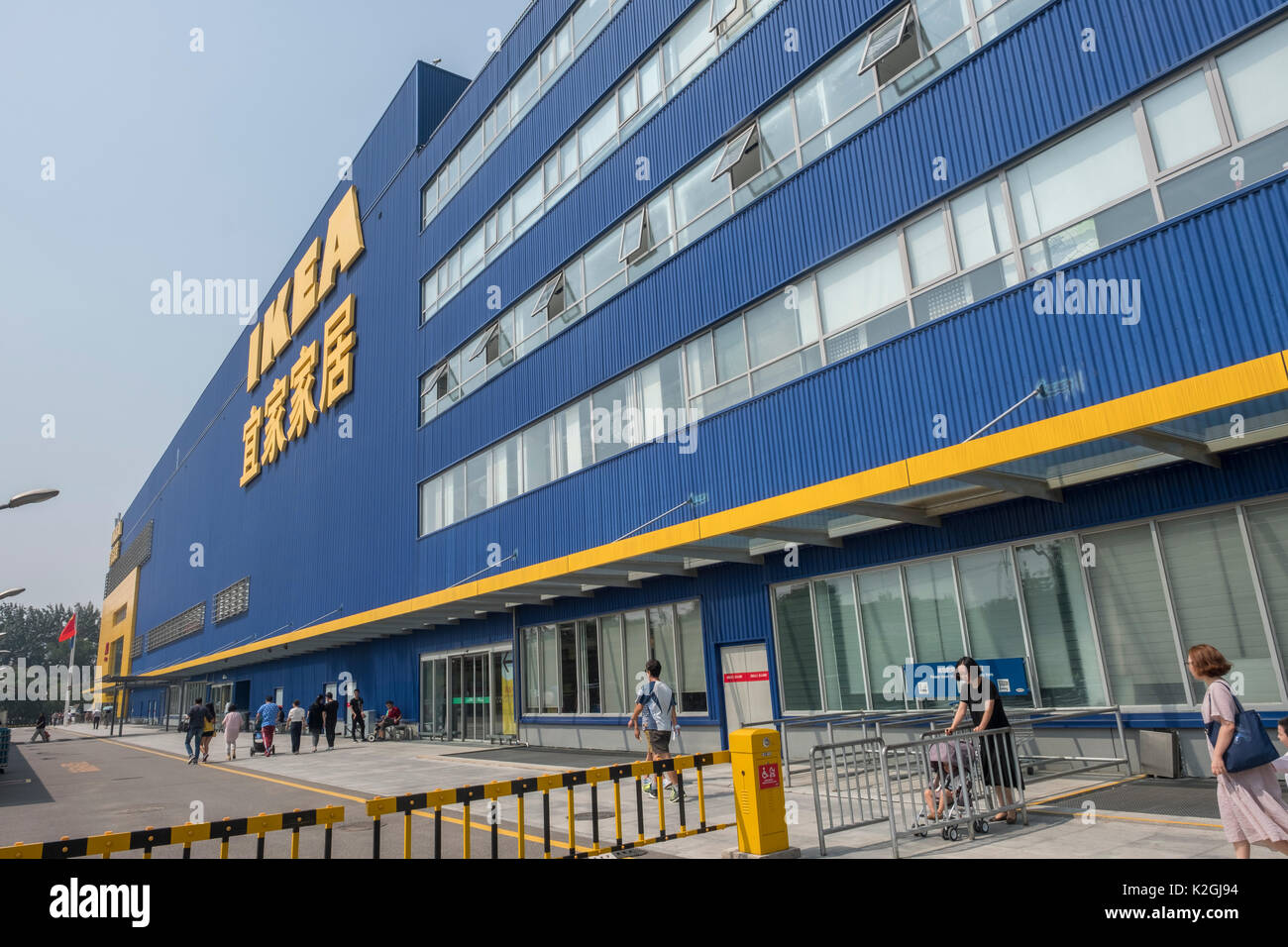
On January 7, 2026, IKEA China officially announced the closure of 7 stores, including Shanghai Baoshan Store, Guangzhou Panyu Store, Tianjin Zhongbei Store, Nantong Store, Xuzhou Store, Ningbo Store, and Harbin Store. The adjustment will take effect on February 2, 2026 [1][2]. This is not the first time IKEA has scaled back its presence in the Chinese market—In 2020, IKEA closed its Guiyang Store and Shanghai Yangpu Store, and in 2025, it shut down the Shanghai Jing’an City Store [3].
All 7 stores to be closed are traditional “Blue Box” large stores. Among them, the Shanghai Baoshan Store was once the largest IKEA store in Asia, with a business area of 55,032 square meters. It opened in August 2013 and was the 13th IKEA store opened in China [4].
According to financial report data released by Ingka Group, IKEA’s sales in the Chinese market have declined for consecutive fiscal years: In fiscal 2024 (September 2023 to August 2024), its sales in RMB dropped 7.6% year-on-year, falling further after a 10.6% decline in fiscal 2023 [5]. Sustained performance pressure is the core consideration for this large-scale store closure decision.
These 7 stores are either trapped in the predicament of traditional old business districts or facing diversion pressure from other stores in the same city. Taking the Shanghai Baoshan Store as an example, its location followed IKEA’s early “suburban radiation” logic. However, with the deepening of urbanization, the core consumer groups have moved to communities. Coupled with the diversion impact of stores such as Xuhui and Beicai, the vacancy rate of parking spaces on weekends remains high, and its location advantage has been completely lost [6]. The Tianjin Zhongbei Store is caught in the embarrassment of “high foot traffic but low conversion”. Its mature surrounding facilities have made it a leisure check-in spot rather than a shopping destination, and a large number of visitors fail to convert into actual sales [7].
Financial data shows that the average daily sales per square meter of IKEA’s large stores have dropped to less than RMB 100, while rents in areas on the edge of core cities have increased by over 300% in the past decade. The contradiction between high costs and low store efficiency is particularly prominent in these 7 stores [8]. The daily foot traffic of some stores has fallen below the break-even point, and the Ningbo Store was exposed as “having almost no customers in the store” as early as 2024 [9].
IKEA’s traditional large-store model, which relies on consumers traveling long distances for low-frequency bulk consumption, is seriously out of touch with the current fragmented and high-frequency consumption demands. After Generation Z became the main consumer group, they prefer the “online seeding + offline experience + instant delivery” model. The average annual visit frequency to traditional large stores has plummeted from 4.2 times in 2018 to 1.8 times in 2025 [10]. Young consumers now have the consumption habit of “leaving after eating the RMB 1 ice cream, only browsing but not buying, and only grabbing low-priced small items”. Although sales of low-priced small items have surged by 70%, the average transaction value has dropped significantly [11].
Another important reason for IKEA’s predicament is the rapid rise of local Chinese home furnishing brands. Leading enterprises represented by Oppein Home, KUKA Home, and Sophia have formed an all-round encirclement of IKEA with designs more in line with local aesthetics, more flexible customized services, and more competitive prices [12].
IKEA is famous for its Nordic minimalist style, but this design language has gradually shown limitations in the Chinese market. In contrast, local brands are better at capturing the aesthetic preferences of Chinese consumers. For example, KUKA Home’s “New Chinese Style” series combines traditional elements with modern craftsmanship, which not only meets young consumers’ demand for cultural identity but also avoids the stereotype of “old-fashioned” [13]. Oppein Home’s “Light Luxury Style” series, through the use of materials such as metal and glass, accurately hits the middle class’s pursuit of a quality life [14].
At the product level, local brands have accurately grasped consumers’ core demands for materials. While IKEA still uses low-cost materials such as particleboard and honeycomb board, brands like Lin’s Home and Yuan’s Wood Language have used solid wood in products at the same price point [15]. IKEA’s curtains have been criticized as “thin as paper”, and local brands launched thickened linen styles which became bestsellers. Local brands better understand Chinese people’s pursuit of materials and practicality, and have won the market with solid quality.
Lin’s Wood Industry adopts the “online direct sales + offline experience” model, cutting out intermediate links, and has reduced product prices to 60%-70% of IKEA’s prices [16]. IKEA’s proud “flat-pack” model has also been upgraded by local brands to “free door-to-door installation” services, further weakening its price advantage.
Local Chinese brands can keep up with social media trends, quickly capture changes in consumer preferences, and launch best-selling products within two weeks, while the design cycle of an IKEA sofa is as long as 18 months [17]. This slow-paced supply chain model is incompatible with the rapidly iterating Chinese market.
IKEA’s standardized products were once its core competitiveness, but this advantage is being weakened under the wave of whole-home customization. Sophia provides consumers with one-stop services from design to installation through the “whole-home customization + smart home” model, and its “7-day delivery” promise directly hits the pain point of IKEA’s “self-pickup + assembly” model [18]. Data shows that the scale of China’s whole-home customization market exceeded RMB 500 billion in 2025, with local brands accounting for more than 70% of the market share [19].
Under the wave of e-commerce and smart homes, IKEA’s digital transformation has been struggling. Although IKEA launched an online mall years ago, the proportion of its online business has long lingered at a low level, far lower than that of local brands. In contrast, KUKA Home’s online sales account for more than 30% of its total sales, and it has built a private traffic pool through new methods such as live-streaming e-commerce and community marketing [20].
In the smart home field, local brands have even achieved overtaking on a curve. Tech giants such as Xiaomi and Huawei have deeply integrated products such as smart speakers and smart door locks with home scenarios through ecological chain layouts, while IKEA’s smart products have been widely criticized for poor compatibility and single functions [21]. China’s smart home industry witnessed explosive growth in 2025, with the market scale exceeding RMB 1.2 trillion, a compound annual growth rate of 18.7%, and local brands accounting for more than 80% of the share [22].
Facing the market space released by IKEA’s store closures, local brands should accelerate their layout in relevant cities to fill market gaps. Especially in cities and business districts where IKEA has withdrawn, local brands can consider using more flexible store formats (such as community stores and pop-up stores) to undertake spillover consumer demand [23].
Local brands should continue to strengthen online-offline integration and build an omnichannel closed loop of “online seeding + offline experience + instant delivery”. They can learn from IKEA’s experience in online channel construction, while leveraging the advantages of local enterprises in digital operations to further increase the proportion of online sales [24].
While maintaining price competitiveness, local brands should further strengthen product design differentiation to avoid falling into pure price competition. They can enhance brand positioning through cross-border collaborations, cultural IP co-branding, etc., get rid of the “affordable alternative” label, and transform into lifestyle proposers [25].
Local brands should continuously optimize supply chain management, improve response speed, and shorten the product cycle from design to launch. At the same time, they should increase investment in areas such as intelligent manufacturing and digital marketing to build core competitiveness for the future [26].
As the real estate market enters the era of existing housing, home furnishing consumption demand is shifting from new home supporting supplies to old house renovation and partial renovation. Local brands should acutely grasp this trend and develop products and services more suitable for existing housing scenarios, such as small apartment solutions and partial renovation packages [27].
Industry insiders point out that future competition in the home furnishing retail industry will focus on three core aspects: “accurate consumer reach”, “improving single-store efficiency”, and “strengthening omnichannel collaboration” [28]. Whether it is international brands or local brands, only by quickly responding to market changes, deepening localized operations, and building differentiated competitive advantages can they gain a firm foothold in the industry reshuffle.
The trend of “large stores fading out, small stores deepening” has become a prominent feature of the industry. In the past, home furnishing brands preferred to layout large warehouse-style stores on the edge of cities. Although this allowed for full-category product display, it had problems such as long distance from consumers, low consumption frequency, and low store efficiency [29]. Now, the strategy of opening small stores focusing on core business districts or communities in core cities has become an industry consensus—small stores are closer to consumers’ living circles, which can effectively reduce customer acquisition costs. At the same time, cooperating with online channels to achieve collaboration of “online browsing and ordering + offline experience and service”, it accurately matches the fragmented and high-frequency home furnishing consumption demands in the era of existing housing [30].
IKEA’s store closure wave is not only a microcosm of the “involution” in China’s home furnishing market but also a witness to the rise of local brands. In this war without gunpowder, local brands have achieved a leap from “imitators” to “disruptors” through design innovation, service upgrading, and digital transformation [31]. How the pattern of China’s home furnishing market will evolve in the future is worthy of continuous attention.
[1] Xinmin Evening News - “IKEA China to Close 7 Stores, Including Shanghai Baoshan Store” (https://finance.sina.com.cn/jjxw/2026-01-07/doc-inhfnemt4789674.shtml)
[2] The Paper - “IKEA China Responds to Reasons for Closing 7 Stores!” (https://cj.sina.cn/articles/view/1279746217/4c4760a900101d23e)
[3] Southern Daily - “IKEA Sudden Store Closure Wave, The Truth Behind Is Very Cruel | Southern Industry View” (https://www.nfnews.com/content/v6JNXEAe6G.html)
[4] Eastmoney - “IKEA China to Close 7 Stores, Including Shanghai Baoshan Store” (https://finance.eastmoney.com/a/202601073611327266.html)
[5] Xinhua Finance - “New Consumption School | From “Big and Comprehensive” to “Fast and Agile”: IKEA Reshapes Its Survival Logic in the Chinese Market” (https://finance.sina.com.cn/jjxw/2026-01-08/doc-inhfqyhm3699018.shtml)
[6] Huxiu - “7 Stores Closed in a Row, Is IKEA Collapsing in China?” (https://www.huxiu.com/article/4824398.html)
[7] Huxiu - “7 Stores Closed in a Row, Is IKEA Collapsing in China?” (https://www.huxiu.com/article/4824398.html)
[8] Huxiu - “7 Stores Closed in a Row, Is IKEA Collapsing in China?” (https://www.huxiu.com/article/4824398.html)
[9] Huxiu - “7 Stores Closed in a Row, Is IKEA Collapsing in China?” (https://www.huxiu.com/article/4824398.html)
[10] Huxiu - “7 Stores Closed in a Row, Is IKEA Collapsing in China?” (https://www.huxiu.com/article/4824398.html)
[11] NetEase - “The Myth Ends? IKEA’s First Shanghai Store Closes for Renovation, Why Do Young People Only Eat Ice Cream and Not Buy Furniture?” (https://www.163.com/dy/article/KICQBIOK05560Z1S.html)
[12] Southern Daily - “IKEA Sudden Store Closure Wave, The Truth Behind Is Very Cruel | Southern Industry View” (https://www.nfnews.com/content/v6JNXEAe6G.html)
[13] Southern Daily - “IKEA Sudden Store Closure Wave, The Truth Behind Is Very Cruel | Southern Industry View” (https://www.nfnews.com/content/v6JNXEAe6G.html)
[14] Southern Daily - “IKEA Sudden Store Closure Wave, The Truth Behind Is Very Cruel | Southern Industry View” (https://www.nfnews.com/content/v6JNXEAe6G.html)
[15] NetEase - “The Myth Ends? IKEA’s First Shanghai Store Closes for Renovation, Why Do Young People Only Eat Ice Cream and Not Buy Furniture?” (https://www.163.com/dy/article/KICQBIOK05560Z1S.html)
[16] Southern Daily - “IKEA Sudden Store Closure Wave, The Truth Behind Is Very Cruel | Southern Industry View” (https://www.nfnews.com/content/v6JNXEAe6G.html)
[17] NetEase - “The Myth Ends? IKEA’s First Shanghai Store Closes for Renovation, Why Do Young People Only Eat Ice Cream and Not Buy Furniture?” (https://www.163.com/dy/article/KICQBIOK05560Z1S.html)
[18] Southern Daily - “IKEA Sudden Store Closure Wave, The Truth Behind Is Very Cruel | Southern Industry View” (https://www.nfnews.com/content/v6JNXEAe6G.html)
[19] Southern Daily - “IKEA Sudden Store Closure Wave, The Truth Behind Is Very Cruel | Southern Industry View” (https://www.nfnews.com/content/v6JNXEAe6G.html)
[20] Southern Daily - “IKEA Sudden Store Closure Wave, The Truth Behind Is Very Cruel | Southern Industry View” (https://www.nfnews.com/content/v6JNXEAe6G.html)
[21] Southern Daily - “IKEA Sudden Store Closure Wave, The Truth Behind Is Very Cruel | Southern Industry View” (https://www.nfnews.com/content/v6JNXEAe6G.html)
[22] Southern Daily - “IKEA Sudden Store Closure Wave, The Truth Behind Is Very Cruel | Southern Industry View” (https://www.nfnews.com/content/v6JNXEAe6G.html)
[23] Sohu Finance - “Financial Observation | Announcing the Closure of 7 Stores at Once, IKEA’s “Decluttering” Aims at Strategic Transformation” (https://m.sohu.com/a/973793833_355158)
[24] Huxiu - “7 Stores Closed in a Row, Is IKEA Collapsing in China?” (https://www.huxiu.com/article/4824398.html)
[25] 36Kr - “AI Mattresses Launch “Active Care” | World Research Consumption Index Brand List Vol.95” (https://m.36kr.com/p/3627648649118983)
[26] Xinhua Finance - “New Consumption School | From “Big and Comprehensive” to “Fast and Agile”: IKEA Reshapes Its Survival Logic in the Chinese Market” (https://finance.sina.com.cn/jjxw/2026-01-08/doc-inhfqyhm3699018.shtml)
[27] Eastmoney - “IKEA China to Close 7 Stores, Including Shanghai Baoshan Store” (https://finance.eastmoney.com/a/202601073611327266.html)
[28] Eastmoney - “IKEA China to Close 7 Stores, Including Shanghai Baoshan Store” (https://finance.eastmoney.com/a/202601073611327266.html)
[29] Eastmoney - “IKEA China to Close 7 Stores, Including Shanghai Baoshan Store” (https://finance.eastmoney.com/a/202601073611327266.html)
[30] Eastmoney - “IKEA China to Close 7 Stores, Including Shanghai Baoshan Store” (https://finance.eastmoney.com/a/202601073611327266.html)
[31] Southern Daily - “IKEA Sudden Store Closure Wave, The Truth Behind Is Very Cruel | Southern Industry View” (https://www.nfnews.com/content/v6JNXEAe6G.html)
Insights are generated using AI models and historical data for informational purposes only. They do not constitute investment advice or recommendations. Past performance is not indicative of future results.
About us: Ginlix AI is the AI Investment Copilot powered by real data, bridging advanced AI with professional financial databases to provide verifiable, truth-based answers. Please use the chat box below to ask any financial question.