
In-Depth Risk Analysis of Husong Technology's Single Business Structure
Unlock More Features
Login to access AI-powered analysis, deep research reports and more advanced features
About us: Ginlix AI is the AI Investment Copilot powered by real data, bridging advanced AI with professional financial databases to provide verifiable, truth-based answers. Please use the chat box below to ask any financial question.
Related Stocks
Based on collected public information, I conduct a systematic analysis of the single business structure risk of Husong Technology (01428.HK).
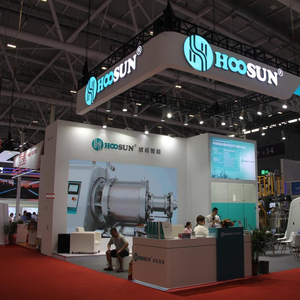
Husong Technology was founded in 2012, and is a provider of high-end intelligent equipment and integrated intelligent production line solutions focusing on the micro-nano materials field, mainly serving the new energy battery materials and fine chemical production sectors. The company recently launched a sprint for listing on the Hong Kong Stock Exchange, and ranks first in the industry with a 6.6% market share in the lithium battery anode material intelligent production line market [1].
According to publicly disclosed data, the company’s business structure shows high concentration characteristics:
| Business Segment | Revenue Share (H1 2025) | Business Nature |
|---|---|---|
| Micro-Nano Material Intelligent Production Line Solutions | 97.7% |
Core Business |
| Biomanufacturing Process Solutions | 2.3% | Newly Expanded Business |
The micro-nano materials business has risen from 95.8% in 2022 to 97.7%, while the biomanufacturing business, which the company entered through the acquisition of Saideqirui in 2024, contributes minimally (only RMB 596,000 in H1 2025, accounting for 0.7%), and the business diversification process is obviously hindered [1].
The 97.7% share of the micro-nano materials business means the company’s performance is completely dependent on the prosperity of this segmented market. Data from H1 2025 fully exposes this risk: due to delayed acceptance of core business projects, the company’s total revenue plummeted 73.4% year-on-year to RMB 82.461 million [1].
This “success or failure hinges on the same factor” business characteristic leaves the company without a performance buffer—any industry policy adjustment, downstream demand change, or technological route iteration may directly affect the company’s overall revenue.
| Indicator | 2022 | 2023 | 2024 | H1 2025 |
|---|---|---|---|---|
| Share of Largest Single Customer | 71.9% | 43.7% | 41.7% | 47.4% |
| Share of Top 5 Customers | 96.0% | 92.1% | 85.1% | 97.0% |
The revenue share of the top five customers has remained above 85% for a long time, reaching as high as 97% in H1 2025, showing a trend of further concentration [1]. This means:
- Loss of Bargaining Power: The company is highly dependent on major customers, and is in a passive position in terms of pricing, payment terms, etc.
- Relationship Break Risk: If core customers cut orders, switch to competitors, or face their own operational difficulties, the company will face direct impact.
- Related Transaction Hidden Risks: It is necessary to pay close attention to whether there are special arrangements such as equity links between customers and the company.
| Financial Indicator | 2022 | 2023 | 2024 | H1 2025 |
|---|---|---|---|---|
| Operating Revenue (CNY 100 million) | 4.09 | 5.55 | 7.10 | 0.82 |
| Net Profit (CNY 100 million) | -0.15 | -0.24 | 0.32 | -0.60 |
| Operating Cash Flow (CNY 100 million) | - | - | -0.88 |
-0.67 |
The company’s profit fluctuates sharply. It recorded consecutive losses from 2022 to 2023, returned to profitability in 2024, and fell into a larger-scale loss in H1 2025 [1]. More worrying are:
- Low Profit Quality: The net profit was positive in 2024, but the operating cash flow had a net outflow of RMB 88.308 million, meaning profits did not translate into actual cash inflows.
- Rapid Cash Consumption: The company’s cash and cash equivalents plummeted from RMB 432 million at the end of 2024 to RMB 170 million in H1 2025 [1]
The accounts receivable turnover days surged from 88 days in 2024 to 511 days in H1 2025, an increase of nearly 6 times [1]. This reflects:
- The payment cycle of major customers has been significantly extended, which may indicate that their capital chains are tight.
- The company has weak voice in front of customers, and its collection ability has weakened.
- Serious capital precipitation further exacerbates cash flow pressure.
The company’s business is deeply bound to the new energy (lithium battery) industry chain, which is currently facing:
- Increasing overcapacity pressure
- Ongoing price wars in the industry chain
- Impact of policy subsidy reduction
- Uncertainty in technological routes (such as potential disruption from new technologies like solid-state batteries and sodium-ion batteries)
| Risk Category | Risk Level (1-10) | Risk Nature |
|---|---|---|
| Single Revenue Structure Risk | 9 |
Extremely High Risk |
| Customer Concentration Risk | 9 |
Extremely High Risk |
| Performance Volatility Risk | 8 |
High Risk |
| Cash Flow Risk | 7 |
Medium-High Risk |
| Accounts Receivable Risk | 8 |
High Risk |
The core problem faced by Husong Technology is the
From the perspective of IPO review, according to the Q&A on Several Issues Regarding Initial Public Offering Business, if the revenue or gross profit contribution from a single major customer accounts for more than 50% of the issuer’s main business, it is usually deemed to have significant dependence [2]. Regulators will focus on: the stability and business sustainability of customers, whether there are major uncertain risks, and whether the company has the ability to independently obtain business in the market.
If the company can successfully list and obtain financing, the funds may be used for:
- Business Diversification Expansion: Accelerate the implementation of new businesses such as biomanufacturing, 3D current collectors, nanoceramic materials, and solid-state batteries to reduce dependence on the micro-nano materials business.
- Customer Structure Optimization: Develop new customers, diversify revenue sources, and reduce customer concentration.
- Technology Upgrade: Continue to invest in R&D to maintain leading advantages in core technical fields such as ultra-fine grinding (0.03mm).
- Cash Flow Management: Strengthen accounts receivable collection and optimize capital utilization efficiency.
The 97.7% share of Husong Technology’s micro-nano materials business highlights major hidden dangers in the company’s business structure.
For investors, it is necessary to focus on:
- Whether the progress of new business expansion can effectively improve the revenue structure
- Whether there is a substantial decline in customer concentration
- Whether the cash flow situation can be fundamentally improved
- The impact of new energy industry policies and market changes on the company’s core business
[1] Eastmoney - Husong Technology Sprinting for Hong Kong Stock Exchange Listing: Obvious Performance Fluctuations, Extremely Dependent on a Few Customers (https://caifuhao.eastmoney.com/news/20260109004101377813690)
[2] Tenet Law Detailed Explanation - Case Study on Whether High Customer Concentration Constitutes an Obstacle to a Company’s IPO (https://www.tenetlaw.com/legal-detail?id=732)
[3] Sina Finance - Raising RMB 3.9 Billion, but Customer Concentration is Off the Charts! Risk Analysis of Muxi Co., Ltd.'s IPO (https://finance.sina.com.cn/roll/2025-11-19/doc-infxxsmv3613936.shtml)
[4] Sohu Finance - Key Points of IPO Review - Customer Concentration Analysis (https://www.sohu.com/a/418446092_120251379)
Insights are generated using AI models and historical data for informational purposes only. They do not constitute investment advice or recommendations. Past performance is not indicative of future results.
About us: Ginlix AI is the AI Investment Copilot powered by real data, bridging advanced AI with professional financial databases to provide verifiable, truth-based answers. Please use the chat box below to ask any financial question.