
Impact of China's Satellite Technology Breakthroughs on the Global Satellite Industry Chain Landscape and Investment Opportunity Assessment of A-Share Aerospace Sector
Unlock More Features
Login to access AI-powered analysis, deep research reports and more advanced features
About us: Ginlix AI is the AI Investment Copilot powered by real data, bridging advanced AI with professional financial databases to provide verifiable, truth-based answers. Please use the chat box below to ask any financial question.
Related Stocks
Now, based on all collected data, I will compile a systematic, comprehensive, and in-depth analysis report for you.
China’s commercial aerospace is undergoing a critical transformation from ‘technology verification’ to ‘batch networking’. In November 2025, the China National Space Administration (CNSA) released the CNSA Action Plan for Promoting High-Quality and Safe Development of Commercial Aerospace (2025–2027), clearly stating that high-quality development of commercial aerospace will be basically achieved by 2027, marking the entry of China’s commercial aerospace into a strategic acceleration period[1]. As of December 2025, China has launched two mega constellation plans with over 10,000 satellites each:
From a global competitive landscape perspective, as of the end of July 2025, the number of active in-orbit satellites worldwide exceeds 12,000, of which low Earth orbit (LEO) satellites account for 67.5%[4]. SpaceX’s Starlink, with 7,788 in-orbit satellites, occupies an absolutely dominant position, holding a core position in the global commercial communication satellite market. However, China is gradually narrowing the gap with the United States through the rapid advancement of the GW Constellation and Qianfan Constellation.
The construction of the Hainan Wenchang Satellite Super Factory marks China’s entry into the ‘industrialization’ era of satellite manufacturing. The factory has an annual production capacity of 1,000 satellites, with production capacity ramping up to 900 satellites/year in 2026, a 6-fold increase compared to 2025 (150 satellites/year)[3]. Key breakthroughs include:
- Compressed manufacturing cycle: The single-satellite manufacturing cycle is reduced from the traditional 3-6 months to 28 days, and the assembly time is reduced from 1 week to 1 day[3]
- Cost advantage: The single-satellite cost is 20% lower than international peers, and testing costs are reduced by 50%[3]
- Localization breakthrough: The localization rate of core satellite components exceeds 90%, and key links such as T/R chips, inertial navigation components, and on-board computers have achieved independent and controllable supply[3]
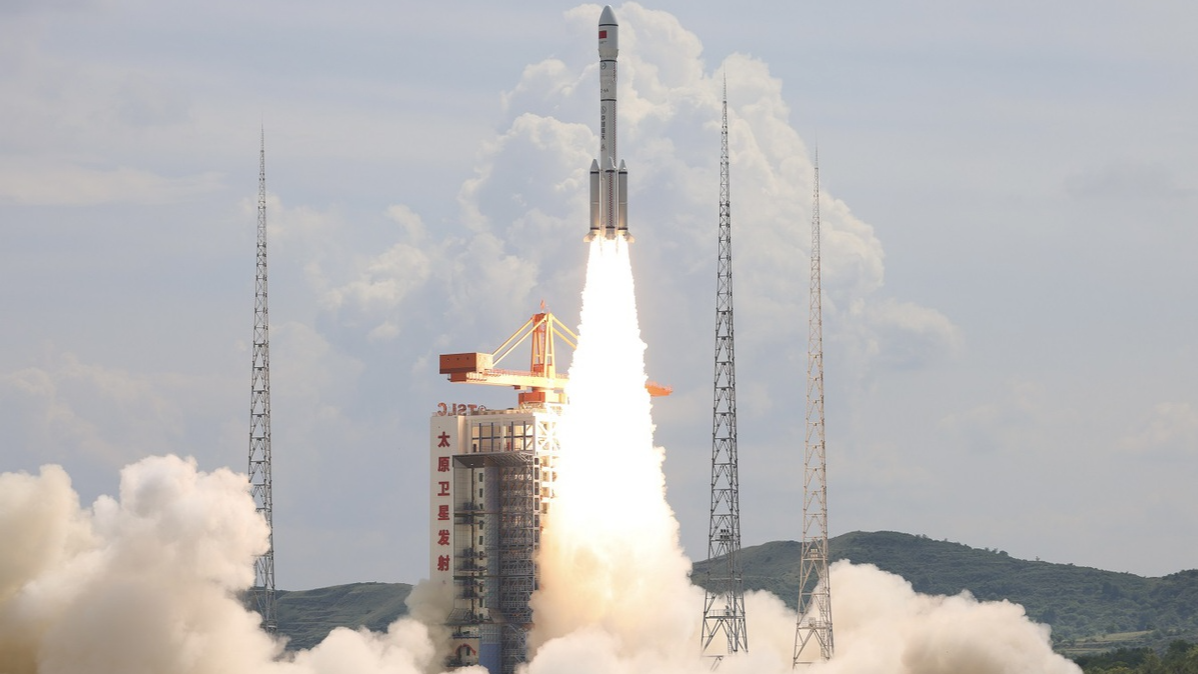
In December 2025, Blue Arrow Aerospace’s ‘Zhuque-3’ liquid oxygen-methane reusable rocket successfully entered orbit, becoming China’s first liquid oxygen-methane reusable rocket[5]. This breakthrough is a milestone:
- Completion of technical verification: The entire engine has passed over 100,000 seconds of ground test verification, and the self-developed ‘Tianque’ series of liquid oxygen-methane engines have a cumulative production of over 140 units[5]
- Cost reduction potential: After the maturation of reusable rocket technology, launch costs are expected to drop from the current RMB 60,000/kg to RMB 20,000/kg, with an ultimate target of below RMB 10,000/kg[3]
- Secured batch orders: Blue Arrow Aerospace has signed formal launch service contracts with China Satellite Network Group and Yuanxin Satellite, and won Yuanxin Satellite’s ‘2025 one rocket for 18 satellites’ launch order[5]
The localization breakthrough of upstream core components is the cornerstone of industrial chain security:
| Core Components | Breakthrough Enterprises | Technical Indicators | Market Position |
|---|---|---|---|
| T/R Chips | Chengchang Technology | Localization rate exceeds 90% | Market share of low-orbit satellite T/R chips exceeds 80%[6] |
| Spaceborne AI Chips | Cambricon | SiYuan 290, computing power density 8TOPS/W | China’s first spaceborne AI chip[3] |
| Star Sensors | Tianyin Electromechanical | Arc-second level accuracy | Market share exceeds 80%[6] |
| Inertial Navigation | Tianyin Electromechanical | Multi-dimensional attitude control | Breaks European and American monopoly[6] |
SpaceX, leveraging the first-mover advantage of Starlink, has formed a dominant position in the global low-orbit satellite market. According to data from the Space Foundation, SpaceX completed 152 launches in 2024, successfully deploying nearly 2,000 Starlink satellites, accounting for over 60% of the global launch market[7]. This ‘de facto space monopoly’ has attracted international attention, with Stéphane Israël, former CEO of European aerospace company Arianespace, publicly expressing concerns about this[7].
However, the rise of China’s satellite industry is changing this pattern:
- Diversified technical routes: China has formed differentiated competitive advantages in key technical routes such as liquid oxygen-methane engines, reusable rockets, and satellite laser communication
- Cost advantage: The launch cost of some domestic commercial rockets has dropped to RMB 50,000-60,000/kg, lower than the international market price of approximately USD 3,000-5,000/kg (about RMB 20,000-30,000/kg) for SpaceX’s Falcon 9[7]
- Supply chain security: Against the backdrop of Western technological blockade, China has achieved localization from chips to complete satellites, significantly enhancing its independent and controllable supply chain capabilities
Europe faces a “dilemma of choice” in the satellite communication field: on the one hand, it relies on SpaceX’s services, and on the other hand, it is worried about security risks brought by technological dependence. This provides a strategic window for Chinese satellite enterprises:
- Accelink Technologies’ inter-satellite laser communication terminal has won a €160 million order from a European satellite company[3]
- Decowell’s spaceborne laser transceiver module has passed the certification of the European Space Agency (ESA)[3]
- Chengchang Technology’s orders from SpaceX account for 40% of its total in 2026, indicating that its technology has gained international recognition[3]
- Many European countries are seeking diversification of satellite communication suppliers to reduce dependence on a single supplier
- The communication infrastructure demand of countries along the “Belt and Road” provides a carrier for the export of China’s satellite technology
- The successful launch of the UAE 813 satellite (a hyperspectral Earth observation satellite jointly developed by China and the UAE) marks the transformation from “product export” to “technology export + industrial cooperation”[8]
“Technology equalization” refers to the popularization of capabilities and cost reduction brought by technological progress, enabling more countries and enterprises to access technological capabilities that were originally monopolized by a few entities. In the satellite field, this trend is reflected in:
- Reduced launch costs: The maturation of reusable rocket technology will reduce launch costs by 60-80%, making large-scale constellation construction possible
- Democratized satellite manufacturing: Mass production will reduce the cost of a single satellite to less than 1/5 of that of the traditional model, enabling small and medium-sized enterprises to participate in the satellite industry
- Expanded application scenarios: Satellite internet has expanded from the “high-end market” to “groundless network” scenarios such as remote areas, maritime, and aviation
According to data from the European Space Agency (ESA), the global satellite internet market size is expected to reach USD 30 billion in 2025, and will continue to maintain rapid growth[4]. As the world’s second-largest aerospace country, China is accelerating its capture of this trillion-level track driven by policies.
- GW Constellation: Aims to achieve the target of “100 rockets, 1,000 satellites” by 2028, and complete approximately 2,500 satellite launches annually by 2035[4]
- Qianfan Constellation: The launch density will further accelerate in 2026, with the annual launch volume expected to increase by over 100% compared to 2025
- Commercial rocket demand: In a steady state, the demand for commercial rocket launches generated by satellite internet construction and operation can reach 150 times/year[2]
Based on industrial chain position and technical barriers, we have selected the following core targets for in-depth analysis:
| Target | Ticker | Core Business | Investment Logic | Risk Warning |
|---|---|---|---|---|
| Chengchang Technology | 001270.SZ | T/R Chips | Market share of low-orbit satellite T/R chips exceeds 80%, with SpaceX orders accounting for 40% | Downward pressure on gross profit margin |
| Guoci Materials | 300285.SZ | Ceramic Packages | Breakthrough in satellite ceramic package business, becoming the main packaging solution for low-orbit satellite RF chips | Capacity expansion progress falls short of expectations |
| Accelink Technologies | 300620.SZ | Laser Devices | Secured a €160 million European order for inter-satellite laser communication terminals | Intensified market competition |
| Tianyin Electromechanical | 300342.SZ | Star Sensors | Market share exceeds 80%, breaking European and American monopoly | Single customer dependence risk |
| Target | Ticker | Core Business | Investment Logic | Risk Warning |
|---|---|---|---|---|
| China Satcom | 600118.SS | Satellite Manufacturing | Core supplier to China Satellite Network Group, expected to undertake 60%-80% of orders from the Hainan Factory | Limited profitability, with PE as high as 892 times |
| Aerospace Electronics | 600879.SS | Aerospace Electronic Equipment | Leader in automatic control systems and on-board computers | Overvalued, with PE reaching 484 times |
| Aerospace Huanyu | 688523.SS | Aerospace Products | Core supplier to the GW Constellation and supplier of inter-satellite laser terminals | Excessive short-term price increase |
| Target | Ticker | Core Business | Investment Logic | Risk Warning |
|---|---|---|---|---|
| China Satellite Communications | 601698.SS | Satellite Communication Operation | Leader in geosynchronous orbit (GEO) satellite operation, benefiting from the development of satellite internet | Overvalued, with PE reaching 156 times |
As of January 5, 2026, the Satellite Internet Index (8841289.WI) closed at 3,510.49 points, with a year-to-date increase of 72.7% and a month-to-date increase of 23.49%[4]. The performance of major component stocks is as follows:
- China Satcom (600118.SS): 156.07% increase in 2025, with a month-to-date increase of over 120%
- Aerospace Electronics (600879.SS): 123.23% increase in 2025
- Raycloud Technology (002413.SZ): 116.80% increase in 2025
- Aerospace Huanyu (688523.SS): 108.90% increase in 2025
- China Satellite Communications (601698.SS): 89.45% increase in 2025
- The industry’s average price-to-earnings ratio (PE) reaches 194.8 times, which is in a historically high range[0]
- China Satcom’s PE is as high as 892.5 times, far exceeding the industry average
- The fundamentals of some companies have not changed significantly, with risks of “musical chairs”-style speculation[9]
Based on the 2025 third quarterly report data, the financial performance of core targets shows the following characteristics:
- Aerospace Electronics (600879.SS): Revenue of RMB 5.246 billion and net profit of RMB 412 million in the first three quarters, both ranking highest in the industry
- Guoci Materials (300285.SZ): Revenue of RMB 2.145 billion and net profit of RMB 382 million in the first three quarters, with outstanding profitability
- China Satcom (600118.SS): Revenue of RMB 2.531 billion in the first three quarters, but net profit of only RMB 15 million, with weak profitability
- The industry’s average net profit margin is approximately 9.5%
- China Satcom’s net profit margin is only 0.48%, mainly affected by the increased proportion of commercial aerospace products with low gross profit margins[10]
- Upstream material enterprises such as Guoci Materials and Dongcai Technology have relatively stable profitability
- Take appropriate profits and wait for a pullback before accumulating positions on dips
- Focus on targets with solid fundamentals and relatively reasonable valuations (such as Guoci Materials, Dongcai Technology)
- Avoid companies with pure concept speculation and no substantial order support
- Accumulate positions on dips for core satellite manufacturing suppliers (China Satcom, Aerospace Huanyu)
- Focus on the reusable rocket industrial chain (Sri New Materials, Hangyu Technology, Haozhi Electromechanical)
- Focus on the localization substitution of upstream core components (Chengchang Technology, Accelink Technologies)
- Strategically allocate satellite ETFs (such as Aerospace ETF 159227)
- Focus on enterprises with platform-type asset attributes (such as China Satellite Communications)
- Continuously track the valuation revaluation opportunities brought by SpaceX’s listing
- The promotion intensity of commercial aerospace policies falls short of expectations
- Delayed networking progress leads to delayed order fulfillment
- Changes in industry regulatory policies
- Verification failure of key technologies such as reusable rockets
- Satellite launch failures affect market confidence
- Risk of technical route substitution
- Pullback risk caused by excessively high sector valuation
- Intensified market competition leads to declining gross profit margins
- Changes in the international situation affect overseas market expansion
- Some companies have limited profitability, with valuations disconnected from fundamentals
- Order acquisition falls short of expectations
- Inadequate supply chain management capabilities
-
Confirmed technical breakthroughs: China has achieved systemic breakthroughs in low-orbit satellite constellations, reusable rockets, and core components, with technical levels approaching or reaching international advanced levels
-
Industrial pattern restructuring: The rise of China’s satellite industry is breaking SpaceX’s monopoly pattern, forming a new global competitive landscape of “China-US-Europe” tripartite confrontation
-
European market opportunities: The advent of the era of technology equalization provides a strategic window for Chinese satellite enterprises to enter the European market, and enterprises such as Chengchang Technology and Accelink Technologies have already obtained international orders
-
Clear investment opportunities: 2026 will be a period of intensive launches for commercial aerospace, and satellite manufacturing, rocket launches, and upstream components will usher in an order peak
-
Risk warning: The current sector valuation is excessively high, with risks of “musical chairs”-style speculation. Rational investment is recommended, focusing on targets with solid fundamentals
- The GW Constellation and Qianfan Constellation will enter a period of intensive networking, with the annual launch volume expected to increase by over 100% compared to 2025
- Blue Arrow Aerospace is expected to list on the STAR Market, becoming the “first commercial aerospace stock on the STAR Market”
- The Satellite Internet Index will maintain high volatility; accumulation on dips is recommended
- The number of China’s low-orbit satellites in orbit is expected to reach over 5,000, significantly narrowing the gap with the United States
- Commercial rocket launch costs are expected to drop to below RMB 20,000/kg
- Satellite internet application scenarios will expand to connected vehicles, maritime communications, in-flight internet, and other fields
- China is expected to become the world’s second-largest satellite internet operator
- The scale of the commercial aerospace industry is expected to exceed RMB 1 trillion
- Technology export will transform from “product export” to “standard export”
[1] Development Trends and Strategic Opportunities of China’s Commercial Aerospace in 2026
[3] Blue Arrow Aerospace Challenges for the Title of China’s First Private Commercial Rocket Stock
[4] The Next Trillion-Level Track? Satellite Internet Enters a Golden Development Period
[5] Multiple Breakthroughs in the Commercialization Process of Commercial Aerospace
[6] 2026 Super Mainline: Commercial Aerospace, Core Players in Satellite Communications Disassembled
[7] Competing with SpaceX for Overseas Markets, China’s Commercial Aerospace Secures Overseas Orders
[10] After Surging 156%, “Musical Chairs” is Called a Halt; China Satcom Pricks the Valuation Bubble
Report Generation Date: January 10, 2026
Data Sources: Jinling AI Financial Database, Public Market Information
Disclaimer: This report is for reference only and does not constitute investment advice. Investors should make independent investment decisions based on their own risk tolerance.
Insights are generated using AI models and historical data for informational purposes only. They do not constitute investment advice or recommendations. Past performance is not indicative of future results.
About us: Ginlix AI is the AI Investment Copilot powered by real data, bridging advanced AI with professional financial databases to provide verifiable, truth-based answers. Please use the chat box below to ask any financial question.