
In-Depth Analysis Report on Investment Timing and Technical Routes of the Brain-Computer Interface Track
Unlock More Features
Login to access AI-powered analysis, deep research reports and more advanced features
About us: Ginlix AI is the AI Investment Copilot powered by real data, bridging advanced AI with professional financial databases to provide verifiable, truth-based answers. Please use the chat box below to ask any financial question.
Related Stocks
Based on the above in-depth research and professional analysis, we now provide you with a complete investment analysis report on the brain-computer interface track:
According to a comprehensive weighted assessment of seven dimensions: policy support, technological maturity, commercialization certainty, market space, competitive landscape, valuation rationality, and liquidity risk, the current comprehensive score of the brain-computer interface track is
| Evaluation Dimension | Score (1-10) | Weight | Evaluation |
|---|---|---|---|
| Policy Support | 9 | 15% | Included in the 15th Five-Year Plan + Special Implementation Opinions |
| Technological Maturity | 6 | 20% | Breakthrough phase, accelerated clinical verification |
| Commercialization Certainty | 4 | 25% | Early stage, only 1 product approved |
| Market Space | 9 | 15% | Trillion-level market potential |
| Competitive Landscape | 5 | 10% | Head concentration, long-tail dispersion |
| Valuation Rationality | 4 | 10% | Valuation of concept stocks is relatively high |
| Liquidity Risk | 6 | 5% | Liquidity constrained for unlisted companies |
| Year | Global Market Size | Chinese Market Size | Medical Application Proportion |
|---|---|---|---|
| 2025E | USD 1.27 billion | RMB 3.5 billion | 56% |
| 2026E | USD 1.40 billion | RMB 5.2 billion | 55% |
| 2027E | USD 1.55 billion | RMB 8.0 billion | 54% |
| 2028E | USD 1.72 billion | RMB 20 billion | 52% |
| 2029E | USD 1.90 billion | RMB 35 billion | 50% |
| 2030E | USD 2.11 billion | RMB 50 billion | 48% |
According to data from Mordor Intelligence, the compound annual growth rate (CAGR) of the global brain-computer interface market from 2025 to 2030 is expected to be
- Serious Medical Field: Potential market size of USD 15-85 billion, covering severe treatments such as amyotrophic lateral sclerosis (ALS), spinal cord injury, and stroke rehabilitation[6]
- Consumer Medical Field: Potential size of USD 25-60 billion, including consumer-grade applications such as health monitoring, sleep management, and cognitive enhancement[6]
- Long-term Market Space: Morgan Stanley predicts that the global market size is expected to reachUSD 320 billionby 2045[4]
| Dimension | Non-Invasive | Semi-Invasive | Invasive |
|---|---|---|---|
Signal Quality |
Medium (easily interfered by skull) | High | Highest |
Safety |
High (non-invasive) | Medium | Low (requires craniotomy) |
Development Cycle |
1-2 years | 2-3 years | 3-5 years |
Clinical Threshold |
Low | Medium | High |
Regulatory Approval |
Class II/III medical devices | Class III medical devices | Class III innovative medical devices |
Single Case Cost |
Thousands to tens of thousands of RMB | Hundreds of thousands of RMB | Millions of RMB |
Applicable Scenarios |
Rehabilitation training/consumer electronics | Stroke rehabilitation/epilepsy treatment | Paralysis/ALS treatment |
Commercialization Progress |
Already in large-scale sales | In clinical verification | Sprinting for registration |
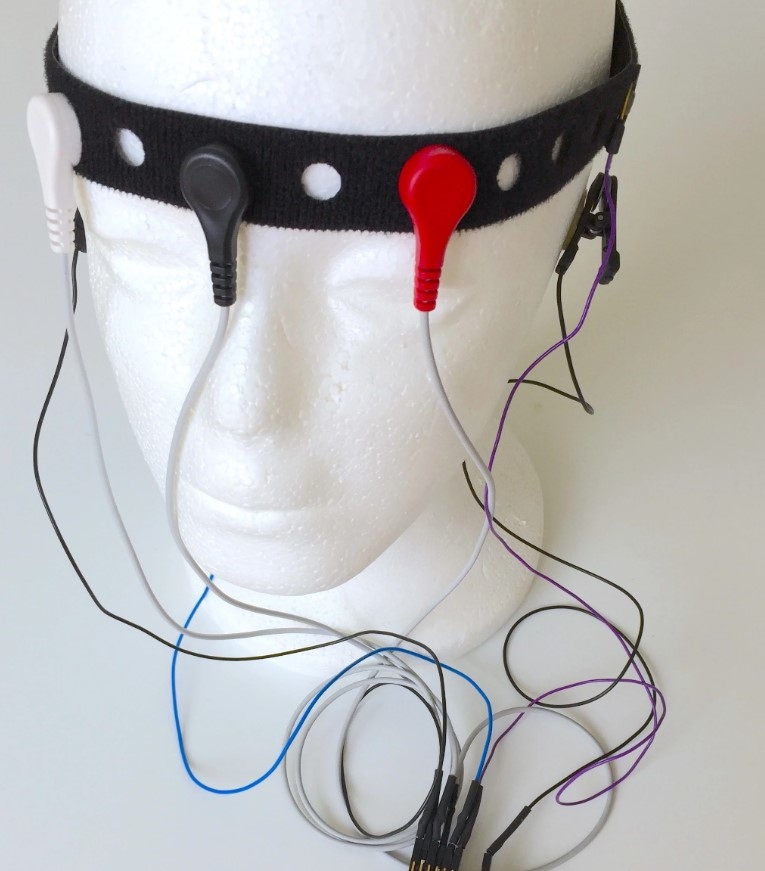
Advantages:
- Clear commercialization path, multiple products already on the market[7]
- Relatively simple regulatory approval, short cycle
- Low cost, can be scaled up quickly
- Large imagination space for consumer scenarios (games, education, sleep)
Limitations:
- Relatively low technical barriers, fierce competition
- Signal quality limits application in serious medical fields
- Obvious ceiling, difficult to replace the effect of invasive routes
Representative Enterprises: BrainCo (non-invasive leader, valuation of USD 1.3 billion, intelligent bionic hand has obtained FDA certification), Xiangyu Medical (entered over 500 top-tier hospitals)[8][9]
Advantages:
- Highest technical barriers, deepest moat
- Targets the rigid demand market for severe diseases, strong willingness to pay
- Once a breakthrough is achieved, huge room for valuation improvement
- Great synergy potential with AI and humanoid robots
Limitations:
- Long clinical trial cycle, high failure risk
- Strict regulatory approval (3-5 years)
- Safety issues (immune rejection, signal attenuation)
- Slow commercialization pace
Representative Enterprises: Neuralink (valuation of USD 9 billion, mass production plan in 2026), Boruikang (NEO product sprinting for registration), Naohu Technology (completed 54 clinical trials), Jieti Medical (RMB 350 million Series B financing)[3][10][11]
| Evaluation Dimension | Non-Invasive | Semi-Invasive | Invasive |
|---|---|---|---|
| Technical Barriers | 6/10 | 7/10 | 9/10 |
| Market Space | 7/10 | 6/10 | 9/10 |
| Commercialization Certainty | 8/10 | 6/10 | 4/10 |
| Policy Support | 9/10 | 8/10 | 9/10 |
| Competition Intensity | 8/10 (fierce) | 5/10 | 4/10 |
| Valuation Premium | 5/10 | 6/10 | 8/10 |
Comprehensive Score |
7.2/10 |
6.3/10 |
7.2/10 |
Upstream (25%)     Midstream (50%)      Downstream (25%)
  Chips/Electrodes → Devices/Algorithms →  Medical/Consumer
| Company | Core Capability | Technical Highlights |
|---|---|---|
| Guide Infrared | Chips | Self-developed 65,000-channel bidirectional BCI chip, internationally leading |
| Fudan Microelectronics | Chips | Low-noise neural signal acquisition chip, over 50 patents |
| Hanwei Technology | Electrodes | Subsidiary Suzhou Nengsida develops 0.1mm ultra-flexible electrodes |
| Guanhao Biosciences | Materials | Biocompatible dural patch, used for implantation protection |
| Company | Position | Key Progress |
|---|---|---|
| iFLYTEK | AI Algorithm Leader | 92% accuracy in BCI signal decoding, ALS communication device has been deployed in top-tier hospitals |
| Yanshan Technology | Full Industrial Chain | Non-invasive latency is only 60ms, performance exceeds early versions of Neuralink |
| Chengyitong | System Integration | Simultaneously lays out non-invasive and invasive routes, launches neural rehabilitation prototype |
| Company | Business | Progress |
|---|---|---|
| Sanbo Brain Hospital | Medical Services | 7 specialized neural hospitals nationwide, completes over 200 BCI surgeries annually |
| Innolife Healthcare | Rehabilitation Equipment | Holds shares in Boling BCI, C-end product experience launched |
| Company | Code | Technical Route | Commercialization Progress | Investment Rating |
|---|---|---|---|---|
BrainCo |
Unlisted | Non-Invasive | Mass production of intelligent bionic hand / planning to go public | ★★★★★ |
Boruikang |
Unlisted | Semi-Invasive | NEO sprinting for registration | ★★★★☆ |
Jieti Medical |
Unlisted | Invasive | RMB 350 million Series B financing / first clinical case | ★★★★☆ |
Naohu Technology |
Unlisted | Invasive | 54 clinical trials completed | ★★★★☆ |
Xiangyu Medical |
688626.SH | Non-Invasive | Entered over 500 top-tier hospitals | ★★★☆☆ |
Innolife Healthcare |
002173.SZ | Non-Invasive | C-end product experience launched | ★★★☆☆ |
Sanbo Brain Hospital |
301293.SZ | Medical Services | Mature DBS surgery | ★★☆☆☆ |
- BrainCo(Unlisted): Absolute leader in non-invasive route, valuation of USD 1.3 billion, intelligent bionic hand has obtained FDA/CE certification, planning to list on STAR Market/Hong Kong Stock Exchange[8]
- Boruikang/Jieti Medical(To be listed): Core targets in invasive route, leading clinical progress, high technical barriers
- Xiangyu Medical(688626.SH): Leader in non-invasive rehabilitation equipment, entered over 500 top-tier hospitals, target to cover over 1,000 hospitals by 2026[9]
- Innolife Healthcare(002173.SZ): Holds 68% shares in Boling BCI, C-end product experience launched
| Indicator | Current Status | Early Warning Threshold |
|---|---|---|
| Neuralink Mass Production Progress | 2026 mass production plan | Early warning if delayed by >6 months |
| Domestic Clinical Trial Progress | 54 clinical trials completed | Early warning if suspended for >3 months |
| NMPA Registration Certificate Approval | Only 1 product (Jingyu Medical DBS) | Early warning if no new approvals within 1 year |
| Financing of Leading Enterprises | RMB 2 billion financing for BrainCo | Early warning if no large-scale financing within 6 months |
| Concept Stock Market Value/R&D Ratio | Relatively high | Early warning if >50x |
- Technical Uncertainty: Issues such as long-term signal stability, immune rejection, and material degradation have not been fully resolved[5]
- Long Regulatory Cycle: Medical device registration usually takes 3-5 years, with risks of Phase III clinical failure[12]
- Slow Commercialization Pace: User acceptance and pricing strategies of consumer-grade products remain to be verified[12]
- Valuation Bubble Risk: Market value of concept stocks has fully reflected optimistic expectations, Innolife Healthcare’s P/E ratio exceeds 180x[12]
- Liquidity Risk: Most leading enterprises are unlisted, and secondary market targets mostly “ride the concept” with small business proportions[13]
- Technical Route Risk: Large differences in commercialization pace between non-invasive and invasive routes, requiring precise differentiation in investment[13]
- Regulatory Risk: Shanghai Stock Exchange has issued regulatory warnings to companies like Yahuilong and Injoinic for inaccurate information disclosure on BCI businesses[13]
| Strategy | Suitable Investors | Expected Return | Risk Level |
|---|---|---|---|
| Core Allocation | High-risk preference | 5-10x | High |
| Satellite Allocation | Stable type | 2-3x | Medium |
| Wait and See | Conservative type | 1-2x | Low |
The brain-computer interface track is currently at a critical turning point from “laboratory” to “clinical practice”, and 2026 is regarded as the first year of commercialization.
- Short-term (2026):Thematic investment heat continues, but need to be vigilant against valuation correction risks
- Medium-term (2027-2028):The first batch of invasive products is expected to be approved, entering the business model verification period
- Long-term (after 2029):If technical breakthroughs are successful, the industry is expected to enter a high-growth period
- Pursue Certainty:Prioritize non-invasive routes, focus on targets that have achieved commercialization
- Pursue High Elasticity:Lay out core targets in invasive routes, but need to be prepared for long-term holding
- Portfolio Allocation:Adopt a combined allocation of “non-invasive + invasive” routes to balance certainty and elasticity
[1] Caifuhao - “Understand Brain-Computer Interface in One Article: The Trend is Coming, Musk Announces Mass Production” (https://caifuhao.eastmoney.com/news/20260105190858543721620)
[2] Caifuhao - “Understand the Brain-Computer Interface Industrial Chain in One Look” (https://caifuhao.eastmoney.com/news/20260106184351548951800)
[3] 21st Century Business Herald - “Brain-Computer Interface Competition Begins, Multiple Companies Reserve 2026 Milestones” (https://www.21jingji.com/article/20260107/herald/8669a887e0b4f05d09ea4897902ec42f.html)
[4] Wall Street CN - “Musk Releases Mass Production Schedule, Brain-Computer Interface Stocks Surge Across the Board” (https://wallstreetcn.com/articles/3762545)
[5] Sina Finance - “After Successful Clinical Trials, Brain-Computer Interface Begins to Answer Commercialization Questions” (https://finance.sina.com.cn/tech/roll/2025-12-18/doc-inhcetxr6539570.shtml)
[6] Securities Times - “Musk’s Mass Production Declaration Ignites the Market, Brain-Computer Interface Commercialization Accelerates” (https://www.stcn.com/article/detail/3572633.html)
[7] Huxiu - “Financing Trap of Brain-Computer Interface: The Paradox of RMB 5 Billion Financing and Zero Listed Products” (https://www.huxiu.com/article/4823816.html)
[8] Pedaily - “Brain-Computer Interface: Old Shares Are Snapped Up Madly” (https://news.pedaily.cn/202601/559607.shtml)
[9] OFweek - “RMB 2 Billion! Harvard PhD Leads China’s Brain-Computer Interface Unicorn” (https://m.ofweek.com/medical/2026-01/ART-11111-8120-30678602.html)
[10] Securities Times Network - “A-Share: Dense Announcements! Brain-Computer Interface: Breaking News” (https://stcn.com/article/detail/3575120.html)
[11] Jiemian - “Brain-Computer Interface Concept Stocks Issue Batch Risk Warnings” (https://m.jiemian.com/article/13853780.html)
[12] Securities Times - “Shanghai Stock Exchange Takes Action Late at Night! Two STAR Market Companies Receive Regulatory Warnings” (https://www.stcn.com/article/detail/3577286.html)
[13] Deloitte China - “2026 Economic and Industry Outlook” (https://www.deloitte.com/cn/zh/our-thinking/research//issue101.html)
Report Generation Time: January 10, 2026
Data Source: Jinling AI Financial Database, Compilation of Public Online Information
Disclaimer: This report is for reference only and does not constitute investment advice. Investment involves risks, and you should be cautious when entering the market.
Insights are generated using AI models and historical data for informational purposes only. They do not constitute investment advice or recommendations. Past performance is not indicative of future results.
About us: Ginlix AI is the AI Investment Copilot powered by real data, bridging advanced AI with professional financial databases to provide verifiable, truth-based answers. Please use the chat box below to ask any financial question.