
Hong Kong IPOs of Zhipu AI and MiniMax: Analysis of Drivers Behind High Valuations and Oversubscriptions
Unlock More Features
Login to access AI-powered analysis, deep research reports and more advanced features
About us: Ginlix AI is the AI Investment Copilot powered by real data, bridging advanced AI with professional financial databases to provide verifiable, truth-based answers. Please use the chat box below to ask any financial question.
Related Stocks
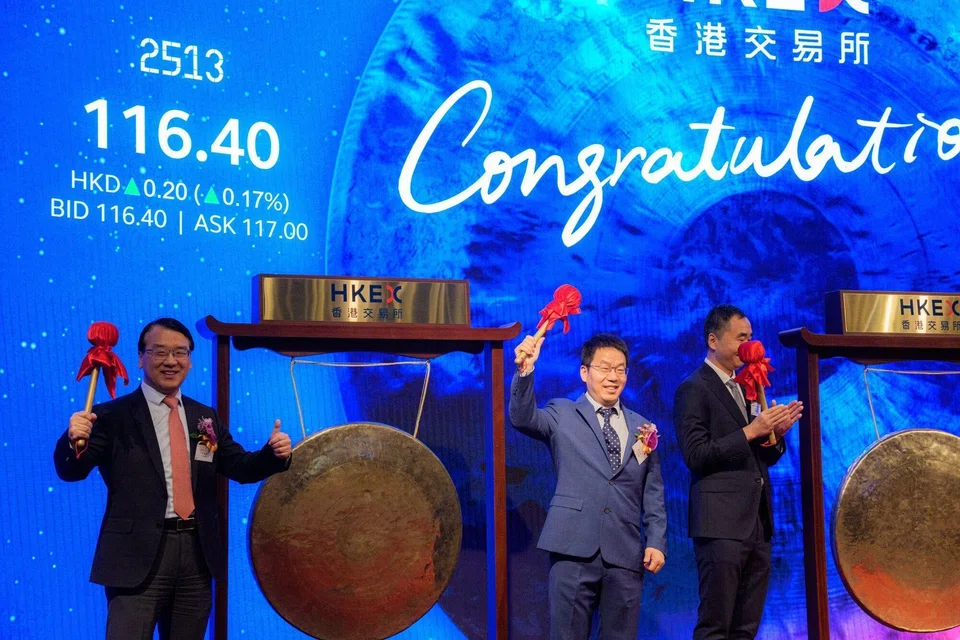
From January 8 to 9, 2026, Zhipu AI (02513.HK) and MiniMax (0100.HK), the two earliest established companies among China’s “Six Tigers of Large Models”, listed on the Hong Kong Stock Exchange (HKEX) successively. With market capitalizations of HK$57 billion and HK$71.9 billion respectively, they became the “world’s first large model stock” and “Hong Kong’s first AI large model stock”[1][2]. Both companies received over 1,000 times oversubscription in their public offerings: Zhipu AI reached 1,159 times, while MiniMax hit 1,209-1,837 times, with margin financing funds approaching HK$197.8 billion and HK$253.3 billion respectively[1][3]. This phenomenal IPO frenzy marks the official start of the era of large-scale secondary market fundraising for Chinese AI enterprises.


According to a report by Frost & Sullivan, the size of China’s large language model market reached 5.3 billion yuan in 2024, with institutional clients contributing 4.7 billion yuan and individual clients contributing 600 million yuan[8]. The market size is projected to grow to 101.1 billion yuan by 2030, representing a compound annual growth rate (CAGR) of 63.5% from 2024 to 2030; among this, the enterprise-level large model market is expected to reach 90.4 billion yuan, accounting for approximately 90% of the total, and remains the core driver of market growth[8][9]. This growth expectation provides solid fundamental support for the high valuations of AI companies.
The liquidity of the Hong Kong stock market improved significantly in 2025, with the average daily turnover reaching HK$255.8 billion in the first 11 months, a year-on-year increase of approximately 95%[5]. Long-term international capital has continued to flow back into the Chinese market, and investor interest in AI concept stocks has continued to rise in early 2026. Analysts pointed out that investors have shifted to Chinese AI stocks due to concerns about the US AI bubble, while also being driven by expectations of favorable policies for the industry from the Chinese government[10].
The US Holding Foreign Companies Accountable Act has continued to pressure the VIE (Variable Interest Entity) structure of Chinese concept stocks. In February 2025, the America First Investment Policy further required stricter scrutiny of financial audit standards for Chinese concept stocks, and NASDAQ proposed tightening listing standards for Chinese concept stocks[7]. Against this backdrop, Hong Kong stocks have become the preferred destination for Chinese enterprises to list overseas, with institutional advantages and geopolitical security forming dual attractions.

| Dimension | Zhipu AI | MiniMax |
|---|---|---|
Business Path |
B-end/G-end ecosystem construction, MaaS platform | C-end hit products, multi-modal applications |
Core Advantages |
Self-controllable GLM architecture, open-source ecosystem | Global layout, 212 million users |
Cumulative Fundraising |
Over 8.3 billion yuan | Over US$1.5 billion |
Shareholder Composition |
Meituan, Ant Group, Alibaba, Tencent, State-owned Capital | Alibaba, miHoYo, Tencent, Shanghai State-owned Capital |
R&D Investment |
1.595 billion yuan in H1 2025 | Sustained high-intensity investment |
Cash Reserves |
Approximately 8.94 billion yuan as of October 2025 | Over US$1.1 billion as of September 2025 |
- Make full use of the pre-communication mechanism of the “Tech Enterprise Fast Track” to resolve rule applicability issues in advance
- Meet R&D investment ratio requirements (no less than 15% for commercialized companies, 30%-50% for non-commercialized companies)
- Introduce eligible leading senior independent investors (holding at least 10% of shares in total or investing at least HK$1.5 billion)
- Consider submitting applications in confidential form to protect trade secrets
- Demonstrate scalable business models (MaaS, API subscriptions, C-end product monetization, etc.)
- Establish differentiated competitive advantages (technical routes, application scenarios, customer resources)
- Show clear profit paths (gross margin improvement, user retention, average revenue per user (ARPU) increase)
- Build a stable and repeat-purchase customer base (annual recurring revenue (ARR) from institutional clients)
- Pay attention to changes in market sentiment and choose an appropriate IPO timing
- Introduce diversified cornerstone investors (industrial capital, long-term funds, state-owned capital)
- Set a reasonable offering price range to balance primary market valuation and secondary market liquidity
- Reserve the “greenshoe” mechanism to stabilize stock price performance after listing
- Persist in R&D of pre-trained foundation large models (independent and controllable technology)
- Have clear commercialization paths and revenue growth
- Possess differentiated technical routes or application scenarios
- Receive continuous support from leading institutions or industrial capital
- Actively expand overseas developer ecosystems and API calls
- Establish global influence through open-source strategies
- Use Hong Kong listings to attract long-term international capital
- Pay attention to international compliance requirements to lay a foundation for future overseas expansion
| Risk Type | Specific Manifestations |
|---|---|
Valuation Risk |
High valuations are based on high growth expectations; if commercialization falls short of expectations, stock prices may fluctuate sharply |
Competition Risk |
Internet giants (Alibaba, ByteDance, Tencent) have fully entered the market, compressing the survival space of startups |
Technological Risk |
Large model technology iterates rapidly; wrong choices of technical routes may lead to loss of competitiveness |
Regulatory Risk |
Uncertainty in AI regulatory policies may affect business expansion and overseas layout |
Liquidity Risk |
If the liquidity of the Hong Kong stock market declines, it may affect subsequent IPO pricing and trading activity |
The Hong Kong listings of Zhipu AI and MiniMax are milestone events in the development history of China’s AI industry. The core drivers of their high valuations and oversubscriptions can be summarized as:
For subsequent Chinese AI companies listing in Hong Kong, they should focus on the following points:
[1] Securities Times - 1,000x Oversubscription Becomes the Norm, Hong Kong AI New Stocks Ignite Capital Frenzy
[2] Caixin - MiniMax Opens 42.67% Higher on Debut, Valued at HK$71.9 Billion
[3] The Paper - MiniMax’s Public Offering Receives 1,209x Oversubscription
[4] Wall Street CN - HKEX Doesn’t Have Enough Gongs for IPOs
[5] Sina Finance - 2025 Hong Kong IPO Year Concludes
[6] AllBright Law Offices - The Team of HKEX Chapter 18C Enterprises Continues to Grow
[7] Zhong Lun Law Firm - HKEX Launches Tech Enterprise Fast Track to Support Tech Companies’ Listings
[8] HKEX Announcement - Industry Overview PDF
[9] 36Kr - Chinese Companies Targeted by OpenAI
[10] Wall Street CN - CICC Hong Kong Stock Market Outlook
[11] Pedaily - A Comprehensive Guide to Zhipu AI’s Listing
[12] OFweek - Competition for Hong Kong’s First AI Large Model Stock
[13] AIbase - Conclusion of MiniMax’s Hong Kong IPO
[14] Securities Times - Over 460 Institutions Scramble for MiniMax Ahead of Its Listing Tomorrow
[15] Securities Times - Hong Kong IPOs of Zhipu AI and MiniMax
[16] Securities Times - The World’s First Large Model Stock Lists in Hong Kong
[17] DeepView - How Good Are the Six AI Tigers?
[18] Xinhua News - Rising Tech Content Expands the Team of HKEX Chapter 18C Enterprises
[19] Clifford Chance - Brief Analysis of HKEX Listing Rules Chapter 18C
[20] Futu Securities - MiniMax IPO Data
Insights are generated using AI models and historical data for informational purposes only. They do not constitute investment advice or recommendations. Past performance is not indicative of future results.
About us: Ginlix AI is the AI Investment Copilot powered by real data, bridging advanced AI with professional financial databases to provide verifiable, truth-based answers. Please use the chat box below to ask any financial question.