
Analysis of the Impact of Xiaomi SU7 Product Upgrades on Xiaomi Group's Market Competitiveness
Unlock More Features
Login to access AI-powered analysis, deep research reports and more advanced features
About us: Ginlix AI is the AI Investment Copilot powered by real data, bridging advanced AI with professional financial databases to provide verifiable, truth-based answers. Please use the chat box below to ask any financial question.
Related Stocks
Based on the above data collection and analysis, I now present to you the
According to the content of the New-Generation SU7 Q&A with netizens released by Xiaomi Auto, this upgrade covers five core dimensions [1]:
- Full standard equipment of 2200MPa Xiaomi Super Steel embedded roll cage: Uses industry-leading high-strength steel to significantly improve body rigidity
-
- New 1500MPa anti-scratch bottom beam added to the bottom of the battery pack: Enhances bottom protection capability
- Full standard equipment of 9 airbags: Adds 2 rear side airbags
- Front four-piston fixed brake calipers: Delivers better braking performance
- 265mm wide rear tires: Improves grip and driving stability
- Full standard equipment of V6s Plus Super Motor: Delivers stronger power output and faster response
- Pro/Max versions come standard with dual-chamber air springs and CDC dampers: Intelligently adjusts suspension stiffness
- Full standard equipment of LiDAR and 4D millimeter-wave radar
- Computing platform computing power reaches 700TOPS
- Equipped with Xiaomi HAD End-to-End Large Model Assisted Driving System
- Standard version is equipped with 800V high-voltage platform; Max version is equipped with 897V high-voltage platform
- Ultra-long cruising range of 902km
- Significantly improved charging efficiency
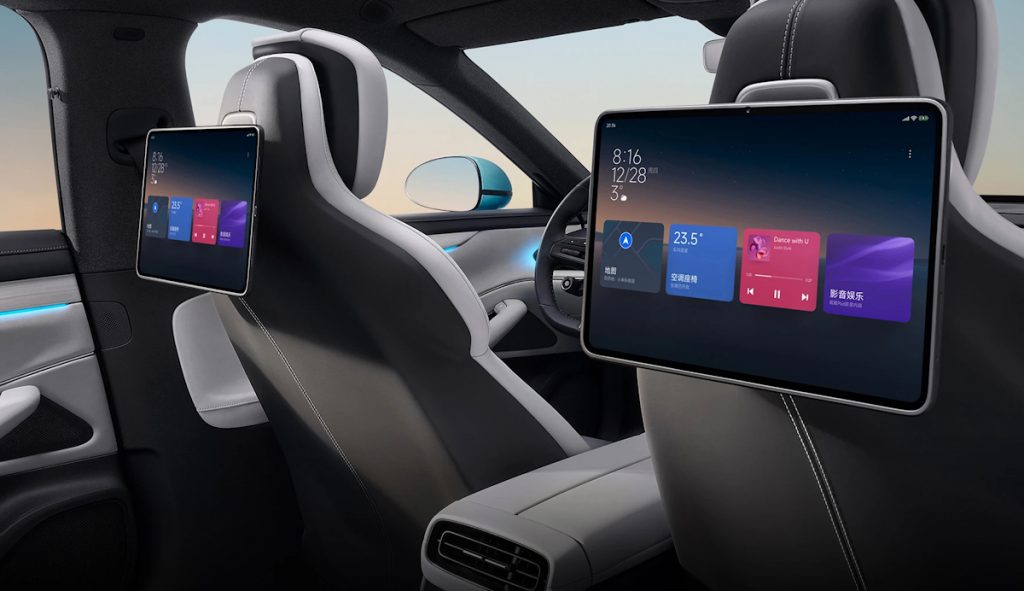
- Seat ventilation, heating, and massage functions
- Matte black interior and exquisite stitching design
- Smart dual instrument panel and other configurations

According to market data [3], the Xiaomi SU7 has shown strong growth since deliveries began in April 2024:
| Time Node | Monthly Sales | Market Ranking | Key Milestones |
|---|---|---|---|
| May 2024 | 8,400 units | New Launch | First Month of Deliveries |
| December 2024 | 23,000 units | Top 5 | Annual Sales Exceed 100,000 Units |
| May 2025 | 28,013 units | Top 3 | Continuous Growth |
| June 2025 | 23,225 units | 6th | 91.3% Year-on-Year Growth |
| December 2025 | 50,000+ units | Top 3 | Monthly Sales Exceed 50,000 Units |

As of December 2025, Xiaomi Auto holds a market share of approximately
- 3rd in Global Market Capitalization Ranking: Xiaomi Group surpassed BYD (USD 130.23 billion) with a market capitalization of USD 131.49 billion, ranking among the top three global automakers by market capitalization [6]
- Sales Champion of Pure Electric Sedans Priced Above RMB 200,000: The SU7 has ranked first in sales in the pure electric sedan market priced above RMB 200,000 for consecutive months [2]
- 500,000th Unit Off the Production Line: Achieved on November 20, 2025, setting a new industry speed record in just 19 months [7]

According to Xiaomi Group’s Q3 2025 financial report [8]:
| Indicator | Q3 2025 Data | Year-on-Year Change |
|---|---|---|
| Automotive Business Revenue | RMB 28.3 Billion |
199.2% Year-on-Year Growth |
| Automotive Business Operating Income | RMB 700 Million |
First Quarterly Profit |
| Gross Profit Margin | 25.5% |
At a Good Level in the Industry |
| Automotive Business Revenue as a Percentage of Total Revenue | 25.6% |
Record High |
| Quarterly Deliveries | 108,800 Units |
Month-on-Month Growth |
| Profit per Unit | Approx. RMB 7,000/Unit |
Calculated Figure |
- Emergence of Scale Effects: With increased production volume, advantages in component procurement and production cost control become prominent
- Optimized Product Structure: The launch of SU7 Ultra and YU7 increased the average unit price to RMB 260,000 [8]
- Gross Profit Margin Improvement: The 25.5% gross profit margin outperforms most new energy vehicle startups
- Increased Capacity Utilization: Production capacity at the Beijing Smart Factory continues to ramp up
The upgrade of the new-generation SU7 has enabled it to form three major advantages in the core market of RMB 200,000-300,000 [2]:
| Competitive Advantage | Specific Performance | Comparison with Competitors |
|---|---|---|
Configuration Cost-Effectiveness |
Full standard equipment of LiDAR, high-voltage platform, and multiple airbags | Surpasses peer competitors |
Three-Electric Technology |
897V high-voltage platform, 902km cruising range | Leads mainstream pure electric platforms |
Ecosystem Synergy |
HyperOS “Human-Vehicle-Home Full Ecosystem” connectivity | Xiaomi’s unique advantage |
This price increase of RMB 10,000-14,000 is a
- Comprehensive upgrades to core configurations have led to significant cost increases
- Continues the “performance-focused” product positioning and avoids price wars
- Some configurations of the current SU7 have shown “sold out”, indicating strong market demand
- Provides limited-time upgrade options for users who have already locked in orders [2]
Despite the significant improvement in product strength, Xiaomi Auto still faces the following challenges:
| Risk Type | Specific Content | Impact Assessment |
|---|---|---|
Intensified Competition |
Tesla’s affordable models and new products from Huawei Smart Selection will be launched | Increased pressure |
Price Sensitivity |
The price increase may affect some consumers’ decisions | Need to observe market feedback |
Production Capacity Bottlenecks |
Long delivery cycles may lead to order losses | Need continuous optimization |
Technological Iteration |
Rapid evolution of intelligent driving technology | Need continuous investment |
- The new SU7 is expected to launch in April; based on historical data, monthly sales are expected to exceed 30,000 units
- Market share is expected to rise to the 5-6%range
- Market share in the pure electric sedan market priced at RMB 200,000-300,000 is expected to exceed 15%
- After YU7 sales stabilize and ramp up, the product matrix effect will emerge
- Xiaomi Auto’s annual delivery target is 550,000 units [6], and market share is expected to reach 6-7%
- The average unit price of the automotive business will increase by approximately 5-10% (due to configuration upgrades)
- Automotive business revenue is expected to reach RMB 120-140 Billionin 2026
- Scale effects will further dilute fixed costs
- Supply chain bargaining power continues to strengthen
- The gross profit margin of the automotive business is expected to remain at 24-26%in 2026
- Full-year operating income of the automotive business is expected to reach RMB 4-5 Billion
- Profit per unit is expected to increase to RMB 8,000-10,000
| Dimension | Assessment | Rating |
|---|---|---|
Growth |
Automotive business revenue grew 199.2% YoY, with rapid growth | ★★★★★ |
Profitability |
Achieved first quarterly profit; 25.5% gross profit margin outperforms the industry | ★★★★☆ |
Market Position |
3rd in global market capitalization, with continuous market share growth | ★★★★★ |
Product Strength |
Competitiveness significantly enhanced after upgrade | ★★★★★ |
Valuation Level |
PE ratio of 22x (2025E), lower than historical average | ★★★★☆ |
- Persistent Industry Price Wars: May compress profit margins
- Technical Route Risks: Intelligent driving technology evolves rapidly, requiring continuous R&D investment
- Supply Chain Risks: Fluctuations in supply of core components such as chips and batteries
- Policy Risks: Changes in new energy vehicle subsidy policies
- Positive Effects of Product Upgrades: The new-generation SU7 has achieved all-round upgrades in safety, intelligent driving, cruising range, and driving control, significantly enhancing product competitiveness
- Market Share Expected to Rise: With the “standard equipment is fully equipped” strategy and ecosystem advantages, market share is expected to increase from 4.2% to 6-7%
- Profitability to Continue Improving: Scale effects and optimized product structure will drive an increase in profit per unit; the automotive business’s operating income is expected to reach RMB 4-5 billion in 2026
- Long-Term Value Highlighted: Xiaomi’s “Human-Vehicle-Home Full Ecosystem” strategy continues to deepen, and ecosystem premium capability has become the core support for valuation
- Maintain “Overweight” Rating: Xiaomi’s automotive business has entered a cycle of profitability and new product launches, and is expected to see a strong product cycle in 2026
- Focus on Catalysts: YU7 sales performance, market feedback after the launch of the new SU7, and technological breakthroughs in intelligentization
[1] All-New SU7 Fully Upgraded, Standard with 900V + LiDAR
[2] Analysis of the New-Generation Xiaomi SU7 Product Upgrade
[3] New Vehicle Sales in China by Brand
[5] 2025 China Whole Vehicle Industry Research Report
[6] Global Automaker Market Capitalization Shakeup: Xiaomi Firmly Ranks Third
[7] Xiaomi Group Releases Q3 2025 Financial Report
[8] Xiaomi’s Automotive Business Starts to Make Profits
[9] 2026: The Logic of Selling Cars Hasn’t Changed, But It’s Getting Harder
Insights are generated using AI models and historical data for informational purposes only. They do not constitute investment advice or recommendations. Past performance is not indicative of future results.
About us: Ginlix AI is the AI Investment Copilot powered by real data, bridging advanced AI with professional financial databases to provide verifiable, truth-based answers. Please use the chat box below to ask any financial question.