
In-Depth Analysis of the Impact of Muyuan Co., Ltd.'s Overseas Expansion Strategy on Asset-Liability Ratio
Unlock More Features
Login to access AI-powered analysis, deep research reports and more advanced features
About us: Ginlix AI is the AI Investment Copilot powered by real data, bridging advanced AI with professional financial databases to provide verifiable, truth-based answers. Please use the chat box below to ask any financial question.
Related Stocks
Based on collected data and analysis, I will provide you with a systematic analysis report on the impact of Muyuan Co., Ltd.'s overseas expansion strategy on its asset-liability ratio.
As China’s largest pig breeding enterprise, Muyuan Co., Ltd. is currently in a period of in-depth adjustment of its financial structure. From the perspective of key financial indicators [0], the company’s current ratio is 0.79, and the quick ratio is only 0.31, indicating that the enterprise faces relatively large short-term debt repayment pressure. Looking at historical liability data, from 2022 to 2024, the company’s net current liabilities were RMB 15.589 billion, RMB 31.076 billion, and RMB 24.158 billion respectively, mainly consisting of short-term borrowings and accounts payable [1]. Notably, net current liabilities in 2024 fell from the 2023 peak by 22.24%, showing that the company’s willingness to actively reduce liabilities is gradually being realized.
The company’s senior management clearly stated in public that “the company’s current liability ratio is still at a relatively high level”, and has set a clear liability reduction target: planning to reduce the liability scale by RMB 10 billion by the end of 2025 compared to the end of 2024 [1]. The setting of this target means that Muyuan Co., Ltd. must balance scale expansion and financial prudence when promoting its overseas expansion strategy. From the perspective of profitability, the company achieved operating revenue of RMB 137.947 billion in 2024, a year-on-year increase of 24.43%; net profit attributable to shareholders was RMB 17.881 billion, a year-on-year surge of 519.42% [1]. Strong profit growth provides endogenous motivation for liability reduction.
Muyuan Co., Ltd.'s internationalization strategy shows clear phased promotion characteristics. In September 2024, the company signed a strategic cooperation agreement with Vietnam’s BAF Agriculture Joint Stock Company, launching its overseas expansion journey through technology export [2]. In March 2025, the company established a wholly-owned subsidiary in Ho Chi Minh City, Vietnam, marking the entry of its overseas layout from the agreement level to the substantive operation stage [2]. In May 2025, the company officially launched the Hong Kong IPO process and submitted an application for H-share issuance and listing to the Hong Kong Stock Exchange, clearly stating that this financing “is oriented towards the next five to ten years, to carry out overseas business and implement internationalization strategy” [1]. In August 2025, the company signed a strategic cooperation agreement with CP Group to carry out all-round cooperation around strategic planning, business integration and global layout [2].
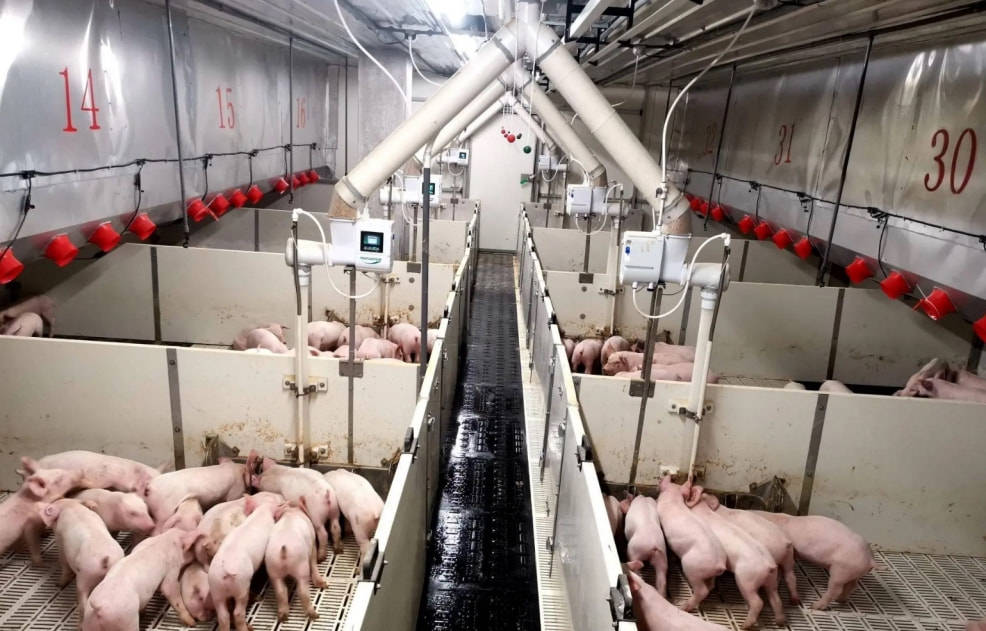
The capital demand for overseas expansion is mainly reflected in the following dimensions: First, the construction of the first 500,000-head/year demonstration farm in Vietnam requires a large amount of capital investment, including pig farm infrastructure construction, intelligent environmental control system installation, disease prevention and control system establishment, etc.; Second, the operation of overseas subsidiaries requires continuous capital injection, including local talent development, market development expenses, supply chain system establishment, etc.; Third, technology service export requires continuous R&D investment to maintain technological leadership. The company has set a target of achieving 10% of revenue from overseas business within 3 years [1], which requires a considerable scale of upfront investment support.
In terms of financing strategy, the company adopts a diversified approach to reduce dependence on debt financing. The Hong Kong IPO is the core financing channel, with the raised funds focusing on Southeast Asia market expansion [1]. At the same time, the company adopts a light-asset model of “technology export + localized operation”, obtaining cash flow by providing technical services such as pig farm design, biosecurity, and intelligent management to partners, which effectively reduces the pressure of self-owned capital investment. Strategic cooperation with enterprises such as BAF and CP Group also realizes the sharing of investment risks, avoiding excessive impact of overseas expansion on the balance sheet.
From a short-term perspective, the overseas expansion strategy may exert certain upward pressure on the asset-liability ratio. Overseas projects generally have the characteristics of large investment scale, long construction period, and slow return on investment. Taking the 500,000-head/year demonstration farm in Vietnam as an example, based on the investment intensity of domestic pig farms of the same scale, the initial capital investment may reach the level of billions of RMB. During the project construction period, a large amount of capital demand needs to be solved through external financing, which will push up the company’s liability level in the short term. In addition, expenses such as channel construction, brand promotion, and team building required for new market development will also increase working capital occupation.
However, it should be pointed out that the company has realized this problem and taken countermeasures. In 2025, the company’s fixed asset investment decreased by 25% year-on-year [1], and its business focus shifted from new capacity expansion to technological transformation of existing pig farms and slaughterhouses. This dual-drive strategy of “stable domestic operation + breakthrough in overseas expansion” allows the cash flow generated by domestic business to partially support overseas expansion needs, thereby reducing the dependence on debt financing.
From a long-term perspective, the overseas expansion strategy is expected to have a positive impact on the asset-liability ratio. First, the incremental revenue and profit contributed by overseas business will enhance the company’s debt-solvency capability. With the gradual development of the Southeast Asian market, Muyuan Co., Ltd. will gain a new profit growth pole, which can effectively hedge against performance fluctuations caused by domestic pig cycle volatility, and improve the stability and sustainability of profits. Second, technical service fee income will become a stable cash flow source. The company obtains income by exporting a full set of technical solutions such as intelligent pig farm design, disease prevention and control, and intelligent management. This light-asset mode does not require a large amount of capital investment but can generate continuous cash inflows [1].
Third, the implementation of overseas layout will improve the company’s international credit rating. Global layout helps to diversify market risks, enhance the company’s anti-cyclical capability and long-term growth potential, which will gain higher recognition and valuation premium in the capital market. Fourth, listing on the Hong Kong Stock Exchange will significantly broaden the company’s financing channels. As a Hong Kong-listed company, Muyuan Co., Ltd. can make full use of diversified financing tools in the international capital market, including but not limited to overseas bond issuance, USD bonds, convertible bonds, etc., to optimize the financing structure and debt maturity arrangement.
Based on current financial data and strategic planning, we have made the following scenario analysis on the future change trend of Muyuan Co., Ltd.'s asset-liability ratio:
| Scenario | Core Assumptions | Asset-Liability Ratio Trend | Main Driving Factors |
|---|---|---|---|
| Base Scenario | Overseas projects proceed as scheduled, Hong Kong IPO is successful | Slight increase followed by stabilization and decline | IPO proceeds reduce dependence on debt financing |
| Optimistic Scenario | Overseas business exceeds expectations, strong technical service income | Steady decline | Profit growth covers investment expenditures |
| Conservative Scenario | Overseas investment slows down, domestic liability reduction is prioritized | Significant decline | RMB 10 billion liability reduction target is achieved |
From the perspective of financial health assessment, the company’s ROE reaches 29.21% and net profit margin is 14.50% [0], demonstrating strong profitability and asset operation efficiency. This efficient capital operation capability provides an important guarantee for the company to maintain financial prudence during overseas expansion. As long as the company can adhere to the expansion model of “light asset + technology export” and control the investment pace, the negative impact of overseas expansion on the asset-liability ratio will be controllable and temporary.
During the overseas expansion process, attention should be paid to the potential impact of the following risks on the asset-liability ratio: First, exchange rate fluctuation risk. Overseas business involves multi-currency settlement, and exchange rate fluctuations may affect the liability scale and financial expenses in the financial statements; Second, overseas policy risk. Changes in trade policies, tax policies, and foreign investment access policies in different countries may affect investment returns; Third, pig cycle fluctuation risk. Overseas markets also face the challenge of periodic fluctuations in pig prices, which may affect the profit expectations and debt-solvency capability of overseas projects.
In response to the above risks, the company should adopt diversified countermeasures. In terms of exchange rate management, exchange rate risks can be hedged through derivative tools such as forward foreign exchange contracts and currency swaps; In terms of policy risk, the company should conduct in-depth research on the laws and policies of target markets, and strengthen communication and cooperation with local government departments; In terms of cycle risk, the company should continue to leverage its cost leadership advantage, continuously reduce breeding costs through intelligent breeding and refined management, and enhance the capability to withstand cycle fluctuations.
In addition, the company should make full use of the advantages of the international financing platform after listing on the Hong Kong Stock Exchange, prioritize equity financing over debt financing for overseas project funding, and control the rise of asset-liability ratio from the source. At the same time, a dynamic evaluation mechanism for overseas investment projects should be established, and projects with lower-than-expected investment returns should be adjusted in a timely manner to avoid erosion of the financial structure caused by excessive capital expenditure.
Based on the above analysis, we believe that the impact of Muyuan Co., Ltd.'s overseas expansion strategy on its asset-liability ratio features “short-term pressure, long-term improvement”. In the short term, overseas project investment may exert certain upward pressure on the liability level, but the company has raised funds through diversified channels such as Hong Kong IPO, light-asset model, and strategic cooperation, and has set a clear domestic liability reduction target, so the overall financial risk is controllable. In the long term, the successful development of overseas business will contribute a new profit growth point for the company, enhance profit stability and anti-cyclical capability, and ultimately achieve a steady decline in the asset-liability ratio.
From an investment perspective, the company’s current valuation of 12.04x PE and 3.48x PB [0] is in a relatively reasonable historical range. Coupled with the growth imagination brought by overseas expansion and the continued boom of the domestic pig cycle, Muyuan Co., Ltd. has good medium-to-long-term investment value. Investors should focus on the progress of the Hong Kong IPO, changes in the proportion of overseas business contribution, and the achievement of the company’s liability reduction target as important references for investment decisions.
[0] Jinling AI Financial Database - Company Profile and Financial Data of Muyuan Co., Ltd. (002714.SZ)
[1] OFweek - “Mid-Year Report Surges, Is Muyuan Co., Ltd.'s Internationalization Story Easy to Tell with Secondary Listing” (https://mp.ofweek.com/finance/a456714886507)
[2] Dahe Net - “First Stop in Vietnam, Pig Giant Opens Southeast Asian Market with Technology | Henan Enterprises’ Overseas Journey” (https://5g.dahe.cn/news/202511152020928)
Insights are generated using AI models and historical data for informational purposes only. They do not constitute investment advice or recommendations. Past performance is not indicative of future results.
About us: Ginlix AI is the AI Investment Copilot powered by real data, bridging advanced AI with professional financial databases to provide verifiable, truth-based answers. Please use the chat box below to ask any financial question.