
Trump's 10% Credit Card Rate Cap Proposal: Banking Sector Impact and Implementation Uncertainty Analysis
Unlock More Features
Login to access AI-powered analysis, deep research reports and more advanced features
About us: Ginlix AI is the AI Investment Copilot powered by real data, bridging advanced AI with professional financial databases to provide verifiable, truth-based answers. Please use the chat box below to ask any financial question.
Related Stocks
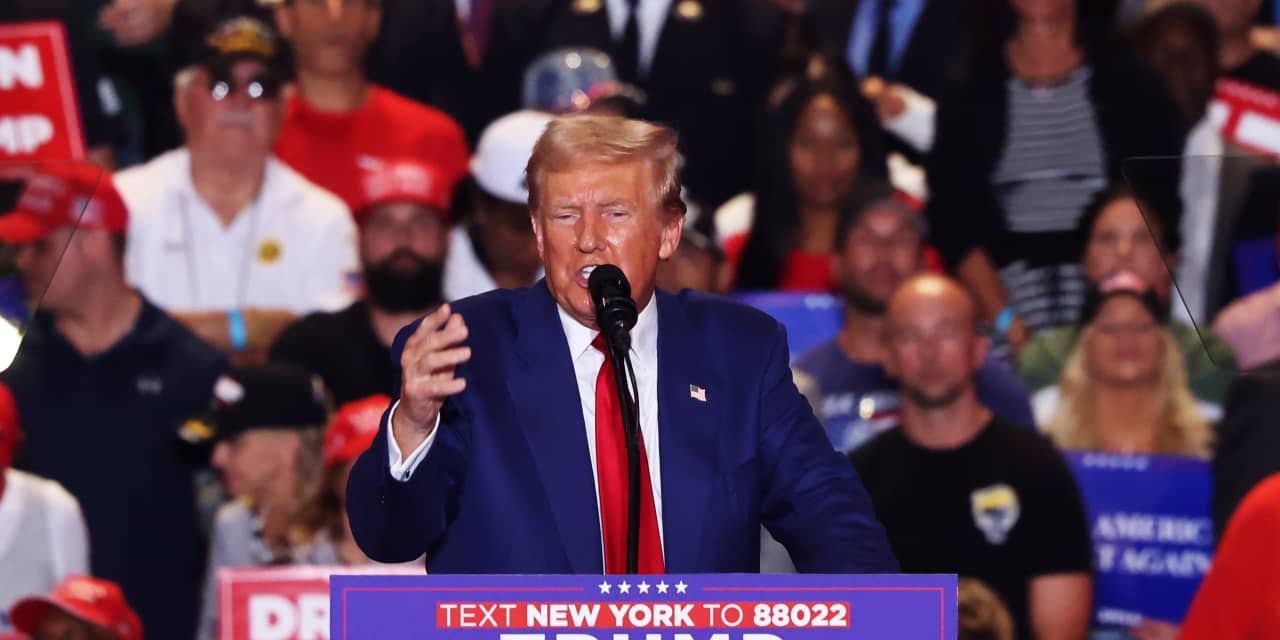
This analysis examines President Donald Trump’s January 10, 2026 announcement calling for a one-year cap on credit card interest rates at 10%, significantly below current market rates of 20-30%. The proposal, scheduled for a January 20, 2026 effective date, represents a direct challenge to one of the banking sector’s most profitable business lines. Market reaction was immediate and pronounced, with credit card-focused lenders experiencing the sharpest declines—Capital One (COF) dropped 2.53% in early trading. However, significant implementation uncertainty remains, as legal experts question whether the administration can enact such caps without Congressional action. The proposal creates substantial regulatory ambiguity for banks while simultaneously raising concerns about reduced credit availability and potential consumer displacement to higher-cost alternative lenders.
President Trump’s announcement via Truth Social on January 10, 2026, represents the most aggressive consumer finance policy initiative of the current administration [1][2][3]. The proposed 10% interest rate cap would apply for one year and would fundamentally restructure the economics of credit card lending in the United States. Currently, average credit card interest rates range from approximately 20% to 30%, making this a compression of 10-20 percentage points—a substantial reduction in revenue for card issuers.
The timing of the announcement is strategically significant, arriving just ten days before the proposed January 20th effective date, which coincides with the one-year anniversary of the administration. This timeline suggests either exceptional confidence in implementation capability or a deliberately aggressive posture to maximize political messaging impact. However, the compressed timeline has amplified uncertainty in financial markets, as participants struggle to assess the probability of actual implementation [1][2].
A critical dimension of this proposal involves the mechanism of implementation. Legal analysts and banking experts have expressed significant skepticism about the administration’s ability to unilaterally impose interest rate caps through executive action [1][2]. Credit card interest rates are largely determined by market forces and competitive dynamics, with regulatory oversight primarily focused on usury ceilings at the state level rather than federal rate mandates.
The most likely pathway for implementation would require Congressional legislation, which would need to navigate the legislative process and overcome potential procedural hurdles. Senate Banking Committee leadership responses will be particularly important in assessing the viability of any legislative vehicle [1]. Additionally, the proposal raises constitutional questions about federal preemption of state usury laws and potential challenges from banking industry litigation.
The lack of released draft legislation or regulatory filings as of the announcement date compounds this uncertainty [1]. Market participants have been left to interpret the announcement’s political and signaling value without concrete implementation details to analyze.
The market reaction on January 10, 2026, revealed clear differentiation among affected financial institutions based on credit card exposure [0]:
| Institution | Early Trading Impact | Exposure Assessment |
|---|---|---|
Capital One (COF) |
-2.53% | HIGH – Credit card-focused business model |
Synchrony Financial (SYF) |
Monitoring required | HIGH – Pure-play consumer credit |
Bread Financial (BFH) |
Monitoring required | HIGH – Similar card-focused model |
JPMorgan Chase (JPM) |
-0.18% | MODERATE – Significant but diversified |
Bank of America (BAC) |
Under observation | MODERATE – Diversified operations |
Wells Fargo (WFC) |
Under observation | MODERATE – Diversified operations |
American Express (AXP) |
Unique dynamics | VARIABLE – Premium positioning |
The disproportionate impact on Capital One reflects investor recognition that its business model is most vulnerable to credit card rate compression. Unlike diversified money center banks, Capital One generates a substantial portion of its revenue and profits from credit card lending operations, leaving it with limited ability to offset policy-driven margin compression through other business lines [0].
The KBW Bank Index has experienced substantial appreciation of approximately 40% since the November 2024 election, driven primarily by investor expectations of regulatory relaxation and favorable monetary policy [2]. This proposal represents a significant counter-force to that momentum, injecting regulatory risk into a sector that had been pricing in reduced regulatory friction.
Historical precedents for interest rate caps exist in the Military Lending Act, which imposes a 36% rate cap on credit extended to active-duty service members. However, the scope and duration of the current proposal—applying broadly to all consumers and lasting one year—would represent a significantly more extensive intervention. Industry analysis of military lending cap effects may provide some insight into behavioral responses, though the broader market implications remain largely uncharted territory.
Major banking trade groups responded to the announcement with a coordinated opposition statement warning of unintended consequences [3]. The industry argument centers on the proposition that artificial rate caps could reduce credit availability rather than improve consumer outcomes. Specifically, banks contend that rate caps would:
- Reduce incentive to extend credit to higher-risk borrowers
- Compress risk-adjusted returns to levels that may not justify certain lending activities
- Potentially force consumers toward “less regulated, more costly alternatives” such as payday lenders [3]
- Create adverse selection dynamics that harm the very consumers the policy intends to protect
This opposition framing is significant because it shifts the policy debate from simple rate comparison to credit availability—a metric that resonates differently with voters and policymakers than headline interest rates.
The proposal has generated mixed political reactions. Democrats, including Senator Elizabeth Warren, characterized the move as “meaningless” without Congressional action [2]. This critique highlights the implementation uncertainty while simultaneously creating pressure on Congressional Democrats to either support alternative legislation or explain opposition to consumer-friendly rate caps.
From a legislative perspective, the path forward depends heavily on Republican Congressional leadership priorities. A standalone bill faces uncertain prospects given the 10-day implementation timeline, which is inconsistent with normal legislative timelines. Alternative approaches might include attachment to must-pass legislation or administrative actions through the Consumer Financial Protection Bureau (CFPB), though the latter would face its own legal and procedural hurdles.
The proposal creates differentiated competitive implications across the card issuer landscape. American Express’s premium positioning may provide some insulation, as its cardholder base typically exhibits lower price sensitivity and higher usage of non-interest-rate fee-based features. Conversely, subprime-focused card issuers and those with higher risk-based pricing models would face the most significant profit compression.
Capital One’s particular vulnerability stems from its strategic focus on the credit card market following its acquisition of HSBC’s U.S. credit card portfolio. This concentration, while strategically rational under previous regulatory and competitive conditions, now represents maximum exposure to the proposed policy intervention.
The January 20, 2026 effective date creates acute time sensitivity for several actions:
- Congressional leadership response(within 5-7 days) will substantially clarify implementation probability
- Bank earnings callsbeginning with JPMorgan on January 16, 2026, will provide management guidance that shapes investor expectations [1]
- Regulatory filings and CFPB announcementsduring the coming week will reveal administrative implementation pathways
- Industry coalition actionsincluding potential litigation or legislative negotiations will crystallize over the same period
The January 10, 2026 announcement calling for a 10% credit card interest rate cap represents a significant policy proposal with substantial implications for the banking sector. Key factual findings include:
The proposal targets credit card interest rates currently ranging from 20-30%, proposing to cap them at 10% for one year with an effective date of January 20, 2026 [1][2][3]. Implementation mechanism remains uncertain, with legal experts questioning the administration’s ability to act without Congressional authorization [1][2]. Market reaction has been negative for credit card-focused lenders, with Capital One experiencing the most pronounced decline at 2.53% [0].
Banking industry opposition has been immediate and substantial, with major trade groups warning of reduced credit availability and potential consumer harm from displacement to alternative lenders [3]. Congressional action would be required for implementation, and no draft legislation had been released as of the announcement date [1]. The KBW Bank Index’s recent 40% appreciation since November 2024 reflects expectations of regulatory relaxation, creating context for understanding market reaction to countervailing policy initiatives [2].
Stakeholder impacts vary significantly by business model concentration. Capital One faces maximum exposure due to its credit card-focused operations, while diversified institutions like JPMorgan Chase demonstrate relative resilience despite significant card operations [0]. American Express’s premium positioning may provide insulation through non-interest-fee-based revenue models. Synchrony Financial and Bread Financial face exposure similar to Capital One given their consumer credit focus.
Monitoring priorities include Congressional Banking Committee responses, CFPB actions, bank earnings guidance beginning January 16, and industry legal and advocacy initiatives [1]. The compressed timeline between announcement and proposed effective date creates uncertainty that markets will continue to price until implementation clarity emerges.
[0] Ginlix Analytical Database – Market data, ticker analysis, and quantitative indicators
[1] CNBC – “Trump calls for one-year cap on credit card interest rates at 10%” (https://www.cnbc.com/2026/01/10/trump-calls-for-one-year-cap-on-credit-card-interest-rates-at-10percent.html)
[2] Yahoo Finance/Bloomberg – “Trump’s Call for 10% Credit-Card Cap Aims at Banks’ Crown Jewels” (https://finance.yahoo.com/news/trump-call-10-credit-card-143014438.html)
[3] Reuters – “Trump calls for one-year cap on credit card interest rates at 10%” (https://www.reuters.com/sustainability/boards-policy-regulation/trump-calls-one-year-cap-credit-card-interest-rates-10-2026-01-10/)
Insights are generated using AI models and historical data for informational purposes only. They do not constitute investment advice or recommendations. Past performance is not indicative of future results.
About us: Ginlix AI is the AI Investment Copilot powered by real data, bridging advanced AI with professional financial databases to provide verifiable, truth-based answers. Please use the chat box below to ask any financial question.