
In-Depth Analysis of the Technological Competitiveness of BYD's "Sky Eyes" Intelligent Driving System
Unlock More Features
Login to access AI-powered analysis, deep research reports and more advanced features
About us: Ginlix AI is the AI Investment Copilot powered by real data, bridging advanced AI with professional financial databases to provide verifiable, truth-based answers. Please use the chat box below to ask any financial question.
Related Stocks
Based on the data obtained, I will prepare a detailed analysis report for you.
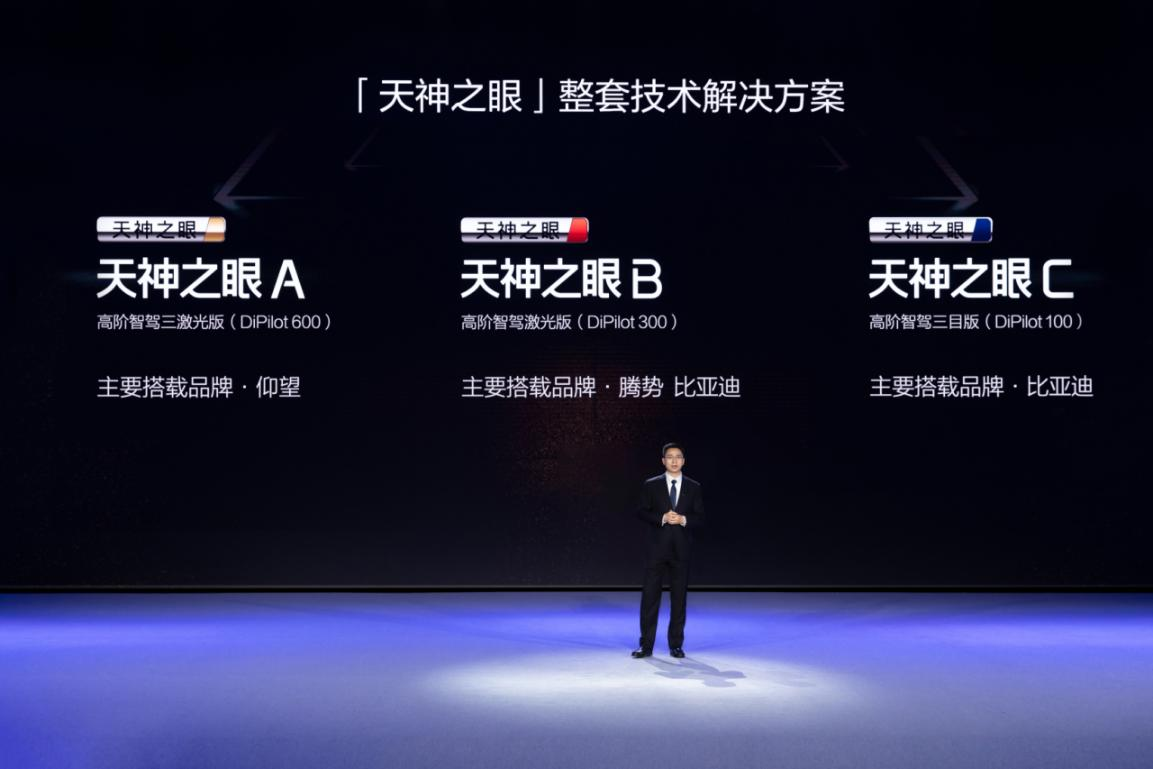
BYD’s “Sky Eyes” Intelligent Driving System adopts a differentiated layered strategy, building a technology matrix covering the full price range [1]. The system is divided into three versions:
The localization rate of the “Sky Eyes” system exceeds 90%, forming a complete independent and controllable supply chain system [4]. In terms of core chips, it adopts Horizon Journey 5 and NVIDIA Orin series, among which the Horizon solution has been widely applied to models in the RMB 100,000 class. Lidar suppliers include leading domestic manufacturers such as RoboSense and Hesai, while camera modules are supplied by enterprises such as Sunny Optical and O-film [4]. This supply chain structure ensures that BYD can maintain stable supply of intelligent driving systems even in the face of external technological blockades.
According to the latest test data, BYD’s “Sky Eyes B” has completed actual tests on 22 expressway ETC toll stations in Beijing, covering 162 stations and 1,800 kilometers, verifying the system’s reliability in actual complex road conditions [1]. This test shows that BYD’s intelligent driving system has mature application capabilities in high-speed scenarios, laying a technical foundation for the subsequent expansion of City NOA functions.
Relying on the scale advantage of the world’s largest new energy vehicle manufacturer, BYD has established an industry-leading intelligent driving data ecosystem. As of the end of October 2025, the cumulative sales of vehicles equipped with the “Sky Eyes” system have exceeded 2 million, generating more than 130 million kilometers of valid driving data per day [4]. This data scale has approached the global data accumulation speed of Tesla FSD, providing sufficient training materials for algorithm iteration.
BYD’s intelligent driving team revealed that the system’s algorithm model is updated once a month, and each update is based on tens of millions of kilometers of real road condition data [4]. This closed-loop iteration capability of “Data-Training-Deployment” enables “Sky Eyes” to quickly adapt to China’s complex road traffic environment, including “China-specific” scenarios such as bicycle lanes, electric vehicle flows, and irregular traffic lights.
BYD’s investment in the field of intelligent driving continues to increase. The company has formed a full-time intelligent driving R&D team of over 5,000 people, and plans to invest a total of more than RMB 100 billion in the intelligent field [5]. This investment scale is at the leading level in the domestic automotive industry, reflecting BYD’s strategic emphasis on intelligent driving technology.
The team adopts a dual-line parallel development strategy of “Independent R&D + Open Cooperation”, which not only strengthens full-stack independent R&D capabilities (including computing power chips, algorithms, large models, etc.), but also maintains in-depth cooperation with suppliers such as NVIDIA, Horizon, Momenta, Huawei, and DJI [2]. This strategy not only ensures the independent controllability of core technologies, but also makes full use of the expertise of industry chain partners.
The implementation of BYD’s “Universal Intelligent Driving” strategy has brought about a significant jump in the penetration rate of intelligent driving. Official data in May 2025 shows that the penetration rate of intelligent driving in new vehicles reached approximately 80% that month, meaning 4 out of every 5 vehicles sold are equipped with intelligent driving systems [3]. This penetration rate far exceeds Tesla’s FSD penetration rate of approximately 30% in the Chinese market and XPeng’s XNGP penetration rate of approximately 50%.
In November 2025, BYD’s monthly sales reached 480,200 vehicles, of which approximately 380,000 were intelligent driving versions [3]. The monthly sales of intelligent driving vehicles alone exceeded XPeng Motors’ cumulative total sales from January to November 2025 (over 300,000 vehicles), forming a significant scale advantage over competitors.
In 2024, BYD’s new energy vehicle sales market share reached 33.2%, firmly ranking as the industry leader [6]. The full-year sales target for 2025 is 5.5 million vehicles, corresponding to a year-on-year growth of approximately 30%, with an overseas sales target of 800,000 vehicles [6]. The standard configuration of intelligent driving functions will further strengthen BYD’s competitive advantage in the mainstream price range (RMB 70,000 - 200,000), promoting continuous growth in market share.
CITIC Securities estimates that in 2025, sales of BYD models equipped with Highway Navigation (DiPilot 100) are expected to reach 800,000 - 1,000,000 units [7]. Considering BYD’s annual total sales target of 5 million vehicles, intelligent driving version models will become the core driver of sales growth.
BYD’s “Add Features Without Increasing Price” strategy has had a profound impact on the industry’s competitive landscape. Intelligent driving functions have shifted from the previous “Optional Extra Charge” model to “Standard Configuration for All Models”, directly impacting new car-making forces such as XPeng, Li Auto, and NIO, which take intelligent driving as their core selling point [3]. These brands face a difficult choice: following the price reduction will pressure profits, while maintaining high prices will lead to market share loss.
For joint venture brands, BYD’s intelligent driving strategy has brought dual pressures of “Electrification + Intelligence”. Against the background of lagging electrification transformation and lack of intelligent driving configurations, joint venture car companies face the risk of accelerated market share shrinkage.
Tesla FSD was officially launched in China on February 25, 2025, providing consumers with an opportunity for direct comparison [4]. From the perspective of technical routes, there are significant differences between BYD and Tesla:
| Comparison Dimension | BYD “Sky Eyes” | Tesla FSD |
|---|---|---|
| Technical Solution | Pure Vision + Lidar (High-end Version) | Pure Vision |
| Hardware Cost | RMB 2,000 - 8,000 | Additional RMB 640/month subscription fee |
| Localization Adaptation | Optimized for Chinese road conditions | Mainly trained based on US data |
| Pricing Strategy | Standard configuration for all models without price increase | Subscription-based payment |
BYD’s advantages lie in its in-depth adaptation to China’s complex road conditions and precise control of the price-sensitive market. However, Tesla FSD still has an advantage in the “humanization” of driving decisions such as lane changing and overtaking [4].
In the higher-level City NOA field, there is still a gap between BYD and leading intelligent driving car companies such as Huawei, XPeng, and Li Auto [2]:
CITIC Securities analysis believes that the more important significance of BYD’s intelligent strategy in 2025 is to accelerate the penetration of Highway NOA intelligent driving functions, while Huawei and Li Auto’s leading advantages in the City NOA field are still obvious [2].
As of the close of trading on January 10, 2026, BYD (002594.SZ) closed at US$97.01 per share, with a market capitalization of US$87.375 billion [9]. Current valuation indicators include: P/E Ratio of 23.06x, P/B Ratio of 4.02x, and ROE of 17.62% [9]. The stock price has fallen 10% in the past 3 months and 9.4% in the past 6 months, mainly reflecting the market’s concerns about industry price wars and slowing growth.
Based on the DCF model calculation, BYD’s intrinsic value under three scenarios is as follows [10]:
| Scenario | Intrinsic Value | Premium vs. Current Stock Price |
|---|---|---|
| Conservative Scenario | US$326.17 | +236.2% |
| Base Scenario | US$2,915.91 | +2,905.8% |
| Optimistic Scenario | US$5,502.84 | +5,572.4% |
The WACC calculation is based on: Beta coefficient of 0.42, risk-free interest rate of 4.5%, and market risk premium of 7.0%, resulting in a weighted average cost of capital of 7.3% [10]. The DCF model shows that the current market price is significantly lower than the company’s intrinsic value, implying a large valuation repair space.
The impact of intelligent driving technology on BYD’s valuation is mainly reflected in the following dimensions:
The technological competitiveness of BYD’s “Sky Eyes” Intelligent Driving System can be summarized into the following investment highlights:
- Significant Cost Advantage: Relying on scale effects and domestic supply chains, the hardware cost of intelligent driving has been reduced to the lowest level in the industry, realizing the “Add Features Without Increasing Price” strategy.
- Solid Data Barrier: The data accumulation brought by the 2 million vehicle installation scale provides continuous motivation for algorithm iteration.
- Leading Market Share: A 33.2% market share combined with an 80% intelligent driving penetration rate forms a strong scale effect.
- Valuation Repair Space: The DCF model shows that the current stock price has an upside potential of over 200% compared to its intrinsic value.
Investors need to pay attention to the following risks:
- Price War Risk: The intelligent driving equalization strategy may trigger an industry price war, compressing the overall profit space of the industry.
- Safety Risk: Intelligent driving systems involve driving safety. If a major safety accident occurs, it may have a negative impact on brand reputation and sales.
- Technological Iteration Risk: In the higher-level City NOA field, there is still a gap between BYD and Huawei, XPeng, which requires continuous investment to catch up.
- Policy Risk: The implementation progress of L3-level autonomous driving regulations may affect the promotion of high-level intelligent driving functions.
BYD’s “Sky Eyes” Intelligent Driving System has successfully built a competitive intelligent driving system through a differentiated technology matrix, supply chain localization, and scale data advantages. This system has transformed high-level intelligent driving functions from “optional luxury items” to “standard configuration items for all models”, having a profound impact on the competitive landscape of the new energy vehicle market.
From the perspective of market share, the “Universal Intelligent Driving” strategy has increased BYD’s intelligent driving penetration rate to 80%, with monthly sales of 380,000 intelligent driving vehicles, forming an unmatched scale advantage over new EV startups. From the perspective of valuation, the market share growth, data asset value, and industry chain synergy effect brought by intelligent driving technology provide a solid foundation for BYD’s valuation re-rating.
Looking to the future, BYD has established a leading position in the Highway NOA field, but still needs to catch up with leading enterprises such as Huawei and XPeng in the City NOA field. With the continuous increase in intelligent driving penetration rate and iteration of end-to-end large model technology, BYD is expected to further narrow the gap with leading intelligent driving car companies in 2026 and consolidate its leading position in the new energy vehicle industry.
[1] Test Report of BYD’s “Sky Eyes B” Intelligent Driving System on ETC Toll Stations
[2] Guozheng International: BYD Intelligent Driving Special Report
[3] Baidu Youjia: Analysis of BYD’s Intelligent Driving Penetration Rate
[4] Autohome: Analysis of BYD’s Intelligent Driving Supply Chain
[5] Gasgoo: BYD’s Intelligent Driving Team and Investment Plan
[6] Sina Finance: BYD Electronics Research Report
[7] Wallstreet CN: CITIC Securities 2025 Intelligent Driving Research Report
[8] East Money: 2025 City NOA Test Drive Report of Mainstream Car Companies
[9] Jinling API: BYD Real-Time Quotation and Company Profile
[10] Jinling API: BYD DCF Valuation Analysis
Report Generation Date: January 11, 2026
Insights are generated using AI models and historical data for informational purposes only. They do not constitute investment advice or recommendations. Past performance is not indicative of future results.
About us: Ginlix AI is the AI Investment Copilot powered by real data, bridging advanced AI with professional financial databases to provide verifiable, truth-based answers. Please use the chat box below to ask any financial question.