
Analysis of the Impact of U.S. Lifting Venezuelan Sanctions on Energy Companies and Global Oil Supply
Unlock More Features
Login to access AI-powered analysis, deep research reports and more advanced features
About us: Ginlix AI is the AI Investment Copilot powered by real data, bridging advanced AI with professional financial databases to provide verifiable, truth-based answers. Please use the chat box below to ask any financial question.
Related Stocks
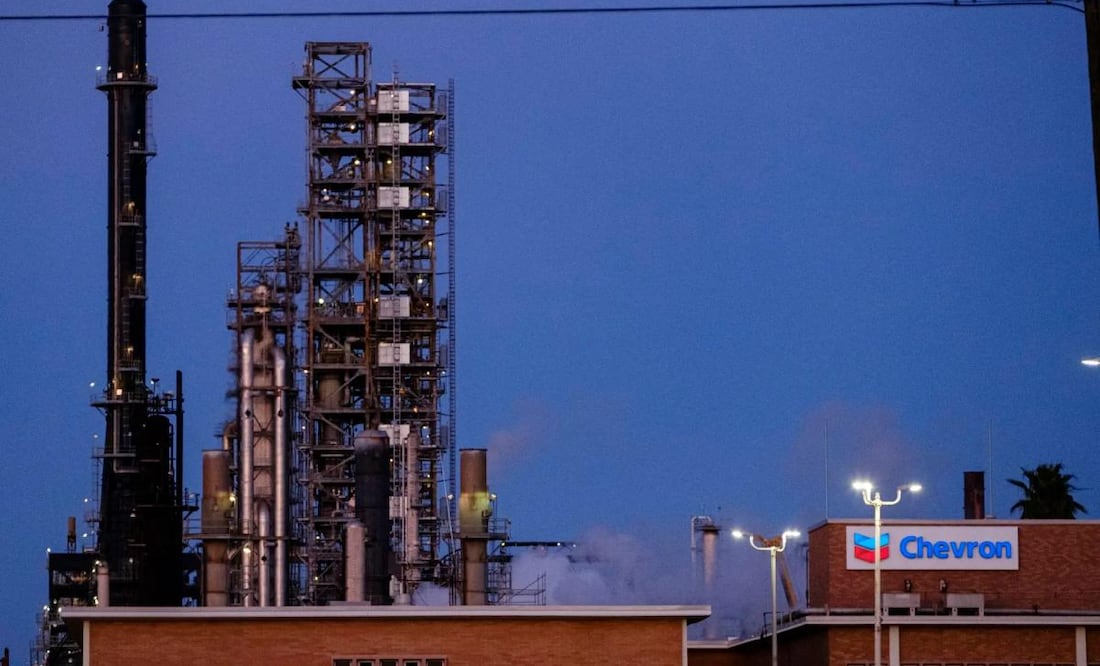
According to the latest news, the U.S. government is rapidly advancing adjustments to its sanctions policy on Venezuela. On January 6, 2025, U.S. Treasury Secretary Bessent stated that it will “selectively” lift sanctions so that Venezuelan oil can be transported and sold to global markets [1][2]. U.S. Energy Secretary Chris Wright further confirmed on January 9 that the government is in contact with Venezuela, and stated that Chevron’s investment payback period in Venezuela is
The backdrop of this policy shift is a major change in Venezuela’s political landscape. After the overthrow of the Maduro regime, the U.S. government announced that it will accept 30-50 million barrels of sanctioned Venezuelan oil, and plans to purchase oil from the country “indefinitely” [2][3].
Chevron is currently
| Oil Company | Venezuela Business Status | Potential Benefit Level |
|---|---|---|
| Chevron (CVX) | Continuously operating | High |
| ExxonMobil (XOM) | Withdrew after assets were nationalized in 2007 | Medium-High (Asset Recovery) |
| ConocoPhillips (COP) | Withdrew after assets were seized | Medium-High (Asset Recovery) |
| TotalEnergies (TTE) | Limited participation | Medium |
| BP (BP) | Limited participation | Low |
According to JPMorgan analysts, Chevron holds a
- Production Growth Potential: After the completion of the political transition, production is expected to rise to a higher level within 2 years
- Investment Return Certainty: The U.S. Energy Secretary explicitly stated the 18-24 month payback period, reducing investment uncertainty
- Policy Dividend: As the only U.S. oil major not expelled from Venezuela, Chevron will receive priority access
Following the announcement of the sanctions relief news, Chevron’s stock price performed strongly. After CNBC reported the overthrow of Maduro on January 5, Chevron’s stock price
Venezuela holds the world’s largest proven oil reserves, approximately
| Time Frame | Forecasted Production | Conditions Description |
|---|---|---|
Current |
Approximately 750,000-1.1 million barrels per day | Actual level |
Within 2 years |
1.3-1.4 million barrels per day | Smooth political transition + resumption of investment |
Within 5 years |
Approximately 2 million barrels per day | Significant investment + institutional reform |
Within 10 years |
Approximately 2.5 million barrels per day | Comprehensive reform + large-scale investment |
Despite the great potential, analysts are cautious about production capacity recovery [7]:
- Aging Infrastructure: Decades of insufficient investment have led to severe equipment aging
- Investment Uncertainty: Potential investors need to consider political stability risks
- Huge Capital Demand: Restoring to historical production levels requireshundreds of billions of dollarsin investment
- Brain Drain of Technical Talent: Severe shortage of professional talent
Goldman Sachs analysts estimate that if Venezuela’s production increases to
- Even if production rebounds to the 3 million barrels per day level of a decade ago, it will only account for approximately 2% of global supply[7]
- The current pattern of global oil supply glut has initially taken shape
- Production policies of other oil-producing countries such as OPEC+ will still dominate the market
Natasha Kaneva, Global Head of Commodities Strategy at JPMorgan, pointed out [5]:
“The changes in the Venezuelan situation could immediately become
one of the biggest upside risksto the global oil supply outlook for 2026-2027 and beyond.”
The U.S. government has explicitly required Venezuela to
| Scenario | Production Increment | Potential Impact on Oil Prices |
|---|---|---|
| Conservative Scenario | +500,000 barrels per day | Limited impact |
| Neutral Scenario | +1 million barrels per day | Moderate downward pressure on prices |
| Optimistic Scenario | +1.5-2 million barrels per day | Downward pressure of approximately $2-$4 per barrel |
- Political Stability Risk: The political landscape after the overthrow of Maduro remains uncertain
- Policy Implementation Risk: U.S. government policies may adjust with changes in the political situation
- Infrastructure Bottlenecks: Even with sanctions relief, production capacity recovery will still take time
- Geopolitical Risk: Changes in relations with countries such as Russia may affect the outlook for sanctions
- JPMorgan: Believes Venezuela is “the biggest upside risk to global oil supply”
- Capital Economics: Warns that “there is a large gap between theory and reality”, and political instability will hinder resource development [7]
- Goldman Sachs: Maintains its 2026 oil price forecast unchanged (Brent $56 per barrel, WTI $52 per barrel)
- Chevron (CVX) is the biggest winner of sanctions relief: As the only U.S. oil major operating continuously in Venezuela, its business improvement is the most direct
- Production capacity recovery will be a gradual process: Even if policies are adjusted quickly, it will still take 2-5 years to restore production to the target level
- Impact on global supply is limited but notable: Although it only accounts for 1-2% of global supply, it may still exert downward pressure of $2-$4 per barrel on oil prices in the current market environment
- Uncertainty remains high: Factors such as political stability, infrastructure, and capital investment may all affect the actual recovery progress
- Chevron (CVX): Significant short-term benefits; pay attention to its outlook for Venezuelan operations mentioned in its Q4 earnings report to be released on January 30
- ExxonMobil (XOM) and ConocoPhillips (COP): Potential opportunities for asset recovery exist; follow-up developments are worth attention
- Oil and Gas Industry as a Whole: Venezuela’s production capacity recovery may exert moderate pressure on oil prices, but the impact on U.S. shale oil producers is limited
[1] FastBull - “U.S. Secretary of State Rubio Hints at Selling Seized Venezuelan Oil” (https://m.fastbull.com/cn/news-detail/4364689_1)
[2] Morgan Lewis - “Compliance Landscape in Venezuela Following Nicolas Maduro’s Removal from Power” (https://www.morganlewis.com/pubs/2026/01/compliance-landscape-in-venezuela-following-nicolas-maduros-removal-from-power)
[3] Holland & Knight - “Venezuela: Navigating a New Era of Uncertainty” (https://www.hklaw.com/en/insights/publications/2026/01/venezuela-navigating-a-new-era-of-uncertainty)
[4] CNBC - “Maduro overthrow could help these U.S. oil companies recover Venezuela assets” (https://www.cnbc.com/2026/01/05/maduro-overthrow-could-pave-the-way-for-us-oil-companies-to-recover-venezuela-assets.html)
[5] JPMorgan - “Venezuela: Impact on Oil and LNG Markets” (https://www.jpmorgan.com/insights/global-research/commodities/venezuela-oil-lng)
[6] Bloomberg - “Venezuelan Oil Faces Long Road to Lasting Recovery, Analysts Say” (https://www.bloomberg.com/news/articles/2026/01/05/venezuela-oil-output-faces-long-and-risky-recovery-analysts-say)
[7] Reuters - “U.S. sanctions policy to determine Venezuela’s oil production outlook: Goldman Sachs” (https://www.reuters.com/business/energy/us-sanctions-policy-determine-venezuelas-oil-production-outlook-goldman-says-2026-01-04/)
Data Sources: Jinling AI Financial Database, public market information, brokerage research reports
Analysis Date: January 11, 2026
Insights are generated using AI models and historical data for informational purposes only. They do not constitute investment advice or recommendations. Past performance is not indicative of future results.
About us: Ginlix AI is the AI Investment Copilot powered by real data, bridging advanced AI with professional financial databases to provide verifiable, truth-based answers. Please use the chat box below to ask any financial question.