
Analysis of the Impact of Political Pressure on Federal Reserve Independence and U.S. Stock Market Valuation
Unlock More Features
Login to access AI-powered analysis, deep research reports and more advanced features
About us: Ginlix AI is the AI Investment Copilot powered by real data, bridging advanced AI with professional financial databases to provide verifiable, truth-based answers. Please use the chat box below to ask any financial question.
Related Stocks
Based on the latest collected data and market information, I will provide a systematic analysis of this critical issue.
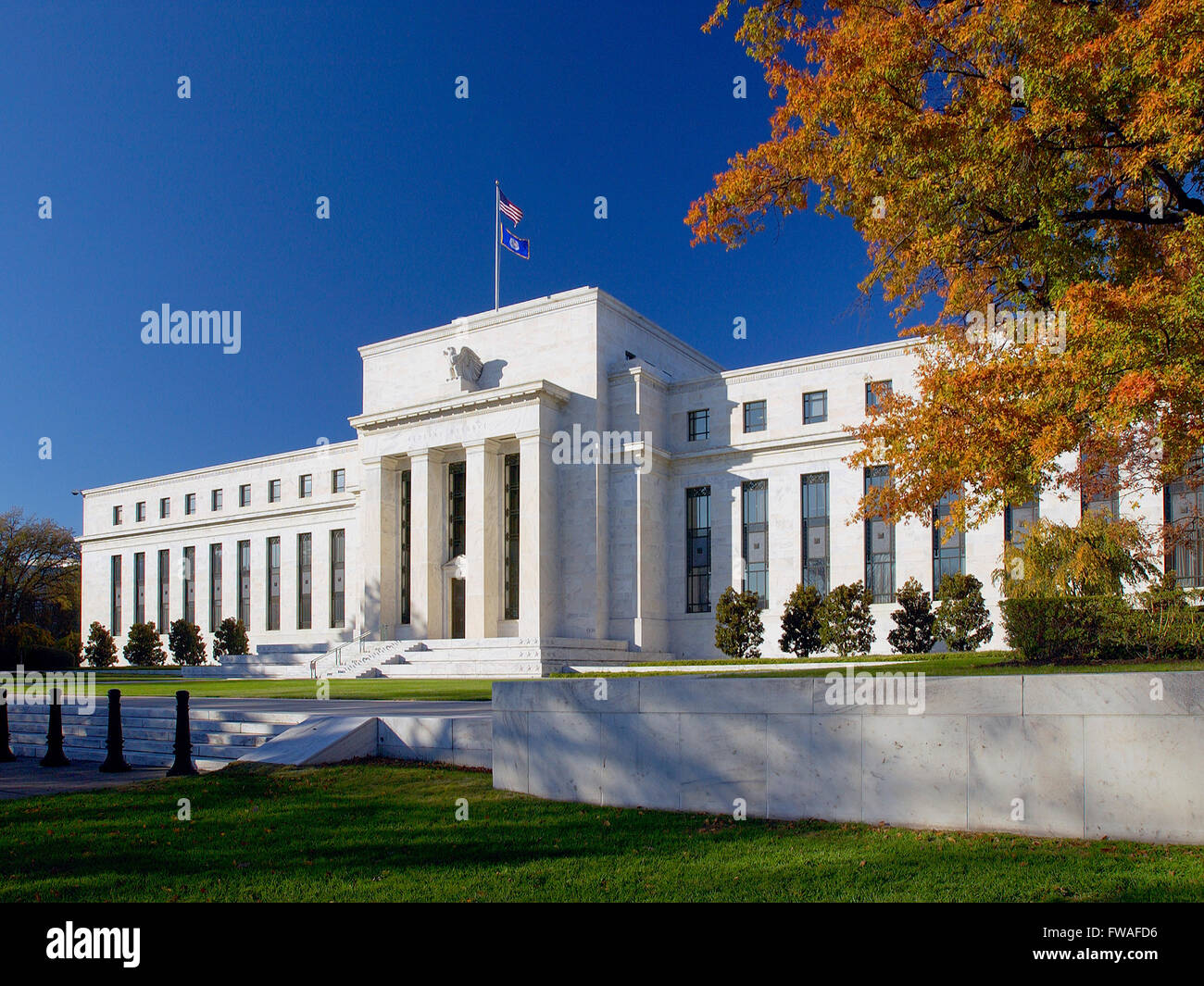
According to the latest reports, U.S. President Trump adopted various measures to weaken the political independence of the Federal Reserve in the first year of his second term, forcing the central bank to comply with his interest rate cut demands [1]. At the start of 2026, the Federal Reserve faces two critical tests:
Powell emphasized: “Public service sometimes requires standing firm in the face of threats” [3]. He stated that he will continue to perform his duties with integrity, formulating monetary policy based on economic data rather than political considerations.
The “Audit the Fed” bill advancing in Congress could lead to the Government Accountability Office (GAO) conducting real-time reviews of the Federal Reserve’s monetary policy deliberations and FOMC communications [4]. This legislation will break a long-standing taboo in Congress and may create a chilling effect on internal debates within the Federal Reserve. Economists generally agree that independence of monetary policy decisions from short-term political pressure is crucial for economic outcomes [4].
Former Federal Reserve Chair Janet Yellen recently delivered a speech on the future of the Federal Reserve, clearly expressing concerns about “Fiscal Dominance” [4]. She pointed out:
- To reduce debt service costs, Trump has publicly demanded that the Federal Reserve lower interest rates below most estimated “neutral” interest rate levels
- Trump has attempted to remove Federal Reserve governors not appointed by him for “just cause”
- The president has claimed the authority to remove Federal Reserve Board members due to policy reasons
The historical lessons of political interference in central banks are extremely profound. In the 1970s, President Nixon pressured the Federal Reserve to ease monetary policy, directly leading to the stagflation crisis that plagued the U.S. economy for decades [5]. A European Central Bank report warns that such credibility crises will amplify fiscal sustainability risks and undermine financial stability [5].
If Federal Reserve independence is compromised, its core ability to anchor inflation expectations and maintain price stability will be fundamentally challenged, potentially leading to:
| Impact Area | Specific Risk |
|---|---|
Inflation Expectations |
Loss of credibility could lead to unanchored inflation expectations |
Interest Rate Pricing |
Politically driven rate cuts may trigger yield curve distortions |
U.S. Dollar Credit |
The status of global reserve currency faces erosion risks |
Capital Flows |
International capital may withdraw from U.S. markets |
Current market data shows that investors have begun pricing in policy uncertainty. According to the latest market data, the financial sector fell 1.01% today, significantly underperforming the broader market [0]. This reflects market concerns about the profit outlook and regulatory environment for the banking industry.
Judging from market data, despite political pressure, major U.S. stock indices have performed relatively steadily recently:
| Index | Period Performance | Volatility |
|---|---|---|
| S&P 500 | +2.26% | 0.52% |
| NASDAQ | +2.15% | 0.72% |
| Dow Jones Industrial Average (DJIA) | +4.04% | 0.61% |
| Russell 2000 | +5.72% | 0.92% |
The S&P 500 is currently trading near historical highs, with the SPY ETF closing at $694.07, corresponding to a price-to-earnings ratio of approximately 28.10 times [0]. This valuation is based on the assumption that the Federal Reserve maintains policy independence.
According to professional analysis, if Federal Reserve independence is eroded, stock market valuations may face significant downward pressure:

| Scenario | Estimated P/E Compression | Driving Factors |
|---|---|---|
Base Case (Independent Central Bank) |
22.5x | Policy stability, normal risk premium |
Moderate Pressure |
20.8x (-7.6%) | Political noise but institutional integrity remains |
High Pressure |
18.5x (-17.8%) | Independence questioned, capital outflows |
Severe Erosion |
15.2x (-32.4%) | Central bank credibility collapses, U.S. dollar under pressure |
The latest industry performance data shows a clear pattern of differentiation:
- Real Estate (+1.36%) - Interest rate-sensitive, expected to benefit from rate cuts
- Industrials (+1.32%) - Economic recovery expectations
- Basic Materials (+1.27%) - Inflation hedging demand
- Energy (-1.59%) - Demand concerns
- Financials (-1.01%) - Regulatory risks and policy uncertainty
- Health Care (-0.64%) - Policy-sensitive sector
This differentiation pattern reflects market pricing expectations for different policy scenarios.
Based on historical experience and current data, escalating political pressure may impact the market through the following pathways:

A compromised Federal Reserve independence will directly threaten the U.S. dollar’s status as the global reserve currency:
- Foreign investors may reduce their allocation of U.S. assets
- The U.S. dollar exchange rate faces structural downward pressure
- Hedging costs for multinational corporations will increase
- The global trade settlement system may gradually undergo “de-dollarization”
Taking JPMorgan Chase (JPM) as an example, despite its solid fundamentals (current stock price $329.19, P/E ratio 15.82 times, ROE 16.42%), the financial sector performed weakly today, reflecting market concerns about the following factors:
- Regulatory policy uncertainty
- Impact of interest rate policy fluctuations on net interest margins
- Restricted ability to price credit risks
- Rising potential legal and compliance risks
Facing policy uncertainty, professional institutions recommend considering the following hedging strategies:
| Strategy Category | Specific Recommendations | Rationale |
|---|---|---|
Safe-Haven Assets |
Increase allocation to gold, high-quality sovereign bonds | Hedge against inflation and U.S. dollar depreciation risks |
Geographic Diversification |
Allocate to markets with stable monetary policies such as Canada and Switzerland | Diversify against U.S. policy shocks |
Liquidity Management |
Maintain sufficient liquidity, avoid excessive leverage | Prepare for severe market volatility |
Tail Risk Hedging |
Consider volatility products or option strategies | Guard against extreme events |
In the current uncertain environment, it is recommended to focus on:
- Real Estate- Expected to benefit from interest rate cuts
- Utilities- Defensive nature, stable cash flow
- High-Quality Tech Stocks- Profitability can withstand cycles
- Financial Sector- High policy sensitivity
- Highly Leveraged Cyclical Industries- Valuations under pressure
- Interest Rate-Sensitive Growth Stocks- Rising discount rates
Investors should closely monitor the following indicators:
- Public Statements by Federal Reserve Officials- Especially Powell’s remarks on independence
- DOJ Investigation Progress- Legal developments
- Treasury Yield Curve- Market changes in policy expectations
- U.S. Dollar Index Trend- Signal of international capital flows
- VIX Volatility Index- Indicator of market panic sentiment
Current political pressure poses the most severe test to Federal Reserve independence since the 1970s. Powell clearly characterized the DOJ investigation as an “attack on Federal Reserve independence” [3], and the weight of this statement should not be underestimated.
| Time Node | Key Event |
|---|---|
January 2026 |
Trump announces the nominee for Federal Reserve Chair |
February 2026 |
Senate confirmation hearing |
May 2026 |
Powell’s term expires |
2026 FOMC Meetings |
First interest rate decision led by the new Chair |
In the current environment, investors should:
- Maintain Strategic Resolve- Avoid major adjustments to long-term allocations due to short-term political noise
- Increase Defensive Exposure- Moderately increase allocations to high-quality bonds and low-volatility stocks
- Maintain Liquidity- Set aside buffer funds to deal with market volatility
- Focus on Fundamentals- Select companies with solid profitability and strong balance sheets
- Diversify Geographic Risks- Moderately allocate to high-quality assets in non-U.S. markets
[1] New York Times - “Tests of Fed’s Independence Intensify as Trump Seeks to Reshape Institution” (https://www.nytimes.com/2026/01/07/business/fed-independence-trump.html)
[2] MarketWatch - “Powell says criminal investigation by Trump’s Justice Department threatens Fed’s independence” (https://www.morningstar.com/news/marketwatch/20260111177/powell-says-criminal-investigation-by-trumps-justice-department-threatens-feds-independence)
[3] Fortune - “Powell blasts DOJ criminal probe as attack on Fed independence. ‘Public service sometimes requires standing firm in the face of threats’” (https://fortune.com/2026/01/11/powell-doj-criminal-probe-fed-independence-rate-cuts-trump/)
[4] Brookings Institution - “Remarks by Janet L. Yellen on the future of the Fed” (https://www.brookings.edu/articles/remarks-by-janet-l-yellen-on-the-future-of-the-fed-central-bank-independence-and-fiscal-dominance/)
[5] AInvest - “The Fed’s Integrity Crisis: How Powell’s Legal Troubles Could Reshape U.S. Monetary Policy and Markets” (https://www.ainvest.com/news/fed-integrity-crisis-powell-legal-troubles-reshape-monetary-policy-markets-2601/)
[6] Congress.gov - “Introduction to Financial Services: The Federal Reserve” (https://www.congress.gov/crs_external_products/IF/PDF/IF10054/IF10054.18.pdf)
Report Generation Date: January 12, 2026
Data Sources: Gilin AI Market Data, Bloomberg, Reuters, Major Financial Media
Insights are generated using AI models and historical data for informational purposes only. They do not constitute investment advice or recommendations. Past performance is not indicative of future results.
About us: Ginlix AI is the AI Investment Copilot powered by real data, bridging advanced AI with professional financial databases to provide verifiable, truth-based answers. Please use the chat box below to ask any financial question.