
Impact Analysis of Maruti Suzuki India's Large-Scale Capacity Expansion Plan
Unlock More Features
Login to access AI-powered analysis, deep research reports and more advanced features
About us: Ginlix AI is the AI Investment Copilot powered by real data, bridging advanced AI with professional financial databases to provide verifiable, truth-based answers. Please use the chat box below to ask any financial question.
Related Stocks
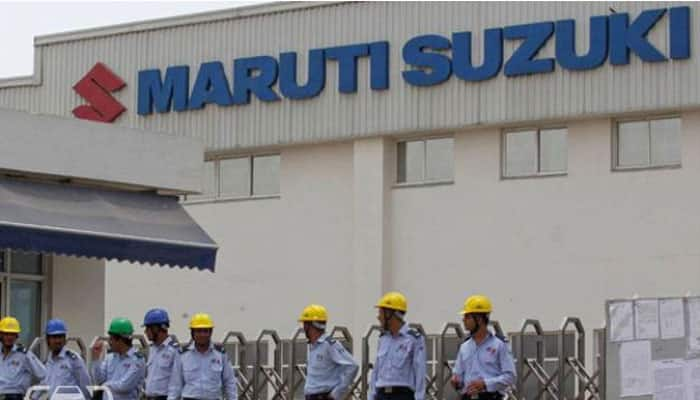
Based on the latest information, this article provides an in-depth analysis of the impact of Maruti Suzuki’s large-scale capacity expansion in India.
According to the latest announcement, Maruti Suzuki, India’s largest automaker, announced on January 12, 2026, that its board of directors has approved the acquisition of land in the Khoraj Industrial Area of Gujarat for a capacity expansion project with a new production capacity of up to 1 million units [1][2]. The initial investment for the project is 49.6 billion Indian rupees (approximately $550 million), covering land acquisition, development, and pre-construction preparations, with funding sourced from a combination of internal funds and external borrowings [2].
Currently, Maruti Suzuki’s annual production capacity across its manufacturing bases in Gurugram, Manesar, Kharkhoda, and Hansalpur is approximately 2.4 million units. If the capacity of the former Suzuki Motor Gujarat plant, which was recently merged, is included, the maximum annual capacity can reach 2.6 million units [2]. This expansion will increase the company’s total capacity by approximately 38%-42%, making it one of the largest capacity expansion projects in the company’s history.
As the absolute leader in the Indian market, Maruti Suzuki achieved monthly sales of 2.22 million units in October 2025, representing a year-on-year growth of 7% [3]. In the global automaker market capitalization rankings, Maruti Suzuki ranks 10th with a market value of $58.35 billion, making it the only Indian enterprise to enter the top 10 global automaker market capitalization list [3]. This large-scale capacity expansion will further consolidate its dominant market position, and its market share in India is expected to increase further from the current approximately 45%-50%.
| Competitor | Current Market Position | Pressure Faced |
|---|---|---|
| Tata Motors | Second-largest automaker, leader in electrification | Needs to accelerate product iteration to cope with price competition |
| Hyundai Motor | Third-largest automaker, core export player | Its export advantage may be replaced by Maruti Suzuki |
| MG Motor | Emerging challenger, positioned in electrification | Needs to achieve differentiated breakthroughs to avoid head-to-head competition |
India’s automobile exports reached 858,000 units in 2025, hitting a record high with a year-on-year growth of 15% [4]. As India’s largest automobile exporter, Maruti Suzuki’s exports reached 395,000 units in 2025, a year-on-year increase of 21%, accounting for 46% of India’s total automobile exports [4]. Over the past five years, India’s annual automobile exports have increased from 413,000 units in 2020 to 858,000 units, with Maruti Suzuki contributing 69% of the growth [4].
The new capacity is clearly oriented towards “meeting the growth of market demand including exports” [2]. Maruti Suzuki currently exports 18 models to approximately 100 countries, including over 13,000 units of its electric model e-Vitara to 29 countries such as those in Europe [4]. Upon completion of the expansion, Maruti Suzuki is expected to further capture emerging markets such as Africa, West Asia, and Latin America, and accelerate its entry into developed markets such as Europe, Japan, and Australia.
India’s electric vehicle (EV) market is in a stage of rapid growth. The market size reached $3.98 billion in 2024, and is expected to reach $17.88 billion by 2032, with a compound annual growth rate (CAGR) of 19.0% [5]. Key players in the market include Tata Motors, MG Motor, and Mahindra & Mahindra, among others [5].
Maruti Suzuki is relatively lagging in the electrification field, but this capacity expansion plan reflects the company’s confidence in the long-term growth of the Indian automobile market. The company is gradually entering the EV market through electric models (such as the e-Vitara), and the Gujarat plant is expected to become an important production base for its electrification transition.
The large-scale capacity expansion will drive Maruti Suzuki to further deepen its localized procurement strategy. Automobile manufacturing involves an extensive network of component suppliers, including:
- Powertrain Suppliers: Engines, transmissions, drive systems
- Body Component Suppliers: Frame, body stamping parts, interior components
- Electronic and Electrical Suppliers: Wiring harnesses, instrument panels, in-vehicle systems
- Chassis and Suspension Suppliers: Wheels, braking systems, suspension systems
With the increase in production capacity, Maruti Suzuki’s procurement volume from local suppliers will increase significantly, which is expected to create supply chain investment opportunities worth billions of Indian rupees.
The Indian government is promoting the transformation of the automobile industry towards sustainable mobility. Maruti Suzuki’s capacity expansion plan has a synergistic effect with the development of India’s EV industry:
- Battery Supply Chain: With the increase in EV production, demand for battery modules, battery management systems (BMS), etc., will rise rapidly
- Charging Infrastructure: India plans to build more charging stations, and cities such as Delhi have already launched pilot projects for shared electric mobility [6]
- Localization of Components: To reduce costs and meet export requirements, localized production of core components will become a priority
Gujarat has become an important agglomeration area for automobile manufacturing in India. Maruti Suzuki’s capacity expansion here will create a “business-driven investment attraction” effect, attracting more component suppliers to set up factories in the surrounding area and forming a complete automobile industry cluster. Such regional agglomeration not only reduces logistics costs but also improves the response speed of the supply chain.
This capacity expansion is a strategic layout by Maruti Suzuki to address market growth demand. The company’s existing production facilities are already nearing full capacity [2], and the new capacity will:
- Break Through Capacity Bottlenecks: Resolve the supply shortage issue and improve delivery capabilities
- Support Export Strategy: Provide capacity guarantee for global layout
- Reduce Unit Costs: Achieve a more optimized cost structure through economies of scale
- Strengthen Competitive Barriers: Further raise the market entry threshold
| Impact Area | Expected Changes |
|---|---|
| Market Competition Structure | Maruti Suzuki’s market share increases, pressure on small and medium-sized automakers intensifies |
| Export Pattern | India’s automobile export capacity improves, global market competitiveness enhances |
| Supply Chain Investment | Localized procurement deepens, foreign suppliers accelerate their layout |
| Electrification Process | Industrial transformation accelerates, investment in charging infrastructure increases |
| Employment and Economy | Manufacturing employment in Gujarat increases, GDP contribution rises |
Maruti Suzuki’s investment of approximately $550 million to expand capacity by 1 million units in Gujarat is a milestone event in the history of India’s automobile industry development. This plan not only reflects the company’s firm confidence in the long-term growth of the Indian automobile market, but will also profoundly reshape the structure of the Indian and even global automobile markets.
In the short term, this capacity expansion will further consolidate Maruti Suzuki’s leading position in the Indian market and exert greater pressure on competitors; in the long term, it will promote the development of India’s automobile industry towards higher capacity, greater intelligence, and greater environmental friendliness, and accelerate India’s strategic process of becoming an important global automobile manufacturing and export base.
Supply chain enterprises should closely monitor Maruti Suzuki’s supplier cooperation dynamics and seize the accompanying industrial supporting opportunities.
[1] Eastmoney.com - Maruti Suzuki Plans to Add 1 Million Units of Production Capacity (https://finance.eastmoney.com/a/202601123615743733.html)
[2] Tribune India - Maruti to acquire land for expansion of production capacity (https://www.tribuneindia.com/news/business/maruti-to-acquire-land-for-expansion-of-production-capacity-at-khoraj-industrial-estate-with-investment-of-rs-4960-crore/)
[3] EET China - 2025 Global Automaker Market Capitalization TOP 10: Tesla Takes the Top Spot, Xiaomi and BYDI Rank Among the Leading Players (https://www.eet-china.com/mp/a464858.html)
[4] Gasgoo - India’s Automobile Exports Hit a Record High of 858,000 Units in 2025 (https://auto.gasgoo.com/news/202601/9I70441787C110.shtml)
[5] Fortune Business Insights - India Electric Vehicle Market (https://www.fortunebusinessinsights.com/zh/india-electric-vehicle-market-106623)
[6] Sina Finance - New Attempt at Electrification Transition: Delhi, India Bets on “Shared Electric Mobility” (https://finance.sina.com.cn/roll/2026-01-04/doc-inhfcxwm2763951.shtml)
Insights are generated using AI models and historical data for informational purposes only. They do not constitute investment advice or recommendations. Past performance is not indicative of future results.
About us: Ginlix AI is the AI Investment Copilot powered by real data, bridging advanced AI with professional financial databases to provide verifiable, truth-based answers. Please use the chat box below to ask any financial question.