
Analysis of the Impact of Heineken CEO's Departure on Global Beer Market Competition Landscape and Company Valuation
Unlock More Features
Login to access AI-powered analysis, deep research reports and more advanced features
About us: Ginlix AI is the AI Investment Copilot powered by real data, bridging advanced AI with professional financial databases to provide verifiable, truth-based answers. Please use the chat box below to ask any financial question.
Based on the collected data, I will provide you with a systematic and comprehensive analysis report.
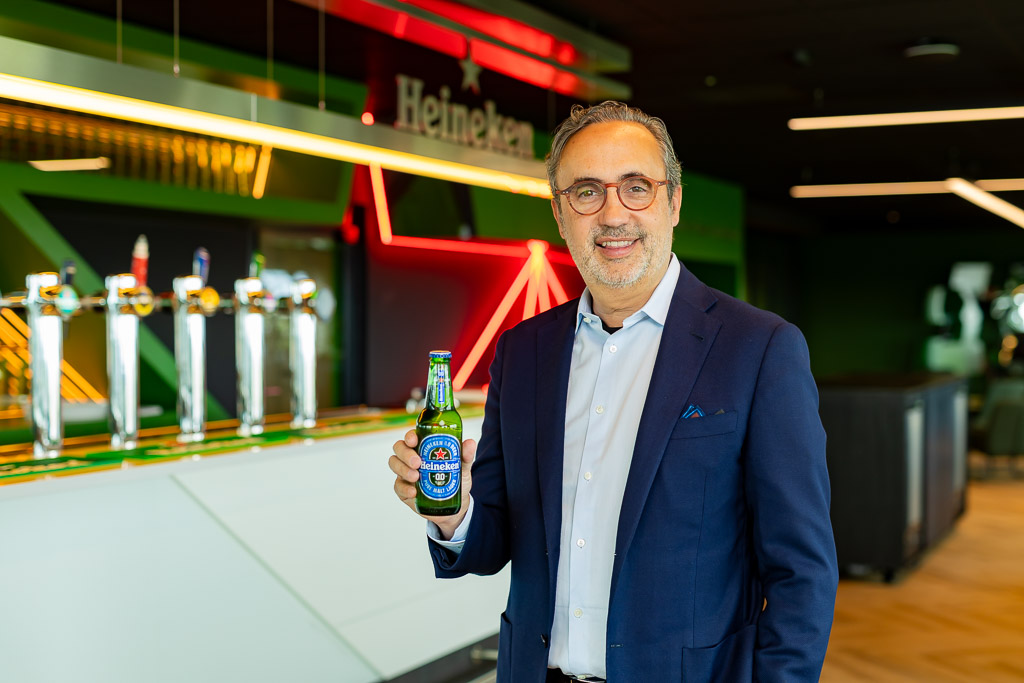
Dutch beer giant Heineken N.V. announced on
In terms of market reaction, the share price performance was relatively stable:
| Indicator | Value | Interpretation |
|---|---|---|
| Current Price | $40.85 | - |
| One-Day Change | +0.81% (+$0.33) |
Mild increase, positive market reaction |
| 5-Day Gain | +2.79% |
Favorable short-term trend |
| 1-Year Gain | +23.19% |
Robust long-term performance |
| 52-Week Range | $32.77 - $46.62 | Currently in the middle of the range |
| Market Capitalization | $45.7B | The world’s second-largest beer manufacturer |
Technical analysis shows that the current share price is in a
Based on the latest financial analysis data [0]:
| Financial Dimension | Metrics | Assessment |
|---|---|---|
Profitability |
ROE 7.75%, Net Profit Margin 6.54%, Operating Margin 12.25% | Above-average |
Valuation Level |
P/E 27.13x, P/B 2.21x, P/S 1.77x | Reasonable Range |
Liquidity |
Current Ratio 0.75, Quick Ratio 0.51 | Short-term debt repayment pressure |
Debt Risk |
Classified as High Risk |
Need to monitor leverage levels |
Accounting Policies |
Conservative | High depreciation/capital expenditure ratio |
Valuation of Heineken using the Discounted Cash Flow (DCF) model [0]:
| Scenario | Intrinsic Value | vs. Current Price |
|---|---|---|
Conservative Scenario |
$87.43 | +114.0% |
Base Scenario |
$120.03 | +193.8% |
Optimistic Scenario |
$234.84 | +474.9% |
Probability-Weighted Valuation |
$147.43 | +260.9% |
| Parameter | Conservative Scenario | Base Scenario | Optimistic Scenario |
|---|---|---|---|
| Revenue Growth Rate | 0.0% | 10.9% | 13.9% |
| EBITDA Margin | 18.9% | 19.9% | 20.8% |
| Terminal Growth Rate | 2.0% | 2.5% | 3.0% |
| WACC | 6.5% | 6.5% | 6.5% |
DCF analysis shows that Heineken’s current share price is
- High debt risk
- Slowing growth in the European market
- Management uncertainty
Based on the financial report data of the last five quarters [0]:
| Reporting Period | EPS | Revenue | Earnings Surprise |
|---|---|---|---|
| Q2 FY2025 | $0.78 | $16.7B | EPS -35.82% vs. Consensus |
| Q4 FY2024 | $0.99 | $15.53B | - |
| Q2 FY2024 | -$0.09 | $15.94B | - |
| Q4 FY2023 | $1.12 | $17.42B | - |
Heineken faces the challenge of
According to industry research data [3], the global beer market exhibits the following characteristics:
| Indicator | 2026 | 2031 Forecast | CAGR |
|---|---|---|---|
Market Size |
$850B | $1.09T | 5.16% |
Lager Category Share |
87.09% | Dominant Position | - |
Premiumization Growth Rate |
- | - | 4.9% |
Non-Alcoholic Beer CAGR |
- | - | 5.30% |
| Region | Market Share | Growth Rate | Strategic Significance |
|---|---|---|---|
Asia-Pacific |
30.12% | 5.40% CAGR | Largest and fastest-growing |
| Europe | ~25% | Low growth | Mature market |
| North America | ~18% | Moderate growth | Driven by premiumization |
| Latin America | ~15% | Mid-speed growth | Heineken’s traditional stronghold |
| Other | ~12% | - | Emerging opportunities |
The global beer market is
| Company | Estimated Market Capitalization | Market Share | Strategic Advantages |
|---|---|---|---|
AB InBev |
~$150B | ~30% (global) | Scale advantage, brand portfolio |
Heineken |
$45.7B | ~10-12% | International brand, premium positioning |
Carlsberg |
~$15B | ~6-8% | Traditional European market |
Molson Coors |
~$12B | North America-focused | Position in the U.S. market |
Constellation Brands |
~$45B | Premium segment | Modelo, Corona |
-
Deepening Premiumization
- Consumers are willing to pay a premium for quality, storytelling, and experience
- Heineken 0.0 (non-alcoholic) and ultra-premium brands benefit
- The CAGR of premium beer is expected to reach 5.45%
-
Boom in Non-Alcoholic/Low-Alcohol Beverages
- Young consumers prefer “responsible drinking”
- CAGR of up to 5.30%
- Heineken has an early layout in this field
-
Supply Chain and Cost Optimization
- Fluctuations in raw material (malt, hops) costs
- Cost pressure from aluminum cans
- Sustainability has become a differentiating factor
- van den Brink will remain as an advisor for 8 monthsto ensure strategic continuity
- His nearly six-year tenure is sufficient to establish a mature management team
- The company is already conducting succession planning(e.g., the succession plan was mentioned in the Heineken USA Brand Director job posting [5])
- The new CEO may bring strategic direction adjustments
- Key decisions (such as mergers and acquisitions, regional expansion) may be delayed
- Investor confidence may be under short-term pressure
| Competitor | Potential Impact | Heineken’s Response Strategy |
|---|---|---|
AB InBev |
May seize the opportunity to gain market share, especially in the Asia-Pacific and Latin American markets | Accelerate the promotion of premium and non-alcoholic products |
Carlsberg |
May intensify its offensive in the European market | Maintain advantages in the traditional European market |
Constellation Brands |
Continue premiumization offensive | Strengthen Heineken 0.0 and ultra-premium brands |
Molson Coors |
Compete with cost advantages | Optimize supply chain efficiency |
| Region | Degree of Impact | Analysis |
|---|---|---|
Asia-Pacific |
High |
Fierce competition; the new CEO needs to accelerate growth |
| Europe | Medium | Mature market; need to defend against AB InBev and Carlsberg |
| Latin America | Medium-High | Heineken’s traditional stronghold; need to maintain position |
| Africa | Medium-Low | Emerging growth point; need investment |
- Market’s required premium for management uncertainty increases
- Share price may come under pressure in the short term
- However, the current share price is already in a consolidation range, limiting the decline
| Scenario | Valuation Change | Trigger Factors |
|---|---|---|
Ideal Scenario |
+15% to +25% | New CEO has international experience and clear strategy |
Neutral Scenario |
0% to +10% | Smooth transition with no major strategic changes |
Unfavorable Scenario |
-5% to -15% | Strategic chaos or loss of market opportunities |
According to DCF analysis, Heineken’s long-term valuation range is $120-$147 [0]. The new CEO’s leadership will determine whether the company can:
- Achieve a historical revenue growth rate of 10.9%
- Maintain an EBITDA margin of 19.9%
- Seize the opportunities of 5.4% growth in the Asia-Pacific marketand5.45% growth from premiumization
- Announcement of a clear succession plan
- Q4 FY2025 earnings beat consensus (to be released on February 10, 2026 [0])
- Major breakthrough in the Asia-Pacific market
- Success of non-alcoholic product line
- Unclear successor
- Sustained weakness in the European market
- Rising debt costs
- Macroeconomic recession
| Rating | Percentage |
|---|---|
Buy |
60% |
| Hold | 20% |
| Sell | 20% |
Overall Consensus |
Buy |
| Metric | Value | Industry Comparison |
|---|---|---|
| Current P/E | 27.13x | Reasonable (industry average 25-30x) |
| Current P/B | 2.21x | Low (historical average ~3x) |
| EV/OCF | 12.42x | Medium |
| DCF-Implied Discount | ~66% |
Significantly Undervalued |
| Investor Type | Recommended Strategy |
|---|---|
Long-Term Value Investors |
Gradually build positions, wait for clarification of succession plan |
Short-Term Traders |
Monitor the $40.50 support level, stop loss at $39.50 |
Institutional Investors |
Maintain core positions, monitor opportunities for position adjustments |
-
Mild Market Reaction: The share price rose 0.81% after the CEO’s departure was announced, indicating that the market views this as an orderly transition rather than a negative event [1].
-
Significant Valuation Discount: DCF analysis shows that the current share price is discounted by approximately 66% relative to intrinsic value; if the new CEO can restore growth momentum, there is huge potential for valuation recovery [0].
-
Short-Term Stability of Competitive Landscape: Heineken ranks second in the global beer market, with traditional advantages in the Asia-Pacific and Latin American markets; the competitive landscape will not undergo fundamental changes in the short term [3].
-
Succession is a Key Variable: The strategic direction of the new CEO will determine whether Heineken can seize the three major trends of premiumization, non-alcoholization, and Asia-Pacific growth.
- February 10, 2026: Release of Q4 FY2025 earnings report to test operational execution [0]
- May 31, 2026: CEO officially steps down, monitor the announcement of the successor
- Next 6 months: Performance in the Asia-Pacific market, sales growth of non-alcoholic products
[1] Reuters - “Heineken’s van den Brink to step down as CEO” (https://www.globalbankingandfinance.com/heinekens-van-den-brink-step-down-ceo/)
[0] Jinling AI Financial Database - Real-time quotes, technical analysis, financial analysis, and DCF valuation data for Heineken
[3] Mordor Intelligence - “Beer Market Size, Share Analysis & Industry Report, 2031” (https://www.mordorintelligence.com/industry-reports/beer-market)
[4] Yahoo Finance - “Beer’s Big Comeback? 2 Stocks Poised to Benefit in 2026” (https://finance.yahoo.com/news/beer-big-comeback-2-stocks-194300285.html)
[5] LinkedIn - Heineken USA Brand Director Job Posting (https://www.linkedin.com/jobs/view/brand-director-at-the-heineken-company-4358560934)
Insights are generated using AI models and historical data for informational purposes only. They do not constitute investment advice or recommendations. Past performance is not indicative of future results.
About us: Ginlix AI is the AI Investment Copilot powered by real data, bridging advanced AI with professional financial databases to provide verifiable, truth-based answers. Please use the chat box below to ask any financial question.