
DOJ Criminal Investigation into Fed Chair Powell: Market Response and Institutional Implications
Unlock More Features
Login to access AI-powered analysis, deep research reports and more advanced features
About us: Ginlix AI is the AI Investment Copilot powered by real data, bridging advanced AI with professional financial databases to provide verifiable, truth-based answers. Please use the chat box below to ask any financial question.
Related Stocks
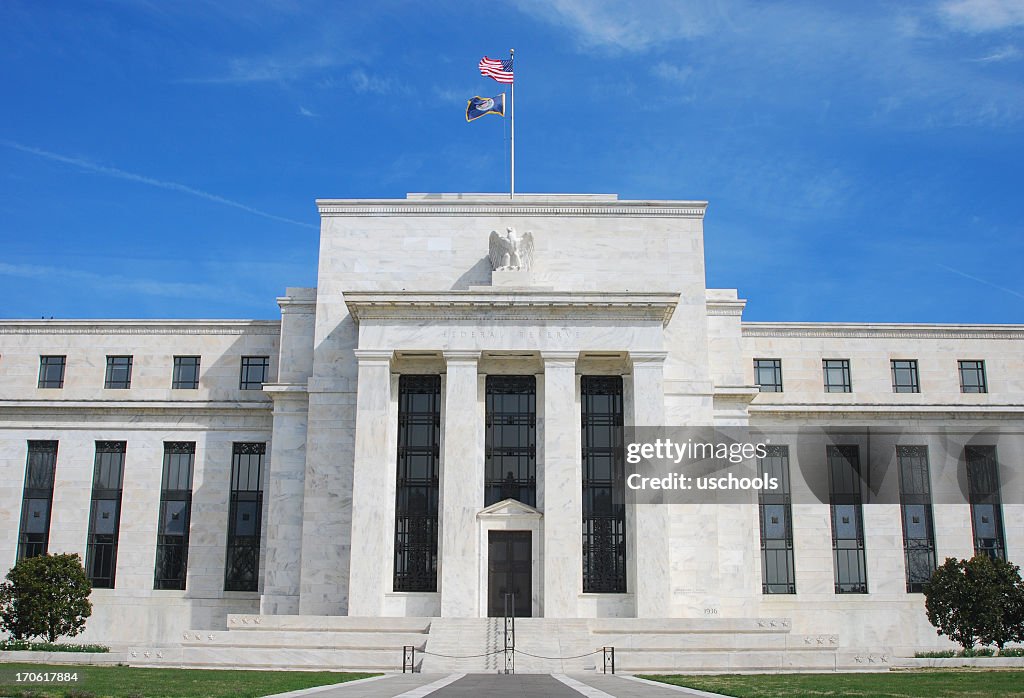
The DOJ’s criminal investigation into Federal Reserve Chair Jerome Powell represents a watershed moment for U.S. financial institutions and global market confidence in American monetary policy independence. According to the YouTube video featuring Jim Cramer’s “Mad Money” commentary [7], Wall Street participants are predominantly adopting a dismissive stance toward the investigation’s practical implications, betting that no meaningful action will transpire between the federal government and the central bank. This market positioning aligns with the observed price action on January 12, 2026, where initial selling pressure across equities, the dollar, and Treasury securities ultimately reversed, with the S&P 500 closing up 0.48% and the NASDAQ gaining 0.67% [0][1].
The investigation’s scope centers on Powell’s June 2025 congressional testimony concerning a $2.5 billion renovation project at the Federal Reserve’s headquarters in Washington, D.C. Grand jury subpoenas have been served to Federal Reserve officials, and the DOJ has threatened potential criminal indictment, prompting Powell to break his typical public silence with a rare video statement released on Sunday, January 11, 2026. Powell characterized the investigation as a “pretext” designed to justify political retaliation against the Fed for its resistance to pressure to lower interest rates, according to coverage by Yahoo Finance and NBC News [1][3]. This framing transforms what might otherwise appear as a routine oversight inquiry into a fundamental confrontation over central bank independence—a concept that has underpinned global confidence in U.S. financial markets for decades.
The market’s initial reaction pattern provides critical insight into investor sentiment and risk assessment. The Dollar Index (DXY) declined by 0.3% to 0.4% during the trading session, while 10-year Treasury yields climbed above 4.2%—reaching levels not seen since September 2025—and 30-year yields surpassed 4.8% [0][2][3]. ING analysts, cited by Fidelity Investments, noted that the combined decline in the dollar, equities, and Treasury prices represented a significant signal of market alarm, warning that the dollar faces “substantial downside risks” if further interference with Fed independence emerges [2]. This price action mirrors patterns observed during the Spring 2025 “Sell America” trade, suggesting that market participants are actively monitoring the situation for escalation risks while maintaining a baseline assumption of institutional stability.
The political dimensions of this investigation extend beyond partisan lines, creating an unusual coalition of critics. Former Federal Reserve chairs—including Alan Greenspan, Ben Bernanke, and Janet Yellen—along with multiple former Treasury secretaries, released an unprecedented joint condemnation of the DOJ’s actions, according to ABC News [6]. Republican senators have also joined Democrats in criticizing the investigation, with Senator Elizabeth Warren characterizing the administration’s approach as “wannabe dictator” behavior [6]. This bipartisan backlash suggests that the DOJ may face significant political constraints, potentially limiting the investigation’s ultimate reach and reinforcing market expectations that “nothing will happen,” as Cramer observed.
The investigation’s timing carries particular significance given Powell’s term as Fed chair is scheduled to conclude in May 2026, creating natural succession dynamics that intersect with the political pressure campaign. According to analysis from the Las Vegas Review-Journal, there is growing speculation that Powell might seek to remain on the Federal Reserve Board beyond his chairmanship to defend institutional independence, rather than allowing a potentially compromised departure that could set a precedent for future political interference with central bank officials [5]. This institutional self-preservation instinct may explain why Powell chose to address the investigation publicly—a departure from the Fed’s traditional preference for depoliticized communication.
The monetary policy implications deserve careful attention from a fundamental perspective. Market participants had been anticipating potential interest rate cuts at the January 30, 2026 Federal Open Market Committee meeting, but the DOJ investigation may fundamentally alter the Fed’s calculus. Analysts suggest the Fed may now be even less likely to implement rate cuts in the near term, as any accommodation could be characterized as political capitulation rather than data-driven policy, according to coverage by the Las Vegas Review-Journal [5]. The Fed may instead use the upcoming FOMC meeting to signal its commitment to independence through a more hawkish policy stance, regardless of underlying economic conditions.
From an international standpoint, the investigation raises questions about how foreign central banks and sovereign investors perceive U.S. institutional stability. The dollar’s role as the primary reserve currency depends fundamentally on investor confidence in U.S. institutions’ independence from political manipulation. While markets have thus far bet against significant fallout, the trajectory of the investigation and any perceived erosion of Fed independence could gradually influence foreign portfolio allocation decisions, with potentially significant implications for Treasury financing costs and U.S. dollar purchasing power over medium-term horizons.
The “Sell America” trade dynamics identified by NBC News analysts merit monitoring as a potential early warning indicator [3]. The term describes coordinated selling of U.S. assets by both domestic and foreign investors in response to perceived policy instability. If the investigation escalates—or if additional actions against Fed officials or other independent agencies occur—we could see renewed pressure on the dollar and Treasury yields that extends beyond a single trading session. Treasury futures markets, according to ING’s analysis, currently suggest that participants are “not ready to price in a loss of Fed independence,” but this baseline assumption remains contingent on the investigation’s trajectory [2].
The risk landscape surrounding this development encompasses multiple dimensions requiring vigilant monitoring. The most immediate financial market risk involves sustained dollar weakness and elevated Treasury yields, which could compound if the investigation generates additional headlines or if market participants reassess the probability of meaningful consequences. A sustained 10-year yield above 4.2% carries broader economic implications, potentially affecting mortgage rates and corporate financing costs even before any actual policy changes occur [3]. The mortgage market, which closely tracks 10-year Treasury yields, could experience rate increases that impact housing affordability and residential investment.
Institutional credibility risks extend beyond the immediate market reaction. The Federal Reserve’s effectiveness as a monetary authority depends on market confidence that policy decisions reflect economic considerations rather than political pressure. If investors, businesses, or foreign counterparties begin to doubt this independence, the Fed’s ability to manage expectations and influence financial conditions could be compromised. This represents a second-order risk that may not manifest immediately in market prices but could affect economic outcomes over the medium term.
Legal and procedural risks warrant attention as the investigation proceeds. The issuance of grand jury subpoenas suggests a formal process with potential for escalation, yet the unprecedented nature of pursuing a sitting Fed chair creates legal uncertainty regarding jurisdiction, immunities, and the appropriate scope of oversight over central bank operations. These legal ambiguities could produce unexpected outcomes, either in the form of rapid dismissal on jurisdictional grounds or extended litigation that maintains uncertainty over extended periods.
Opportunity considerations, from an informational standpoint, include potential volatility around scheduled economic data releases and FOMC communications. Tuesday’s CPI report and the January 30 FOMC meeting will receive enhanced attention as markets assess how the Fed responds to both economic conditions and political pressure simultaneously. Traders and investors may find tactical opportunities around these events, though increased volatility also implies elevated position risk.
The bipartisan congressional backlash creates a potential moderating influence that could constrain the investigation’s scope. Congress retains oversight authority over the executive branch and could potentially exercise oversight hearings or legislative responses if the investigation appears to cross institutional norms. This political check represents a potential stabilizing factor that market participants should monitor for signals of congressional intent.
The DOJ investigation into Fed Chair Powell centers on questions regarding his testimony about a $2.5 billion Federal Reserve building renovation project, with Powell characterizing the probes as politically motivated retaliation for his resistance to pressure on interest rate decisions. The investigation has generated bipartisan criticism from current members of Congress and former Fed chairs, while markets initially exhibited stress before recovering, suggesting investor skepticism about the investigation’s practical consequences. The dollar weakened during the trading session while Treasury yields climbed, with the 10-year rate exceeding 4.2% and reaching levels last observed in September 2025. Powell’s term as Fed chair concludes in May 2026, adding succession dynamics to an already complex political situation. Market participants, following Cramer’s analysis, appear to be betting that institutional norms will ultimately constrain the investigation’s impact, though the trajectory of developments remains uncertain and warrants continued monitoring.
Insights are generated using AI models and historical data for informational purposes only. They do not constitute investment advice or recommendations. Past performance is not indicative of future results.
About us: Ginlix AI is the AI Investment Copilot powered by real data, bridging advanced AI with professional financial databases to provide verifiable, truth-based answers. Please use the chat box below to ask any financial question.