
In-Depth Analysis of the Impact of 'Waste-Free City' Construction Policies on Environmental Protection Industry Investment
Unlock More Features
Login to access AI-powered analysis, deep research reports and more advanced features
About us: Ginlix AI is the AI Investment Copilot powered by real data, bridging advanced AI with professional financial databases to provide verifiable, truth-based answers. Please use the chat box below to ask any financial question.
Related Stocks
Based on collected policy information and industry data, I will systematically analyze the impact of the ‘Waste-Free City’ construction policies on investments in the environmental protection industry.
On January 13, 2025, the State Council Information Office held a regular policy briefing, where Li Gao, Vice Minister of the Ministry of Ecology and Environment, announced:

Based on the policy framework and industry data, the 560 billion RMB solid waste management investment mainly flows into the following
- Construction and upgrading of waste incineration treatment facilities
- Co-processing facilities for food waste
- Harmless treatment and resource utilization of fly ash
- Regional centralized hazardous waste disposal facilities
- Hazardous waste collection and transportation system for small and micro enterprises
- Pilot projects for centralized collection and storage of hazardous waste in industrial parks
| Sub-Sector | Market Characteristics | Growth Potential |
|---|---|---|
| Waste Mineral Oil | Dominated by leading enterprises | Steady Growth |
| Waste Lead-Acid Batteries | Improved recycling system | Moderate Growth |
| Laboratory Waste | Emerging Blue Ocean | High Growth |
| Halogen-Containing Organic Waste | Tight production capacity | Supply Shortage |
- Increase the resource utilization rate of construction waste to 65%
- The proportion of recycled aggregates replacing natural sand and gravel exceeds 50%
- Promote the application of recycled construction waste aggregates in construction and road engineering [5]
- Large-scale utilization of bulk industrial solid waste (tailings, gangue, metallurgical slag, etc.)
- Construction of green mines and “waste-free” mining areas
- Exploration of industrial solid waste reduction paths in key industries [5]
- Construction of straw collection and storage systems
- Resource utilization of livestock and poultry manure
- Recycling of agricultural film and promotion of degradable alternatives
| Market | 2024 Scale | 2025 Forecast | Annual Growth Rate |
|---|---|---|---|
| Power Battery Recycling | RMB 75 Billion | RMB 82 Billion | 9.3% |
| Waste Steel Recycling | RMB 300 Billion | RMB 350 Billion | 16.7% |
| Waste Electrical and Electronic Products | RMB 200 Billion | RMB 240 Billion | 20% |
The policy clearly promotes the active joint construction of regional “Waste-Free Cities” in the
| Region | Characteristics | Investment Density |
|---|---|---|
| Beijing-Tianjin-Hebei | Policy Pioneer, Collaborative Governance | High |
| Guangdong-Hong Kong-Macao Greater Bay Area | Economically Developed, Technologically Leading | High |
| Middle Yangtze River Urban Agglomeration | Undertakes Industrial Transfer | Medium |
| Chengdu-Chongqing Region | Western Growth Pole | Medium |
- Inter-Provincial “White List” System:Pilot cooperation between Shanghai and hazardous waste disposal enterprises in Jiangsu and Anhui
- Enclave Cooperation:Overall planning of solid waste disposal between Shanghai Laogang and Jiangsu Haimen
- Ecological Compensation Mechanism:Water quality improvement rate in the Taipu River Basin of the Yangtze River Delta reaches 41% [7]
The environmental protection industry is shifting from “incremental construction” to “stock optimization”. In 2025, the proportion of investment in ecological environmental engineering is expected to drop to
- Upgrading of waste incineration plants (flue gas purification efficiency improvement, zero sewage discharge)
- Smart Operations (AI optimization of incineration processes to improve power generation efficiency)
- Refined management of existing facilities
- Low-Carbon Technologies:Hydrogen metallurgy, Carbon Capture, Utilization and Storage (CCUS), biomass energy
- Intelligent Technologies:Industrial Internet smart environmental protection platform, AI pollution traceability system
- Biotechnology:Application of gene editing in contaminated soil remediation [7]
| Sub-Sector | Market Space | Growth Rate |
|---|---|---|
| Power Battery Recycling | RMB 82 Billion | 11x (2020-2025) |
| Organic Solid Waste Treatment | RMB 600 Billion (Biogas) | Trillion-Level Track |
| Smart Environmental Protection | RMB 300 Billion (Contract Environmental Services) | Sustained Growth |
- Sanfeng Environment:54 projects in operation, 42,500 tonnes per day treatment capacity, handled 7.73 million tonnes of waste in H1 2025 [3]
- Everbright Environment:Leading enterprise in hazardous waste disposal, acquired 45% equity of Beijing Orient Landscape Co., Ltd.
- Hanlan Environment:Full industrial chain layout for solid waste treatment
- Shan Gao Huan Neng:Resource utilization of waste oil, benefiting from the EU’s mandatory SAF blending policy
- INTCO Recycling:Leading enterprise in recycled plastics
- GEM:Closed-loop system for power battery recycling, metal recovery rate of 98.5% [7]
- Focused Photonics:Domestic substitution of scientific instruments, benefiting from equipment update policies
- SDL:Leading enterprise in environmental monitoring
- Overcapacity Risk:In 2023, the waste incineration treatment capacity was 862,000 tonnes per day, while the actual treatment volume was only 629,000 tonnes per day, leaving anunused capacity of over 200,000 tonnes per day[6]
- Subsidy Reduction Risk:The agricultural and forestry biomass power generation industry is highly dependent on subsidies
- Intensified Competition:Low-price competition erodes profit margins
- Payment Collection Cycle:Tight government fiscal funds lead to longer accounts receivable periods for waste disposal fees
The ‘Waste-Free City’ construction policies have brought
- Domestic Waste Incineration Power Generation(RMB 140 Billion) — In the era of stock operation, we are optimistic about technological upgrading and refined management
- Hazardous Waste Disposal(RMB 120 Billion) — Regional collaboration brings new opportunities
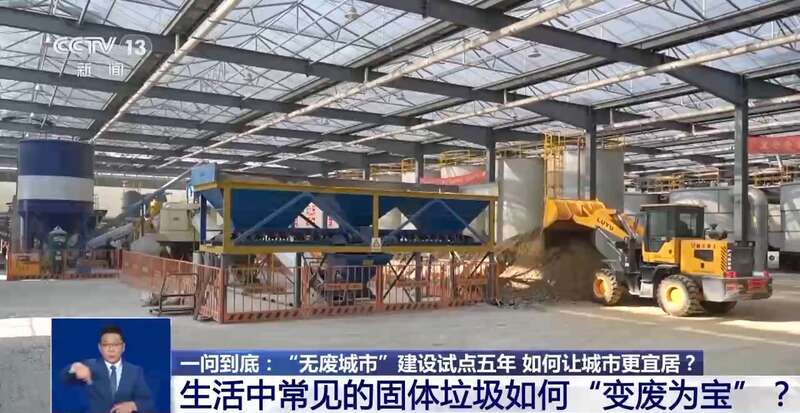
- Construction Waste Resource Utilization(RMB 90 Billion) — Policies drive the increase of resource utilization rate
- Industrial Solid Waste(RMB 110 Billion) — Core area of circular economy
- Agricultural Organic Solid Waste(RMB 50 Billion) — New trillion-level track
- Renewable Resource Recycling(RMB 40 Billion) — Key direction supported by policies
[1] Ministry of Ecology and Environment: Around 200 More Cities to Carry Out ‘Waste-Free City’ Construction During the 15th Five-Year Plan Period - People’s Finance News (https://finance.eastmoney.com/a/202601133617100472.html)
[2] 2026 January Investment Strategy for Public Utilities and Environmental Protection - Guosen Securities (https://pdf.dfcfw.com/pdf/H3_AP202601061816141962_1.pdf)
[3] 2025 Half-Year Report of Chongqing Sanfeng Environment Group Co., Ltd. (https://stockmc.xueqiu.com/202508/601827_20250827_V9EU.pdf)
[4] In-Depth Research on the Most Competitive Environmental Protection Market in China: 5 Key Changes We Observed - Green Hill Research Institute (https://mp.ofweek.com/ecep/a056714079547)
[5] Work Plan for ‘Waste-Free City’ Construction During the 14th Five-Year Plan Period - Ministry of Ecology and Environment (https://www.mee.gov.cn/xxgk2018/xxgk/xxgk03/202112/W020211215761126730366.pdf)
[6] Not Enough Waste to Incinerate: Can the “Ten Measures for Solid Waste Management” Bring New Opportunities to the Environmental Protection Industry? - Sina Finance (https://finance.sina.com.cn/stock/wbstock/2026-01-10/doc-inhfvsui4655663.shtml)
[7] China’s Environmental Protection Industry: From Policy-Driven to Dual-Driven by Market and Technology in 2025 - HC360 Water Industry Network (http://www.water.hczyw.com/detail/new/825090908010128)
Insights are generated using AI models and historical data for informational purposes only. They do not constitute investment advice or recommendations. Past performance is not indicative of future results.
About us: Ginlix AI is the AI Investment Copilot powered by real data, bridging advanced AI with professional financial databases to provide verifiable, truth-based answers. Please use the chat box below to ask any financial question.