Strategic Analysis Report on Hyundai Motor's Recruitment of Former NVIDIA/Tesla Executive
Unlock More Features
Login to access AI-powered analysis, deep research reports and more advanced features
About us: Ginlix AI is the AI Investment Copilot powered by real data, bridging advanced AI with professional financial databases to provide verifiable, truth-based answers. Please use the chat box below to ask any financial question.
Based on the collected information, I will now provide you with a detailed analytical report.
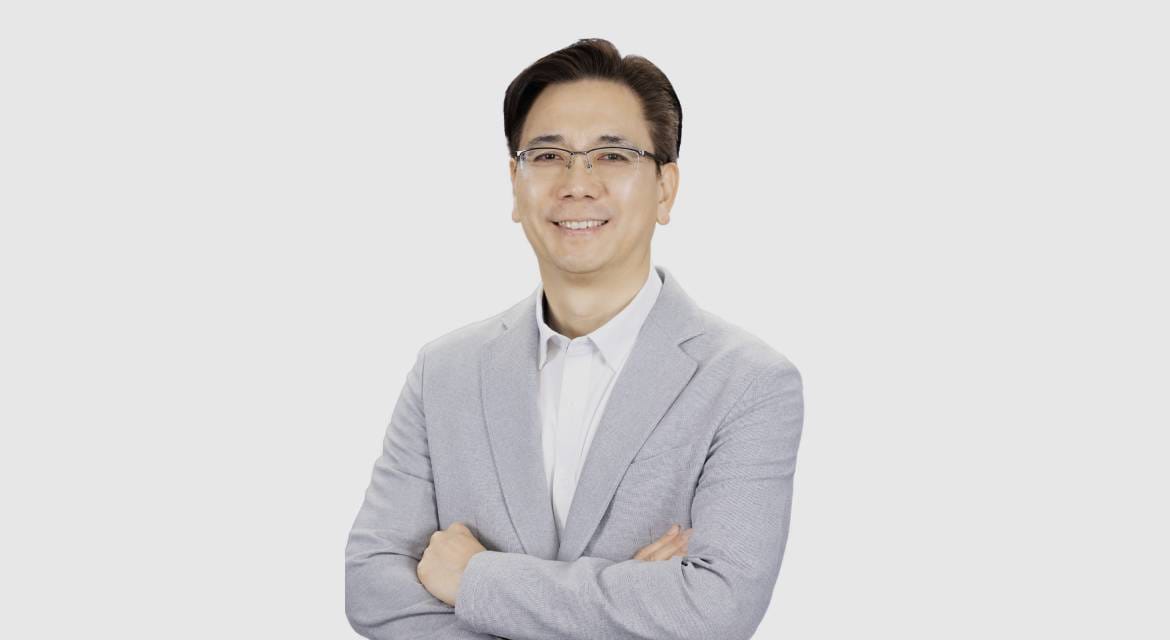
On January 13, 2026, Hyundai Motor Group announced the appointment of Park Min-woo, former Vice President of NVIDIA, as the new head of its Advanced Vehicle Platform (AVP) Department. This move marks an important strategic counterattack by Hyundai Motor in the fields of autonomous driving and Software-Defined Vehicle (SDV). As a senior technical expert who has worked at two tech giants, NVIDIA and Tesla, Park Min-woo’s joining is highly anticipated by the industry, and is expected to help Hyundai Motor narrow the gap with Tesla in autonomous driving technology. This report will conduct in-depth research from multiple dimensions including technological gap analysis, talent recruitment strategy, transformation dilemmas and enlightenment of traditional automakers.
According to reports from Yonhap News Agency and Korea Joint News, Park Min-woo has a rich background in autonomous driving technology[1]. He previously worked at Tesla before joining NVIDIA, where he was an early core member of NVIDIA’s autonomous driving perception technology team and participated in building the company’s autonomous driving development framework[1]. Park Min-woo is recognized by the industry as an expert in computer vision for autonomous driving, and his professional capabilities are exactly what Hyundai Motor currently needs urgently.
Park Min-woo is replacing Song Chang-hyeon, who resigned suddenly last month. Song Chang-hyeon’s resignation is widely interpreted by the outside world as taking responsibility for the unmet expectations of Hyundai Motor Group’s progress in autonomous driving technology[1]. Despite Hyundai Motor’s heavy investment in the AVP Department, its technological progress still lags behind that of its competitors.
In addition to serving as the head of the AVP Department, Park Min-woo will also concurrently serve as the CEO of Hyundai Motor’s software research subsidiary 42dot[1]. This dual role means that he will oversee the overall work of Hyundai Motor Group in vehicle software technology development and commercialization, and shoulder the important mission of accelerating the group’s software transformation.
The competitive pressure facing Hyundai Motor was fully reflected at the 2026 CES exhibition. After NVIDIA released its new autonomous driving AI platform Alpamayo, NVIDIA CEO Jensen Huang held a private meeting with Hyundai Motor Executive Chairman Euisun Chung, sparking speculation in the industry about possible deepened cooperation between the two parties[2]. This indicates that Hyundai Motor has realized that it is difficult to narrow the gap with industry leaders in the short term by relying on its own strength, and cooperation with tech giants has become an important option.
Hyundai Motor Group has already established a deep cooperative relationship with NVIDIA. On October 31, 2025, the two parties signed a memorandum of cooperation with the Ministry of Science and ICT of South Korea to jointly promote the development of South Korea’s physical AI industry, with a total investment of approximately $3 billion[3]. This cooperation covers multiple fields such as autonomous driving AI model training, smart factory construction, and robot technology development, laying a foundation for Hyundai Motor to introduce advanced external technologies.
According to in-depth analysis by Korean media Asia Economic, the technological gap between Hyundai Motor and Tesla in autonomous driving is systematic, covering multiple aspects such as technical architecture, data iteration model, and commercialization speed[4].
The innovation in Tesla’s technological iteration model is one of the key factors for it to maintain its leading position. Tesla adopts a model of “pushing immature technology on a small scale and quickly iterating and optimizing it through user usage data”, forming a virtuous cycle of technological evolution[4]. This model allows Tesla to collect massive data in real environments and continuously optimize its autonomous driving algorithms.
According to the latest reports, Tesla’s FSD Supervised system has achieved remarkable results — user David Moss drove over 11,000 miles in a single trip without any intervention on the steering wheel or pedals[5]. This data fully demonstrates the technical maturity of Tesla’s end-to-end neural network. Wall Street analyst Pierre Ferragu raised Tesla’s target stock price from $520 to $600, stating: “The signal from CES 2026 is clear and resounding: the industry has not caught up with Tesla; instead, the industry is validating Tesla’s strategy… it’s just 12 years behind.”[6]
In contrast, due to its long-term corporate culture centered on quality and safety, Hyundai Motor has a low tolerance for failures and accidents, and has not adopted a similar rapid trial-and-error iteration model[4]. Although this conservative strategy reduces short-term risks, it also slows down the speed of innovation, forming a vicious cycle of widening technological gaps.
Hyundai Motor also faces challenges in the mass production and implementation of L3 autonomous driving. Kia, a subsidiary of Hyundai, originally planned to equip its EV9 model with L3 autonomous driving functions supporting speeds of up to 80km/h, but ultimately canceled the function due to insufficient stability in rainy days and at night, as well as regulatory restrictions in most countries (which require speeds below 60km/h)[4]. As of now, Hyundai has not launched a mass-produced L3 model, and still mainly offers L2+ functions.
This situation stands in sharp contrast to Tesla. Tesla has clearly stated its goal of removing safety drivers from robotaxi operations in 2026, and plans to expand its service scale in multiple cities such as Austin and Phoenix[5]. Tesla plans to use approximately 10 billion miles of training data to improve the safety and reliability of autonomous driving[5].
The primary challenge faced by traditional automakers in the process of intelligent transformation is the conflict of organizational culture. According to in-depth reports from Sina Finance, traditional automakers adopt a hierarchical pyramid-style decision-making mechanism with cumbersome approval processes, while the technical iteration speed in the smart vehicle field is extremely fast, requiring rapid decision-making responses and flexible adjustment mechanisms[7].
Taking Haomo Zhixing as an example, its internal organization is equivalent to a scaled-down original equipment manufacturer, with as many as a dozen first-level departments including artificial intelligence, capital markets, products, and engineering directly reporting to the CEO. The three core teams of products, algorithms, and hardware operate independently, resulting in high communication costs, and valuable resources are consumed in internal inefficiencies[7].
Differences in working hours and management styles are also significant. The case of Zebra Intelligence, a joint venture between Alibaba and SAIC, shows that SAIC employees basically work from 8:30 AM to 5:00 PM, while Alibaba employees usually start work at 10:00 AM and have no fixed off-time[7]. This difference is not only reflected in the schedule, but also extends to work methodologies — original equipment manufacturers adopt waterfall development focusing on process compliance, while internet talents are accustomed to iterative development and can release products after testing.
The salary approval system of traditional automakers is rigid, making it difficult to match the high-salary talent poaching trend in the intelligent driving industry. According to reports, when Dazhu Intelligence introduced a 985 master’s degree graduate who had worked at NIO, the candidate had rich experience in end-to-end autonomous driving model algorithms and requested an annual salary of 600,000 RMB (the average annual salary of leading companies in the industry reaches 1,000,000 RMB), but Chery did not approve the offer on the grounds that the salary was too high[7].
This problem with the salary system directly affects the ability of traditional automakers to attract and retain core talents. In the field of intelligent driving, talents are the most critical success factor, but the compensation mechanism of traditional automakers cannot compete with that of tech companies, leading to the loss of high-quality talents to new forces or tech enterprises.
Traditional automakers tend to avoid risks in technical route selection, and are hesitant to make decisions at critical technological transformation nodes. The case of Haomo Zhixing is representative: during the critical period when intelligent driving was transforming from “rule-driven” to “data-driven” and “map-based navigation” to “mapless navigation”, Haomo Zhixing chose a relatively conservative technical route[7].
In August 2022, Haomo Zhixing high-profile announced that its urban NOH would cover 10 cities by the end of the year and expand to 100 cities in 2023. However, the actual progress fell far short of expectations: by the end of 2023, its NOH was only implemented in 3 cities including Beijing, Baoding, and Shanghai; by September 2024, it had only launched in 8 cities, far behind competitors such as Huawei and Xpeng[7].
More critically, when the “end-to-end” large model became the mainstream technical direction in the industry, the decision-makers of Haomo Zhixing still hesitated and debated for several months before deciding to transform, but by then they had missed the best integration cycle[7]. This strategic delay directly led to a continuous decline in product competitiveness — in 2024, the HP570 solution launched by Haomo Zhixing was priced as high as 8,000 RMB, with computing power of only 100TOPS, while the price of competing solutions with equivalent performance had already dropped to below 4,000 RMB[7].
Intelligent companies incubated by traditional automakers often face traps in equity structure. When the parent company holds an absolute controlling stake, the management of the intelligent company has insufficient voice, and the promotion of technical routes is hindered. For example, Great Wall Motors holds more than 53% of the shares in Haomo Zhixing, while the management holds a small number of shares, resulting in insufficient decision-making autonomy when promoting innovative technical routes[7].
When automakers and tech companies adopt an equal joint venture structure, it is easy to trigger interest games and internal friction. In the early days of Zebra Intelligence, SAIC and Alibaba each held 50% of the shares, and the two parties had constant differences in business direction, eventually leading to SAIC gradually reducing its dependence, and the company’s market competitiveness declined[7].
As a traditional large automaker, Hyundai Motor faces the dilemma of resource dispersion. In addition to autonomous driving and SDV, Hyundai also needs to disperse investment in multiple new fields such as robots, Advanced Air Mobility (AAM), and hydrogen energy, resulting in the inability to concentrate resources on breakthroughs in the core field of autonomous driving[4].
In addition, as a traditional automaker, Hyundai Motor has legacy assets such as internal combustion engines and hybrid vehicles. During transformation, it needs to consider the depreciation costs of existing R&D and facilities, and cannot start from scratch to layout innovative platforms like Tesla and other new forces[4]. This dilemma of “running with a burden” is a structural challenge faced by almost all traditional automakers.
Facing the development trend of software-defined vehicles, Hyundai Motor Group has launched a software brand named “Pleos”, which is the core carrier for its transformation into a “mobility technology company”[8]. The name Pleos is a combination of the Greek word “Pleo (more)” and “OS (operating system)”, and its goal is to support all mobile devices to achieve autonomous operation and intelligent management.
The Pleos platform includes three core modules: Pleos Connect (infotainment system), Pleos Playground (open development platform) and NUMA collaboration function[8]. Among them, Pleos Connect is based on the Android Automotive Operating System (AAOS), has a smartphone-like UI design, supports split-screen and multi-window functions, and is equipped with the “Gleo AI” voice recognition agent. It is expected to be launched in the second quarter of 2026 and cover more than 20 million vehicles by 2030[8].
The launch of this platform marks that Hyundai Motor is building its own software ecosystem, trying to break its dependence on external suppliers, and at the same time lay a foundation for future function expansion and business model innovation.
The cooperation between Hyundai Motor and NVIDIA has deepened from the strategic level to the stage of core technology joint innovation. According to the official announcement of Hyundai Motor Group, the two parties are building an AI factory based on NVIDIA Blackwell AI infrastructure to realize large-scale training, verification and deployment of autonomous driving AI models[3].
The cooperation is supported by three computing platforms: the NVIDIA DGX platform is used for large language AI model training and software development; NVIDIA Omniverse+Cosmos (equipped with RTX PRO servers) is used to build digital twins of driving environments; NVIDIA DRIVE AGX Thor serves as the “AI brain” of vehicles and robots[3]. In addition, the two parties plan to deploy 50,000 NVIDIA Blackwell GPUs to support the integrated training, verification and deployment of AI models[3].
The strategic significance of this cooperation lies in that Hyundai Motor can leverage NVIDIA’s leading position in the AI field to quickly obtain industry-leading computing power and algorithm support, without having to develop from scratch. This strategy of “borrowing strength to fight” may be a pragmatic path to narrow the gap with Tesla.
Park Min-woo’s joining represents Hyundai Motor’s strategic intention to accelerate technological transformation by introducing external talents. More importantly, this appointment is accompanied by the handling of the resignation of the previous head, showing Hyundai Motor’s high attention and sense of urgency regarding technological progress.
Hyundai Motor has integrated its autonomous driving R&D resources to a certain extent, appointing Park Min-woo to lead both the AVP Department and 42dot at the same time, aiming to break the previous situation where resources were dispersed across multiple entities such as Motional in the United States, the AVP Department of the Namyang R&D Center, and the software subsidiary FortyTwoDot[4].
Park Min-woo’s joining has brought hope for Hyundai Motor to narrow the gap with Tesla, but the realization of this goal still faces many challenges. From a positive perspective, Park Min-woo’s work experience at NVIDIA and Tesla will help Hyundai Motor:
- Introduce an advanced autonomous driving perception technology framework
- Learn from Tesla’s data-driven iteration model
- Strengthen the synergy with Hyundai Motor’s existing cooperative relationship with NVIDIA
- Promote the transformation of organizational culture to be more agile
However, the challenges cannot be ignored. Hyundai Motor faces not only technological gaps, but also deep-seated systematic gaps in organizational capabilities, cultural genes, business models and other aspects. Introducing a single executive alone cannot completely change this situation in the short term, and systematic reforms from multiple dimensions such as strategy, organization, and culture are required.
The intelligent transformation of traditional automakers is a long marathon, not a short sprint. The market pattern in 2025 has proved that relying solely on brand history and sales networks is no longer enough to maintain competitive advantages, and technology and ecology have become the core factors determining future market rankings[9].
Looking forward to the future, traditional automakers need to continue to work hard in the following directions:
- Accelerate organizational reform: Establish agile decision-making mechanisms and flat organizational structures
- Increase R&D investment: Continue to invest in core fields such as software, chips, and algorithms
- Deepen ecological cooperation: Establish closer strategic alliances with tech companies and suppliers
- Build talent advantages: Establish competitive talent incentive mechanisms and cultural atmosphere
- Clarify strategic focus: Select the most strategically valuable directions to make breakthroughs under limited resources
From the perspective of industry competition pattern, the autonomous driving field is forming a diversified competitive situation. Tesla maintains its leading position with its data advantages and vertical integration strategy; NVIDIA empowers traditional automakers and autonomous driving enterprises through its open AI platform; Chinese enterprises such as Huawei and Baidu are also rising rapidly.
In such a competitive pattern, the survival strategies of traditional automakers will show differentiation: some automakers will accelerate transformation through in-depth cooperation with tech giants; some may focus on specific niche markets; others may be marginalized or even integrated in the competition.
Hyundai Motor’s move to recruit Park Min-woo represents a positive attempt by traditional automakers to proactively seek change. The success of this attempt is not only related to the future of Hyundai Motor itself, but also will provide important references for the transformation of the entire traditional automotive industry.
[1] Yonhap News Agency - Hyundai taps ex-Nvidia VP Park Min-woo to lead autonomous driving program (https://en.yna.co.kr/view/AEN20260113010900320)
[2] Times of India - After ‘surprise car announcement’, Nvidia CEO Jensen Huang meets CEOs of Mercedes and Hyundai (https://timesofindia.indiatimes.com/technology/tech-news/after-surprise-car-announcement-nvidia-ceo-jensen-huang-meets-ceos-of-mercedes-and-hyundai/articleshow/126395773.cms)
[3] Hyundai Motor Group - Hyundai Motor Group Announces NVIDIA Blackwell AI Infrastructure Partnership (https://www.hyundaimotorgroup.com/en/news/CONT0000000000192393)
[4] Asia Economic - Hyundai’s Autonomous Driving Technology Gap Analysis (https://cm.asiae.co.kr/en/article/2025091513094516057)
[5] OpenTools - Tesla’s FSD Supervised Drives 11000 Miles Without a Touch (https://opentools.ai/news/teslas-fsd-supervised-drives-11000-miles-without-a-touch)
[6] Teslarati - Tesla gets price target bump, citing growing lead in self-driving (https://www.teslarati.com/tesla-analyst-teases-self-driving-dominance-its-not-even-close/)
[7] Sina Finance - 车企孵化的智能化公司,为何多数都难善终? (https://finance.sina.com.cn/stock/t/2025-12-31/doc-inheshqs3733657.shtml)
[8] Hyundai - Hyundai Motor Group Launches ‘Pleos’ Software Brand (https://www.hyundai.com/worldwide/en/newsroom/detail/hyundai-motor-group-launches-%25E2%2580%2598pleos%25E2%2580%2599-software-brand%252C-unveiling-new-sdv-technologies-and-collaborations-0000000921)
[9] China Business Network - 传统车企分化、新势力加速洗牌 打响生态战 (https://finance.sina.com.cn/jjxw/2026-01-10/doc-inhfuete0959301.shtml)
This report is compiled and analyzed by Jinling AI on January 13, 2026 based on public information, for reference only, and does not constitute investment advice.
Insights are generated using AI models and historical data for informational purposes only. They do not constitute investment advice or recommendations. Past performance is not indicative of future results.
About us: Ginlix AI is the AI Investment Copilot powered by real data, bridging advanced AI with professional financial databases to provide verifiable, truth-based answers. Please use the chat box below to ask any financial question.