
Competitive Strategy Analysis Report of Zhijie Auto in the High-End MPV Market
Unlock More Features
Login to access AI-powered analysis, deep research reports and more advanced features
About us: Ginlix AI is the AI Investment Copilot powered by real data, bridging advanced AI with professional financial databases to provide verifiable, truth-based answers. Please use the chat box below to ask any financial question.
Based on the latest collected information, I will conduct a comprehensive competitive analysis of Zhijie Auto in the high-end MPV market.
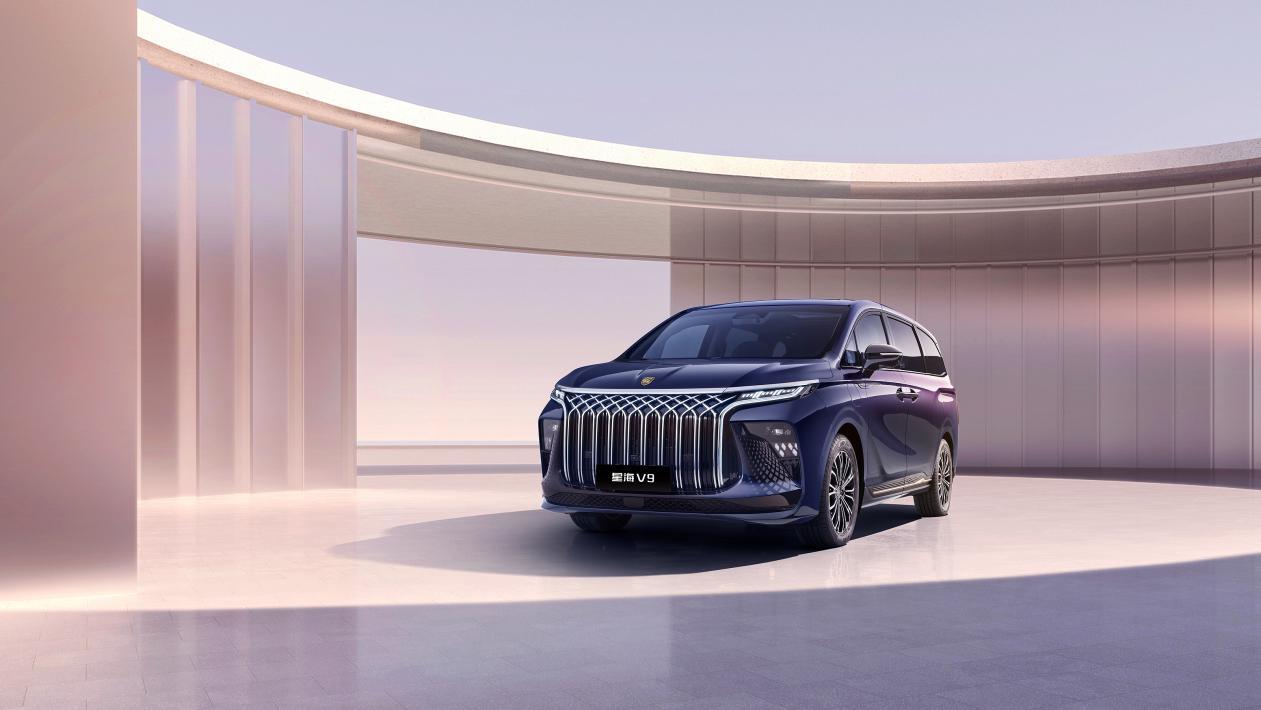
Zhijie Auto is at a critical turning point in its brand development. On January 13, 2026, Zhao Changjiang, former General Manager of Denza Sales Division, officially joined Zhijie Auto as Executive Director and Executive Vice President[1]. This personnel change marks the official transition of the Zhijie brand from Phase 1.0 of the Huawei-Chery cooperation to Phase 2.0 fully led by Huawei. As the first MPV model under the HarmonyOS Smart Mobility system, Zhijie V9 bears the strategic mission of enabling Zhijie brand to achieve large-scale leap from “1 to 100”[2].
The current high-end MPV market is undergoing profound structural changes. In December 2025, the Ministry of Industry and Information Technology (MIIT) officially announced the first batch of access permits for L3 conditional autonomous driving models in China, ushering in a golden development period for the intelligent vehicle industry[3]. This policy breakthrough has removed institutional barriers for MPV models equipped with high-level intelligent driving technology, and also created favorable conditions for the technical implementation of Zhijie V9.
Zhijie V9 is built on the Huawei DriveONE 800V Silicon Carbide Gold Powertrain Platform, offering both extended-range and pure electric versions, and is the culmination of the HarmonyOS Smart Mobility technology system. The specific technical parameters are shown in the table below:
| Technical Module | Zhijie V9 Configuration | Competitive Advantage |
|---|---|---|
| Powertrain Platform | Huawei DriveONE 800V Silicon Carbide | 300km range with 10-minute charging |
| Battery System | Huawei Giant Whale Battery 100kWh (Pure Electric Version) | Supports 6C ultra-fast charging technology |
| Range Extender System | Huawei Snow Owl Intelligent Range Extender System | 53kWh battery + 60L fuel tank |
| Comprehensive Range | CLTC 1250km | Eliminates range anxiety |
| Intelligent Driving | Huawei Kunlun ADS 4.0 + 4 LiDARs | First to launch high-speed L3 autonomous driving |
| Cabin System | New-generation smart cockpit with triple screens + overhead screen | Deep integration of HarmonyOS ecosystem |
In an exclusive interview, Zhao Changjiang pointed out that the intelligent advantages of Zhijie V9 are not only reflected in hardware configurations, but also in the all-round empowerment of user experience by Huawei AI technology. He described a typical scenario: when users enter the cockpit, the Huawei AI seat can recognize the habit preferences of different passengers, including massage intensity, seat angle, etc.; meanwhile, the cabin system can directly access trip information transferred from mobile phones and automatically plan driving routes; the system can also actively help users “kill time” or remind them of the arrival time according to the trip duration[4]. This in-depth human-computer interaction experience is a competitive barrier that traditional automakers find difficult to replicate.
Located in Wuhu, the Zhijie Super Factory is the first automobile factory deeply defined by Huawei, and also the world’s first AI intelligent agent life factory in the automobile industry. The key processes of the factory achieve 100% automation, with a production capacity of one vehicle per minute, covering the manufacturing and delivery capacity of Zhijie R7, S7, V9 and subsequent models[5]. This manufacturing capability provides a solid hardware foundation for the large-scale delivery of Zhijie V9, and also marks that Zhijie has systematically solved the “production capacity - delivery” bottleneck.
Chery’s nearly 30-year vehicle manufacturing system provides in-depth manufacturing support for Zhijie. After independence, the number of R&D personnel of Zhijie Auto has increased to 5,000, and the overall investment plan in three years exceeds 10 billion RMB[6]. This scale of R&D investment is at a leading level among new car manufacturers, reflecting the strategic commitment of Huawei and Chery to the Zhijie brand.
Zhao Changjiang’s career can be called a classic case in the marketing of new energy vehicles in China. Born in 1986, he joined BYD in 2009, and was promoted from regional sales manager to General Manager of BYD Auto Sales Co., Ltd. in 2017. In October 2021, Zhao Changjiang took the position of General Manager and Chief Co-creation Officer of BYD Denza Brand Division, leading the launch and sales of Denza D9[7].
The success of Denza D9 has verified Zhao Changjiang’s profound understanding of the needs of high-end MPV users. The model won the championship of China’s new energy MPV sales with 84,549 units sold from January to November 2025, and became the world’s first new energy MPV model to reach 300,000 sales[8]. More importantly, the success of D9 helped Denza brand transform from a long-loss joint venture brand to a high-end new energy vehicle benchmark, achieving a double breakthrough in brand value and market performance.
Zhao Changjiang’s top priority at Zhijie is to build an efficient channel system. According to the plan, Zhijie will establish about 200 exclusive channel networks in 2026, forming a symbiotic relationship with the original channels of HarmonyOS Smart Mobility[9]. This channel strategy has the following strategic considerations:
China’s MPV market is in a period of structural transformation. According to data from the China Passenger Car Association (CPCA), from January to November 2025, MPV sales reached 953,000 units, a year-on-year increase of 0.1%, with a market share of only 4.4%[10]. Although the absolute scale is limited, the mid-to-high-end MPV segment shows a significant growth trend: in November 2025, mid-to-high-end MPV products accounted for about 70% of the domestic MPV market; from January to November 2025, the cumulative sales of mid-to-high-end MPV products increased by about 8% year-on-year[11].
The rapid increase in NEV penetration is the most significant change trend in the MPV market. According to the “New Energy MPV Market Insight Report” released by China Car Rating (CCRT), the NEV penetration rate in the MPV market jumped from 9% in 2022 to 49% in 2025[12]. Zhang Yi, chief analyst of iiMedia Research, pointed out that although the MPV market is relatively niche, it means there is room for breakthrough; at the same time, high-end models above 300,000 RMB have guaranteed profits, and the popularization of electrification and intelligence has amplified the product premium capacity.
The sales ranking and competitive landscape of high-end MPVs from January to November 2025 are shown in the table below:
| Ranking | Model | Sales (10,000 units) | Market Position | Core Advantage |
|---|---|---|---|---|
| 1 | Denza D9 | 8.45 | NEV MPV Sales Champion | DM-i Super Hybrid, First-mover Advantage |
| 2 | WEY Gaoshan | 4.52 (past 6 months) | Independent High-end New Force | Pricing Strategy, Multi-size Matrix |
| 3 | Voyah Dreamer | 7.32 | High-end NEV MPV | Huawei ADS 3.0, Magic Carpet Suspension |
| 4 | Buick GL8 | 12.2 (full year) | Market Evergreen Tree | Brand Heritage, Channel Network |
| 5 | Toyota Sienna | 6.70 (November) | Joint Venture MPV Benchmark | Quality Reputation, Fuel Economy |
Although Denza D9 still maintains the sales championship of NEV MPV, it has shown signs of growth stall. From January to November 2025, its total sales decreased by 8.9% year-on-year, mainly due to a 13.5% sales decline in the DM version[13]. This reflects that the first-mover advantage is being rapidly diluted by competitors. Although the EV version increased by 86.2% year-on-year and its proportion rose to 9.4%, the low base is difficult to make up for the decline gap of the DM version. Zhao Changjiang once led the marketing of Denza D9, and has a deep understanding of the advantages and shortcomings of this model. His switch to Zhijie may provide important reference for the adjustment of competitive strategies.
Voyah Dreamer sold 73,240 units from January to November 2025, a year-on-year increase of 62.8%[14]. Equipped with Huawei ADS 3.0 intelligent driving system and Magic Carpet Air Suspension, the model is continuously diverting users who pursue high-end experience. It is particularly worth noting that the pure electric proportion of the Voyah Dreamer PHEV version reaches 10.6%, higher than 9.4% of the Denza D9 EV, showing a stronger determination to transform to electrification. For Zhijie V9 to establish differentiated advantages, it needs to form an obvious generational gap in intelligent experience.
The Buick GL8 family sold more than 122,000 units in 2025, continuing to lead the MPV market, with the proportion of NEV versions exceeding 50%[15]. The GL8 LuZun PHEV launched in April 2024 and the GL8 LuShang launched in 2025 have completed the layout of the plug-in hybrid route. At the 2025 Guangzhou Auto Show, Buick’s new new energy flagship MPV “Zhijing Shijia” made its debut, equipped with “Zhenlong” Plug-in Hybrid Pro dual-motor four-wheel drive and “Xiaoyao Zhixing” high-level assisted driving system[16]. This indicates that joint venture brands are accelerating their electrification and intelligent transformation, and their brand heritage and channel advantages are still non-negligible competitive barriers.
Based on the above analysis, the core competitive advantages of Zhijie V9 can be summarized as follows:
With the “iron triangle” combination of Huawei’s technology empowerment, Chery’s manufacturing system, and Zhao Changjiang’s channel operation capabilities, Zhijie Auto has the potential to achieve breakthrough competition in the high-end MPV market. The comprehensive competitiveness of Zhijie V9 in terms of technological generation, manufacturing capacity, and channel strategy has laid a solid foundation for its entry into the 500,000 RMB level MPV market.
However, the competition pattern of the high-end MPV market has been relatively stable, and models such as Denza D9, Voyah Dreamer, and Buick GL8 all have strong market foundations. Whether Zhijie V9 can achieve large-scale leap of the brand depends on the evolution of the following three core variables:
The 1 million sales target set by Zhao Changjiang for Zhijie by 2030 is not only a strategic ambition announced to the outside world, but also a fighting direction for internal motivation. As a “foundation-building” year, the market performance in 2026 will lay the tone for the subsequent large-scale leap. The success of Zhijie V9 is not only related to the fate of a brand, but also will provide a new industry sample for the cooperation model of “technology company + traditional automaker”.
[2] On the Eve of Intelligent Outbreak: Zhijie Auto Launches the Brand Leap Battle from 1 to 100
[3] Exclusive | Zhao Changjiang Takes Office at Zhijie, How to Fight a Pioneer Tough Battle?
[4] Exclusive | Zhao Changjiang Takes Office at Zhijie, How to Fight a Pioneer Tough Battle?
[8] Denza D9 Sales Decline - Still the No.1 NEV MPV! Will Voyah Dreamer Surpass It?
[9] Exclusive | Zhao Changjiang Takes Office at Zhijie, How to Fight a Pioneer Tough Battle?
[10] From Denza D…
Insights are generated using AI models and historical data for informational purposes only. They do not constitute investment advice or recommendations. Past performance is not indicative of future results.
About us: Ginlix AI is the AI Investment Copilot powered by real data, bridging advanced AI with professional financial databases to provide verifiable, truth-based answers. Please use the chat box below to ask any financial question.