
Analysis of the Impact of Sluggish Tesla Cybertruck Sales on Overall Business
Unlock More Features
Login to access AI-powered analysis, deep research reports and more advanced features
About us: Ginlix AI is the AI Investment Copilot powered by real data, bridging advanced AI with professional financial databases to provide verifiable, truth-based answers. Please use the chat box below to ask any financial question.
Related Stocks
Based on collected data and analysis, we now present a comprehensive report for you.
According to data released by Cox Automotive, Tesla Cybertruck’s 2025 U.S. market sales performance fell far short of expectations:
| Metric | Value | YoY Change |
|---|---|---|
| 2025 Total U.S. Sales | 20,237 units |
~50% YoY Decline |
| 2025 Q4 Sales | ~5,100 units | 68% YoY Decline |
| 2025 Q3 Sales | 5,400 units | Continuous Sequential Decline |
| Annual Sales Target Set by Elon Musk | 250,000 units | Actual Completion Rate of Only 8% |
This sales performance stands in stark contrast to the over 1 million pre-orders received when the vehicle was unveiled in 2019, indicating a huge gap between actual market demand and expectations. [1][2]
Cybertruck’s underperformance failed to help Tesla reverse its global sales decline trend:
| Year | Global Deliveries | YoY Change |
|---|---|---|
| 2023 | 1.81 million units | +38% |
| 2024 | 1.79 million units | -1.1% |
| 2025 | 1.64 million units |
-9% |
This marks the first time Tesla has seen consecutive annual sales declines. [3][4]
In 2025, BYD’s pure electric vehicle sales grew nearly 28% year-over-year to
Cybertruck is currently only sold in the following countries/regions:
- North America: U.S., Mexico, Canada
- Asia: South Korea
- Middle East: United Arab Emirates, Saudi Arabia, Qatar
Tesla’s quarterly profitability data for 2025 shows significant pressure:
| Quarter | Operating Profit Margin | Automotive Gross Margin (Excluding Credits) |
|---|---|---|
| 2024 Q1 | 6.3% | 18.5% |
| 2024 Q2 | 10.8% | 25.9% |
| 2024 Q3 | 6.2% | 17.1% |
| 2024 Q4 | 2.1% | 6.3% |
| 2025 Q1 | 4.1% | 15.4% |
| 2025 Q2 | 5.6% | 16.5% |
| 2025 Q3 | 4.1% | 15.4% |
According to Tesla’s 2025 Q3 earnings report and earnings call, factors impacting profit margins include:
- Decline in regulatory credit income: Sequential decline for multiple consecutive quarters
- Increase in operating expenses: AI and R&D projects drove a 56% year-over-year increase in R&D spending
- Reduced fixed cost absorption: Falling sales led to an increase in unit fixed costs
- Model price cut pressure: Low-priced versions launched to boost Model 3/Y demand pressured profit margins
- Tariff impact: Q3 tariff costs exceeded $400 million, with the energy and automotive businesses each bearing approximately half
Although Tesla did not disclose separate financial data for Cybertruck, its impact on profit margins can be inferred to mainly lie in:
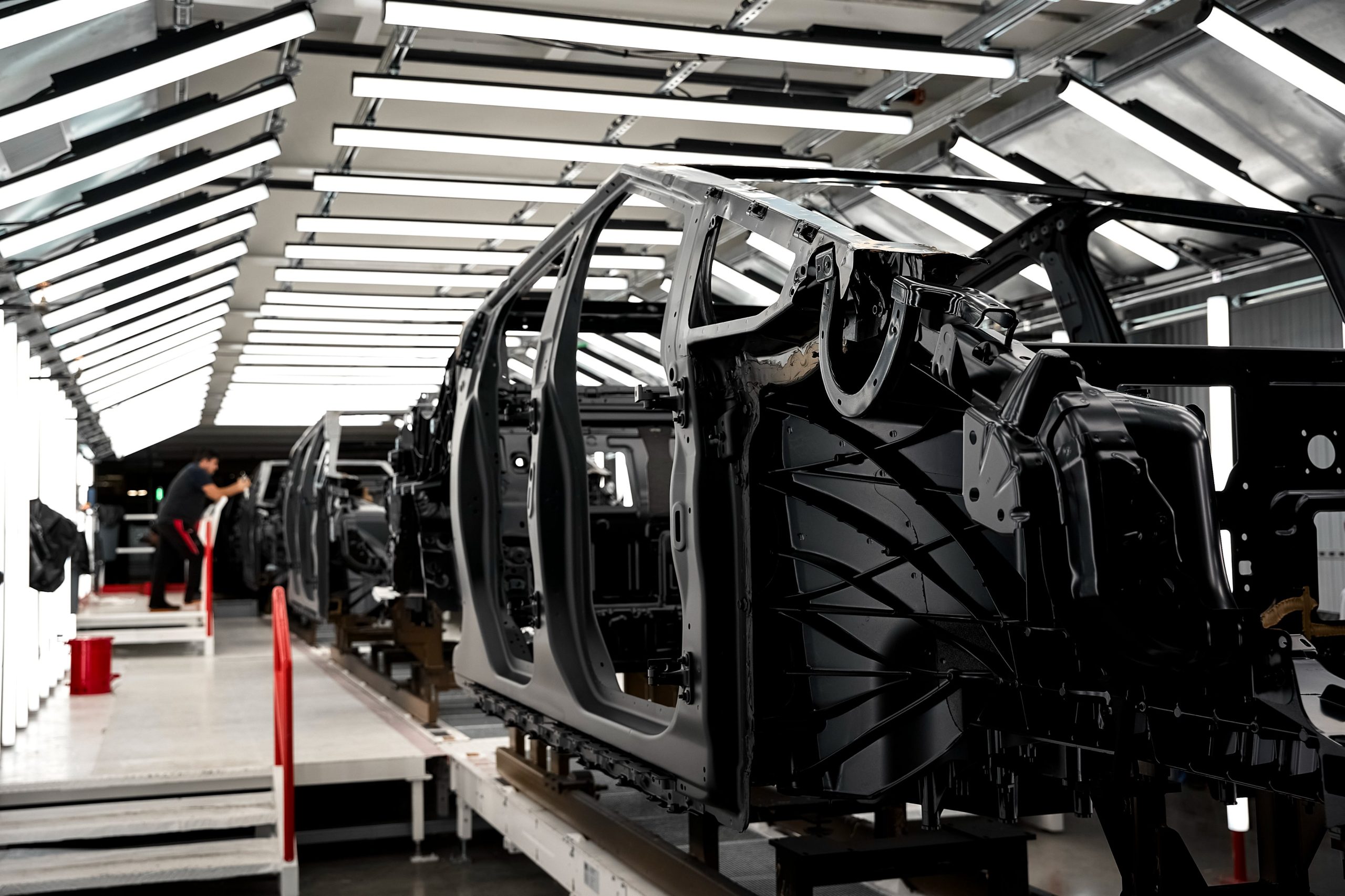
- Insufficient capacity utilization: Low capacity utilization of the Cybertruck-specific production line at the Texas Gigafactory
- R&D cost amortization: High Cybertruck R&D costs cannot be effectively allocated due to low sales volume
- Supply chain costs: The unique stainless steel body material has high costs, and production volume does not achieve economies of scale
Despite facing sales and margin pressure, Tesla’s financial fundamentals remain resilient:
| Financial Metric | Value | Assessment |
|---|---|---|
| Total Cash and Investments | $41 billion |
Sufficient cash reserves |
| Operating Cash Flow in the Past Four Quarters | $15.8 billion | Healthy cash flow generation capability |
| Current Ratio | 2.07 | Strong short-term solvency |
| Free Cash Flow (2025 Q3) | $4 billion |
Record level |
Tesla’s financial buffer capacity gives it room to address potential cost pressures related to Cybertruck while continuing to invest in new businesses such as AI, energy storage, and robotics. [6]
Analysts show clear divergence in their attitudes toward Tesla’s stock:
| Rating | Number of Analysts | Percentage |
|---|---|---|
| Strong Buy | 14 | 37.5% |
| Hold | 17 | 45.9% |
| Strong Sell | 10 | 16.6% |
- Average Target Price: $358.3 (19% downside from current stock price)
- Most Optimistic Target Price: $600 (36.6% upside potential)
Analysts expect Tesla to face a profit decline in FY2025, but forecast a 67.24% profit growth rate in FY2026. [7]
-
Sluggish Cybertruck saleshave alimited but negativeimpact on Tesla’s overall sales growth, as it accounts for only about 1.2% of Tesla’s total deliveries (20,237 units vs. 1.64 million units)
-
Margin pressuremainly stems from:
- Reduced fixed cost allocation due to overall sales decline
- Price promotion strategies for Model 3/Y
- Increased R&D and AI investment
- External cost pressures such as tariffs
-
Long-term impactdepends on:
- Whether Tesla can offset the slowdown in its automotive business through new businesses such as FSD, Robotaxi, and Optimus
- Whether Cybertruck can enter more international markets
- Changes in the competitive landscape of the overall electric vehicle market
- Pay attention to the FY2025 Q4 earnings report to be released on January 28, 2026
- Monitor progress of new products such as Cybercab and Optimus
- Track regulatory approval and deployment progress of FSD autonomous driving technology
- Watch whether growth in the energy storage business can offset the slowdown in the automotive business
[1] Business Insider - “Tesla’s Cybertruck is falling far short of Elon Musk’s ambitious sales targets” (https://www.businessinsider.com/cybertruck-sales-decline-tesla-elon-musk-cox-automotive-data-2026-1)
[2] Yahoo Finance - “As Cybertruck Sales Fall Flat, Should You Buy, Sell, or Hold Tesla Stock?” (https://finance.yahoo.com/news/cybertruck-sales-fall-flat-buy-190101829.html)
[3] CarPro - “Tesla Loses Global EV Crown In 2025” (https://www.carpro.com/blog/tesla-loses-global-ev-crown-in-2025)
[4] BBC - “China’s BYD overtakes Tesla as world’s top EV seller” (https://www.bbc.com/news/articles/cj9rjwpvmpzo)
[5] Tesla SEC Filing 10-Q (Q3 FY2025) (https://www.sec.gov/Archives/edgar/data/1318605/000162828025045968/tsla-20250930.htm)
[6] Tesla Q3 2025 Earnings Call Transcript
[7] Tesla Company Overview Data (Jinling API)
Insights are generated using AI models and historical data for informational purposes only. They do not constitute investment advice or recommendations. Past performance is not indicative of future results.
About us: Ginlix AI is the AI Investment Copilot powered by real data, bridging advanced AI with professional financial databases to provide verifiable, truth-based answers. Please use the chat box below to ask any financial question.