
Ghabour's 2026 Outlook: Bullish Small Caps & Financials, Tech Bar "Set Too High"
Unlock More Features
Login to access AI-powered analysis, deep research reports and more advanced features
About us: Ginlix AI is the AI Investment Copilot powered by real data, bridging advanced AI with professional financial databases to provide verifiable, truth-based answers. Please use the chat box below to ask any financial question.
Related Stocks
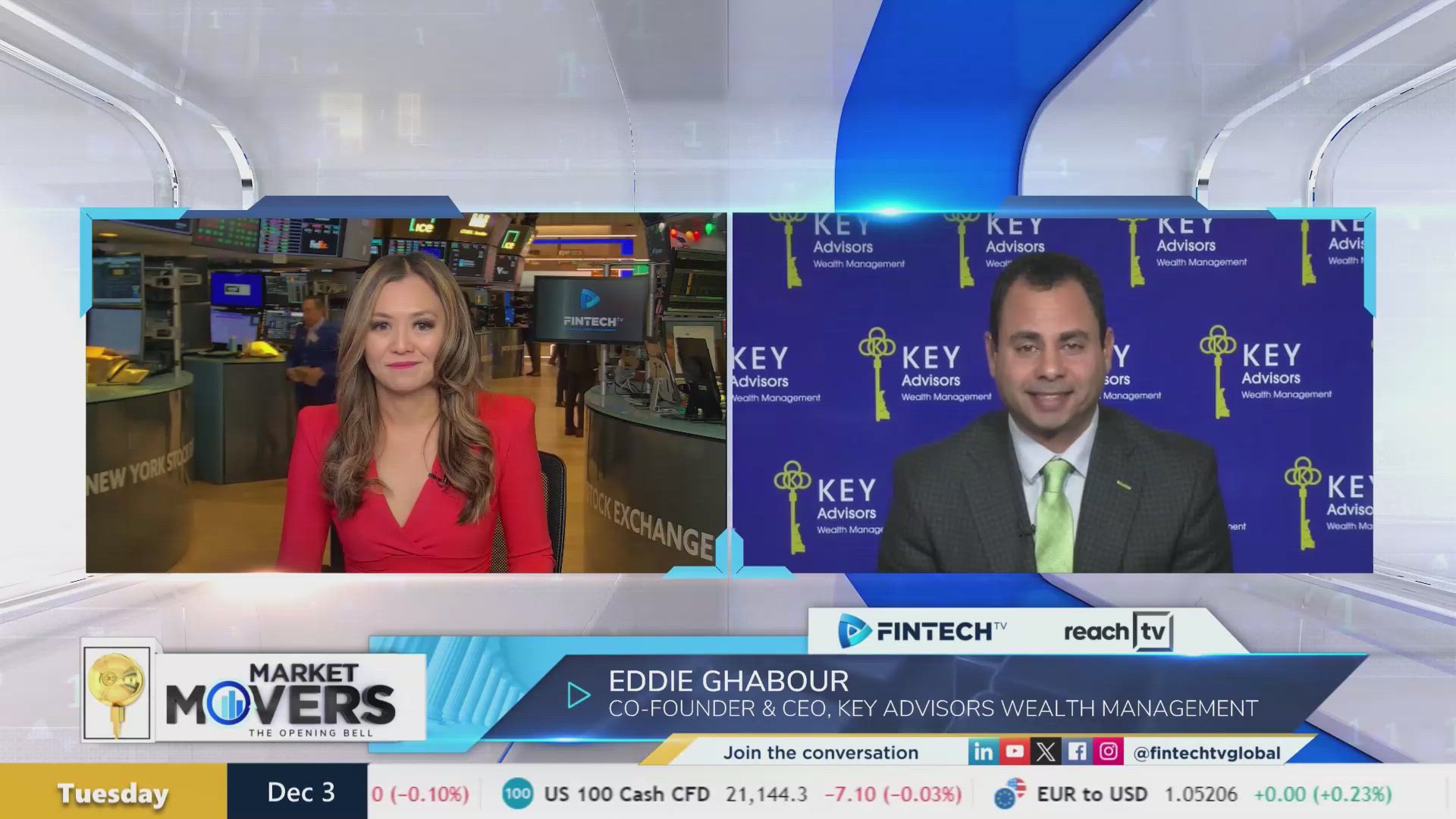
This analysis is based on Eddie Ghabour’s interview on FOX Business [1], published on January 13, 2026, in which he articulated his investment thesis for the year ahead. As CEO of KEY Advisors Wealth Management, Ghabour brings a practitioner’s perspective to market positioning, having specifically noted that his firm holds the iShares Russell 2000 ETF (IWM) for client portfolios [1]. His outlook represents a coherent market thesis that integrates macroeconomic factors—including energy prices and interest rate expectations—with sector-specific dynamics.
Ghabour’s core thesis rests on three interconnected pillars: first, that small-cap stocks are positioned for sustained outperformance due to their relative valuation discount and earnings recovery; second, that financial sectors will benefit from the anticipated lower interest rate environment; and third, that technology sector momentum has peaked due to excessively elevated expectations that are unlikely to be met [1]. The temporal context of this outlook is significant—it arrives at the start of 2026, coinciding with observable market rotation patterns that validate portions of his thesis in real-time.
The early January 2026 market data provides immediate validation for Ghabour’s small-cap thesis. The Russell 2000 has demonstrated exceptional strength, gaining 5.83% year-to-date through January 13, significantly outperforming the S&P 500’s 1.88% gain and the NASDAQ’s 1.98% advance [0][3]. This outperformance is not isolated to a single day but reflects a sustained rotation that has seen small-caps gaining 4.72% for the week ending January 9, making the Russell 2000 the best-performing major index during that period [0][3].
The sector rotation pattern Ghabour anticipates is already materializing. On January 13, 2026, real estate led sector gains at +1.61%, followed by consumer defensive at +0.83% and energy at +0.70%, while technology declined by 0.29% [0]. Financial services maintained modest gains of +0.21%, consistent with Ghabour’s bullish stance on the sector [0]. This divergence between value-oriented sectors and growth technology names aligns precisely with the rotation thesis he has advocated.
The valuation differential between small-cap and large-cap stocks represents one of the most compelling aspects of Ghabour’s thesis. The Russell 2000 currently trades at approximately 18x earnings, while the S&P 500 commands a valuation of 31x—a spread that independent analysts confirm is near the tightest relative to large-caps in 25 years [5]. This historical extreme in relative valuations creates a structural tailwind for small-cap outperformance that Ghabour describes as a “rare and promising confluence” of factors.
Independent analysis from Franklin Templeton’s Royce Investment Partners corroborates Ghabour’s assessment, noting that small-cap leadership in 2026 is supported by both the relative valuation discount and accelerating earnings growth expectations [5][6]. The small-cap earnings recession that persisted for “more than two years” has concluded, with earnings recovery projected to accelerate faster than large-cap growth—a key catalyst that could sustain small-cap outperformance beyond the current momentum-driven phase [5]. This earnings recovery narrative adds fundamental substance to what might otherwise appear purely valuation-driven positioning.
Ghabour’s bearish stance on technology merits careful examination given the sector’s outsized contribution to market returns in recent years. His warning that tech names could lose “at least 20% during this downdraft” reflects concern that the AI trade has become exhausted and that expectations embedded in current valuations are unrealistically high [1][4]. The NASDAQ’s modest 1.98% year-to-date gain compared to small-caps’ 5.83% advance suggests early evidence of this rotation, though a 20% correction would represent a meaningful deviation from current price levels.
The technology sector’s elevated valuations reflect investor expectations for continued AI-driven earnings acceleration. However, Ghabour’s caution aligns with a broader market debate about whether the AI transformation’s benefits are already priced into current multiples. The S&P 500’s 31x P/E ratio represents a significant premium to historical averages, while individual technology leaders like Nvidia trade at premiums that assume continued execution at the highest levels [4]. This concentration of market expectations creates vulnerability to disappointment, even if the long-term AI thesis remains intact.
Alternative perspectives from analysts such as Wedbush Securities remain constructive on semiconductors, targeting the S&P 500 at 10,000-13,000 by 2029-2030 based on continued AI infrastructure spending [7]. This constructive view suggests that while Ghabour’s caution may be warranted for short-term positioning, complete avoidance of technology exposure could prove costly if AI-driven growth continues.
The falling energy prices that Ghabour identifies as a tailwind for both small-cap companies and U.S. consumers represent a macroeconomic factor with broad-based implications. Lower energy costs directly improve margins for energy-intensive small-cap manufacturers and distributors while simultaneously increasing disposable income for consumers through reduced gasoline and heating costs. This dual benefit creates a virtuous cycle that supports both corporate earnings and consumer spending—the two primary engines of economic growth.
The energy sector’s 0.70% gain on January 13, 2026, reflects market recognition of the sector’s importance even as prices decline [0]. For small-cap companies specifically, which tend to have higher domestic operational exposure than their large-cap counterparts, falling energy costs translate to improved competitive positioning relative to larger multinational corporations that may have hedged against energy price volatility.
Ghabour’s bullish stance on financial sectors reflects the historical relationship between lower interest rates and improved net interest margins for financial institutions. Market expectations indicate approximately 61% probability of interest rate cuts by late April 2026 [6], creating an environment conducive to financial sector outperformance. Small-caps historically benefit from lower rates due to their higher debt sensitivity—many small companies have floating-rate debt that becomes less burdensome as rates decline.
The financial services sector’s modest 0.21% gain on January 13, while not explosive, represents positive performance during a period when the broader market showed mixed sector results [0]. This stability, combined with the anticipated rate cut environment, supports Ghabour’s view that financials represent a defensive yet growth-oriented positioning for 2026.
The market rotation from mega-cap technology toward small-caps and value-oriented sectors represents a significant regime change that Ghabour has identified ahead of its full realization. This rotation is supported by three converging factors: valuation compression in small-caps relative to large-caps, the conclusion of the small-cap earnings recession, and the anticipation of a more favorable interest rate environment. The coordination of these factors creates a structural rather than merely tactical case for small-cap outperformance that could persist throughout 2026.
The current small-cap valuation levels relative to large-caps have not been observed in approximately 25 years, creating a unique opportunity set that Ghabour’s thesis capitalizes upon [5]. Historical precedents for similar valuation regimes suggest that when small-caps reach such extreme relative discounts, subsequent periods of outperformance can be sustained and substantial. This historical context provides intellectual grounding for Ghabour’s bullish positioning beyond merely current momentum.
The technology sector’s concentration in market-cap-weighted indices creates risk asymmetry that Ghabour’s underweight positioning addresses. As the AI trade matures, the potential for negative earnings surprises increases while the reward for meeting already-elevated expectations diminishes. This asymmetry suggests that the risk-reward profile for technology exposure has deteriorated relative to earlier phases of the AI cycle, supporting a more defensive positioning even for investors who remain fundamentally constructive on AI’s long-term trajectory.
The small-cap sector presents a compelling opportunity window supported by the convergence of valuation compression, earnings recovery, and favorable policy expectations. The IWM ETF’s proximity to its 52-week high at $261.35, up 6.2% from early December levels, reflects building momentum that could accelerate as the year progresses [0]. Investors considering tactical allocation to small-caps should note that the entry point, while above 52-week lows, remains historically attractive relative to large-cap alternatives.
Financial sector exposure represents an additional opportunity window, particularly for investors seeking yield and value orientation in an environment of anticipated rate cuts. The sector’s modest valuation premiums and dividend yields provide downside protection while maintaining participation in potential market appreciation.
The Supreme Court ruling on Trump’s emergency tariff powers represents a significant macroeconomic risk that Ghabour himself has acknowledged, noting “We’ve never seen a ruling that has such an economic impact” [8]. This binary outcome could introduce substantial market volatility regardless of the ruling’s direction, creating uncertainty that tactical positioning should account for.
Technology sector vulnerability presents both risk and opportunity. While Ghabour warns of potential 20% corrections, selective accumulation of quality technology names on weakness could prove advantageous if the AI thesis remains intact. The key distinction is between broad technology exposure and concentrated positions in individual names with elevated expectations.
Geopolitical tensions involving Venezuela and Ukraine could stress growth assumptions and introduce volatility to energy markets, potentially disrupting the tailwind Ghabour identifies from falling energy prices [8]. These risks are difficult to quantify but merit monitoring as potential catalysts for tactical repositioning.
| Index | YTD Return | Weekly Return | Status |
|---|---|---|---|
| Russell 2000 | +5.83% | +4.72% | Leading performer |
| Dow Jones | +3.00% | +2.32% | Strong performance |
| S&P 500 | +1.88% | +1.69% | Moderate gain |
| NASDAQ | +1.98% | +2.01% | Lagging rotation |
| MSCI EAFE | +2.87% | +1.80% | Positive |
The IWM ETF, which Ghabour specifically mentioned holding for clients, closed at $261.35 on January 13, 2026, trading within its 5-day range of $258.24 to $262.89 and approaching its 52-week high of $262.89 [0]. The 52-week low of $171.73 illustrates the significant price appreciation that has occurred, though the current level remains historically attractive on a relative basis.
The daily sector breakdown reveals rotation dynamics: real estate (+1.61%), consumer defensive (+0.83%), energy (+0.70%), and financial services (+0.21%) posted gains, while consumer cyclical (-1.07%) and technology (-0.29%) declined [0]. This sector performance pattern validates Ghabour’s thesis regarding the rotation from growth to value-oriented exposures.
The valuation differential between small-caps (18x P/E) and large-caps (31x P/E) remains at historically extreme levels not seen in 25 years [5]. This spread creates structural support for small-cap outperformance that extends beyond momentum-driven positioning.
Market pricing indicates 61% probability of interest rate cuts by late April 2026 [6], creating favorable conditions for both small-cap companies (higher debt sensitivity) and financial institutions (net interest margin improvement).
Insights are generated using AI models and historical data for informational purposes only. They do not constitute investment advice or recommendations. Past performance is not indicative of future results.
About us: Ginlix AI is the AI Investment Copilot powered by real data, bridging advanced AI with professional financial databases to provide verifiable, truth-based answers. Please use the chat box below to ask any financial question.