
DOJ Criminal Investigation into Fed Chair Powell: Analysis of Central Bank Independence Crisis
Unlock More Features
Login to access AI-powered analysis, deep research reports and more advanced features
About us: Ginlix AI is the AI Investment Copilot powered by real data, bridging advanced AI with professional financial databases to provide verifiable, truth-based answers. Please use the chat box below to ask any financial question.
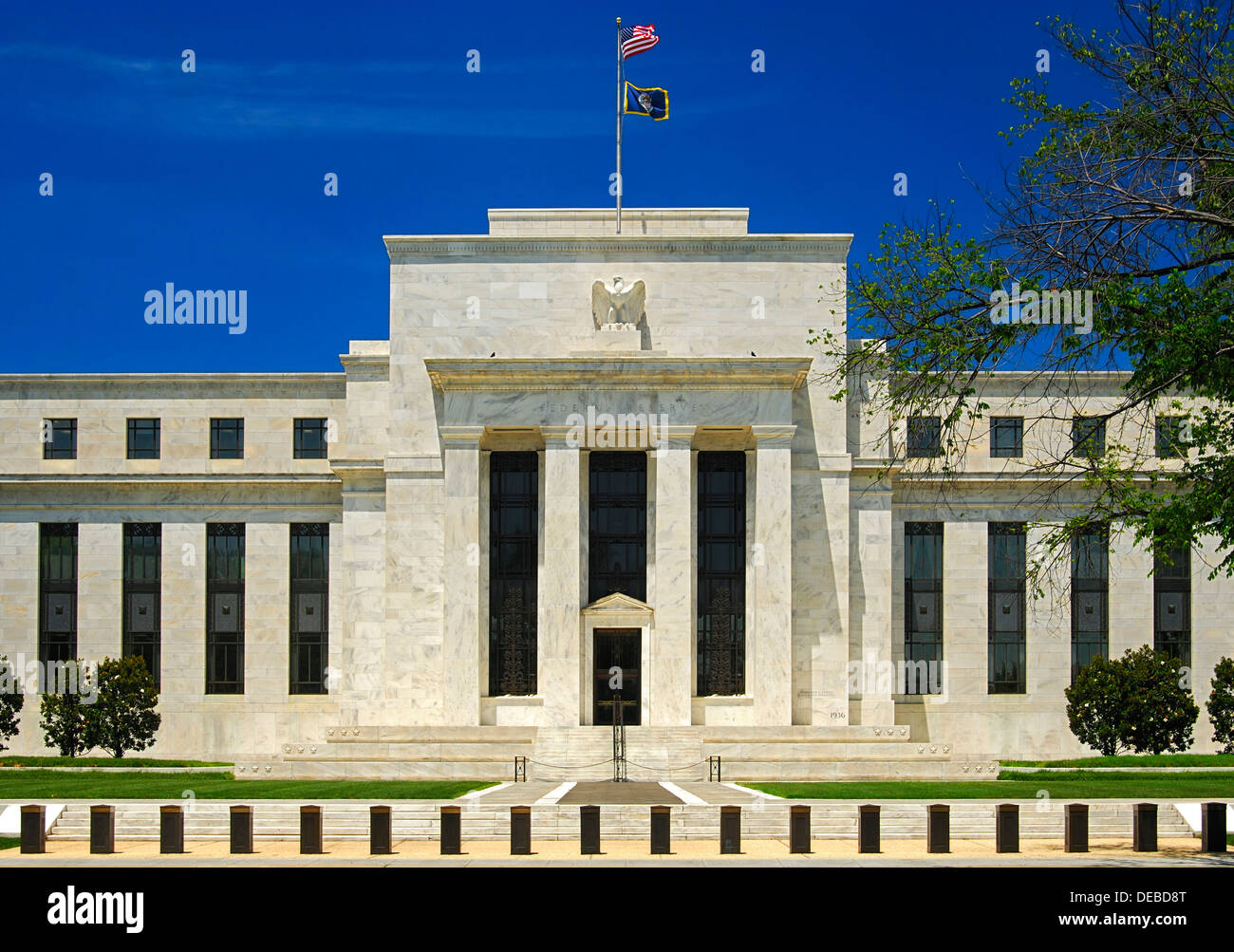
This analysis examines the unprecedented criminal investigation launched by the U.S. Department of Justice into Federal Reserve Chair Jerome Powell, which has sparked international concern about the independence of the United States’ central banking system. The investigation, reportedly related to testimony about the $2.5 billion Federal Reserve headquarters renovation, has drawn sharp criticism from former European Central Bank President Jean-Claude Trichet, who characterized President Trump’s attacks on Powell as “extremely grave” [1]. Global financial leaders have rallied behind Powell, with eleven major central banks issuing a joint solidarity statement defending institutional autonomy [4][5]. While U.S. equity markets have demonstrated notable resilience—recovering from early declines on January 13, 2026—the long-term implications for monetary policy credibility and international confidence in dollar-denominated assets remain significant concerns [0][2].
The Department of Justice, through U.S. Attorney for the District of Columbia Jeanine Pirro, served grand jury subpoenas to the Federal Reserve on Friday, January 10, 2026, initiating an investigation into Fed Chair Jerome Powell’s testimony before the Senate in June 2025 [2][3]. The investigation centers on allegations of perjury related to the Federal Reserve’s headquarters renovation project, which experienced cost overruns of approximately $700 million, ultimately reaching roughly $2.5 billion [1][2]. Powell confirmed the existence of the investigation in a rare public video statement released on Sunday, January 11, 2026, where he characterized the inquiry as a “pretext” for political pressure aimed at compelling him to lower interest rates [2][3].
The timing and nature of this investigation raise profound questions about the intersection of political authority and monetary policy independence. Powell’s current term as Federal Reserve Chair is scheduled to conclude in May 2026, and the investigation coincides with an ongoing Supreme Court case scheduled for January 21, 2026, concerning President Trump’s attempt to remove Fed Governor Lisa Cook—a ruling that could establish significant precedents regarding the removal of Fed leadership [2]. The parallel developments suggest a coordinated effort to test the boundaries of executive power over the independent central bank, though the extent of coordination remains a matter of speculation.
The international reaction to the investigation has been swift and remarkably unified, reflecting the foundational importance of central bank independence to global financial stability. Eleven major central banks issued a joint solidarity statement supporting Powell, including the European Central Bank under Christine Lagarde, the Bank of England under Andrew Bailey, the Bank of Canada, the Bank of Korea, the Swiss National Bank, and the Reserve Bank of Australia [4][5][6]. This collective stance represents an extraordinary display of international coordination in defense of institutional norms that have underpinned global monetary stability since the post-World War II era.
Former European Central Bank President Jean-Claude Trichet, whose voice carries particular weight given his eight-year tenure at the helm of the ECB during the European debt crisis, explicitly characterized Trump’s attacks on Powell as “extremely grave” [1]. Trichet’s assessment carries particular credibility given his direct experience with political pressures on central banking during the eurozone crisis, when he defended ECB independence against political interference from multiple member states. His intervention signals that European financial authorities view this situation not merely as a bilateral U.S. matter but as a potential erosion of the global architecture supporting monetary policy independence.
The investigation has generated unexpected bipartisan criticism within the United States, highlighting the traditionally non-partisan nature of Federal Reserve governance. Republican Senator John Kennedy publicly opposed the investigation, joining Democratic lawmakers in questioning the appropriateness of criminal probes targeting monetary policy officials [2]. This bipartisan resistance suggests that the investigation may face political constraints on its escalation, though the ultimate trajectory remains uncertain.
Internal divisions within the Trump administration have also emerged. According to reporting from the New York Times, Treasury Secretary Scott Bessent actively attempted to prevent the investigation from being pursued, while Federal Housing Finance Agency Director Bill Pulte allegedly encouraged President Trump to move forward with the criminal inquiry [3]. These conflicting positions within the administration suggest ongoing debates about the appropriate relationship between fiscal and monetary policy authorities, with Bessent apparently recognizing the potential market destabilization risks associated with perceived political interference in Fed operations.
U.S. equity markets demonstrated notable resilience in response to the investigation news, though this resilience should not be interpreted as dismissing the underlying risks. On January 13, 2026, the major indices experienced modest declines and recovered from earlier losses—behavior market observers characterized as “shrugging off” the probe [1][2]. The S&P 500 closed at 6,963.75 (down 0.20%), the NASDAQ at 23,709.87 (down 0.11%), and the Dow Jones at 49,192.00 (down 0.86%) [0]. The relatively contained market reaction may reflect several factors: investor assessment that the investigation will not materially affect near-term monetary policy; confidence in the Federal Reserve’s institutional resilience; or simply a delayed market response that could manifest in subsequent trading sessions.
JPMorgan CEO Jamie Dimon provided a particularly insightful assessment of the economic stakes involved. According to CNBC reporting, Dimon stated that “anything that chips away at [Fed independence] is probably not a great idea… it will raise inflation expectations” [2]. This observation gets to the heart of the matter: central bank independence is not merely an institutional preference but a practical mechanism for maintaining price stability by insulating monetary policy decisions from short-term political pressures. When markets perceive that interest rate decisions are subject to political influence rather than purely economic considerations, they demand higher risk premiums—a dynamic that could paradoxically undermine the Trump administration’s stated goal of lower interest rates.
The investigation into Powell represents a stress test of American institutional frameworks governing the separation of monetary and political authority. While the Federal Reserve has faced political pressure throughout its history—including public criticism from presidents of both parties—the initiation of a criminal investigation targeting a sitting Fed Chair marks an unprecedented escalation. The potential chilling effect on future Fed officials cannot be overstated: if monetary policy decisions can become the basis for criminal prosecution, qualified candidates may become increasingly reluctant to serve in leadership positions, potentially degrading the quality of Federal Reserve decision-making over time.
The international dimension of this crisis extends beyond diplomatic statements. Central bank independence functions as a coordination mechanism for global capital flows, with investors worldwide treating dollar-denominated assets as a relatively predictable store of value insulated from short-term political volatility. If that perception erodes, the consequences could include capital flow volatility, widening risk premiums on U.S. Treasury securities, and potential currency effects that complicate the Fed’s inflation-targeting mandate.
The investigation coincides with the terminal portion of Powell’s term as Fed Chair, creating compound uncertainty around leadership succession. Typically, a reappointment or nomination process unfolds with relative predictability, allowing markets to price in likely policy continuities. The criminal investigation introduces unpredictable variables: if Powell were to resign or be removed before the end of his term, the succession process could become politically contested; if he remains but faces legal distractions, decision-making quality could suffer; if the investigation results in criminal charges, the precedent implications would be extraordinary.
The Supreme Court case regarding Lisa Cook’s removal adds another layer of complexity. A ruling favorable to expanded presidential removal authority could fundamentally alter the balance of power between the executive branch and the Federal Reserve, potentially enabling future administrations to remove Fed officials whose policy decisions conflict with political preferences. The January 21, 2026 hearing represents a critical inflection point that investors should monitor closely [2].
While equity markets have thus far absorbed the news with limited impact, the Treasury market may provide a more sensitive gauge of investor concern regarding monetary policy independence. The 10-year Treasury yield serves as a benchmark for mortgage rates and other long-term borrowing costs, and any spike in yields attributable to independence concerns would signal market expectations of elevated future inflation or risk premiums. The interaction between political pressure on the Fed and Treasury market behavior deserves close monitoring, particularly given Treasury Secretary Bessent’s apparent recognition of the risks involved.
The analysis reveals several risk factors warranting attention from market participants and observers. The investigation creates unprecedented uncertainty around Federal Reserve leadership continuity, with implications that could extend beyond the immediate situation to affect long-term institutional credibility [2]. Investors with rate-sensitive portfolios should monitor Treasury yields for stress signals that might indicate growing market concerns about monetary policy independence. However, mitigating factors including bipartisan Congressional criticism, global central bank solidarity, and apparent administration internal opposition to escalation provide context for assessing the probability of extreme outcomes [2][3].
The DOJ investigation into Fed Chair Powell centers on alleged perjury regarding the Federal Reserve headquarters renovation that reached approximately $2.5 billion, $700 million over initial projections. Powell has characterized the investigation as a pretext for political pressure to lower interest rates [2]. Eleven major central banks have issued solidarity statements supporting Powell, while former ECB President Jean-Claude Trichet described Trump’s attacks as “extremely grave” [1][4][5]. The investigation coincides with a January 21, 2026 Supreme Court case on presidential removal authority over Fed governors, adding legal uncertainty to an already complex situation [2]. U.S. equity markets have demonstrated resilience, recovering from early declines on January 13, 2026, though Treasury market reaction and international capital flows warrant continued monitoring [0][1][2].
The investigation’s ultimate trajectory remains uncertain, but its implications for central bank independence—a cornerstone of modern monetary policy frameworks—have already reverberated through global financial markets and diplomatic channels. The coming weeks, particularly the Supreme Court hearing and any further developments in the DOJ investigation, will be critical in determining whether this episode represents a contained political dispute or a more fundamental challenge to the institutional architecture governing U.S. monetary policy.
Insights are generated using AI models and historical data for informational purposes only. They do not constitute investment advice or recommendations. Past performance is not indicative of future results.
About us: Ginlix AI is the AI Investment Copilot powered by real data, bridging advanced AI with professional financial databases to provide verifiable, truth-based answers. Please use the chat box below to ask any financial question.