
US Stock Markets Decline for Second Consecutive Session Amid Bank Earnings Disappointment and Fed Independence Concerns
Unlock More Features
Login to access AI-powered analysis, deep research reports and more advanced features
About us: Ginlix AI is the AI Investment Copilot powered by real data, bridging advanced AI with professional financial databases to provide verifiable, truth-based answers. Please use the chat box below to ask any financial question.
Related Stocks
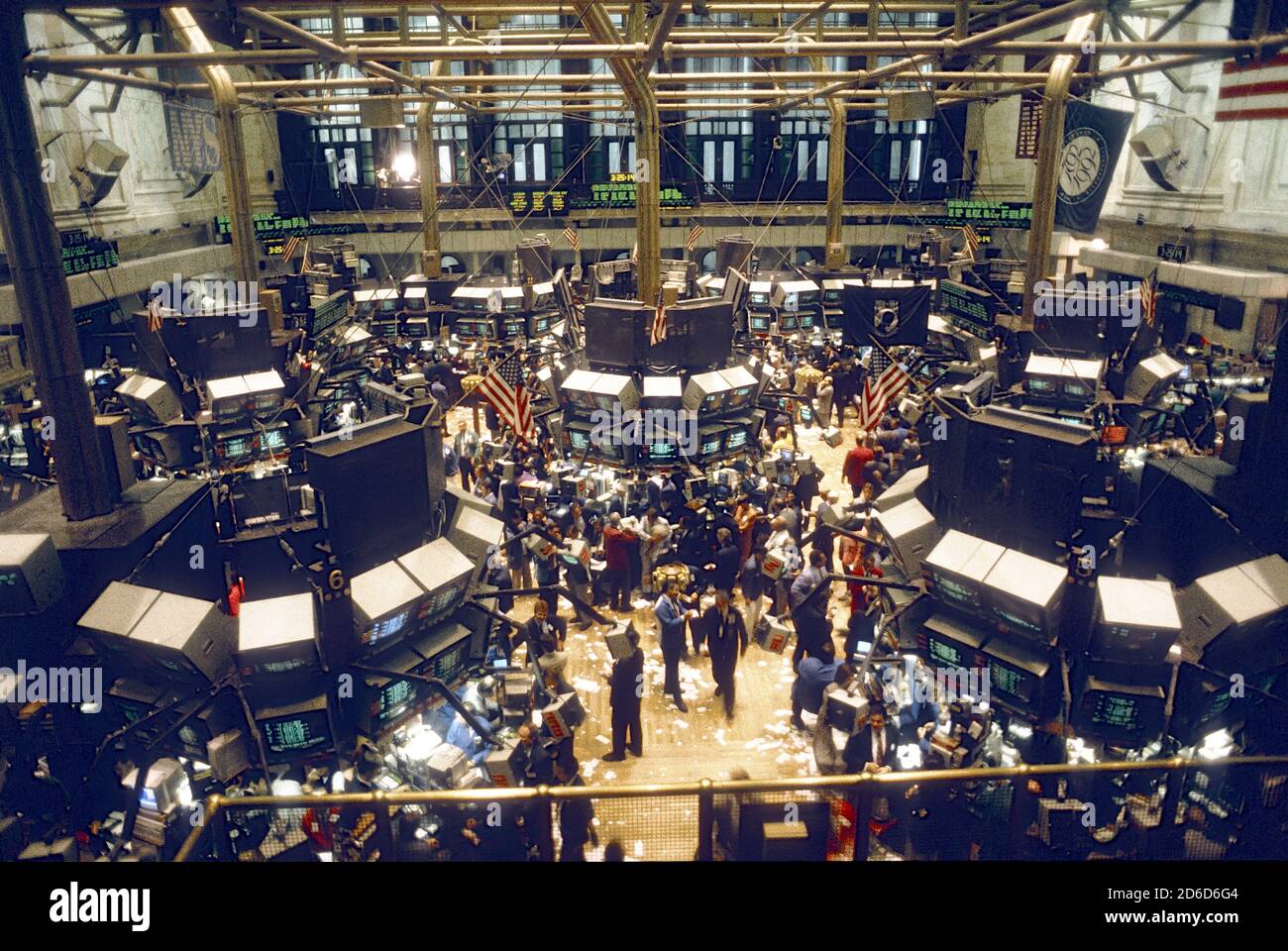
On January 14, 2026, US stock markets experienced their second consecutive session of declines, pulling back from recent record highs amid a confluence of corporate earnings disappointments and political developments affecting monetary policy expectations. The S&P 500 declined 0.67% to close at 6,891.03, while the Nasdaq Composite fell 0.96% to 23,338.76. The Dow Jones Industrial Average slipped 0.38% to 48,903.95, and the Russell 2000 dropped 0.19%, reflecting broad-based selling pressure across market capitalizations [0][1].
The market selloff was primarily driven by three interrelated factors that collectively shifted investor sentiment from the optimism that had pushed indices to record levels. First, major financial institutions reported fourth-quarter earnings that fell short of analyst expectations, with Wells Fargo (WFC) declining 4.64% to $89.22 and Bank of America (BAC) falling 4.51% to $52.08 [0][2][3]. These declines in systemically important banks raised concerns about the broader health of the financial sector and the potential for a credit contraction that could slow economic growth.
Second, the Justice Department’s opening of a criminal investigation into Federal Reserve Chair Jerome Powell introduced unprecedented uncertainty regarding the central bank’s independence and its ability to conduct monetary policy without political interference [4][5][6]. While some market observers noted that stocks have shown resilience to Fed-related tensions in recent months, the formal criminal investigation represents an escalation that could fundamentally alter the market’s assumptions about future interest rate trajectories. The investigation’s scope and potential implications for Fed decision-making remain unclear, creating a structural uncertainty that investors must weigh in their positioning.
Third, the release of delayed economic data due to 2025 government shutdown backlogs presented a mixed picture that complicated the investment thesis. The Producer Price Index (PPI) for November 2025 came in at 3.0% year-over-year, exceeding the consensus forecast of 2.7% and suggesting that inflationary pressures remain more persistent than many investors had anticipated [0][1]. However, Retail Sales data beat expectations at 0.6% versus the 0.4% forecast, indicating continued consumer resilience that could support economic growth even in the face of elevated prices.
The sector performance data reveals a notable rotation toward defensive positioning as investors reassessed risk exposures. Energy stocks (+1.30%) emerged as the top performers, potentially benefiting from geopolitical risk premiums, while Consumer Defensive (+0.99%) and Utilities (+0.79%) attracted capital as bond-proxy investments [0]. Technology stocks (-1.0%) led the decliners, consistent with the Nasdaq’s underperformance and reflecting pressure on high-multiple growth equities that had driven much of the prior market rally. Financial Services (-0.11%) declined modestly, though the sector’s relative resilience compared to individual bank stock performance suggests some sector-level diversification benefits [0].
The market’s reaction to the bank earnings disappointment reveals important structural considerations about the current market environment. While individual bank stocks experienced significant single-day declines, the financial services sector’s modest 0.11% drop suggests that investors are treating these misses as company-specific issues rather than sector-wide problems. This differentiated response indicates that market participants are maintaining a selective approach, rewarding companies that meet expectations while punishing those that miss, rather than applying blanket sector-level risk aversion.
The juxtaposition of sticky producer inflation with resilient consumer spending creates a complex monetary policy backdrop that could persist into the near term. The 3.0% year-over-year PPI reading, which exceeded forecasts by 30 basis points, suggests that pipeline inflation pressures remain embedded in the economy despite the Federal Reserve’s efforts to moderate price growth through interest rate adjustments [0][1]. Simultaneously, the 0.6% beat on Retail Sales demonstrates that consumer spending power has not yet been materially eroded by prior rate increases, potentially complicating the Fed’s inflation fight and extending the period of elevated interest rates.
The market’s relatively muted reaction to the Fed independence concerns, at least in terms of the magnitude of the decline, raises questions about whether these concerns have been fully priced in or whether investors are awaiting more concrete developments before adjusting positions more significantly. Market commentary suggests that investors may have become “accustomed to hostile jawboning” regarding Fed matters and may not trade on these concerns “absent some clear coordinating proof point” [6]. This sentiment dynamic bears monitoring, as a sudden escalation in the investigation or additional political actions targeting the Fed could trigger more pronounced market responses.
The elevated trading volumes across major indices, with the Nasdaq recording 4.23 billion shares and the S&P 500 showing 790.28 million shares, indicate that market participants are actively processing and responding to new information rather than passively absorbing price moves [0]. This heightened activity suggests that the current market environment demands close attention to evolving developments, as investor positioning may be shifting in meaningful ways.
The analysis identifies several risk factors that warrant continued monitoring. The DOJ investigation into Fed Chair Powell represents a structural concern that introduces unprecedented uncertainty into monetary policy expectations [4][5][6]. The independence of the Federal Reserve has been a foundational assumption in market pricing for decades, and any erosion of that independence could fundamentally alter risk premia across asset classes. Investors should be aware that this risk dimension extends beyond short-term volatility and touches on the fundamental framework through which markets interpret economic data and policy signals.
The bank earnings disappointments from Wells Fargo and Bank of America raise the possibility that these misses are symptomatic of broader challenges facing the financial sector rather than isolated incidents. If additional financial institutions report revenue shortfalls in upcoming earnings, the negative sentiment could intensify and potentially spread to related sectors such as commercial real estate and leveraged lending, which have meaningful exposure to bank balance sheets [2][3].
The persistence of inflation above the Fed’s 2% target, as evidenced by the 3.0% year-over-year PPI reading, complicates the case for interest rate cuts that many investors had priced into 2026 expectations [0][1]. Should inflation data continue to surprise to the upside, the market may need to reprice rate trajectory expectations, potentially causing valuation compression in interest-rate-sensitive sectors.
Despite the near-term headwinds, several factors may provide support for markets going forward. The continued resilience of consumer spending, as evidenced by the better-than-expected Retail Sales data, suggests that the underlying economy remains on solid footing and may be capable of absorbing modest policy tightening or earnings disappointments without entering a significant downturn.
The sector rotation toward defensive areas such as Consumer Defensive and Utilities may provide relative stability for portfolios positioned to benefit from risk aversion. Additionally, the strength in Energy stocks indicates that certain cyclical sectors continue to find support from specific supply-demand dynamics that are independent of broader market concerns.
The current pullback from record highs, while uncomfortable in the near term, may also create entry opportunities for long-term investors who believe that corporate earnings growth will ultimately justify current valuation levels. The market’s selectivity in punishing underperformers while supporting companies that meet expectations suggests a functioning price discovery mechanism that could ultimately identify attractive risk-adjusted opportunities.
The January 14, 2026 market decline represents a confluence of corporate earnings disappointment, political uncertainty regarding monetary policy, and mixed economic data that collectively shifted investor sentiment from the optimism that had characterized the prior period. The S&P 500’s 0.67% decline and the Nasdaq’s 0.96% drop reflect meaningful but not catastrophic moves, while the rotation into defensive sectors suggests that investors are actively managing risk exposures rather than panicking [0][1].
Key data points from the session include the significant underperformance of major bank stocks, with Wells Fargo falling 4.64% and Bank of America declining 4.51% on revenue misses [2][3]. The PPI reading of 3.0% year-over-year exceeded expectations, while Retail Sales beat forecasts, creating a complex picture for monetary policy assessment. The sector performance breakdown showed Energy (+1.30%) as the best performer and Technology (-1.0%) as the worst, with defensive sectors outperforming cyclical areas.
The Federal Reserve independence situation remains an evolving development with uncertain implications for market pricing. While the immediate market reaction has been relatively measured, the structural nature of this risk suggests that investors should remain attentive to further developments [4][5][6]. The upcoming December CPI data and additional bank earnings reports will provide important updates to the current picture and may clarify the trajectory of both economic conditions and market sentiment.
Insights are generated using AI models and historical data for informational purposes only. They do not constitute investment advice or recommendations. Past performance is not indicative of future results.
About us: Ginlix AI is the AI Investment Copilot powered by real data, bridging advanced AI with professional financial databases to provide verifiable, truth-based answers. Please use the chat box below to ask any financial question.