
Moutai's Direct Sales of Feitian Moutai Impacts Dealer Network: RMB 1,499 Guiding Price Restructures Baijiu Industry Pricing Logic
Unlock More Features
Login to access AI-powered analysis, deep research reports and more advanced features

About us: Ginlix AI is the AI Investment Copilot powered by real data, bridging advanced AI with professional financial databases to provide verifiable, truth-based answers. Please use the chat box below to ask any financial question.
Related Stocks
Based on comprehensive data collection and analysis, I have prepared this in-depth investment research report for you.
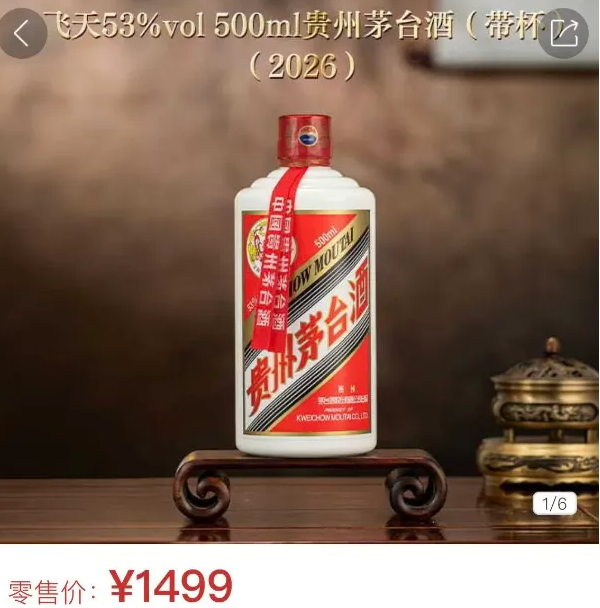
On January 1, 2026, Kweichow Moutai officially launched the 53% ABV 500ml Feitian Moutai at the official guiding price of RMB 1,499 on its self-operated e-commerce platform "iMoutai", this major transformation, dubbed the "Channel Scalpel" by the industry, marks Moutai’s official bypass of its dealer network to reach consumers directly via flat-price direct sales. Within only 9 days of launch, iMoutai gained over 2.7 million new users, with over 400,000 transaction users, and more than 100,000 users successfully purchased the product within 3 days [1][2][3].
This move’s significance has been severely underestimated. For a long time, iMoutai only carried non-standard products such as zodiac-themed liquors and series liquors, while Feitian Moutai was always retained within the dealer network — this was not due to technical limitations, but a long-established channel consensus: Feitian Moutai is the core and most sensitive pricing asset in the dealer network. Moutai’s choice to face consumers directly at the minimum guiding price of RMB 1,499 this time is equivalent to personally touching the foundation of this system [3].
From a financial data perspective, although Kweichow Moutai still maintains its leading position in the industry, its growth momentum has clearly weakened. In Q3 2025, the company’s year-on-year growth rates of revenue and net profit attributable to parent company were only 0.6% and 0.5% respectively, hitting the lowest single-quarter growth rate since 2016 [4]. In the first three quarters of 2025, the revenue growth rate was only 6.32%, failing to meet the growth target set at the beginning of the year [1].

More alarmingly, the growth rate of the direct sales channel has also begun to slow down. Although the direct sales channel revenue reached RMB 74.843 billion in 2024, accounting for 43.87% of total revenue, the iMoutai platform recorded negative growth for the first time [2]. The market price of Feitian Moutai has continued to loosen, with the wholesale price dropping from RMB 2,580 per bottle at the beginning of 2025 to RMB 1,565 per bottle by the end of 2025, and market confidence in Moutai has begun to waver [5].
China’s baijiu industry is undergoing the most severe adjustment since 2015. Baijiu production has dropped from the 2016 peak of 13.58 million kiloliters to 4.145 million kiloliters in 2024, a shrinkage of over 69%; the number of scale-grade baijiu enterprises has decreased from 1,578 to 989 [2][6]. After the introduction of the "Strictest Alcohol Ban" in 2025, government-related consumption plummeted, worsening the situation for the high-end baijiu market.
Against this backdrop, Chen Hua, Chairman of Kweichow Moutai, stated frankly: "The industry has fully entered the era of stock competition, and it is difficult to recover quickly in the short term." [3] Moutai must expand its customer base through new channels and activate new consumption growth.
The market price of Feitian Moutai has long deviated from the official guiding price, and there has been a huge price gap between the actual transaction price and RMB 1,499. This not only harms consumers’ interests but also provides a breeding ground for price speculation. Chen Hua clearly stated at the National Dealer Fellowship Meeting: "We must do everything possible to prevent price speculation, which is responsible to both the broad consumer group and Moutai itself." [1]
By selling Feitian Moutai at RMB 1,499 via the direct sales channel, Moutai is actually re-educating the market on what the "reasonable price range for Feitian Moutai" is. For products of different vintages, iMoutai simultaneously launched Feitian Moutai products from 2019 to 2024, priced at RMB 2,649, RMB 2,459, RMB 2,299, RMB 2,139, RMB 2,109, and RMB 1,909 respectively, forming a clear price gradient [3].
On paper, direct sales do bring more substantial profits to Moutai. The ex-factory price of Feitian Moutai is RMB 1,169 per bottle; if sold directly at the guiding price of RMB 1,499, Moutai will retain a profit margin of approximately RMB 330 per bottle [3]. From 2021 to 2024, the proportion of Moutai’s direct sales channel revenue increased from 22.7% to 43.87%, reaching RMB 74.843 billion in 2024 [1][4].
However, this reform also means that Moutai has sacrificed part of the profits from non-standard products. In the past, liquor companies would bundle non-standard Moutai products when shipping to dealers as a profit source. Chen Hua, Chairman of Moutai Group Marketing Company, clearly stated: "Moutai agents can still make money, but the era of huge profits is gone forever." [3]
On December 28, 2025, Kweichow Moutai announced at a dealer event that it would no longer use the "distribution model" to wholesale non-standard products to downstream parties. This decision was interpreted by the industry as "reducing the burden on agents" — apart from Feitian Moutai, the market prices of many Moutai products are lower than the suggested retail price, and the price inversion of non-standard products has caused implicit loss burdens for dealers [1].
Some dealers have begun to actively adapt to the new rules. On January 4, Chengdu Chuantang Supply Chain Management Co., Ltd. launched a pre-sale activity for whole cases of 2026 Feitian Moutai, accepting orders at RMB 1,499 per bottle, becoming one of the first dealers to follow the official guiding price [1].
At the end of Moutai’s sales terminal, the scalper group engaged in Moutai trading is facing a dilemma of greatly squeezed living space. In the past, the profit margin of zodiac-themed Moutai was very transparent — the "small profit" model of scalpers buying bottles at RMB 2,499 (the price when purchasing from specialty stores), adding RMB 20 to buy, and earning RMB 30 when reselling has become the norm. After the launch of iMoutai, the profit margin for reselling Moutai has become extremely transparent, and scalpers’ profit margins have been greatly reduced [1].
For a long time, the baijiu industry, especially high-end baijiu, has enjoyed the market belief of "price rigidity" — high-end baijiu prices only rise and never fall, serving as a social currency and investment product. However, this belief was completely shattered in 2025.

Taking Feitian Moutai as an example, the wholesale price of original cases dropped from RMB 2,580 per bottle at the beginning of 2025 to RMB 1,505 per bottle in January 2026, and the retail price of loose bottles dropped from RMB 2,680 per bottle to RMB 1,490 per bottle [5]. While Moutai’s wholesale price continued to decline, the actual price that dealers receive for Wuliangye 8th Generation Pu Wu, after various fees and rebates, may drop to over RMB 800 per bottle, marking the first price cut in nearly a decade [5]. The terminal retail price of Luzhou Laojiao 52% ABV Guojiao 1573 also dropped from a peak of RMB 1,389 to the range of RMB 860-980 [5].
Hao Hongfeng, Chairman of Jiuxian Group, pointed out: "The prices of 99% of famous liquors have fallen across the board, with an average retail price drop of over 30%." [6] This marks the baijiu industry’s official transition from the golden era of "volume and price increasing simultaneously" to the in-depth adjustment period of "volume and price decreasing simultaneously".
The significance of Moutai’s RMB 1,499 guiding price is not only to provide consumers with affordable Moutai, but also to redefine the pricing benchmark for high-end baijiu:
- Official Guiding Price Becomes Market Anchor: RMB 1,499 is no longer a "nominal price", but an actual price that consumers can directly purchase at, which makes any market sales above this price lose their rational basis.
- Vintage Products Form Clear Price Gradient: Feitian Moutai products of different vintages on iMoutai form a price gradient from RMB 2,649 to RMB 1,909, providing an official pricing reference for the aged liquor market [3].
- Positioning of Non-Standard Products Recalibrated: Moutai simultaneously adjusted the prices of multiple core products such as aged liquors and premium liquors, with adjustments far exceeding market expectations, forming a systematic product matrix centered around Feitian Moutai’s core price band [3].
Moutai’s channel transformation has triggered a chain reaction in the industry. The strategic directions of leading liquor companies in 2026 are highly consistent: Kweichow Moutai is consumer-centric and promotes market-driven pricing; Wuliangye clearly proposed to achieve "absolute monopoly" in the RMB 800-1,000 price segment; Luzhou Laojiao is trying to stabilize the price system by suspending shipments and controlling prices [6].
Analysts from Founder Securities believe that leading liquor companies have clearly identified operational stability as their primary goal in 2026, and will not blindly pursue channel growth [5]. This means that the baijiu industry is bidding farewell to the past strategy of "controlling volume to maintain prices" and shifting to a more flexible market-oriented pricing mechanism.
In the first three quarters of 2025, Wuliangye achieved operating revenue of RMB 60.945 billion, a year-on-year decrease of 10.26%; net profit attributable to parent company was RMB 21.511 billion, a year-on-year decrease of 13.72%. The revenue growth rate was the first negative growth since 2015, and the net profit growth rate was the first negative growth since 2016 [5].
In response to the impact of Moutai’s direct sales, Wuliangye has confirmed that it will increase channel subsidy support in 2026, while piloting direct terminal distribution in 20 cities across the country and eliminating 55 inefficient dealers [6]. Its strategic goal is to consolidate its "absolute monopoly" position in the RMB 800-1,000 price segment and seize the mid-to-high-end market space after Moutai’s price decline.
In the first three quarters of 2025, Luzhou Laojiao achieved operating revenue of RMB 23.127 billion, a year-on-year decrease of 4.84%; net profit attributable to parent company was RMB 10.762 billion, a year-on-year decrease of 7.17% [5]. The terminal retail price of its flagship product Guojiao 1573 dropped from a peak of RMB 1,389 to the range of RMB 860-980, with severe price inversion.
The dilemma faced by Luzhou Laojiao is: Moutai’s price decline has squeezed the high-end market space, while the mid-to-high-end market faces fierce competition from strong rivals such as Wuliangye, and its "price-following" strategy has instead amplified channel pressure during the industry downturn.
Industry data shows that the number of scale-grade baijiu enterprises has dropped to 887 in the first half of 2025, a year-on-year decrease of more than 100 [5]. The profit share of the top 6 high-end baijiu enterprises (CR6) increased from 61% in 2012 to 86% in 2024 [6], and industry concentration continues to rise.
The strengthening of Moutai’s direct sales system will further compress the living space of small and medium-sized liquor enterprises: on the one hand, Moutai’s price band decline to RMB 1,499 will "squeeze out" competing products in the same price segment; on the other hand, the direct consumer reach capability of the direct sales channel has greatly reduced the value of the traditional dealer network, and the model of small and medium-sized liquor enterprises relying on dealer networks faces fundamental challenges.
Moutai’s direct sales strategy is not only a channel transformation, but also brings about a change in consumer groups. Industry insiders point out that in the past, the main consumer groups of Moutai were real estate upstream and downstream bosses, large infrastructure bosses, and financial industry executives; while over 60% of the new direct-supply group purchase customers developed by Moutai’s direct sales system have provincial-level high-tech enterprise qualifications, and new business elites in the internet and artificial intelligence sectors have become new growth poles [1].
This change means that Moutai is shifting from "B-end driven" to "C-end driven", and from government/business consumption-led to mass consumption-led.
The RMB 1,499 pricing enables more ordinary consumers to afford the product. Zhu Danpeng, a Chinese food industry analyst, pointed out: "Feitian Moutai’s unit price has dropped to the thousand-yuan level, and many ordinary consumers can afford it, so they are likely to want to buy it to try, after all, Moutai’s quality is well-reputed." [5]
From New Year’s Day to the Spring Festival is not only the peak period for catering and banquet consumption, but also the traditional peak season for baijiu sales. Moutai’s launch of official online direct purchase at this time is just right to capture the demand of the C-end consumer market [5].
For a long time, Feitian Moutai has had dual attributes of consumer goods and investment products, and market speculation has caused the price to deviate seriously from its value. After Moutai launched direct sales at RMB 1,499, the space for investment speculation has been greatly compressed, and Moutai is returning to its essential attribute as a consumer good.
This transformation has demonstrative significance for the entire baijiu industry: when the investment attributes of high-end baijiu are weakened, enterprises need to rely more on product quality, brand value, and consumer experience to establish competitive advantages.
In the short term, Moutai’s direct sales will continue to play the role of a "price stabilizer". The official guiding price of RMB 1,499 provides a clear bottom support for the market, and it is expected that the wholesale price of Feitian Moutai will fluctuate in the range of RMB 1,400-1,550. At the same time, channel restructuring will continue to deepen, some small and medium-sized dealers will be eliminated, and industry concentration will further increase.
The pricing logic of the baijiu industry is undergoing fundamental changes:
- Shift from "Brand Premium Driven" to "Consumption Value Driven": Prices will be more closely linked to actual consumption value rather than social attributes
- Shift from "Channel Pricing" to "Manufacturer Direct Control": The increase in the proportion of direct sales enables manufacturers to regain pricing power
- Shift from "Price Rigidity" to "Market-Driven Pricing": Price fluctuations will reflect changes in market supply and demand more frequently
Tie Li, an industry expert, predicts that the industry will truly hit bottom "from the second half of 2026 to 2027", and the adjustment period may last until 2028. After this round of adjustment, baijiu will not be able to reproduce the previous peak of crazy price increases, and prices will be more closely linked to commodity prices rather than housing prices [6].
From a more macro perspective, Moutai’s direct sales at RMB 1,499 marks the baijiu industry’s transformation from the "Channel King" era to the "Consumer King" era. This transformation will bring about:
- Flattening of Channel System: The hierarchical dealer network will gradually disintegrate, and manufacturer direct control of terminals will become the mainstream
- Transparency of Price System: The official guiding price becomes the market benchmark, and the channel markup space is greatly compressed
- Popularization of Consumer Groups: High-end baijiu shifts from "privilege consumption" for a few to "experience consumption" for more consumers
- Increase in Industry Concentration: The living space of small and medium-sized liquor enterprises is further compressed, and the CR6 pattern of the industry is strengthened
Moutai’s direct sales of Feitian Moutai and the launch of the RMB 1,499 guiding price is a long-overdue but profound channel revolution in the baijiu industry. Behind this transformation is the fundamental shift of the industry from incremental expansion to stock competition, from B-end driven to C-end driven, and from price rigidity to market-oriented pricing.
For investors, the following key points need attention:
- Moutai’s Leading Position Becomes More Stable: The direct sales channel strengthens Moutai’s control over prices and the market, and its leading advantages will be further expanded
- Increased Pressure on Second and Third-Tier Baijiu: Moutai’s price decline will squeeze the mid-to-high-end market space, and Wuliangye, Luzhou Laojiao, etc. face fierce competition
- Release of Channel Transformation Dividends: Liquor enterprises with terminal direct control capabilities will gain competitive advantages
- Consumption Scenario Innovation Becomes Key: Liquor enterprises that can expand new consumption scenarios and attract young consumers have greater growth potential
The "RMB 1,499 Era" of the baijiu industry has begun, and this restructuring of pricing logic will profoundly affect the industry’s development pattern in the next five to ten years.
[1] Jiemian News - iMoutai Reshapes Kweichow Moutai
[2] China.org.cn - Moutai: A Long-Overdue Self-Rescue
[3] Phoenix Net Finance - Smashing Scalpers’ Rice Bowls, Moutai Jumps into the RMB 1,499 Era
[4] Gilin API Data - Kweichow Moutai Company Profile and Financial Data
[5] The Paper - Can You Drink Moutai at New Year’s Eve Dinner? Official Direct Sales of RMB 1,499 Moutai Are Snapped Up
[6] Sina Finance - Baijiu in 2026: The Long-Overdue and Protracted Bottoming-Out Has Just Begun
Insights are generated using AI models and historical data for informational purposes only. They do not constitute investment advice or recommendations. Past performance is not indicative of future results.
About us: Ginlix AI is the AI Investment Copilot powered by real data, bridging advanced AI with professional financial databases to provide verifiable, truth-based answers. Please use the chat box below to ask any financial question.