
Analysis of FAWER Automotive Parts (000030.SZ)'s Flying Car Business Layout and Transformation Prospects
Unlock More Features
Login to access AI-powered analysis, deep research reports and more advanced features
About us: Ginlix AI is the AI Investment Copilot powered by real data, bridging advanced AI with professional financial databases to provide verifiable, truth-based answers. Please use the chat box below to ask any financial question.
Related Stocks
Based on the information I have collected, let me provide a detailed analysis of FAWER Automotive Parts’ flying car business layout and transformation prospects.
FAWER Automotive Parts (000030.SZ) is a comprehensive enterprise focusing on R&D, production and sales of automotive parts. According to the latest data, the company has a market value of approximately RMB 9.25 billion, a price-to-earnings ratio of 14.15 times, and a current stock price of approximately $5.53 [0]. Its major customers include mainstream automakers such as FAW Group, Seres, Geely, Chery, SAIC, BAIC, Great Wall, NIO, XPeng, etc. [1].
The company’s products cover eight major series:
- Chassis Systems
- Thermal Systems
- New Energy
- Intelligent Connected Systems
- Engine Accessory Systems
- Steering and Safety Systems
- Braking and Transmission Systems
- Fasteners [1]
FAWER Automotive Parts has received a fixed-point development notice for a flying car project from a leading domestic flying car manufacturer, confirming the supply of the following products:
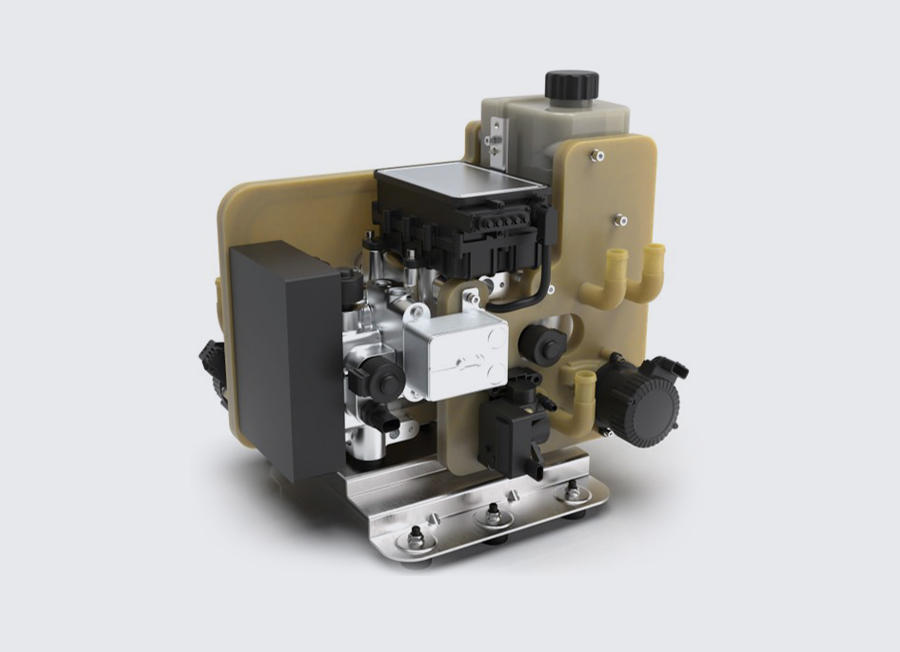
- Electronically Controlled Shock Absorbers: Co-developed with the customer
- Thermal Management Products: The customer adopts the company’s independently developed technical solution [1]
The company has invested in flying car projects through
According to data disclosed by the company:
- First half of 2024: The proportion of new energy orders among new orders reached nearly80%[1]
- The company has sufficient order reserves, with the proportion of new energy-related orders exceeding 70%[2]
The 2024 annual performance was stable:
- Operating revenue: RMB 16.468 billion, a year-on-year increase of 3.95%
- Total profit: RMB 939 million, a year-on-year increase of 30.89%
- Net profit attributable to shareholders: RMB 676 million, a year-on-year increase of 11.93% [3]
According to authoritative forecasts from the Civil Aviation Administration of China, the scale of the low-altitude economy industry will continue to expand at a
- It is expected to reach RMB 1.5 trillionby 2025
- It is expected to achieve leapfrog development of RMB 3.5 trillionby 2035 [4]
Since the second half of the year, policies related to the low-altitude economy have been intensively introduced:
- In November, the General Office of the State Council issued the “Implementation Opinions on Accelerating Scenario Cultivation and Opening to Promote Large-Scale Application of New Scenarios”, clearly listing the low-altitude economy as an important expansion field of the full-space unmanned system
- The Ministry of Transport released 23 typical cases of low-altitude transportation application scenarios [4]
- Solid Technical Accumulation: The company has a rich product line and technical reserves, and products such as electronically controlled shock absorbers and thermal management systems have mass production capabilities
- High-Quality Customer Resources: The company’s major customers cover mainstream domestic automakers, laying a foundation for entering the flying car supply chain
- Sufficient Order Reserves: The proportion of new energy-related orders exceeds 70%, providing a guarantee for business transformation
- Forward-Looking Strategic Layout: The company has laid out its presence in the low-altitude economy through fund investment, reducing direct investment risks
- Market Uncertainty: The low-altitude economy is still in the early stage of development, and there are uncertainties in the commercialization process
- High Technical Threshold: Flying cars have higher requirements for parts, requiring continuous R&D investment
- Intensified Competition: Many enterprises are laying out their presence in the low-altitude economy, which may lead to intensified market competition
FAWER Automotive Parts has solid accumulation in the traditional automotive parts sector and is actively transforming into the new energy and low-altitude economy sectors. Although the flying car business currently accounts for a small proportion of the company’s overall revenue, considering the broad development prospects of the low-altitude economy and the fixed-point development project the company has obtained, it has certain strategic layout value. Investors may pay attention to the subsequent order implementation of the company in the flying car sector and the development progress of its low-altitude economy business.
[0] Jinling AI Financial Database - Company Overview of FAWER Automotive Parts (000030.SZ)
[1] Sina Finance - FAWER Automotive Parts: The proportion of new energy orders among new orders in H1 2024 reached nearly 80% (https://finance.sina.com.cn/stock/relnews/cn/2025-04-07/doc-inesiwtu5732783.shtml)
[2] Securities Times - FAWER Automotive Parts: Has sufficient order reserves, with new energy-related orders accounting for over 70% (https://www.stcn.com/article/detail/3482793.html)
[3] Dongfang Fortune Securities Research Report - April 2025 Investment Strategy for the Automotive Industry (https://pdf.dfcfw.com/pdf/H3_AP202504211660034963_1.pdf)
[4] Securities Times - Low-altitude Economy Sector Surges; Institutions Forecast Positive Performance for These Low-altitude Economy Stocks (https://www.stcn.com/article/detail/3547260.html)
Insights are generated using AI models and historical data for informational purposes only. They do not constitute investment advice or recommendations. Past performance is not indicative of future results.
About us: Ginlix AI is the AI Investment Copilot powered by real data, bridging advanced AI with professional financial databases to provide verifiable, truth-based answers. Please use the chat box below to ask any financial question.