
Saks Global's Real Estate Strategy During Bankruptcy: A Case Study in Retail Sector Distress
Unlock More Features
Login to access AI-powered analysis, deep research reports and more advanced features
About us: Ginlix AI is the AI Investment Copilot powered by real data, bridging advanced AI with professional financial databases to provide verifiable, truth-based answers. Please use the chat box below to ask any financial question.
Related Stocks
Based on my comprehensive research, I can provide a detailed analysis of Saks’ real estate strategy and its broader implications for the retail sector.
Saks Global’s Chapter 11 bankruptcy filing in January 2026 represents a pivotal moment in the ongoing transformation of American department store retailing. The company’s strategic reliance on its real estate assets—valued at approximately $4.4 billion in net asset value—to navigate restructuring highlights both the unique advantages and structural vulnerabilities of luxury multi-brand retailers. This analysis examines how Saks’ approach reflects broader industry challenges and what it means for mall REITs and retail property valuations.
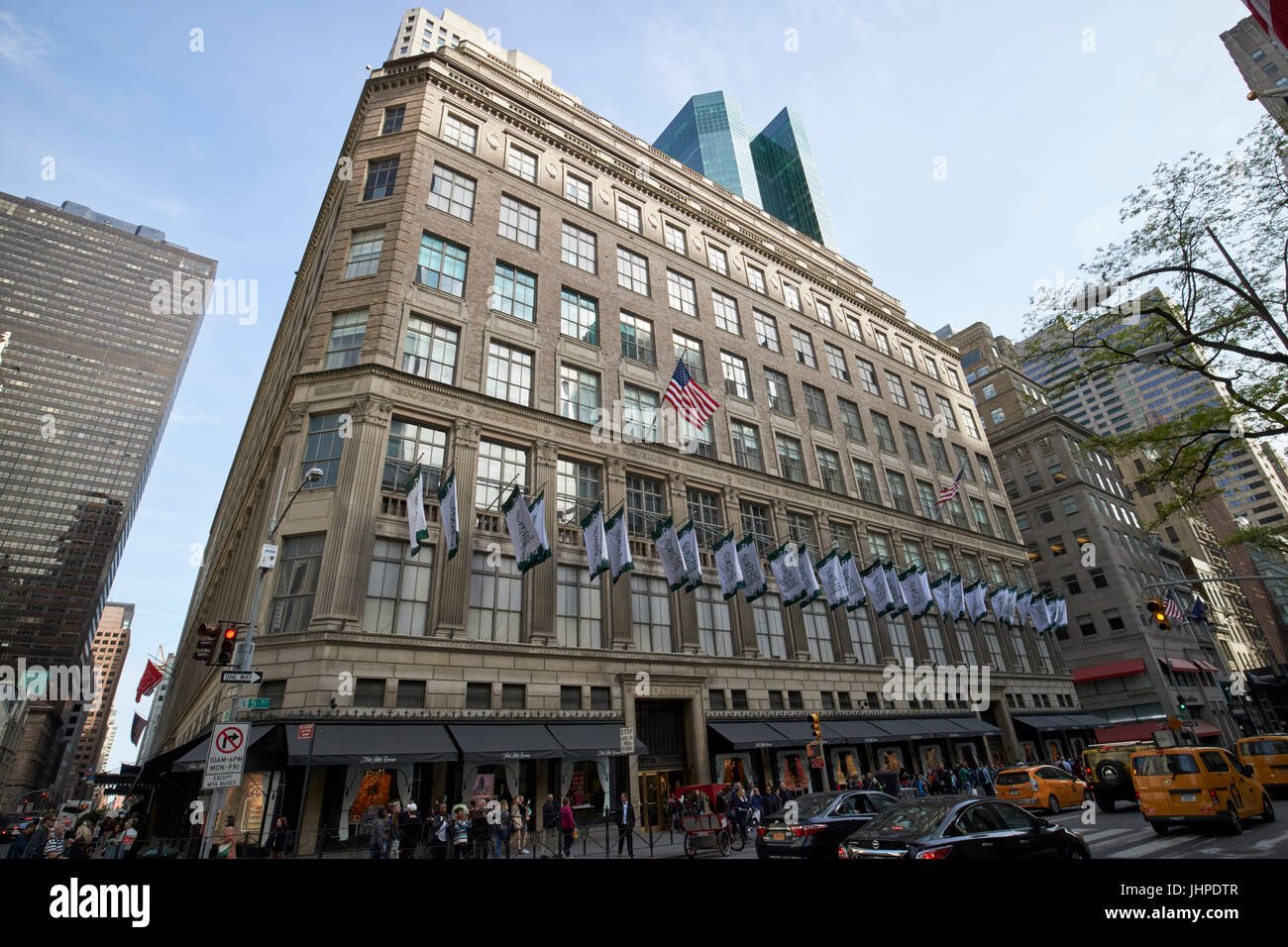
Saks Global operates approximately 125 U.S. stores encompassing 13 million square feet of retail space, with a critical distinction: the company owns or controls ground leases at 39 locations, including premier sites at Manhattan’s Fifth Avenue, Beverly Hills luxury corridors, and top-tier malls such as Florida’s Bal Harbour Shops [1][2]. This asset base forms the foundation of Saks’ restructuring strategy.
The company’s $1.75 billion debtor-in-possession (DIP) financing package, pending court approval, is explicitly designed to buy time for Saks to monetize its real estate assets without resorting to fire-sale closures [2]. According to S&P Global Ratings, Saks is targeting roughly $600 million in real estate sales to shore up liquidity and reduce its debt burden [1].
- The sale of a 184,000-square-foot Neiman Marcus store in Beverly Hills to Ashkenazy Acquisition Corp. (pre-Christmas 2025)
- The sale of a 150,000-square-foot Neiman Marcus store in Plano, Texas (September 2025), with the property scheduled to close in January 2027 [1]
Saks’ bankruptcy is not an isolated event but rather the culmination of persistent structural challenges affecting the entire department store sector:
The department store sector has experienced a wave of notable restructurings:
| Company | Status |
|---|---|
| Saks Global | Filed Chapter 11 (January 2026) |
| Neiman Marcus | Acquired by Saks (2024), now part of restructuring |
| Macy’s | Closing ~150 namesake stores by 2027 |
| Joann Stores | Liquidated after 80+ years in business |
| Party City | Completed wind-down |
| Rite Aid | Second bankruptcy, operations absorbed by competitors |
| Forever 21 | Filed bankruptcy, shuttered hundreds of stores |
Approximately 8,200 store locations closed in 2025 alone—a significant increase over 2024—demonstrating the accelerating pace of retail transformation [4].
Mall REITs face significant exposure to department store bankruptcies. When a department store anchor closes, customer counts can drop by 20-25%, triggering cascading effects throughout the property [5]. Simon Property Group (NYSE: SPG), Brookfield Corporation (NYSE: BN), and Macerich (NYSE: MAC)—the largest mall owners in the United States—face the prospect of filling massive, multi-level anchor spaces that often exceed 200,000 square feet.
The impact extends beyond immediate vacancy. Co-tenancy clauses in many mall leases allow smaller retailers to break their leases or demand rent reductions when anchor tenants depart, creating a multiplier effect on property revenues [6].
The mall sector has undergone dramatic restructuring:
| Mall Category | 2016 | 2022 | Change |
|---|---|---|---|
| Class A/B Malls | 352 | 316 | -10% |
| Class C/D Malls | 684 | 287 | -58% |
This polarization reflects a flight-to-quality dynamic where investors and retailers increasingly prefer well-located, amenity-rich properties while Class C/D assets face existential challenges [5].
Forward-thinking mall owners are aggressively converting former department store spaces:
- Stonestown Galleria (San Francisco): Former Macy’s replaced with Whole Foods, movie theater, sporting goods store, and healthcare facility [5]
- Tysons Galleria (D.C. area: New wing added with entertainment, home furnishings, dining, and EV showroom [5]
- Various Properties: Converted to NHL training facilities, Amazon fulfillment centers, medical buildings, and residential developments [5][7]
Despite headline challenges, the retail sector demonstrated resilience in 2025:
- Vacancy Rates: Remained near historic lows at approximately 4.4%
- Rent Growth: Continued at roughly 1% annually
- Absorption: Achieved approximately 5 million square feet in Q3 2025 and 11 million square feet in Q4 2025—the highest quarterly absorption since 2023 [8][9]
However, this performance masks significant divergence:
| Property Type | Outlook |
|---|---|
| Grocery-anchored centers | Strong demand, premium valuations |
| High-traffic suburban locations | Solid performance |
| Class B/C malls in soft trade areas | Ongoing pressure, redevelopment candidates |
| Regional malls (anchor-dependent) | Challenged, requires repositioning |
The Saks bankruptcy highlights both risks and opportunities for mall REIT investors:
- Continued tenant credit deterioration across department store sector
- Potential dividend pressure from impaired cash flows
- Cap rate expansion for Class B/C assets
- A-quality mall owners positioned to acquire distressed properties at distressed pricing
- Repositioning opportunities for well-capitalized REITs
- Potential multiple expansion for assets successfully converted to mixed-use formats
- Monitor Lease Rollover Schedules: Properties with significant department store lease maturities face near-term uncertainty
- Assess Conversion Capabilities: REITs with demonstrated mixed-use development expertise may outperform
- Evaluate Tenant Mix Diversification: Properties with diversified income streams beyond traditional retail show greater resilience
- Watch for Credit Triggers: Analyst ratings and covenant compliance will be key indicators of stress
Saks Global’s real estate-centric bankruptcy strategy exemplifies the new reality facing American department store retailers: physical assets—particularly those with prime locations and favorable lease structures—have become the primary source of restructuring value, rather than operational turnaround potential. The company’s approach of monetizing $600 million in real estate while maintaining operational continuity through DIP financing reflects a mature acknowledgment that brand survival may depend more on asset extraction than operational improvement.
For mall REITs, this restructuring cycle represents both an immediate challenge and a long-term opportunity. Properties dependent on department store anchors face occupancy and rent pressure, while well-capitalized owners of A-quality malls may benefit from the opportunity to reposition prime real estate for emerging uses—medical services, experiential retail, food and beverage, and mixed-use residential components.
The broader retail property market continues its structural transformation, with the flight-to-quality dynamic accelerating. While traditional department store formats face continued pressure, the retail sector as a whole shows resilience through alternative uses and tenant diversification. The key for investors will be distinguishing between assets facing structural obsolescence and those positioned for successful transformation.
[1] CoStar - “Saks Global Shifts Leadership as It Sells Real Estate and Store Brands with Debt Deepening” (https://www.costar.com/article/1224416192/saks-global-shifts-leadership-as-it-sells-real-estate-and-store-brands-with-debt-deepening)
[2] Reuters - “Luxury Retailer Saks Leans on Real-Estate Rights to Keep Doors Open During Bankruptcy” (https://www.reuters.com/legal/litigation/luxury-retailer-saks-leans-real-estate-rights-keep-doors-open-during-bankruptcy-2026-01-14/)
[3] USA Facts - Retail Spending Analysis (https://www.usafacts.org/data-insights/us-retail-spending-trends/)
[4] LinkedIn/Summary - 2025 Retail Bankruptcy Trends (https://www.linkedin.com/posts/scottrbenedict_saks-global-doesnt-rule-out-bankruptcy-activity-7409272376791855104-wwvY)
[5] CNBC - “How Macy’s Store Closures Will Change Shopping Malls” (https://www.cnbc.com/2024/08/12/macys-store-closures-will-change-malls.html)
[6] Times Online - “A Titan Tumbles: Saks Global Files for Chapter 11” (http://business.times-online.com/times-online/article/marketminute-2026-1-14-a-titan-tumbles-saks-global-files-for-chapter-11-as-the-high-cost-of-luxury-consolidation-collides-with-reality)
[7] Partner Valuation Advisors - “Retail Market Snapshot Mid-Year 2025” (https://www.partnerval.com/wp-content/uploads/2025/07/Retail-Market-Snapshot-Mid-Year-2025-PDF-Download.pdf)
[8] CBI Commercial - “U.S. Retail Market 2025 Recap and 2026 Outlook” (https://www.cbicommercial.com/blog/us-retail-market-2025-recap-and-2026-outlook)
[9] Matthews Real Estate - “Retail Remained Robust Throughout 2025” (https://www.matthews.com/market_insights/retail-remained-robust-throughout-2025)
Insights are generated using AI models and historical data for informational purposes only. They do not constitute investment advice or recommendations. Past performance is not indicative of future results.
About us: Ginlix AI is the AI Investment Copilot powered by real data, bridging advanced AI with professional financial databases to provide verifiable, truth-based answers. Please use the chat box below to ask any financial question.