
In-Depth Analysis Report on XPeng Motors' "Super Range Extender + Self-Developed Chip" Strategy
Unlock More Features
Login to access AI-powered analysis, deep research reports and more advanced features
About us: Ginlix AI is the AI Investment Copilot powered by real data, bridging advanced AI with professional financial databases to provide verifiable, truth-based answers. Please use the chat box below to ask any financial question.
Related Stocks
Based on in-depth analysis of collected data and market information, I present this investment research report on the feasibility of XPeng Motors’ strategy.
XPeng Motors delivered an over-expected performance in 2025, with cumulative annual deliveries of
In terms of financial data, the company’s current market capitalization is
Overseas deliveries reached
XPeng Motors set a sales target of
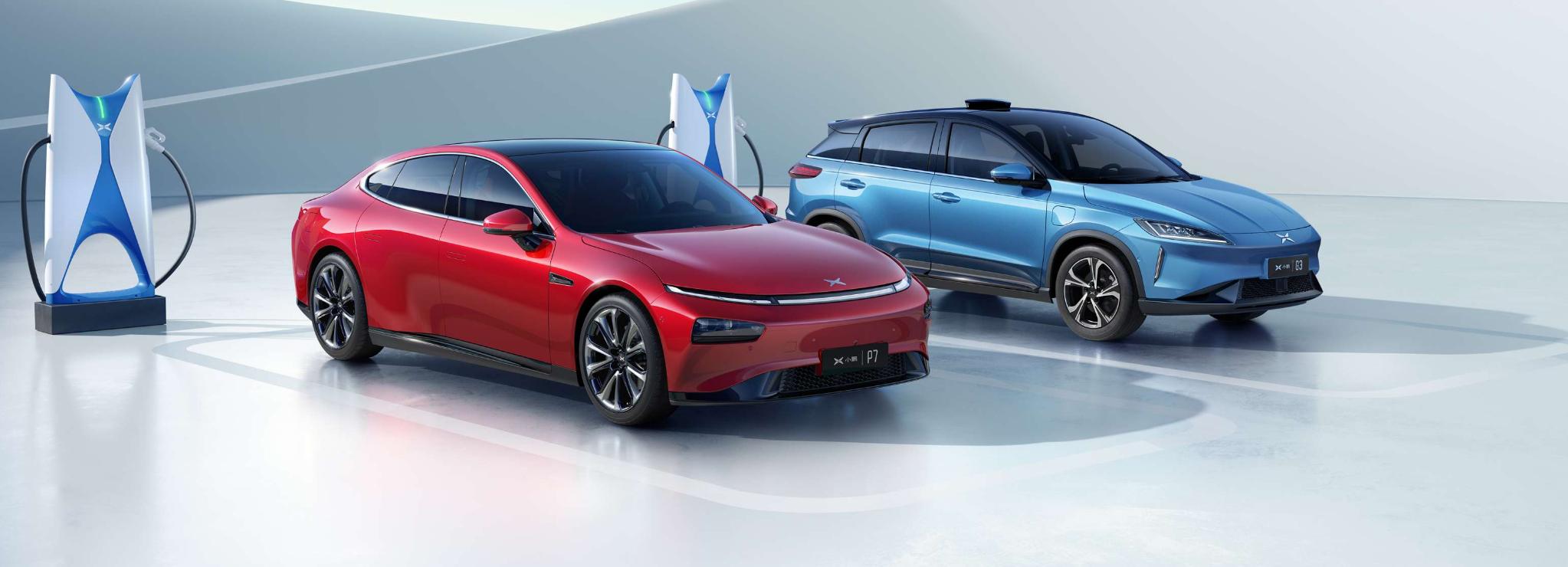
XPeng Motors launched the X9 Super Range Extender version in November 2025, officially entering the range extender vehicle segment, and subsequently launched the P7+ Range Extender version and G7 Range Extender version, forming a “one model, two power options” product matrix[6]. Key technical parameters are as follows:
- P7+ Range Extender Version: 430km pure electric range, 1550km combined range, starting at RMB 186,800[6]
- G7 Range Extender Version: 1704km combined range, starting at RMB 195,800[6]
All range extender models are developed based on the
However, the range extender vehicle market is facing growth bottlenecks. According to industry data, the range extender market experienced four years of explosive growth from 2020 to 2024, with the market size reaching 1.075 million units in 2024, accounting for an 11% share[7]. However,
The core reasons for the decline in the range extender market include:
- Rapid iteration of pure electric technology: The popularization of 800V high-voltage platforms and high-rate cells has significantly improved the range and charging experience of pure electric models, weakening the range advantage of range extender vehicles[7]
- Declining battery costs: Pure electric and range extender models of the same class are basically priced the same, and some pure electric versions are even cheaper[7]
- Increasing plug-in hybrid and pure electric competitors: New models such as Lynk & Co 900, IM LS6, and Lantu L90 have diverted market share from range extender SUVs[7]
In the face of the overall slowdown in the range extender market, XPeng’s response strategy is
- The X9 Range Extender version is equipped with a 63.3kWh super-large battery pack, with a pure electric range of over 450km, and only takes 12 minutes to charge from 10% to 80%[7]
- Compared with Li Auto (40-50kWh battery) and AITO (maximum 310km pure electric range), XPeng’s range extender models have a technological generation gap in pure electric range and charging speed[7]
This positioning can not only address users’ range anxiety but also provide a charging experience close to that of pure electric models, forming a differentiated competitive advantage.
XPeng’s self-developed
- Computing Power: 750TOPS (equivalent to 3 NVIDIA Orin-X chips)[8][9]
- Process: 7nm technology[8]
- Architecture: 40-core processor (supports up to 30B large model parameters), 2 self-developed NPUs, 2 independent image ISPs, with an independent security island[8]
The Turing Chip has been mass-produced and installed on four new 2026 models: P7+, G7 Range Extender version, G6, and G9[4]. The chip configuration strategy is as follows:
- MAX Version: Equipped with 1 Turing Chip (750TOPS)
- Ultra SE Version: Equipped with 2 Turing Chips for intelligent driving
- Ultra Version: Equipped with 3 Turing Chips (2 for intelligent driving + 1 for cockpit)[4]
According to calculations by Soochow Securities, under the assumption of a 4-year full-life-cycle shipment volume of 3 million units, self-developed high-computing-power chips by automakers have significant
| Cost Item | Purchased NVIDIA Orin-X | Self-Developed Turing Chip | Cost Savings |
|---|---|---|---|
| Unit Chip Price | RMB 2,800 | RMB 1,100 | RMB 1,200 saved per chip |
If 3 chips are used per vehicle,
Matching XPeng’s Turing Chip is the
- Training Data: 1 billion kilometers[6]
- Inference Latency: Less than 80ms[6]
- Capability Level: Already equipped with map-free L3-level capability for urban roads[6]
- Launch Plan: First batch of vehicle rollout via OTA in March 2026[6]
VLA 2.0 adopts an end-to-end architecture, eliminating the language translation link in the traditional “V-L-A” architecture, and directly converts visual information input from cameras into vehicle control commands[6]. He Xiaopeng stated that 2026 will be the “real first year of fully autonomous driving” in China and the United States, and XPeng plans to apply the VLA model to Ultra models and Robotaxi vehicles[5].
The sales landscape of new energy vehicle startups changed significantly in 2025:
| Rank | Automaker | 2025 Sales | Year-over-Year Growth | 2026 Target |
|---|---|---|---|---|
| 1 | Leapmotor | 597,000 units | +103% | 1,000,000 units |
| 2 | Harmony Intelligent Mobility | 589,000 units | +32% | N/A |
| 3 | XPeng Motors | 429,000 units | +126% | 550,000-600,000 units |
| 4 | Xiaomi Auto | 410,000 units | +220% | 550,000 units |
| 5 | Li Auto | 406,000 units | -19% | N/A |
| 6 | NIO Inc. | 326,000 units | +47% | N/A |
- Leapmotor has maintained its position as the sales champion among new energy vehicle startups with its “full-domain self-development + cost-based pricing” strategy, holding the top sales spot for 9 consecutive months[10][11]
- XPeng’s 126% growth rate is the highest among leading new energy vehicle startups, but its absolute sales volume still lags behind Leapmotor and Harmony Intelligent Mobility[1]
- Li Auto’s sales volume declined by 19% year-over-year due to setbacks in its pure electric transition, making it the only leading new energy vehicle startup with negative growth[1]
- As a cross-industry player, Xiaomi Auto achieved 500,000 deliveries in only 20 months, demonstrating extremely rapid growth[12]
Leapmotor is XPeng’s most direct competitor, and its strategic characteristics deserve in-depth analysis:
- Cost Control: Self-developed components account for 65% of vehicle cost, and lidar can be equipped on models priced at around RMB 150,000[10][11]
- Profitability: Has achieved consecutive quarterly profits, becoming the first domestic new energy vehicle startup to achieve semi-annual profitability[10]
- Overseas Layout: With the strategic cooperation with Stellantis Group, its business covers 35 countries and regions[10]
- Scale Effect: 2026 target of 1,000,000 units, nearly twice XPeng’s target[10]
- Absolute R&D investment scale is small (RMB 3.1 billion in the first three quarters vs XPeng’s RMB 6.6 billion)[11]
- Quality complaints and internal governance issues[11]
- Ambitious target, with high difficulty in achieving it against the backdrop of slowing market growth[11]
Industry leader BYD sold
Harmony Intelligent Mobility (including AITO, IM, Wenjie, Zunjie, and Shangjie) delivered
The industry generally agrees that
- After breaking through the 500,000-unit mark, supply chain bargaining power, scale effects, and brand recognition will achieve a qualitative leap
- Automakers with a scale of over 500,000 units are more likely to achieve profitability (such as Leapmotor and Xiaomi Auto)
- Automakers that fail to cross this threshold may face the risk of marginalization
XPeng delivered 429,400 units in 2025, only about
- The 126% growth rate in 2025 proves that XPeng has the ability to create “hit models”
- The MONA M03 has achieved monthly deliveries of over 10,000 units for 16 consecutive months, contributing about one-third of total sales[13]
- The 4 all-new SUVs in 2026 will significantly expand the product matrix, covering more price ranges
- The Turing Chip + VLA 2.0 form an integrated hardware and software advantage
- Self-developed chips reduce procurement costs and improve supply chain stability
- Intelligent technology is 1-2 generations ahead of competitors
- “Range extender + pure electric” dual-drive covers a wider user base
- High-speed growth in overseas markets (+96%) reduces dependence on a single market
- Cooperation with Volkswagen on electronic and electrical architecture brings technological and revenue increments[8]
- Losses continue to narrow; Non-GAAP net loss decreased from RMB -944 million in 2023 to an estimated RMB -223 million in 2025[8]
- Analysts are generally optimistic; 10 “Buy” ratings vs 3 “Sell” ratings[0]
- The China Passenger Car Association (CPCA) forecasts that passenger vehicle retail sales will reach approximately 24 million units in 2026, with only a 1% year-over-year growth[6]
- The auto market in Q1 2026 is expected to be flat year-over-year and decline by approximately 25% month-over-month[11]
- Uncertainty brought by the phase-out of new energy vehicle subsidy policies[6]
- Leapmotor’s 2026 target of 1,000,000 units poses a more aggressive growth challenge[10]
- Xiaomi Auto’s 2026 target of 550,000 units directly competes with XPeng[12]
- Traditional automakers such as BYD and Geely are accelerating their transition to new energy vehicles
- The market share of range extender vehicles continues to decline, and the technical route is being questioned[7]
- Early movers such as Li Auto and AITO have already occupied user minds, and XPeng, as a latecomer, needs time to cultivate the market
- The “one model, two power options” strategy may lead to the dispersion of R&D and supply chain resources
- The simultaneous launch of 4 all-new models places extremely high demands on R&D, supply chain, and channel capabilities
- Huge investment is required for overseas localized production and supply chain construction
- Large-scale mass production of self-developed chips still needs to be verified
To achieve the 2026 target of 550,000-600,000 units, XPeng needs to meet the following conditions:
| Condition | Requirement | Difficulty |
|---|---|---|
| Average Monthly Deliveries | 45,800-50,000 units | Medium |
| New Model Success Rate | At least 3 models with monthly sales of over 10,000 units | High |
| Proportion of Range Extender Models | 30-40% | Medium |
| Overseas Sales | Over 90,000 units (+100% year-over-year) | High |
| Supply Chain Stability | Sufficient supply of core components | Medium |
| Dimension | Score | Explanation |
|---|---|---|
| Strategic Clarity | 8/10 | “Super Range Extender + Self-Developed Chip + Globalization” strategy is clear |
| Technological Competitiveness | 9/10 | Turing Chip + VLA 2.0 leads the industry |
| Product Matrix | 7/10 | 4 new models in 2026 significantly expand the matrix |
| Growth Momentum | 8/10 | 126% growth rate + overseas breakthrough |
| Profitability | 5/10 | Still in loss, but losses continue to narrow |
| Competitive Pressure | 6/10 | Under pressure from Leapmotor, Xiaomi Auto, and BYD |
Overall |
7.2/10 |
Strategy is feasible, risks are controllable |
-
Solid Foundation: The 126% growth rate in 2025 verifies product strength and market recognition, and the base of 429,400 units provides a solid foundation for 2026 growth
-
Technological Leadership: The Turing Chip and VLA 2.0 form a differentiated competitive advantage, and the intelligent “moat” continues to deepen
-
Expanded Product Matrix: 4 all-new SUVs cover multiple market segments including luxury 6-seater, full-size flagship, mid-size, and compact, significantly improving market coverage
-
Differentiated Range Extender Strategy: XPeng’s range extender models adopt the “super-large battery + ultra-fast charging” technical route, forming a generation gap with Li Auto and AITO to avoid direct competition
-
Overseas Growth Increment: The 96% high-speed growth in overseas markets is expected to become an important growth driver in 2026
-
Financial Improvement Trend: Losses continue to narrow, and scale effects are gradually emerging
- The overall auto market growth will slow down in 2026, with high policy uncertainty
- Competitors such as Leapmotor and Xiaomi Auto are equally aggressive, and achieving the target will face fierce competition
- The execution difficulty of simultaneously launching 4 new models is high
- The overall contraction of the range extender vehicle market may affect the effectiveness of the strategy
| Scenario | Probability | Sales Range | Key Variables |
|---|---|---|---|
| Optimistic Scenario | 30% | 580,000-600,000 units | Full success of new models + over-expected overseas performance + stable range extender market |
| Neutral Scenario | 50% | 550,000-580,000 units | Progress as planned, core variables meet expectations |
| Conservative Scenario | 20% | 480,000-550,000 units | Intensified competition + underperformance of new models |


[0] Jinling API - XPeng Motors (XPEV) Company Profile and Financial Data
[1] Sina Finance - 2025 Full-Year Sales Released: Auto Industry Maintains “One Superpower, Multiple Strong Players” Pattern (https://finance.sina.com.cn/stock/t/2026-01-08/doc-inhfqpst6732725.shtml)
[2] Blockonomi - Xpeng (XPEV) Stock: Overseas Deliveries Increase 96% Year-Over-Year (https://blockonomi.com/xpeng-xpev-stock-overseas-deliveries-increase-96-year-over-year/)
[3] Pandaily - XPeng to Build Localized Supply Chain Teams in Europe and ASEAN (https://pandaily.com/x-peng-to-build-localized-supply-chain-teams-in-europe-and-asean-as-overseas-expansion-accelerates)
[4] 36Kr - He Xiaopeng States: Top AI Companies in the Future Will All Develop Their Own Chips (https://eu.36kr.com/zh/p/3632116618937351)
[5] IT Home - Sources Say XPeng Will Launch 4 New Models Including G01 This Year, Targeting 550,000-600,000 Sales (https://www.ithome.com/0/912/636.htm)
[6] The Economic Observer - Focusing on VLA 2.0 + Super Range Extender Technology, XPeng Motors Launches Four Models Simultaneously to Kick Off 2026 Offensive (https://cj.sina.cn/articles/view/1641561812/61d83ed)
Insights are generated using AI models and historical data for informational purposes only. They do not constitute investment advice or recommendations. Past performance is not indicative of future results.
About us: Ginlix AI is the AI Investment Copilot powered by real data, bridging advanced AI with professional financial databases to provide verifiable, truth-based answers. Please use the chat box below to ask any financial question.