
Fed's Kashkari: Economic Resilience Complicates Path for Rate Cuts in 2026
Unlock More Features
Login to access AI-powered analysis, deep research reports and more advanced features
About us: Ginlix AI is the AI Investment Copilot powered by real data, bridging advanced AI with professional financial databases to provide verifiable, truth-based answers. Please use the chat box below to ask any financial question.
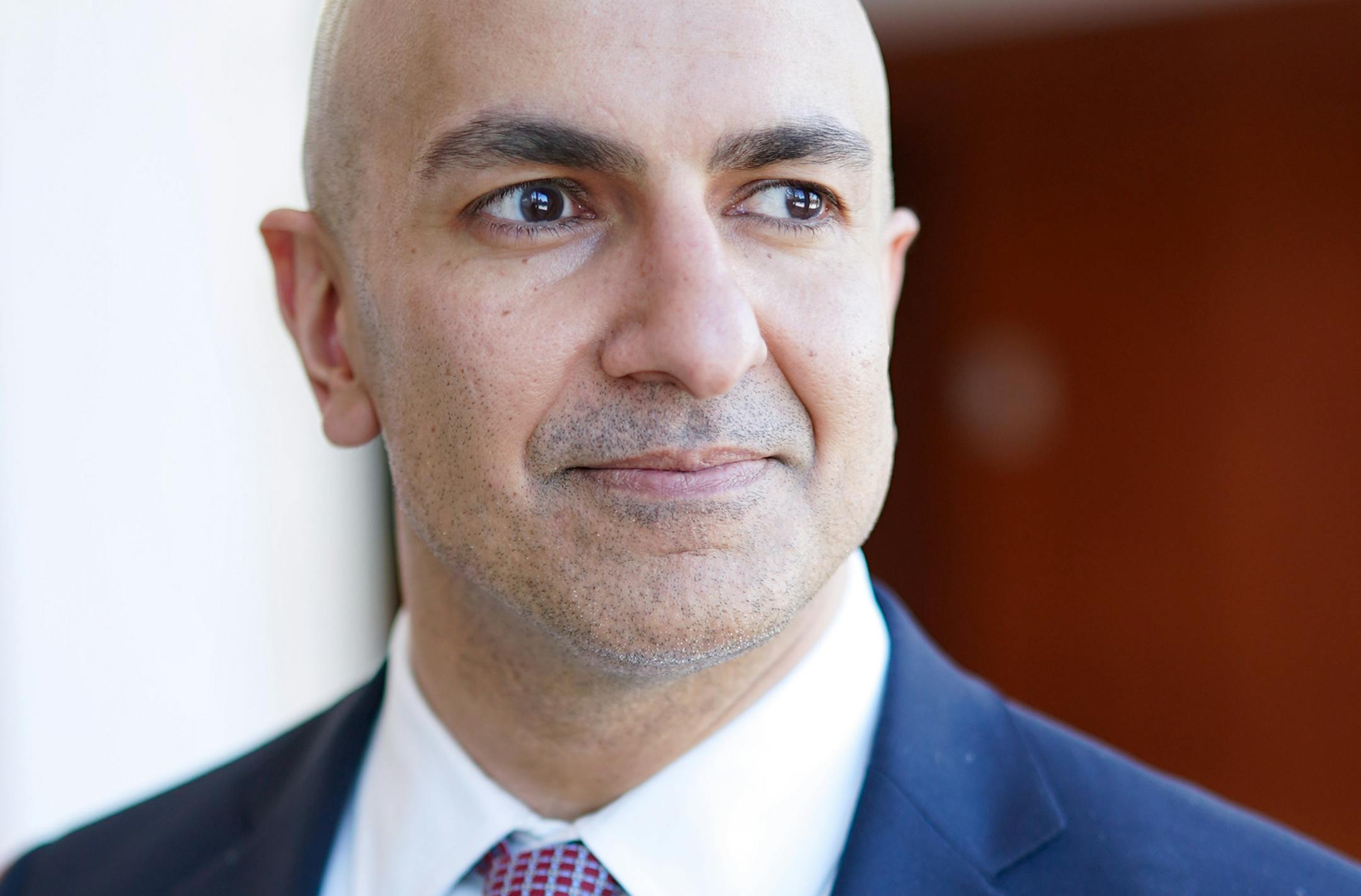
This analysis is based on the Barron’s report [1] published on January 14, 2026, featuring comments from Neel Kashkari, President of the Federal Reserve Bank of Minneapolis and a voting member of the Federal Open Market Committee (FOMC) in 2026. Kashkari emphasized that persistent inflation remains the primary source of financial pressure for households, while the economy’s unexpected strength creates complexity for the Federal Reserve’s policy deliberations. Market reaction to his comments was muted, with the S&P 500 declining 0.29% and the NASDAQ dropping 0.57%, suggesting investor expectations had already incorporated his hawkish stance [0]. Kashkari’s position—opposing the December 2025 quarter-point rate cut and signaling reluctance to support additional reductions at the upcoming January 28-29 FOMC meeting—reflects a broader division within the central bank regarding the appropriate trajectory for monetary policy in the year ahead.
Neel Kashkari has established himself as one of the more hawkish voices within the Federal Reserve system, a position that has become increasingly consequential given his status as a voting FOMC member for 2026. His recent comments, delivered through multiple media outlets including Barron’s and The New York Times, articulate a clear reluctance to support further interest rate reductions in the near term [1][2]. The Minneapolis Fed President explicitly stated that it is “way too soon” for rate cuts, having opposed the December 2025 reduction that passed by a 9-3 vote margin, demonstrating significant dissent within the committee.
The core of Kashkari’s argument rests on two interconnected observations about the current economic landscape. First, he contends that inflation remains stubbornly elevated above the Fed’s 2% target, noting uncertainty about whether inflation will reach 2.5% by year-end or remain at higher levels [2]. His assessment suggests that achieving the inflation goal could require an extended timeline of “2-3 years,” longer than many economists had anticipated during the initial disinflation period. Second, Kashkari emphasizes that household financial pressure continues to stem predominantly from inflation rather than unemployment, reversing the pattern observed in previous economic cycles where job losses typically drove consumer distress [1].
The unexpected strength of the U.S. economy presents a fundamental challenge for Federal Reserve policymakers contemplating the appropriate stance of monetary policy. Kashkari’s characterization of the economy as “resilient” and “stronger than expected” carries significant implications for rate-cut deliberations, as robust economic growth typically reduces the urgency for accommodative policy adjustments [2]. This resilience manifests across multiple dimensions of economic activity, including consumer spending, business investment, and labor market conditions, all of which have demonstrated capacity to absorb the cumulative effects of the current monetary tightening cycle.
The Fed President’s assessment of the neutral interest rate—a theoretical rate that neither stimulates nor restricts economic activity—provides crucial context for understanding his policy stance. Kashkari indicated that the federal funds rate is “pretty close to neutral,” with the current 3.50%-3.75% range approximating the equilibrium level compatible with sustainable economic growth [2][3]. This assessment suggests that additional rate increases are unlikely, but significant rate reductions may also be premature until clearer evidence emerges regarding the durability of inflation’s decline toward the 2% target.
The December 2025 FOMC meeting revealed substantial division within the committee, with the 9-3 vote to implement a quarter-point rate cut reflecting meaningful disagreement among policymakers [2]. Kashkari’s dissenting vote places him among a minority of officials who believe the current policy stance remains appropriate given ongoing inflationary pressures. This voting pattern suggests that future policy decisions will likely continue to involve contested deliberations, particularly as the committee navigates the tension between maintaining restrictive conditions to ensure price stability and supporting labor market conditions.
The Minneapolis Fed President’s conditional approach to future policy easing introduces a specific framework for evaluating the appropriate timing of rate reductions. Kashkari has articulated that he would support cutting rates later in 2026 if unemployment rises concurrently with continued easing of inflationary pressures [2]. This scenario represents a “soft landing” outcome in which the economy gradually normalizes without experiencing significant dislocation, but the path to this outcome remains uncertain given the economy’s current strength.
Equity markets responded to Kashkari’s comments with limited volatility, reflecting the extent to which his hawkish positions had been incorporated into market pricing [0]. The differential response across major indices reveals sector-specific sensitivities to monetary policy expectations, with technology stocks (NASDAQ) demonstrating greater vulnerability to delayed rate cuts given their valuation sensitivity to financing conditions. The Russell 2000’s gain of 0.54% suggests small-capitalization stocks, which tend to be less rate-sensitive and more domestically focused, interpreted the commentary favorably.
The muted market reaction indicates that investors recognize Kashkari’s comments as consistent with his established policy positions rather than a significant departure from prior communications. This dynamic underscores the importance of tracking individual FOMC members’ voting records and public statements when anticipating committee deliberations, particularly during periods of policy uncertainty.
Kashkari’s remarks occurred against a backdrop of heightened political scrutiny of Federal Reserve operations, with the Trump administration having issued a subpoena to Chair Jerome Powell [2]. The Minneapolis Fed President noted “comfort” in the bipartisan congressional support for Federal Reserve independence, suggesting that institutional norms remain robust despite political pressure. This dimension of the policy environment adds complexity to the Fed’s communications strategy, as policymakers must balance transparency about economic conditions with responses to external challenges to central bank autonomy.
The disconnect between aggregate inflation metrics and household perceptions represents a critical challenge for Federal Reserve communication and policy calibration. Kashkari’s observation that “inflation is still the main reason many households feel under pressure” highlights the persistent gap between statistical measures of price changes and lived experiences of American families [1]. This phenomenon reflects several factors, including the concentrated impact of essential goods and services with persistent price increases, the psychological salience of price changes compared to wage growth, and temporal asymmetries in how consumers process economic information.
The policy implication of this dynamic extends beyond traditional inflation targeting frameworks. If household sentiment remains depressed despite progress on headline and core inflation measures, the Federal Reserve faces a communications challenge in explaining the rationale for maintaining restrictive policy settings. Moreover, the potential for inflation expectations to become unanchored—particularly if households perceive the Fed as insufficiently responsive to their concerns—introduces additional complexity into the policy calculus.
Kashkari’s assessment that the Fed is “pretty close to neutral” at current rate levels represents a significant data point in the ongoing debate about the appropriate long-run level of policy accommodation [2][3]. The uncertainty surrounding the neutral rate has substantial implications for both forward guidance and policy implementation, as misjudging this equilibrium level could result in either inadequate stimulus or premature tightening.
The Minneapolis Fed President’s framing suggests that the current 3.50%-3.75% federal funds rate range approximates the neutral rate, implying limited room for additional rate hikes while also reducing the impetus for significant cuts. This interpretation aligns with market-based measures of real interest rates and survey-based estimates of neutral policy, though considerable uncertainty remains about the precision of these estimates. The economy’s performance will ultimately provide the most reliable signal about whether current policy settings remain appropriate.
Kashkari’s articulation of conditional policy easing—supporting rate cuts only if unemployment rises alongside easing inflation—establishes a specific framework for evaluating future policy decisions [2]. This approach prioritizes outcomes over timing, suggesting that the committee’s focus has shifted from recession-prevention to managing a gradual normalization process. The conditions specified by Kashkari imply that a “soft landing” scenario would eventually warrant policy accommodation, while an overheating economy or reaccelerating inflation would argue for maintaining current settings.
The market implications of this conditional framework depend on the probability distribution that investors assign to different economic scenarios. If market participants believe the probability of a “soft landing” has increased, longer-term interest rates may decline and equity valuations may expand. Conversely, if investors perceive heightened risks of either recession or inflation resurgence, market prices will adjust accordingly.
The most significant risk highlighted by Kashkari’s comments pertains to the potential for inflation to remain elevated above the 2% target for an extended period, potentially “2-3 years” according to his assessment [2]. This timeline exceeds many market participants’ expectations for the completion of the disinflation process and introduces uncertainty about the duration of restrictive monetary policy settings. For market participants, this risk manifests primarily through the potential for interest rates to remain elevated, which constrains valuation multiples for rate-sensitive assets and increases borrowing costs across the economy.
The uncertainty about year-end inflation trajectory—Kashkari noted he does not know whether inflation will reach 2.5% or remain higher—underscores the data-dependent nature of future policy decisions [2]. Near-term inflation reports, particularly the January CPI release on January 15, 2026, will provide crucial signals about the path of price pressures and the appropriate stance of monetary policy.
The 9-3 vote at the December 2025 FOMC meeting signals meaningful disagreement among committee members about the appropriate trajectory for policy [2]. This divergence introduces uncertainty about future meeting outcomes, as the balance of voting members and the evolution of economic conditions will determine whether the committee moves toward consensus or remains divided. Market participants should monitor speeches and public appearances by all voting members in the lead-up to the January 28-29 meeting to assess the probability distribution of potential outcomes.
The policy divergence also reflects underlying uncertainty about economic conditions rather than fundamental disagreements about the Fed’s dual mandate. As additional data becomes available, the committee may converge toward a more unified position, or the divergence may persist if economic indicators provide conflicting signals about the appropriate policy stance.
The Trump administration’s subpoena of Federal Reserve Chair Jerome Powell introduces an unprecedented element of political uncertainty into the monetary policy environment [2]. While Kashkari expressed confidence in bipartisan support for Fed independence, the institutional implications of executive branch pressure on the central bank remain unclear. Market participants should monitor developments in this area, as escalation of political interference could affect Fed credibility and independence.
The muted market reaction to Kashkari’s comments suggests that the market had largely priced in his hawkish stance, potentially creating opportunity for investors who hold divergent views about the economic trajectory. If economic data or Fed communications suggest a more dovish policy path, equity markets—particularly rate-sensitive sectors—could experience meaningful appreciation. However, investors should recognize that the timing and magnitude of policy shifts remain highly uncertain, and positions should be sized appropriately for this uncertainty.
The analysis of Kashkari’s January 14, 2026 comments reveals several key information points that market participants should incorporate into their assessment of the monetary policy outlook. First, the Federal Reserve is expected to hold the federal funds rate steady at the 3.50%-3.75% range at the January 28-29, 2026 FOMC meeting, with Kashkari’s vote likely contributing to a hawkish minority [0][2]. Second, inflation persistence remains the primary concern driving Kashkari’s policy stance, with household financial pressure continuing to derive predominantly from price increases rather than labor market weakness [1]. Third, the economy’s unexpected resilience complicates the case for rate cuts by reducing the urgency for accommodative policy while simultaneously suggesting that restrictive settings have not significantly constrained economic activity [2].
The neutral rate assessment indicates that the Fed is operating near policy equilibrium, suggesting limited scope for additional rate increases while also reducing expectations for significant rate reductions in the near term [2][3]. Kashkari’s conditional framework for future easing—requiring rising unemployment alongside continued inflation progress—establishes a specific scenario under which policy accommodation would become appropriate, providing investors with a framework for evaluating potential policy pivots.
Market reaction to Kashkari’s comments remained muted, with the NASDAQ’s 0.57% decline reflecting technology sector sensitivity to delayed rate cuts and the Russell 2000’s 0.54% gain suggesting small-cap optimism about domestic economic conditions [0]. The data calendar ahead, including January CPI and subsequent PCE inflation readings, will provide crucial inputs for the Fed’s January meeting deliberations and subsequent market pricing.
[0] Ginlix InfoFlow Analytical Database – Market Data and Technical Indicators
[1] Barron’s – “Fed’s Kashkari Says Economy’s Strength Complicates Case for Rate Cuts” (January 14, 2026)
URL: https://www.barrons.com/articles/fed-interest-rates-inflation-economy-kashkari-914a95b3
[2] Reuters – “Fed’s Kashkari tells NYT it is ‘way too soon’ to cut rates” (January 14, 2026)
URL: https://www.reuters.com/business/feds-kashkari-says-trump-administrations-threats-are-about-monetary-policy-nyt-2026-01-14/
[3] CNBC – “Minneapolis Fed’s Kashkari indicates interest rates don’t need to be cut much more” (January 5, 2026)
URL: https://www.cnbc.com/2026/01/05/minneapolis-feds-kashkari-indicates-interest-rates-dont-need-to-be-cut-much-more.html
Insights are generated using AI models and historical data for informational purposes only. They do not constitute investment advice or recommendations. Past performance is not indicative of future results.
About us: Ginlix AI is the AI Investment Copilot powered by real data, bridging advanced AI with professional financial databases to provide verifiable, truth-based answers. Please use the chat box below to ask any financial question.