Federal Data Crisis: October Economic Reports May Never Be Released Amid Government Shutdown
Unlock More Features
Login to access AI-powered analysis, deep research reports and more advanced features
About us: Ginlix AI is the AI Investment Copilot powered by real data, bridging advanced AI with professional financial databases to provide verifiable, truth-based answers. Please use the chat box below to ask any financial question.
This analysis is based on the White House announcement [1] on November 12, 2025, that October’s Consumer Price Index (CPI) and jobs report may never be released due to the ongoing government shutdown. The announcement, made by Press Secretary Karoline Leavitt, stated that the Bureau of Labor Statistics (BLS) was unable to collect data during the shutdown, potentially leaving Federal Reserve policymakers “flying blind” at a critical period for monetary policy decisions [1][2][3].
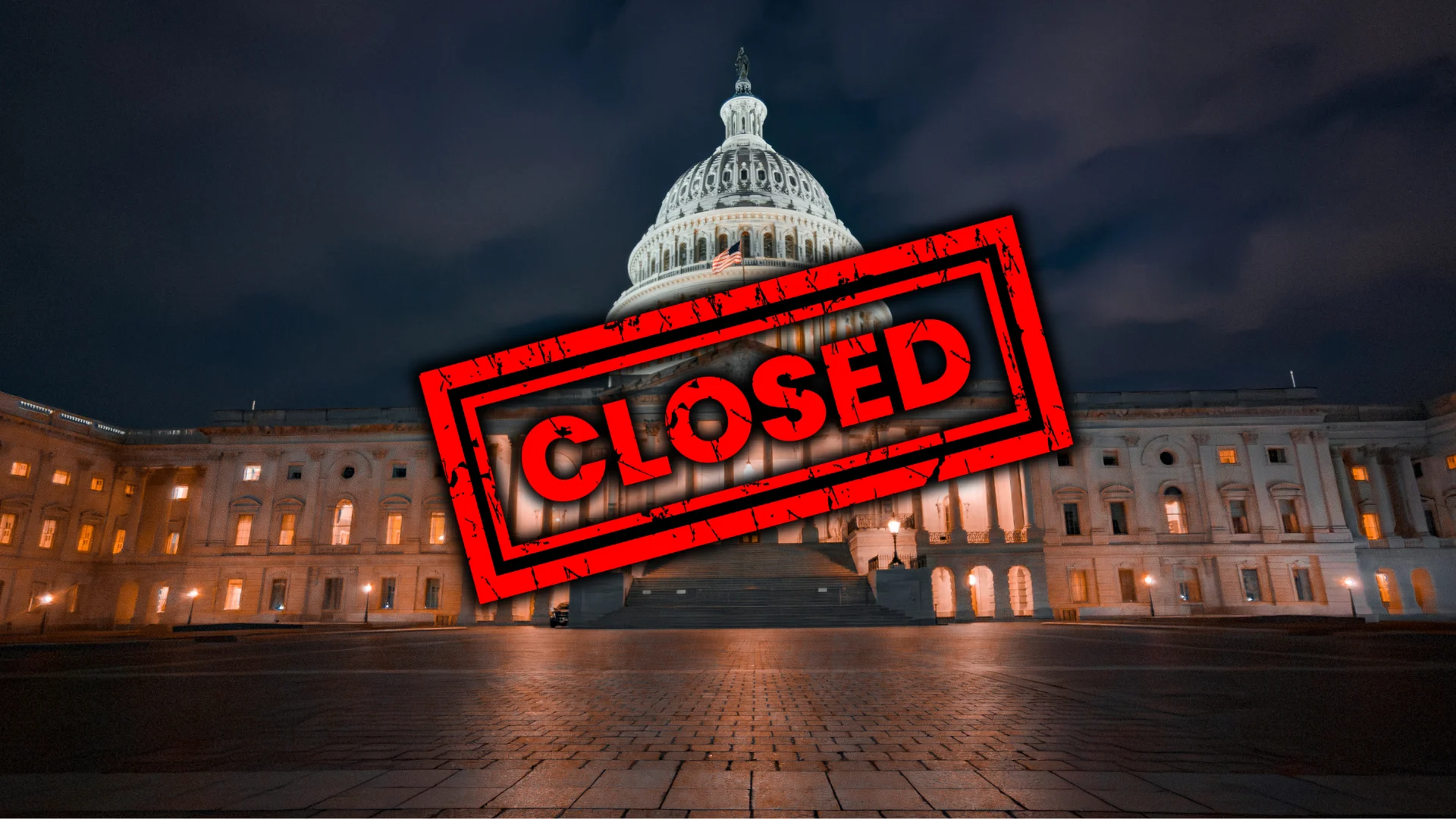
The record-breaking 40+ day government shutdown has created an unprecedented crisis in federal economic data collection. According to the White House, the BLS ceased data collection on October 1st when the government shut down, with only minimal staff recalled for the September CPI release [1][4]. This has resulted in permanent gaps in federal economic statistics that cannot be recovered retroactively.
The shutdown’s timing is particularly critical as it coincides with the Federal Reserve’s December monetary policy meeting, where policymakers traditionally rely on October’s inflation and employment data to inform their decisions [1][2][5]. Without this data, the Fed faces an unprecedented challenge in assessing economic conditions and determining appropriate policy responses.
Financial markets are currently operating with an incomplete economic picture during an already volatile period [0]. The absence of official federal data creates significant uncertainty for investors, economists, and policymakers who rely on these statistics for decision-making. The White House has warned that “all economic data released will be permanently impaired,” raising concerns about the long-term credibility of the federal statistical system [1][3].
While government shutdowns have caused data delays in the past, the current situation appears more severe. The last comparable shutdown in 2013 caused delays, but did not result in permanent data loss [4]. The current administration’s assertion that the data may “never be released” represents an unprecedented escalation in the impact of political impasses on economic infrastructure.
The Fed’s December meeting timing creates extreme urgency for alternative assessment methods. Without October’s CPI and jobs data, policymakers must rely on:
- Private sector employment data (ADP, ISM)
- Regional Federal Reserve surveys
- Real-time economic indicators
- Market-based measures of inflation expectations
This shift could permanently alter how the Fed approaches monetary policy decisions, potentially increasing reliance on private data sources [1][2].
The potential permanent loss of October data represents more than just a temporary gap - it threatens the foundational credibility of the federal statistical system. If the BLS cannot guarantee data continuity during political disruptions, it may undermine confidence in all federal economic indicators [1][3][4].
Financial markets will likely increase reliance on alternative data sources to fill the information vacuum. This could accelerate the trend toward private-sector economic indicators and real-time data analytics, potentially reshaping how market participants assess economic conditions [0][5].
- Policy uncertainty has increased significantlyas Fed may make December rate decisions without complete data [1][2]
- Market volatility may risedue to information gaps and speculation about economic conditions [0]
- Data reliability concerns could persisteven after government reopens, potentially affecting future economic assessments [1][3]
- Historical precedent is limited- the current situation involves potential permanent data loss rather than temporary delays [4]
- Private data providersmay gain increased market influence and credibility
- Alternative economic indicatorscould become more valuable for investment decisions
- Real-time analyticsmay see accelerated adoption as traditional data sources prove vulnerable to political disruptions
The White House announcement on November 12, 2025, revealed that October’s CPI and jobs reports may never be released due to the ongoing government shutdown [1]. This creates unprecedented uncertainty for Federal Reserve policymakers facing December monetary policy decisions without complete economic data [1][2][5]. The situation represents both a short-term crisis for market participants and a potential long-term challenge to the credibility of federal economic statistics [1][3][4]. Market participants should monitor Federal Reserve communications, track alternative data sources, and prepare for increased volatility as the system adapts to this information gap [0][5].
Insights are generated using AI models and historical data for informational purposes only. They do not constitute investment advice or recommendations. Past performance is not indicative of future results.
About us: Ginlix AI is the AI Investment Copilot powered by real data, bridging advanced AI with professional financial databases to provide verifiable, truth-based answers. Please use the chat box below to ask any financial question.