IBM Quantum Computing Breakthrough: Nighthawk and Loon Processors Analysis
Unlock More Features
Login to access AI-powered analysis, deep research reports and more advanced features
About us: Ginlix AI is the AI Investment Copilot powered by real data, bridging advanced AI with professional financial databases to provide verifiable, truth-based answers. Please use the chat box below to ask any financial question.
Related Stocks
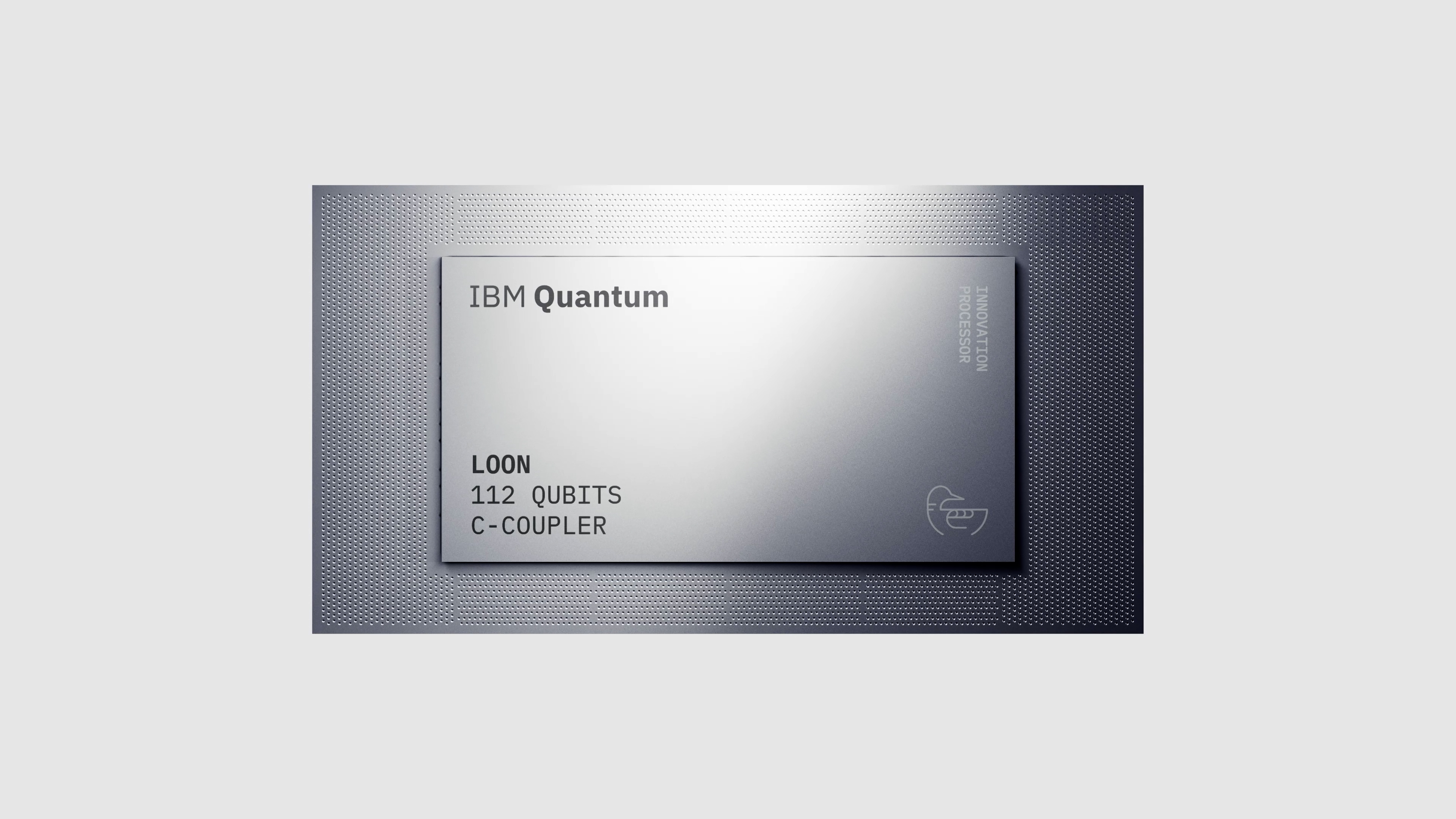
This analysis is based on the Reuters report [1] published on November 12, 2025, which covered IBM’s announcement of two groundbreaking quantum computing processors. The announcement generated immediate market enthusiasm, with IBM shares rising nearly 4% to an all-time high of $324.90 [5].
IBM’s dual-processor announcement represents a strategic approach to quantum computing advancement. The
The more revolutionary
IBM has outlined an aggressive development timeline:
- End of 2025:Nighthawk availability to research partners [4]
- End of 2026:Target for achieving verified quantum advantage with up to 7,500 gates [1][4]
- End of 2027:Up to 10,000 gates capability [4]
- 2028:Up to 15,000 two-qubit gates with 1,000+ connected qubits [4]
- 2029:Goal for fault-tolerant quantum computing [1][4]
Concurrent with hardware announcements, IBM introduced significant software improvements including 24% increased accuracy for circuits with more than 100 qubits, 100x cost reduction for obtaining accurate results, and 10x acceleration in quantum error correction decoding using qLDPC codes [4]. The company also announced a C++ interface to Qiskit for native quantum programming in HPC environments [4].
IBM’s investment in the
The quantum computing market is experiencing rapid growth, with government investment exceeding $10 billion by early 2025 [8]. IBM faces competition from multiple technological approaches:
- Google Quantum AI:Willow chip (105 qubits) with error correction advancements [8]
- Microsoft:Majorana 1 processor using topological qubits based on topoconductor materials [8]
- Amazon Web Services:Cat qubits approach for more effective quantum error correction [8]
- Alternative technologies:IonQ and Quantinuum (trapped ions), D-Wave (quantum annealing), Xanadu (photonic) [8]
IBM uniquely positions itself as “the only company that is positioned to rapidly invent and scale quantum software, hardware, fabrication, and error correction to unlock transformative applications” [4].
IBM is pursuing a collaborative approach to validate quantum advantage claims through partnerships with Algorithmiq, Flatiron Institute, and BlueQubit on an open quantum advantage tracker [4][6]. This strategy aims to establish credible benchmarks and avoid controversies that have plagued previous quantum advantage claims, potentially accelerating industry adoption and standardization.
IBM’s quantum computing announcement represents a significant technological advancement with the Nighthawk processor offering immediate commercial applications and the Loon processor demonstrating revolutionary connectivity architecture. The company’s integrated approach combining hardware innovation, software improvements, and manufacturing infrastructure advantages positions it strongly in the competitive quantum computing landscape.
The announcement generated positive market reaction, with IBM shares reaching an all-time high of $324.90 [5]. However, investors should be aware of the significant technical challenges, competitive pressures, and market adoption uncertainties that remain in the quantum computing sector.
The global quantum computing market is experiencing rapid growth with government investment exceeding $10 billion [8], and McKinsey notes a shift “from development to deployment” in 2025 [8]. IBM’s timeline targeting quantum advantage by 2026 and fault-tolerant computing by 2029 aligns with broader industry momentum but faces execution risks given the technical complexity involved.
Insights are generated using AI models and historical data for informational purposes only. They do not constitute investment advice or recommendations. Past performance is not indicative of future results.
About us: Ginlix AI is the AI Investment Copilot powered by real data, bridging advanced AI with professional financial databases to provide verifiable, truth-based answers. Please use the chat box below to ask any financial question.