Magnificent Seven Stock Analysis: Selective Opportunities Amid Mixed Market Signals
Unlock More Features
Login to access AI-powered analysis, deep research reports and more advanced features
About us: Ginlix AI is the AI Investment Copilot powered by real data, bridging advanced AI with professional financial databases to provide verifiable, truth-based answers. Please use the chat box below to ask any financial question.
Related Stocks
The Magnificent Seven stocks demonstrated notable dispersion during the January 23, 2026 trading session, reflecting the nuanced investment thesis presented in the MarketWatch analysis [1]. Microsoft (MSFT) led the group with a substantial 4.22% gain, closing at $470.19 with a market capitalization of $3.50 trillion and a P/E ratio of 33.39x [0]. Meta Platforms (META) followed with a 2.68% advance to $664.99, representing the most reasonably valued member of the group by traditional metrics at 29.42x P/E [0]. Amazon (AMZN) added 2.20% to reach $239.49, while Nvidia (NVDA) posted a 1.56% gain to $187.72 [0].
In contrast, the lagging performers included Tesla (TSLA), which declined 0.57% to $446.81, and Alphabet (GOOGL), which fell 0.56% to $328.68 [0]. Apple (AAPL) experienced a modest 0.14% decline to $248.01, the smallest negative move in the group [0]. This performance dispersion underscores the importance of stock-specific analysis rather than treating the Magnificent Seven as a homogeneous investment theme.
Technology sector performance remained positive at +0.88%, ranking third among sectors on January 23, 2026 [0]. Communication Services led all sectors with a 1.02% advance, reflecting the strong performance from Meta and Alphabet within the Magnificent Seven cohort [0]. However, Financial Services experienced the steepest decline at -1.45%, while Healthcare dropped -0.81%, indicating continued sector rotation dynamics [0].
Major indices showed divergent performance patterns: the NASDAQ Composite advanced +0.36% to 23,525 points, the S&P 500 was essentially flat at 6,908 points, while the Dow Jones Industrial Average declined -0.55% to 48,992 points [0]. The Russell 2000’s 1.51% decline suggested continued rotation away from small-cap equities toward large-cap quality names [0].
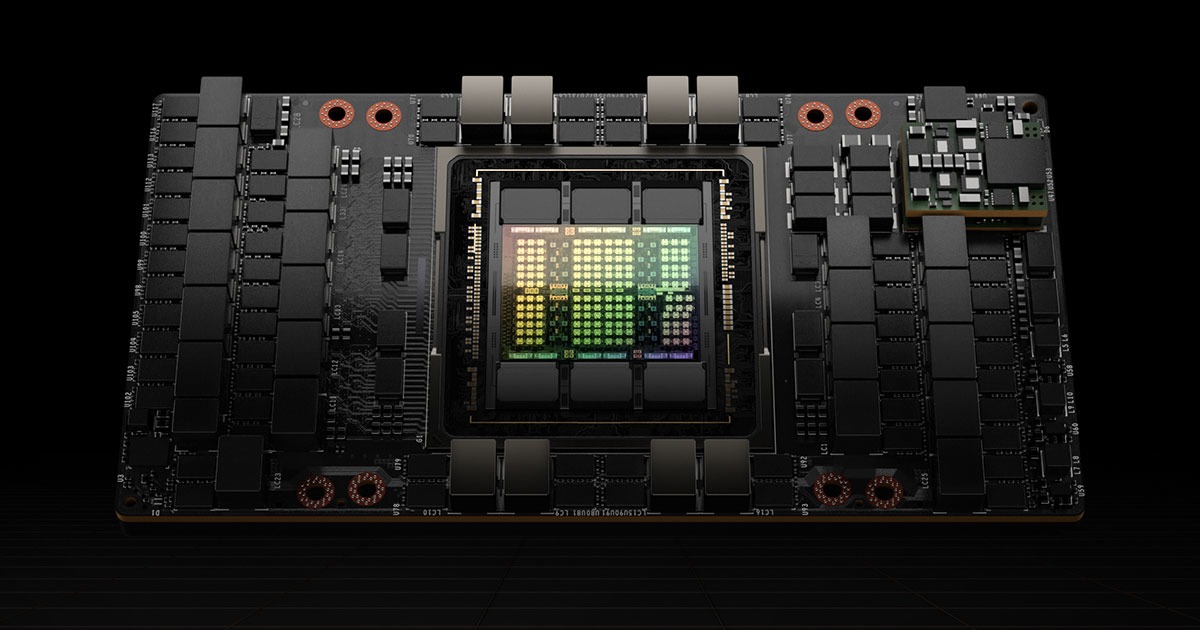
Nvidia’s characterization as a “bargain stock” in the MarketWatch analysis stems from its valuation metrics relative to growth profile [1]. The company trades at a forward price-to-earnings ratio only marginally above the S&P 500 average, despite its dominant position in artificial intelligence chip markets and strong projected revenue compound annual growth rate [1]. This valuation gap has attracted investor attention amid the broader “Magnificent Seven” debate.
- P/E Ratio (TTM):46.05x, below historical averages for growth stocks [3]
- Beta:2.31, indicating high volatility relative to the broader market [4]
- Debt Risk:Low risk classification [4]
- Free Cash Flow:$60.85 billion in latest annual figures [3]
- Market Capitalization:$4.57 trillion [0]
Nvidia is currently trading in a consolidation phase with no clear trend direction, positioned near the middle of its recent range [4]. The stock shows a support level at $184.98 and resistance at $190.23 [4]. The MACD indicator shows no cross, representing a bearish signal, while the KDJ values (K:52.8, D:40.5, J:77.4) indicate bullish momentum building [4]. The RSI remains in normal range without overbought or oversold conditions [4].
Several developments support the constructive outlook for Nvidia. Bloomberg reports indicate Beijing has granted in-principle approval to major Chinese firms including Alibaba, Tencent, and ByteDance to begin preparations for potential purchases of Nvidia’s H200 AI chips [5]. Analysts at KeyBanc estimate Chinese companies could purchase approximately 1.5 million H200 chips, representing roughly $30 billion in potential revenue [5]. Additionally, Nvidia Chief Executive Jensen Huang is expected to visit China ahead of the Lunar New Year in mid-February to attend company events and meet with potential customers [5]. Intel CEO Lip-Bu Tan also disclosed ongoing collaboration with Nvidia to build a custom Xeon processor fully integrated with NVLink technology for AI host nodes [6].
Tesla presents a contrasting picture within the Magnificent Seven framework, with elevated valuation metrics warranting investor attention [7]. The stock trades at a P/E ratio of 235.16x, significantly exceeding traditional valuation benchmarks and the other Magnificent Seven members [0][7]. This elevated multiple leaves limited margin for error, particularly as the company approaches its Q4 FY2025 earnings report scheduled for January 28, 2026 [7].
- 1-Month Return:-8.00% [7]
- YTD Return:+1.98% [7]
- 1-Year Return:+8.33% [7]
- P/E Ratio (TTM):273.70x [7]
- EV/OCF Ratio:94.04x [7]
- ROE:6.91% [7]
- Net Profit Margin:5.51% [7]
Analyst consensus maintains a HOLD rating with a target price of $491.50, representing approximately 10.0% upside from current levels [7]. The upcoming earnings report will serve as a critical test, with EPS estimates at $0.44 and revenue estimates at $24.75 billion [7]. The company has shown an earnings trend decline, with Q3 FY2025 EPS of $0.50 missing estimates by 10.39% despite revenue beating expectations by 5.86% [7].
The MarketWatch article references a bitcoin-related IPO, identified as BitGo’s NYSE debut on January 22, 2026 [2][8]. The cryptocurrency infrastructure company surged 35% above its initial offering price on day one before paring gains [2]. This development represents the first crypto IPO of 2026 and signals renewed investor appetite for cryptocurrency-related offerings [2]. Bitcoin traded around $90,100-$92,000 during the IPO week, experiencing volatility related to geopolitical factors [8]. While this IPO represents a notable development in the intersection of traditional markets and cryptocurrency infrastructure, it remains distinct from the Magnificent Seven equity narrative [2].
The Magnificent Seven stocks continue to dominate major market indices, creating concentration risk for investors who have overexposed themselves to this group. The Roundhill Magnificent Seven ETF (MAGS) has seen trading activity around $64-65 per share in late January 2026, reflecting continued investor interest but also highlighting index concentration concerns [9]. The ETF’s composition, with significant weightings in the largest positions, means that performance is heavily dependent on a limited number of constituents [11]. This concentration dynamic has persisted despite repeated warnings from market analysts about the risks of overweight positions in a narrow group of mega-cap technology stocks.
Meta Platforms faces an Ofcom investigation in the UK over WhatsApp data submission compliance in a bulk business messaging review [10]. The regulatory probe examines whether Meta provided complete and accurate information during a market review process [10]. This development adds a layer of legal and regulatory uncertainty to Meta’s investment thesis, though the stock’s strong performance on January 23, 2026 suggests investors are treating the matter as manageable in scope [10].
Despite positive developments regarding potential H200 chip sales to Chinese companies, Nvidia’s China exposure remains a material uncertainty factor [5]. The company experienced a $5.5 billion inventory write-down last year due to abrupt export rule changes, demonstrating the vulnerability of its international revenue streams to regulatory shifts [5]. Any reversal in current regulatory trends could significantly impact revenue projections, though the opposite scenario of continued China market opening could provide substantial upside [5].
The Magnificent Seven demonstrate significant valuation dispersion that merits careful consideration. Meta at 29.42x P/E represents the most reasonably valued member by traditional metrics, while Tesla’s 235.16x multiple significantly exceeds fundamentals [0][7]. Nvidia’s 46x P/E, while framed as a “bargain” relative to its growth profile, remains substantial in absolute terms [0][4]. This dispersion suggests that investment decisions should be stock-specific rather than group-based, with valuation discipline essential across all positions.
The MarketWatch analysis presenting a case for loading up on Magnificent Seven stocks requires nuanced interpretation given the dispersion within the group [1]. Nvidia’s valuation metrics relative to its growth profile support the “bargain” characterization, particularly given positive developments regarding potential China market access [1][5]. The company’s fundamentals remain solid with low debt risk, substantial free cash flow generation, and multiple positive catalysts including executive engagement in China and technology collaborations [3][4][5][6].
However, elevated valuations across the group, particularly Tesla’s extreme multiples, warrant continued caution [7]. The stock’s recent weakness and upcoming earnings report represent a critical test for the investment thesis [7]. The mixed daily performance on January 23, 2026, with Microsoft advancing 4.22% while Tesla declined 0.57%, reflects ongoing dispersion within the group and suggests selective rather than broad-based positioning may be appropriate [0].
Investors should maintain awareness of concentration risk in Magnificent Seven-focused strategies, monitor regulatory developments affecting Meta, and track China-related developments that could materially impact Nvidia’s revenue outlook [5][10]. The bitcoin IPO backdrop provides context for broader risk appetite but remains a separate consideration from the Magnificent Seven equity thesis [2].
The upcoming earnings calendar will provide fundamental tests for the investment thesis, with Tesla’s January 28, 2026 report and Nvidia’s late February results serving as near-term catalysts for stock-specific movement [7]. Microsoft’s strong performance on January 23 suggests elevated expectations that will require validation through fundamental results [0].
Insights are generated using AI models and historical data for informational purposes only. They do not constitute investment advice or recommendations. Past performance is not indicative of future results.
About us: Ginlix AI is the AI Investment Copilot powered by real data, bridging advanced AI with professional financial databases to provide verifiable, truth-based answers. Please use the chat box below to ask any financial question.