AI Stock Rally 2026: Market Divergence Analysis - Rising Tides Not Lifting All Boats
Unlock More Features
Login to access AI-powered analysis, deep research reports and more advanced features
About us: Ginlix AI is the AI Investment Copilot powered by real data, bridging advanced AI with professional financial databases to provide verifiable, truth-based answers. Please use the chat box below to ask any financial question.
Related Stocks
This analysis is based on the Investopedia report titled “These Two Charts Sum Up the AI Stock Rally in 2026” published on January 23, 2026, which highlights a critical characteristic of the current market environment: artificial intelligence continues to drive tech stock performance, but the associated gains are notably concentrated among a narrow set of beneficiaries rather than lifting broader market participation [1]. The report’s central thesis—captured through two illustrative charts—emphasizes that the 2026 AI rally represents a highly dispersed market environment where winners and losers coexist within the technology sector itself.
The S&P 500’s modest 1.25% gain in early 2026 trading masks substantial underlying volatility and concentration risk [2]. More than half of the Magnificent Seven stocks—which collectively represent roughly one-third of the index—have declined year-to-date, creating a paradox for index-focused investors who may experience index-level gains while simultaneously holding losing positions in individual mega-cap constituents. This dispersion pattern represents a fundamental shift from the 2023-2024 period when AI enthusiasm drove broad-based tech sector appreciation.
The divergence among mega-cap technology stocks represents the defining characteristic of the 2026 AI rally, with clear winners and losers emerging based on AI exposure and monetization capabilities [0][4]:
| Stock | 20-Day Performance | Year-Over-Year | AI Exposure Assessment |
|---|---|---|---|
| NVIDIA (NVDA) | -0.14% | +27.48% | Primary beneficiary |
| Alphabet (GOOGL) | Mixed | Strong | AI infrastructure leader |
| Amazon (AMZN) | Mixed | Moderate | Cloud & AI services |
| Microsoft (MSFT) | -4.06% | Declining | AI integration challenges |
| Apple (AAPL) | -8.92% | Underperforming | Siri AI concerns |
| Meta (META) | -0.57% | Slight decline | AI investment pressure |
| Intel (INTC) | +28.15%→-16.17% | Volatile | Turnaround in progress |
The Wall Street Journal analysis confirms that only Alphabet and NVIDIA outperformed the S&P 500 in 2025, with five of the Magnificent Seven stocks underperforming broader benchmarks—a striking reversal from the concentration dynamics of previous years [4]. This pattern suggests that investors are becoming increasingly discriminating in their AI allocations, moving beyond simple mega-cap tech exposure toward companies with demonstrable AI revenue models.
The sector-level analysis reveals an equally compelling divergence narrative. While Technology has posted a modest +0.77% gain, Financial Services has declined by -1.65%, representing the worst-performing sector [0]:
- Basic Materials: +1.73%
- Communication Services: +1.06%
- Technology: +0.77%
- Consumer Cyclical: +0.66%
- Real Estate: +0.003% (essentially flat)
- Utilities: -0.33%
- Industrials: -0.35%
- Energy: -0.39%
- Healthcare: -0.52%
- Financial Services: -1.65%
This sector dispersion indicates that the AI rally’s benefits have not translated into broad-based economic optimism or sector rotation into value categories. Instead, the market continues to reward AI-adjacent businesses while penalizing sectors without clear AI monetization pathways, creating a bifurcated market environment that challenges traditional diversification strategies.
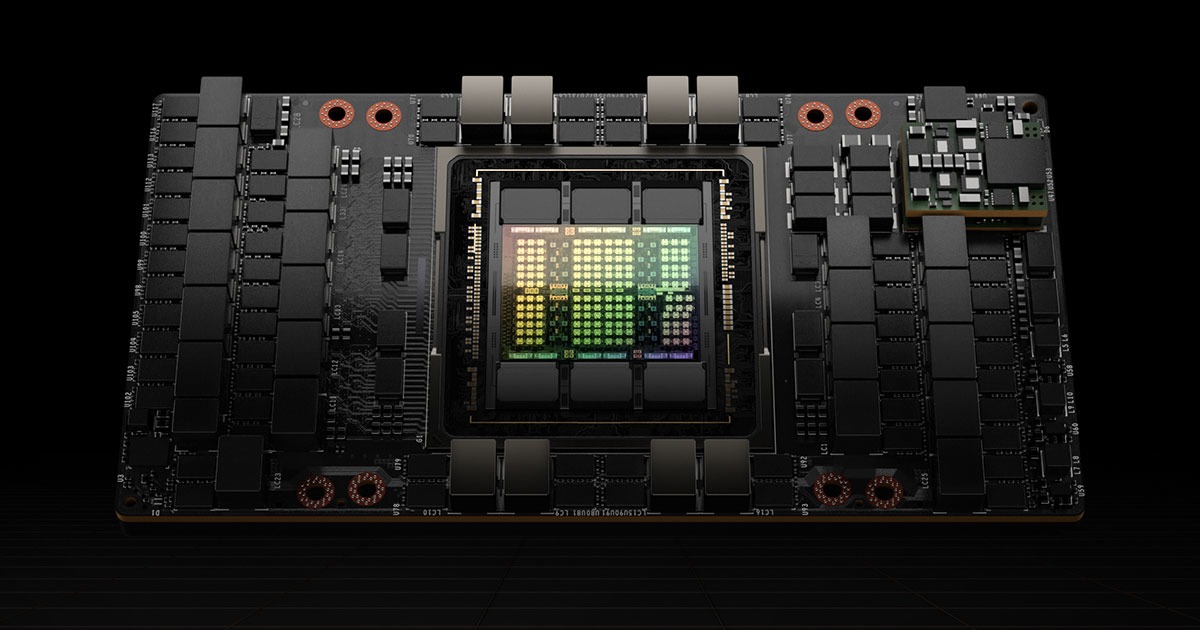
NVIDIA’s market position remains unmatched within the AI semiconductor ecosystem. Despite modest 20-day performance (-0.14%), the company has delivered exceptional long-term returns with a 27.48% year-over-year gain and an extraordinary 878% return over three years [0]. The company’s Data Center revenue now represents 87.9% of total sales, demonstrating the complete transformation of NVIDIA’s business model toward AI infrastructure.
Recent strategic developments reinforce NVIDIA’s dominant positioning [3]. The company announced a $150 million investment in Baseten, an AI inference startup, signaling aggressive expansion into inference chips beyond training hardware. Additionally, NVIDIA’s partnership with Lenovo for N1/X Arm-based processors and its ongoing AI co-innovation lab with Eli Lilly (representing up to $1 billion in potential investment over five years) demonstrate the company’s strategy to cement AI infrastructure leadership across multiple verticals.
However, investors should note geographic concentration risks within NVIDIA’s revenue profile: Singapore accounts for 21.7% of revenue while Taiwan represents 18.2%, creating supply chain and geopolitical exposure that could impact future performance [0]. The company’s 5.9% revenue exposure to China and ongoing export restriction compliance represent additional risk factors requiring monitoring.
Intel presents the most complex case study in the 2026 AI rally. The stock surged 28.15% over 20 trading days amid investor optimism surrounding new CEO Lip-Bu Tan’s turnaround efforts and a reported $5 billion investment from NVIDIA [0][5]. However, this momentum reversed dramatically on January 23, 2026, when Intel’s fourth-quarter earnings report revealed:
- Revenue of $13.7 billion (down 4% year-over-year, beating estimates of $13.4 billion)
- Adjusted EPS of $0.15 versus estimates of $0.08
- Q1 2026 guidance of $11.7-$12.7 billion revenue with break-even EPS
The earnings miss triggered an approximately 16-17% stock plunge, demonstrating the market’s limited patience with turnaround narratives absent operational execution [5][6]. Supply constraints and manufacturing challenges—particularly related to the 18A process node—continue to hinder Intel’s ability to capitalize on AI demand, creating a disconnect between the company’s strategic positioning and operational reality.
The Magnificent Seven’s composition—representing roughly one-third of the S&P 500—creates significant concentration risk for passive index investors that may not be apparent through aggregate index performance metrics [2]. With five of these seven stocks underperforming broader benchmarks, traditional market-cap-weighted index funds are increasingly reliant on a narrow set of AI-focused winners to generate returns. This concentration dynamic suggests that passive investors should carefully evaluate their exposure to mega-cap technology and consider whether intentional underweighting of underperforming Magnificent Seven constituents might improve risk-adjusted returns.
The market is approaching a critical inflection point where investors will increasingly demand measurable returns from AI capital expenditures [7]. The cyclically-adjusted P/E ratio has reached elevated levels, suggesting limited margin of safety for broadly-priced AI optimism. Companies spending heavily on AI infrastructure—including hyperscalers like Alphabet and Meta—face execution risk if expected productivity gains and revenue growth fail to materialize within anticipated timeframes. The current market environment appears to be transitioning from “AI spending enthusiasm” to “AI ROI verification,” a shift that will likely accelerate dispersion among AI beneficiaries.
NVIDIA’s revenue exposure to Singapore (21.7%) and Taiwan (18.2%) highlights ongoing supply chain concentration risks within the AI semiconductor ecosystem [0]. Additionally, Intel’s supply constraints underscore that manufacturing capacity limitations can prevent even well-positioned companies from capitalizing on AI demand, creating supply-driven earnings volatility across the semiconductor value chain. These factors suggest that investors should evaluate supply chain diversification as an increasingly important criterion in AI-related investment decisions.
The Russell 2000’s 1.58% decline on January 23, 2026, and its broader year-to-date underperformance demonstrate that small-cap stocks remain largely excluded from AI-driven market gains [0]. This pattern contradicts historical precedents where technology sector strength typically generates broader small-cap participation through supply chain and adjacent business effects. The small-cap exclusion may reflect investor skepticism about small-cap companies’ ability to meaningfully participate in the AI economy or could represent a tactical opportunity for contrarian investors anticipating eventual small-cap AI adoption.
The AI stock rally of 2026 represents a fundamentally different market environment than the broad-based tech enthusiasm of 2023-2024, characterized by significant dispersion among mega-cap technology stocks and exclusion of small-cap and non-technology sectors from gains. The S&P 500’s modest 1.25% year-to-date performance masks substantial concentration risk, with NVIDIA emerging as the clear AI rally beneficiary while Apple, Microsoft, and Meta have underperformed. Intel’s paradoxical performance—surging 28.15% on turnaround hopes before plunging 16-17% on earnings miss—exemplifies the market’s limited patience for AI-related turnaround narratives absent operational execution. Investors should monitor the Q1 2026 earnings season and NVIDIA’s February 2026 report as critical tests for AI monetization across major technology companies, while remaining cognizant of concentration risks in passive index strategies and geographic vulnerabilities within AI semiconductor supply chains.
Insights are generated using AI models and historical data for informational purposes only. They do not constitute investment advice or recommendations. Past performance is not indicative of future results.
About us: Ginlix AI is the AI Investment Copilot powered by real data, bridging advanced AI with professional financial databases to provide verifiable, truth-based answers. Please use the chat box below to ask any financial question.