Markets Weekly Outlook: Metals Rally, Dollar Weakness, and Equity Resilience Ahead of Critical FOMC Week
Unlock More Features
Login to access AI-powered analysis, deep research reports and more advanced features
About us: Ginlix AI is the AI Investment Copilot powered by real data, bridging advanced AI with professional financial databases to provide verifiable, truth-based answers. Please use the chat box below to ask any financial question.
Related Stocks
The Seeking Alpha article’s assertion that “Metals have shone brightly throughout the week, all gapping higher at the weekly open and extending to continuous record highs” is strongly validated by comprehensive market data across multiple sources [1][2][3]. This metals rally represents one of the most significant commodity movements in recent memory, driven by a confluence of geopolitical, monetary, and institutional factors that have fundamentally altered investor risk calculus.
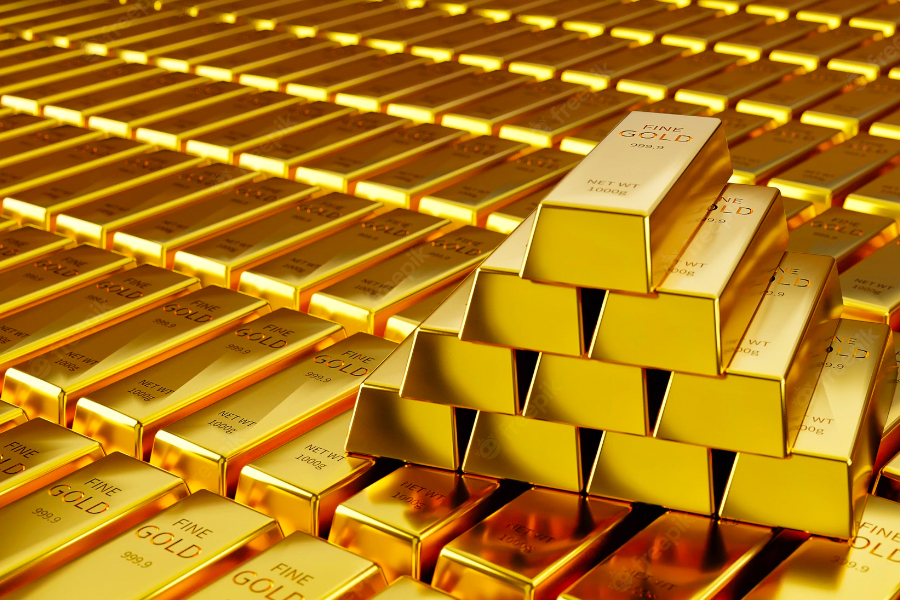
Gold reached a record high of $4,966.59 per ounce during the session on January 23, 2026, before closing at approximately $4,951.91 [2]. Trading Economics data corroborates this performance, showing gold at $4,958.65 with a 0.47% daily gain and an impressive 10.66% weekly advance [3]. U.S. gold futures for February delivery added 0.8% to $4,952.80 per ounce, demonstrating continued strength in the futures market as well [2]. The precious metal’s surge reflects investor concerns about the reliability of traditional financial anchors, with Goldman Sachs noting that “Gold’s surge to record highs reflects a world where investors are questioning the reliability of government bonds and fiat currencies” [4].
Silver demonstrated even more dramatic percentage gains, surging 2.6% to $98.71 per ounce and hitting a record high of $99.20 [2]. The silver rally is particularly notable because it combines strong investment demand with significant industrial demand factors, creating a more sustainable price foundation than purely speculative moves. The 2.70% daily gain reported across silver markets suggests continued momentum [3]. Platinum also participated in the rally, gaining 0.4% to $2,639.40 per ounce after reaching $2,684.43 during the trading session [2].
Goldman Sachs has raised its year-end 2026 gold price forecast to $5,400 per ounce, citing continued diversification into gold by private investors and emerging market central banks [4]. This upward revision from major financial institutions underscores the structural nature of the current precious metals rally rather than a temporary speculative bubble. The analysts at Goldman specifically attribute this movement to “escalating geopolitical risks, from the Greenland dispute and renewed US tariff threats against Europe to fresh questions over central bank independence” [4].
The article’s characterization of the dollar taking “a gigantic hit as Trump’s latest show was not well received by participants” finds substantial confirmation across currency market data and analyst commentary [1][5][6]. The US Dollar Index (DXY) traded around 98.8 on January 22, 2026, representing a significant decline from monthly highs near 99.50 [5]. The index has experienced persistent selling pressure in the 99.14-99.20 range, with technical analysts noting the erosion of key support levels [6].
The dollar’s performance marks its worst weekly decline in eight months, a notable development given the currency’s traditional role as a global safe haven and reserve asset [5]. This weakness has emerged despite a broader market bounce and typical safe-haven flows that would normally support the dollar during periods of uncertainty. The divergence suggests a fundamental shift in investor perception regarding US assets and institutional stability.
Analyst projections indicate potential for continued dollar weakness throughout 2026. “We fully expect the ICE U.S. Dollar Index to continue to grind down and would not be surprised to see it reach 95 this year,” stated Peter Azzinaro, senior partner at Agile Investment Management [5]. The “Sell America” trade narrative has emerged as institutional investors and foreign holders reassess their exposure to US assets amid perceived political instability and risks to institutional credibility [5].
The dollar weakness correlates strongly with concerns about Fed independence and potential political interference in monetary policy. President Trump’s ongoing pressure on Fed Chair Jerome Powell to lower rates, combined with questions about the upcoming Fed chair appointment, has created uncertainty that investors are pricing into currency valuations [8]. This institutional uncertainty compounds the impact of tariff policies and trade tensions that could have mixed effects on dollar valuations.
Market data validates the article’s claim that stocks “have remained resilient throughout the chaos” [1]. Despite significant volatility during the week of January 20-23, major US equity indices demonstrated notable recovery and finished with solid gains across the board [0].
| Index | Weekly Change | Key Observation |
|---|---|---|
| S&P 500 | +1.72% | Recovered from 1% decline on January 20 [0] |
| NASDAQ | +2.36% | Strong technology sector performance [0] |
| Dow Jones | +1.23% | Rebounded after initial weakness [0] |
| Russell 2000 | +0.90% | Small-cap recovery [0] |
The S&P 500 experienced a notable decline on January 20, 2026, erasing its year-to-date gains amid trade rhetoric and broader geopolitical developments [5]. However, all three major US stock indexes enjoyed a two-day rally following Trump’s tariff reversal, recovering most of Tuesday’s sharp losses and demonstrating the market’s ability to absorb political shocks [5]. This pattern suggests that while equity markets remain sensitive to political developments, underlying economic fundamentals and corporate earnings expectations continue to provide underlying support.
Sector rotation analysis reveals a clear pattern aligned with the broader commodity rally. The Basic Materials sector (+1.73%) was the best performer during the week, directly reflecting investor enthusiasm for metals and related commodities [0]. This sector outperformance represents a classic risk-on signal that correlates with the precious metals rally and dollar weakness. Conversely, Financial Services (-1.65%) was the worst performer, potentially reflecting concerns about net interest margin pressures and the uncertain interest rate trajectory [0]. Technology (+0.78%) and Consumer Defensive (+0.82%) showed steady gains, indicating continued confidence in growth segments and defensive positioning simultaneously [0].
The January 28-29 Federal Open Market Committee meeting carries heightened significance due to several interrelated factors that extend beyond the typical rate decision considerations [7][8][9]. Understanding these dynamics is essential for interpreting market movements in the coming days.
Economists expect the FOMC to keep rates unchanged at the January meeting, with one dissent from Governor Miran in favor of a cut [7]. The December meeting minutes revealed that some participants who favored keeping rates unchanged were “concerned that a December cut would be shown as unwarranted in retrospect” [9], indicating the committee’s cautious approach to monetary easing in an environment of persistent inflationary pressures.
Fed Chair Jerome Powell’s robust defense of central bank independence on January 11, in response to ongoing pressure from the President to lower rates, has become a focal point for market participants [8]. This tension between the executive branch and the central bank introduces an unprecedented element of political risk into monetary policy discussions. The bar to a January rate cut remains high, reflecting the Fed’s desire to maintain institutional credibility while navigating complex political dynamics.
The upcoming Fed chair appointment by President Trump overshadows the meeting itself, with investors awaiting the decision that could significantly impact the monetary policy trajectory [3][9]. The nomination’s timing and the potential candidate’s policy orientation represent a structural uncertainty that markets must factor into asset valuations across multiple categories.
BNP Paribas forecasts suggest the Fed will deliver two rate cuts in 2026, bringing the terminal rate to 3.25%, with the first cut potentially coming at the June FOMC meeting [7]. This projection implies a gradual normalization of monetary policy stance but suggests no immediate relief from the current restrictive rate environment. The discrepancy between market expectations and Fed guidance creates potential for volatility around the FOMC statement and subsequent press conference.
The current market environment reveals a striking inverse relationship between precious metals and the US dollar that warrants careful attention from decision-makers. As the DXY experienced its worst week in eight months, gold reached all-time highs, silver set records, and platinum advanced strongly [2][5]. This correlation is not coincidental but reflects fundamental shifts in how investors perceive value preservation and currency reliability in an environment of institutional uncertainty.
The equity market’s resilience amid this dollar weakness and metals rally suggests that investors are not fleeing US assets entirely but rather rotating within them [0][5]. The recovery of major indices from early-week declines indicates that corporate fundamentals and earnings expectations continue to anchor equity valuations even as political uncertainty creates short-term volatility.
Several indicators suggest that current market movements reflect structural rather than purely cyclical factors. Goldman Sachs’ upgraded gold price target to $5,400 per ounce is predicated on “continued diversification into gold by private investors and emerging market central banks” [4], indicating a sustained shift in portfolio allocation rather than temporary speculative positioning.
The dollar weakness appears similarly structural, driven by concerns about “institutional credibility and foreign investor sentiment” rather than purely cyclical economic factors [5]. The “Sell America” trade narrative emerging among institutional investors suggests a reassessment of US asset allocations that could persist beyond the current political cycle.
The Seeking Alpha article and supporting sources highlight how geopolitical developments are reshaping the global financial architecture [1][4][5]. The Greenland dispute, renewed US tariff threats against Europe, and questions over central bank independence collectively contribute to an environment of fragmentation that benefits safe-haven assets while pressuring traditional reserve currencies.
The market environment leading up to the January 28-29 FOMC meeting is characterized by significant interconnected movements across asset classes. Precious metals have reached unprecedented levels, with gold surpassing $4,950 per ounce and silver approaching $100, driven by geopolitical uncertainty, central bank diversification, and currency debasement concerns [2][3][4]. The US Dollar Index has experienced its worst week in eight months, trading near 98.8, with analysts suggesting potential decline to 95 if current trends persist [5][6].
Equity markets have demonstrated notable resilience, with the S&P 500 recovering from early-week declines to post a 1.72% weekly gain [0]. This resilience reflects underlying corporate fundamentals even as political uncertainty creates short-term volatility. The Basic Materials sector has led gains, directly aligned with the metals rally, while Financial Services has lagged [0].
The approaching FOMC meeting carries heightened significance due to Fed independence concerns and the upcoming Fed chair appointment [7][8][9]. While economists expect rates to remain unchanged, the meeting dynamics and subsequent communications could significantly impact market expectations for monetary policy trajectory. Decision-makers should monitor FOMC statement language for shifts in inflation or labor market assessments, the Fed chair nomination for policy direction implications, DXY support levels for currency trend continuation, and gold price targets as indicators of broader sentiment shifts [2][4][5][6].
Insights are generated using AI models and historical data for informational purposes only. They do not constitute investment advice or recommendations. Past performance is not indicative of future results.
About us: Ginlix AI is the AI Investment Copilot powered by real data, bridging advanced AI with professional financial databases to provide verifiable, truth-based answers. Please use the chat box below to ask any financial question.