The Bullish and Bearish Case for 2026: Market at a Crossroads as Fed Decision and Mag 7 Earnings Loom
Unlock More Features
Login to access AI-powered analysis, deep research reports and more advanced features
About us: Ginlix AI is the AI Investment Copilot powered by real data, bridging advanced AI with professional financial databases to provide verifiable, truth-based answers. Please use the chat box below to ask any financial question.
Related Stocks
The U.S. stock market begins 2026 at a pivotal juncture, with major indices trading near all-time highs while investors weigh competing narratives of continued strength versus emerging vulnerabilities. The S&P 500 currently trades around 6,915-6,920, representing levels that historically have been associated with heightened sensitivity to negative catalysts [0][3]. Pre-market futures indicate modest weakness—S&P 500 futures down 0.15% and Nasdaq futures down 0.29%—as investors exercise caution ahead of several high-impact events scheduled for the week [1][2].
The divergence observed in sector performance provides important context for understanding market dynamics. Basic Materials led Friday’s session with a 1.73% gain, followed by Communication Services at 1.07% and Technology at 0.77% [0]. Conversely, Financial Services lagged significantly at -1.63%, with Healthcare, Energy, Industrials, and Utilities also posting negative returns. This rotation pattern—defensive sectors and rate-sensitive financials moving in opposite directions—suggests investors are parsing the implications of Fed policy expectations and yield movements carefully [0].
The Seeking Alpha analysis provides a comprehensive framework for understanding the competing bullish and bearish forces shaping 2026’s investment landscape [3]. This framework proves particularly valuable given the current market positioning, where valuations leave limited room for disappointment while earnings expectations remain elevated.
The bullish argument for 2026 rests on four fundamental pillars that have sustained market momentum through much of the previous year and could continue providing support [3].
The bearish perspective identifies six primary risks that could challenge the bullish narrative and potentially trigger meaningful corrections [3].
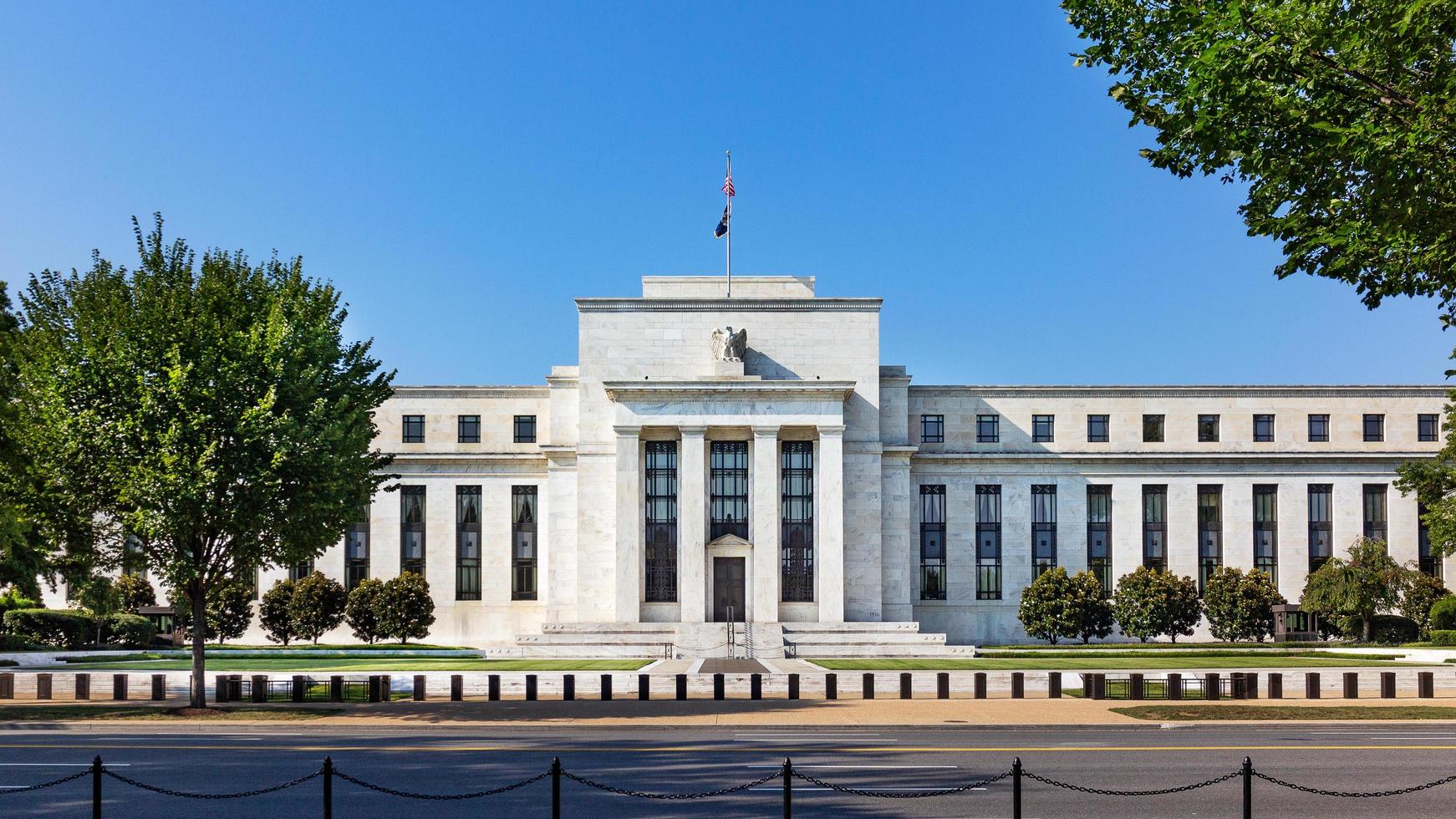
The “battle for Fed independence” has added complexity to the policy backdrop. Tensions between the Trump administration and Fed Chair Jerome Powell, including disputes over facility renovations, have introduced political considerations into what is traditionally a technocratic process [5]. A “dovish hold” could provide support for equities, while a surprise hawkish stance would challenge the bullish liquidity narrative [4][5].
- Apple (AAPL): Focus on iPhone demand trends, services segment growth, and artificial intelligence integration initiatives
- Microsoft (MSFT): Cloud growth trajectories, artificial intelligence revenue contributions, and Azure margin evolution remain key metrics
- Meta (META): Advertising market conditions, Reality Labs performance, and artificial intelligence investment returns are under scrutiny
- Tesla (TSLA): Delivery numbers, Margy rollout progress, and autonomous technology developments will influence market sentiment
Continued AI-driven earnings acceleration could justify current elevated multiples, while any disappointment could trigger sharp multiple compression given the premium valuations currently assigned to these companies [3].
Gold’s advance to record levels above $5,000 per ounce—representing a gain of over 2%—signals important market dynamics [1][2]. Multiple factors have contributed to this historic move:
- Safe-haven demand amid geopolitical uncertainty
- Central bank buying as part of reserve diversification strategies
- Currency diversification concerns reflecting dollar weakness
- Inflation hedging expectations amid ongoing policy accommodation
The precious metal’s rally has propelled gold miner stocks higher in pre-market trading, though the broader market implication suggests underlying caution among investors [2]. The gold surge represents both a diversification trend and a barometer of risk perception.
Currency markets have added another layer of complexity, with the dollar declining to a four-month low against the yen [1][2]. The Federal Reserve New York has contacted trading counterparties for “rate checks”—inquiries that can precede direct currency interventions—while Japan and Washington have signaled preparedness to support the Japanese currency [2]. As noted by XTB’s Kathleen Brooks, “In the short term, a stronger yen means a weaker dollar, which is inflationary for the U.S.” [2]. This dynamic creates additional considerations for multinational corporate earnings and Fed policy deliberations.
The analysis reveals several cross-domain insights that merit attention:
-
Valuation as a Conditional Factor: The current market positioning presents a conditional environment where positive catalysts may be largely priced in while negative surprises could trigger disproportionate responses. This asymmetry favors risk management approaches that acknowledge limited upside potential alongside meaningful downside risks [0][3].
-
Policy Dependency: The bullish case demonstrates significant dependence on continued accommodative monetary policy and supportive fiscal measures. Any deviation from these policy assumptions could rapidly shift the risk-reward calculus [4][5].
-
Earnings as the Tipping Point: With valuations elevated, the Magnificent 7 earnings reports assume outsized importance in validating or challenging current price levels. The market appears positioned for continued growth; any evidence of deceleration could prompt rapid multiple compression [2][3].
-
Safe-Haven Flows Intensifying: Gold’s surge to record levels and currency intervention speculation suggest increasing investor attention to portfolio protection and currency diversification [1][2]. These flows often precede periods of elevated market volatility.
-
Sector Rotation Implications: The divergence between defensive sectors and rate-sensitive financials reflects a market in transition, parsing the implications of policy developments carefully. This rotation pattern could provide early signals of broader market direction [0].
The analysis identifies several risk factors warranting monitoring. Fed surprise remains a significant concern—any hawkish deviation from expected rate cuts could pressure risk assets across the board [4][5]. Earnings disappointment from the Magnificent 7 would challenge the market narrative and could trigger meaningful corrections given current valuation levels [2][3]. Currency volatility, particularly around potential yen intervention, could create dollar-driven market movements with implications for multinational corporations [1][2]. Geopolitical developments, including trade tensions and potential government shutdown risks, could spark risk-off sentiment [2]. Finally, the valuation reset risk—at current levels, markets have limited room for error and any negative catalyst could trigger outsized responses [0][3].
Despite the identified risks, several opportunities exist for positioned investors. A dovish Fed decision combined with strong earnings could extend the rally toward the 7,000 psychological level on the S&P 500 [4]. Sector rotation opportunities remain in defensive sectors demonstrating relative strength while broader markets consolidate [0]. Currency volatility could create opportunities in multinational corporations with significant international exposure [2]. Gold and precious metals-related investments have shown momentum following the metal’s historic advance [1][2].
The market enters 2026 at elevated valuations with multiple catalysts positioned to determine near-term direction. The Federal Reserve decision on Wednesday and Magnificent 7 earnings reports this week represent the most significant near-term events. Gold’s advance to record levels above $5,000 reflects heightened safe-haven demand and currency diversification concerns. The dollar’s weakness against the yen, combined with intervention speculation, adds complexity to the investment landscape. Sector rotation patterns suggest defensive positioning alongside continued growth sector leadership. The bullish case remains contingent on sustained liquidity, tech-driven earnings growth, and continued policy accommodation. The bearish risks—valuation pressure, fading catalysts, and credit concerns—become increasingly relevant at current price levels.
Technical levels to monitor include S&P 500 support at 6,850-6,890 and resistance at 6,950-7,000, Nasdaq support at 23,200-23,400 with resistance at 23,700-23,800, and VIX levels around 16-18, where breaks above 18 could signal elevated caution [1][0].
[0] Ginlix Analytical Database – Market indices, sector performance data, and technical indicator analysis
[1] Wall Street Journal – “Stock Market Today: Gold Price Tops $5000” (https://www.wsj.com/livecoverage/stock-market-today-dow-sp-500-nasdaq-01-26-2026)
[2] Reuters – “US stock index futures slip as Mag 7 results, Fed take center stage” (https://www.reuters.com/business/us-stock-index-futures-slip-mag-7-results-fed-take-center-stage-2026-01-26/)
[3] Seeking Alpha – “The Bullish And Bearish Case For 2026” (https://seekingalpha.com/article/4862591-bullish-bearish-case-2026)
[4] CNBC – “US Treasury yields: investors look ahead to Fed’s rate decision” (https://www.cnbc.com/2026/01/26/us-treasury-yields-investors-look-ahead-to-feds-rate-decision.html)
[5] Reuters – “Battle for the Fed heats up to challenge rate horizon” (https://www.reuters.com/markets/battle-fed-heats-up-challenge-rate-horizon-2026-01-26/)
Insights are generated using AI models and historical data for informational purposes only. They do not constitute investment advice or recommendations. Past performance is not indicative of future results.
About us: Ginlix AI is the AI Investment Copilot powered by real data, bridging advanced AI with professional financial databases to provide verifiable, truth-based answers. Please use the chat box below to ask any financial question.