USA Rare Earth Surges 20% Following $1.6 Billion Trump Administration Investment Under CHIPS Program
Unlock More Features
Login to access AI-powered analysis, deep research reports and more advanced features
About us: Ginlix AI is the AI Investment Copilot powered by real data, bridging advanced AI with professional financial databases to provide verifiable, truth-based answers. Please use the chat box below to ask any financial question.
Related Stocks
The Trump administration’s $1.6 billion investment in USA Rare Earth, announced January 26, 2026, represents a watershed moment in American critical minerals policy and semiconductor supply chain independence efforts [1][2]. The investment, executed through the Commerce Department’s CHIPS Program, marks the first time the U.S. government has taken a direct equity stake in a domestic rare earth miner, fundamentally altering the landscape of strategic resource development and setting precedent for future public-private partnerships in the critical minerals sector.
The capital package comprises multiple components designed to provide comprehensive funding for USA Rare Earth’s mine-to-magnet operations. The federal government will provide $277 million in direct funding alongside a $1.3 billion senior secured loan facility, together constituting the CHIPS Program’s largest commitment to a non-semiconductor entity since the program’s inception [1]. In exchange, the U.S. government will receive 16.1 million shares of USA Rare Earth common stock, along with warrants to purchase an additional 17.6 million shares, representing approximately 10% ownership on a fully diluted basis [1][2].
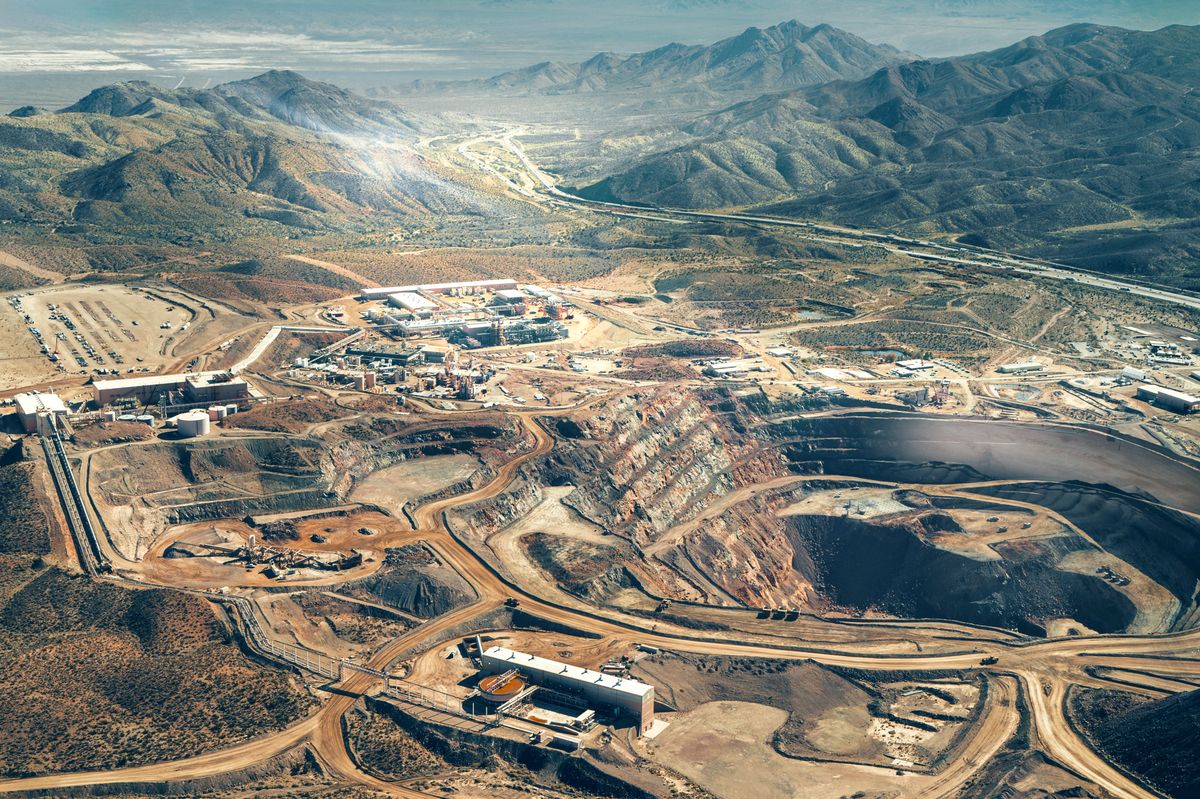
The transaction structure includes a landmark $1.5 billion private investment in public equity, commonly known as a PIPE, which was anchored by Inflection Point Capital Management [1]. This private capital infusion, combined with the government investment, brings the total capital package to approximately $3.1 billion, providing USA Rare Earth with substantial financial resources to advance its Round Top deposit development in Sierra Blanca, Texas, and expand its Less Common Metals subsidiary operations in the United Kingdom [1][2].
The investment addresses a critical vulnerability in U.S. national security infrastructure. Currently, the United States depends on China for approximately 80% of its rare earth imports, creating significant supply chain fragility that has drawn bipartisan concern from policymakers [2][3]. USA Rare Earth’s Round Top deposit contains 12 of the top 30 critical minerals identified by the U.S. Geological Survey, including heavy rare earth elements essential for defense systems, electric vehicle production, renewable energy infrastructure, and advanced semiconductor manufacturing [1][5].
Commerce Secretary Howard Lutnick emphasized during the announcement that this investment represents “the largest federal commitment to domestic rare earth capabilities in American history” and positions the United States to achieve meaningful rare earth supply chain independence within the current administration’s timeframe [1][2]. Energy Secretary Chris Wright further noted that the project would enable domestic production of permanent magnets required for wind turbines, electric vehicles, and precision-guided munitions, sectors currently vulnerable to supply chain disruptions [1].
USA Rare Earth’s stock exhibited extraordinary volatility in response to the announcement. Pre-market trading saw the shares surge as much as 62% above the previous closing level, reflecting intense investor enthusiasm for the government’s substantial commitment [1][4]. However, the stock moderated significantly during regular trading sessions, closing at $24.77, representing a 9.07% gain on the day with approximately 18.93 million shares traded—roughly 1.6 times the stock’s average daily volume [0].
This pattern of pre-market excitement followed by moderated gains during regular hours suggests that sophisticated market participants are applying appropriate risk discounts to the announcement, particularly given the multi-year timeline before commercial production commences and the non-binding nature of the current Letter of Intent [1][4]. The trading volume surge indicates significant institutional and retail interest, though the gap between pre-market highs and closing levels may signal profit-taking by early-positioned traders.
The decision to accept equity securities rather than purely grant-based or loan-based support represents a significant evolution in federal approach to critical minerals development. By accepting warrants alongside common stock, the government has aligned its financial returns with the company’s success while providing sufficient capital for development without imposing crippling debt service obligations [1][2]. This structure may serve as a template for future investments in domestic battery minerals, semiconductor manufacturing, and other strategic sectors deemed essential to national economic security.
The 10% ownership stake, while minority in nature, grants the government meaningful upside participation in the company’s success while avoiding the operational complexities associated with majority ownership or direct management control [2]. This balanced approach acknowledges both the strategic importance of domestic rare earth production and the efficiency advantages of private sector operational management.
USA Rare Earth’s projected commercial production commencement in 2028 means that investors and policymakers must accept a multi-year horizon before the full strategic and financial benefits of this investment materialize [1]. The Round Top deposit development requires substantial infrastructure construction, including processing facilities, separation capabilities, and magnet manufacturing operations at the company’s UK-based Less Common Metals subsidiary [1][5].
This extended timeline introduces execution risk at multiple stages, from construction and commissioning to achieving nameplate production capacity and establishing commercial offtake relationships with semiconductor manufacturers, defense contractors, and automotive OEMs. The company’s ability to navigate regulatory approvals, environmental compliance requirements, and workforce development needs will be critical determinants of ultimate project success.
The simultaneous announcement of a $1.5 billion PIPE investment anchored by Inflection Point Capital Management provides important validation of USA Rare Earth’s strategic positioning beyond the government endorsement [1]. Institutional private capital participation signals sophisticated investor confidence in the company’s long-term prospects and reduces reliance on government funding for project execution. The PIPE structure, while dilutive to existing shareholders, brings non-dilutive government capital alongside growth-oriented institutional investment.
The combination of public and private capital at attractive valuations suggests that institutional investors view the government’s involvement as de-risking the investment rather than creating operational constraints. This bodes well for the company’s ability to attract additional strategic partners, offtake customers, and subsequent capital raising as the project advances through development phases.
The investment occurs against a backdrop of escalating tensions between the United States and China over critical minerals supply chains. China has historically used its dominant position in rare earth processing as a diplomatic tool, implementing export restrictions during periods of geopolitical friction [2][3]. The USA Rare Earth investment directly addresses this vulnerability, though potential Chinese countermeasures could include restrictions on processing equipment exports, targeted tariffs on downstream products, or strategic delays in processing technology transfers.
The timing of this investment, occurring in the early days of the second Trump administration, suggests that critical minerals independence has been elevated to a priority policy objective with sustained executive branch attention [1][2][3]. This policy continuity provides important support for the investment thesis, though changes in administration or congressional priorities could affect ongoing program support.
The stock’s technical position suggests elevated short-term correction risk. Prior to the announcement, USA Rare Earth had already appreciated approximately 75% year-to-date, rising from approximately $14.15 to the mid-$20 range [4]. The preceding trading sessions had produced single-day gains of 9% and 17%, indicating substantial pre-announcement momentum that may have been partially exhausted by the current announcement [4].
Relative Strength Index readings in overbought territory, combined with the gap between pre-market highs and closing levels, suggest that traders should anticipate potential volatility in extended and after-hours trading sessions [4]. Historical patterns for government-backed stocks demonstrate that initial enthusiasm can be followed by significant corrections, as evidenced by Intel’s 17% single-session decline on January 23, 2026, despite substantial government support [4].
The current investment commitment is structured as a Letter of Intent rather than a definitive binding agreement [1]. The announcement explicitly states that finalization remains subject to “further diligence, finalization of agreements, customary closing conditions, and regulatory approvals” [1]. This qualification introduces meaningful execution risk, as the transaction could potentially be modified, delayed, or terminated based on findings during due diligence or changes in market conditions.
Market participants should monitor upcoming SEC filings, particularly Form 8-K disclosures and prospectus filings related to the PIPE transaction (Form 424B3), for updated terms and conditions that may differ from initial announcements [1]. The gap between announcement and closing creates a period of uncertainty during which the stock may experience elevated volatility.
The 2028 commercial production target represents a multi-year development horizon during which numerous factors could affect project economics [1]. Construction cost overruns, regulatory delays, supply chain disruptions for specialized processing equipment, and workforce availability challenges could all impact the timeline and ultimate project returns. The rare earth processing industry has historically experienced significant cost escalation at greenfield operations, making precise financial projections challenging.
While the investment addresses Chinese rare earth dominance, it may provoke retaliatory measures that could affect the broader critical minerals sector or USA Rare Earth’s specific operations [2]. Chinese export restrictions on rare earth processing equipment, separation chemicals, or downstream products could increase project costs or extend development timelines. Additionally, Chinese rare earth producers could engage in predatory pricing strategies to maintain market share, potentially affecting the economics of domestic production.
USA Rare Earth is positioned to establish itself as the leading domestic supplier of heavy rare earth elements and permanent magnets, creating durable competitive advantages as defense contractors and semiconductor manufacturers seek to diversify supply chains away from Chinese sources [1][2][3]. Early movers in establishing domestic processing capabilities may capture significant market share as offtake customers increasingly prioritize supply chain security over pure cost considerations.
The government’s 10% equity stake may facilitate preferential access to federal procurement programs, defense contracts, and semiconductor manufacturing incentives, creating revenue visibility that competitors cannot easily replicate [1][2]. This structural advantage, combined with established operations at the UK-based Less Common Metals subsidiary, positions the company favorably for long-term growth.
The bipartisan consensus supporting critical minerals independence suggests sustained policy attention and potential program extensions regardless of administration changes [2][3]. The CHIPS Program’s expansion beyond pure semiconductor manufacturing to encompass related critical minerals infrastructure indicates a broader strategic vision that could generate additional funding opportunities for USA Rare Earth and sector peers.
Long-term demand fundamentals for rare earth elements remain robust, driven by semiconductor manufacturing expansion, electric vehicle production growth, renewable energy infrastructure deployment, and defense modernization programs [1][3][5]. USA Rare Earth’s integrated mine-to-magnet approach provides exposure to multiple end markets while capturing value across the supply chain, potentially enhancing margins compared to single-stage producers.
This analysis presents factual information regarding the Trump administration’s $1.6 billion investment in USA Rare Earth, Inc. (NASDAQ: USAR) announced on January 26, 2026, synthesizing findings from multiple information sources including market data, regulatory announcements, and news reports [0][1][2].
The investment comprises $277 million in federal funding and a $1.3 billion senior secured loan under the CHIPS Program, with the U.S. government acquiring a 10% equity stake through 16.1 million shares plus warrants for 17.6 million shares [1][2]. A concurrent $1.5 billion PIPE investment anchored by Inflection Point Capital Management provides additional growth capital [1]. The company operates the Round Top deposit in Sierra Blanca, Texas, with commercial production targeted for 2028 [1].
Market data indicates the stock pre-market surged up to 62% before closing at $24.77, a 9.07% gain on elevated volume of 18.93 million shares [0]. The announcement carries significant implications for U.S. critical minerals strategy, domestic semiconductor supply chains, and defense industrial base independence from Chinese rare earth imports [1][2][3].
Risk factors identified include technical overbought conditions suggesting short-term correction potential, the non-binding nature of the current agreement subject to due diligence, extended production timeline until 2028, and potential geopolitical countermeasures [1][4]. The stock’s 75% year-to-date appreciation prior to the announcement indicates existing momentum that may limit immediate upside despite the favorable news [4].
This summary provides objective context for understanding the investment’s scope and implications without offering recommendations regarding buying, selling, or holding securities. Market participants should conduct independent analysis and consider individual risk tolerance and investment objectives when evaluating positions in USA Rare Earth or related critical minerals sector equities.
Insights are generated using AI models and historical data for informational purposes only. They do not constitute investment advice or recommendations. Past performance is not indicative of future results.
About us: Ginlix AI is the AI Investment Copilot powered by real data, bridging advanced AI with professional financial databases to provide verifiable, truth-based answers. Please use the chat box below to ask any financial question.