Gold Surpasses $5,100 Per Ounce Marking Historic Safe-Haven Rally
Unlock More Features
Login to access AI-powered analysis, deep research reports and more advanced features
About us: Ginlix AI is the AI Investment Copilot powered by real data, bridging advanced AI with professional financial databases to provide verifiable, truth-based answers. Please use the chat box below to ask any financial question.
Related Stocks
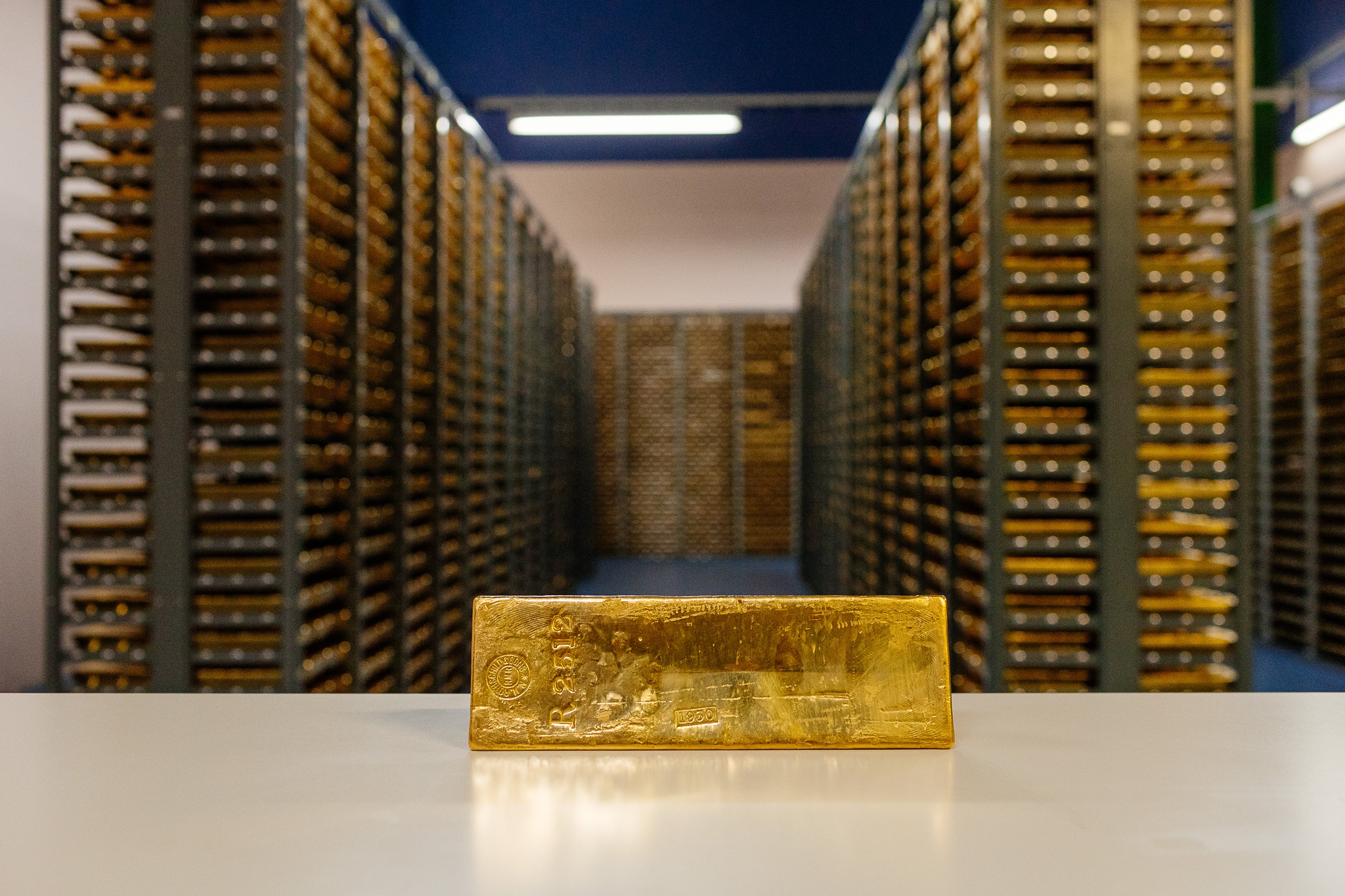
The breach of the $5,100 per ounce threshold represents a watershed moment in global financial markets, marking the culmination of a sustained rally that has fundamentally altered investor perceptions of safe-haven assets. According to real-time market data [0], gold reached an intraday peak of $5,110.50 during the January 26, 2026 trading session, establishing a new baseline for valuation that would have seemed implausible just months prior. The precious metal’s remarkable trajectory—climbing approximately 64% throughout 2025—constitutes its most significant annual appreciation since 1979, when inflationary pressures and geopolitical instability similarly drove investors toward tangible assets [1][2].
The timing of this milestone is particularly noteworthy given the broader market environment. While gold has been consolidating its gains near record territory, major equity indices have remained within striking distance of their all-time highs. The S&P 500 advanced 0.50% and the Nasdaq gained 0.42% on the same day gold surpassed $5,100, creating an unusual decoupling between traditional safe-haven assets and risk-on equities [1][2]. This divergence challenges conventional market correlations and suggests that institutional investors may be positioning defensively while maintaining equity exposure—a strategy that could prove precarious if risk sentiment deteriorates rapidly.
The unprecedented surge in gold prices reflects a convergence of multiple macroeconomic and geopolitical factors that have collectively reinforced its status as the premier safe-haven asset. Geopolitical tensions across multiple theaters have intensified significantly, with the ongoing Russia-Ukraine conflict and escalating Middle East instability creating sustained demand for assets perceived as stores of value [3][4]. These regional conflicts have introduced systemic uncertainty into global markets, prompting both sovereign wealth funds and private investors to increase their gold allocations as insurance against potential tail risks.
Central bank purchasing activity has provided structural support for gold prices throughout this rally. Major central banks, particularly those in emerging markets, have been net purchasers of gold for several consecutive quarters, diversifying away from US dollar-denominated assets amid concerns about fiscal sustainability and currency debasement [4][6]. This official sector buying has created a floor beneath prices that has proven remarkably resilient to periodic profit-taking by speculative investors.
The Trump administration’s trade policies have emerged as a particularly potent catalyst for gold’s appreciation. Analysts have characterized these measures as “the most disruptive trade policies since the 1930s,” with tariffs of up to 50% on certain goods introducing significant uncertainty into global supply chains and trade relationships [3][4]. This policy environment has elevated inflation expectations and simultaneously increased recession risk—a combination that historically favors gold while penalizing duration-sensitive assets.
US monetary policy dynamics have further amplified gold’s attractiveness. The Federal Reserve’s easing cycle has compressed real yields across the Treasury curve, reducing the opportunity cost of holding non-yield-bearing assets like gold [2][6]. Simultaneously, rising nominal Treasury yields—often viewed as a negative for gold—have failed to dampen the rally, suggesting that safe-haven demand is overwhelming traditional valuation frameworks.
The technical picture for gold has undergone a fundamental transformation as prices have consolidated above psychological resistance levels. According to technical analysis cited by market commentators, spot gold has successfully cleared resistance at $5,070, establishing a new trading range with immediate support around $5,033.70 based on after-hours data [0][2]. Analysts are projecting potential extension toward the $5,154 to $5,206 range in the near term, with more aggressive scenarios suggesting possible advances toward $5,427 if current momentum sustains [2].
The commodity complex more broadly has exhibited strength alongside gold’s rally. Platinum prices advanced approximately 5% while palladium surged 5.7%, with both metals reaching record levels [2]. This broad-based commodity appreciation suggests a reflationary mindset among investors rather than pure safe-haven positioning, though gold’s relative outperformance indicates that risk aversion remains a dominant theme.
Perhaps the most consequential observation emerging from this analysis is the stark divergence between gold’s record-setting rally and equity market resilience. Historically, periods when gold advances to new highs while equities remain near all-time highs have preceded significant market corrections. The Seeking Alpha analysis explicitly characterizes this pattern as a “not a good sign,” noting that the author is “increasing cash allocations” and “tightening portfolio selectivity” as a precautionary measure [1].
This divergence carries multiple potential interpretations that warrant careful consideration. One school of thought holds that equity markets are exhibiting irrational complacency, failing to discount the systemic risks that gold investors are clearly pricing in. Alternatively, the equity rally may reflect genuine confidence in corporate earnings resilience and economic growth, suggesting that gold’s advance is being driven primarily by central bank purchasing and speculative positioning rather than fundamental economic deterioration.
The dollar index (DXY) provides additional context for this puzzle. The US currency weakened 0.54% on the same day gold reached its milestone, suggesting that at least some of gold’s appreciation reflects currency dynamics rather than pure safe-haven demand [2]. A weaker dollar typically benefits dollar-denominated commodities, creating technical tailwinds for gold that are only partially related to geopolitical concerns.
The current gold rally invites comparison to historical episodes of significant precious metal appreciation. The 1970s bull market in gold coincided with high inflation, geopolitical uncertainty, and the breakdown of the Bretton Woods monetary system. The 2000s rally reflected central bank selling exhaustion, emerging market industrialization, and the financial crisis aftermath. What distinguishes the current episode is the absence of obvious monetary or financial system stress that characterized previous bull markets.
Analysts have noted that past gold spikes have typically coincided with periods of stock market underperformance and dollar weakness [1]. The unusual aspect of the current rally—the fact that equities have not yet corrected despite gold’s extraordinary advance—suggests that either the equity rally is unsustainable or that structural changes in global finance have altered traditional asset correlations. The unprecedented scale of central bank balance sheet expansion since 2020 may have distorted historical relationships between safe-haven assets and risk assets.
The simultaneous strength across precious metals—gold, platinum, and palladium all reaching records—signals broader commodity market dynamics that extend beyond pure safe-haven demand [2]. Industrial metal prices have also exhibited resilience despite slowing global growth, suggesting that supply-side constraints and energy transition demand are providing fundamental support across the commodity spectrum.
This multi-commodity strength complicates the narrative that gold’s rally is purely a reaction to geopolitical risk. If commodities broadly are appreciating, the driver may be more fundamental—related to long-term supply constraints, currency debasement concerns, or structural shifts in global investment allocation. Central bank gold purchases alone cannot explain the full magnitude of the rally, implying that private investor participation and speculative positioning are playing significant roles.
The analysis reveals several interconnected risk factors that merit close monitoring by market participants. The unprecedented nature of gold trading above $5,100 introduces valuation uncertainty, as traditional frameworks for assessing fair value become less reliable when prices are exploring uncharted territory. Technical indicators that have historically signaled reversals may prove inadequate in an environment where structural changes—central bank buying, ETF flows, and sovereign wealth diversification—have altered market dynamics.
The unusual divergence between gold’s rally and equity market resilience represents a critical risk indicator. Historical patterns suggest that when safe-haven assets rally dramatically while risk assets remain elevated, the resolution typically involves a correction in risk assets rather than a decline in safe-haven prices [1]. Portfolio managers should be aware that maintaining equity exposure while gold signals distress may prove hazardous if historical patterns repeat.
Currency implications warrant careful attention. Dollar weakness accompanying gold’s advance could accelerate if foreign holders of US Treasuries perceive increased credit risk or if the Federal Reserve signals more aggressive easing. A rapidly declining dollar would compound inflation concerns and potentially trigger capital flight from US financial assets, creating a self-reinforcing loop that could benefit gold while damaging equities and fixed income.
The sustained gold rally has created opportunities across the precious metals value chain. Gold mining equities have demonstrated resilience, with companies like Gold Fields and Harmony Gold rallying alongside spot prices [1]. These producers benefit from operating leverage that amplifies margin expansion as input costs remain relatively stable while revenue per ounce escalates.
Central bank purchasing activity creates structural demand that may persist regardless of near-term price action. Emerging market central banks continue diversifying reserves away from dollar-heavy allocations, providing a floor for gold demand that did not exist during previous bull markets. This official sector buying could prove particularly significant during periods of price weakness, limiting drawdowns and supporting eventual recovery.
The technical breakout above $5,070 opens potential extension targets that technical traders will be monitoring closely. While price targets like $5,154, $5,206, and $5,427 should be viewed with appropriate skepticism given the unprecedented nature of current levels, they provide reference points for positioning and risk management [2].
The indicators identified in this analysis suggest elevated systemic risk that warrants attention without implying imminent catastrophe. The unusual divergence between gold and equities should be interpreted as a caution signal rather than an alarm—past patterns do not guarantee future outcomes, and structural changes in global markets may have invalidated historical correlations. Market participants should consider reviewing portfolio risk exposures and ensuring adequate liquidity for potential volatility, while maintaining appropriate perspective on the uncertainty inherent in unprecedented market conditions.
This analysis synthesizes findings from multiple specialized analyses and external sources to provide a comprehensive overview of the gold price milestone and its implications.
Insights are generated using AI models and historical data for informational purposes only. They do not constitute investment advice or recommendations. Past performance is not indicative of future results.
About us: Ginlix AI is the AI Investment Copilot powered by real data, bridging advanced AI with professional financial databases to provide verifiable, truth-based answers. Please use the chat box below to ask any financial question.