Federal Reserve Communication Research: Post-Meeting Press Conferences as Significant Market Movers
Unlock More Features
Login to access AI-powered analysis, deep research reports and more advanced features
About us: Ginlix AI is the AI Investment Copilot powered by real data, bridging advanced AI with professional financial databases to provide verifiable, truth-based answers. Please use the chat box below to ask any financial question.
The Federal Reserve Bank of San Francisco has published significant research (Working Paper 2025-30) that quantifies the market impact of monetary policy surprises from Federal Open Market Committee communications [1]. The study, authored by Miguel Acosta, Andrea Ajello, Michael Bauer, Francesca Loria, and Silvia Miranda-Agrippino, introduces the U.S. Monetary Policy Event-Study Database (USMPD), a comprehensive dataset measuring high-frequency market reactions to Fed communications across multiple event types and time windows [2]. The research analyzes the distinct information content generated during press conferences, distinguishing between the policy decision itself and the communication surrounding it.
The USMPD methodology captures market movements during specific event windows: 30 minutes for FOMC statements, 70 minutes for press conferences, and combined analysis for both events together [2]. This granular approach allows researchers to isolate the specific impact of verbal communication versus written policy decisions, revealing that press conferences carry substantial independent information value that moves markets independently of the underlying policy choice. The database tracks movements in money-market futures, OIS rates, Treasury yields, stock indices, dollar exchange rates, and TIPS securities across these precise time windows.
The research demonstrates that Treasury yields exhibit pronounced sensitivity to Fed communication surprises, with short-term rates (2-year) responding immediately to policy surprises while longer-term rates (10-year) reflect multi-year inflation expectations through term structure effects [2]. Current 10-year Treasury yields are hovering around 4.24%, with the 10-year term premium estimated at approximately 0.87% [5][6]. The high-frequency nature of the USMPD data shows that unexpected elements in Fed statements can cause significant intraday movements, particularly during the 70-minute press conference window when Chair Powell responds to questions from financial journalists.
The relationship between policy surprises and bond markets operates through multiple channels. A 10 basis point increase in monetary policy rate has been shown to reduce commodity prices by 0.5% to 2.5% over 18-24 business days, indicating the broader economic transmission of Fed communication [11]. TIPS breakeven rates, which serve as market-based inflation expectations indicators, respond dynamically to Fed guidance, creating a feedback loop between monetary policy communication and inflation expectations that the Fed closely monitors. The first principal component of money-market futures rate changes serves as the primary policy-surprise metric in this analysis framework.
The research identifies risk assets as particularly susceptible to Fed surprises, a finding corroborated by current market data showing mixed equity performance [7]. The S&P 500 closed at 6,950.22 on January 26, up +0.39%, while the NASDAQ closed at 23,601.36, up +0.31%, diverging from the Russell 2000’s decline of -0.48% [7]. Sector performance reveals Healthcare (+1.10%) and Technology (+1.04%) leading gains, while Consumer Defensive (-0.67%) and Utilities (-0.38%) lagged [8]. This sector dispersion suggests investors are processing Fed communication implications through differential sector exposures.
The research confirms that positive policy surprises strengthen risk assets while negative surprises generate widespread selling pressure across equity markets. Current market positioning reflects the uncertainty surrounding this week’s Fed meeting, with investors carefully calibrating exposure to interest-rate-sensitive sectors. The eurodollar/SOFR futures and Treasury yields have historically moved in tandem with policy surprises, suggesting coordinated repricing across fixed-income and equity markets during high-impact Fed communication events.
The research gains heightened practical relevance given the unusual political environment surrounding the January 2026 FOMC meeting [3][4]. The ongoing DOJ investigation into Chair Jerome Powell and discussions about potential leadership changes create unprecedented uncertainty about institutional continuity at the Fed. Markets are pricing in a higher probability of policy influence through non-economic pressure, which research suggests increases institutional risk premiums and creates wider credit spreads [9]. This political dimension adds a layer of complexity to the traditional Fed communication analysis framework.
The USMPD research primarily measures market reactions to policy-relevant information surprises, but current conditions introduce a secondary uncertainty dimension: the credibility of Fed communication itself as an independent policy signal. Once investors price even a small probability that monetary policy can be influenced through non-economic pressure, institutional risk premiums tend to rise across asset classes, affecting broader market valuation multiples and term structure expectations.
The research emphasizes that monetary surprises influence multi-year expectations via the term structure of rates, suggesting current yield levels reflect not just immediate policy but long-horizon expectations [9]. The December 10, 2025 USMPD data recorded an MP1 (policy-rate surprise) of -0.05 percentage points and an MP2 (next-meeting surprise) of -0.04 percentage points, with eurodollar/SOFR futures and Treasury yields moving in tandem with these surprises [2]. These modest surprise levels suggest markets were generally well-calibrated for the expected policy path at that meeting.
Term premiums may remain volatile as Fed communication credibility is tested during this week’s meeting and press conference. Forward guidance carries increasing weight in market pricing when the policy path appears uncertain, making Wednesday’s press conference a critical event for calibrating market expectations across multiple time horizons. The PCE price index release coinciding with Fed meeting week adds another layer of volatility potential, as investors will be processing both inflation data and Fed communication simultaneously.
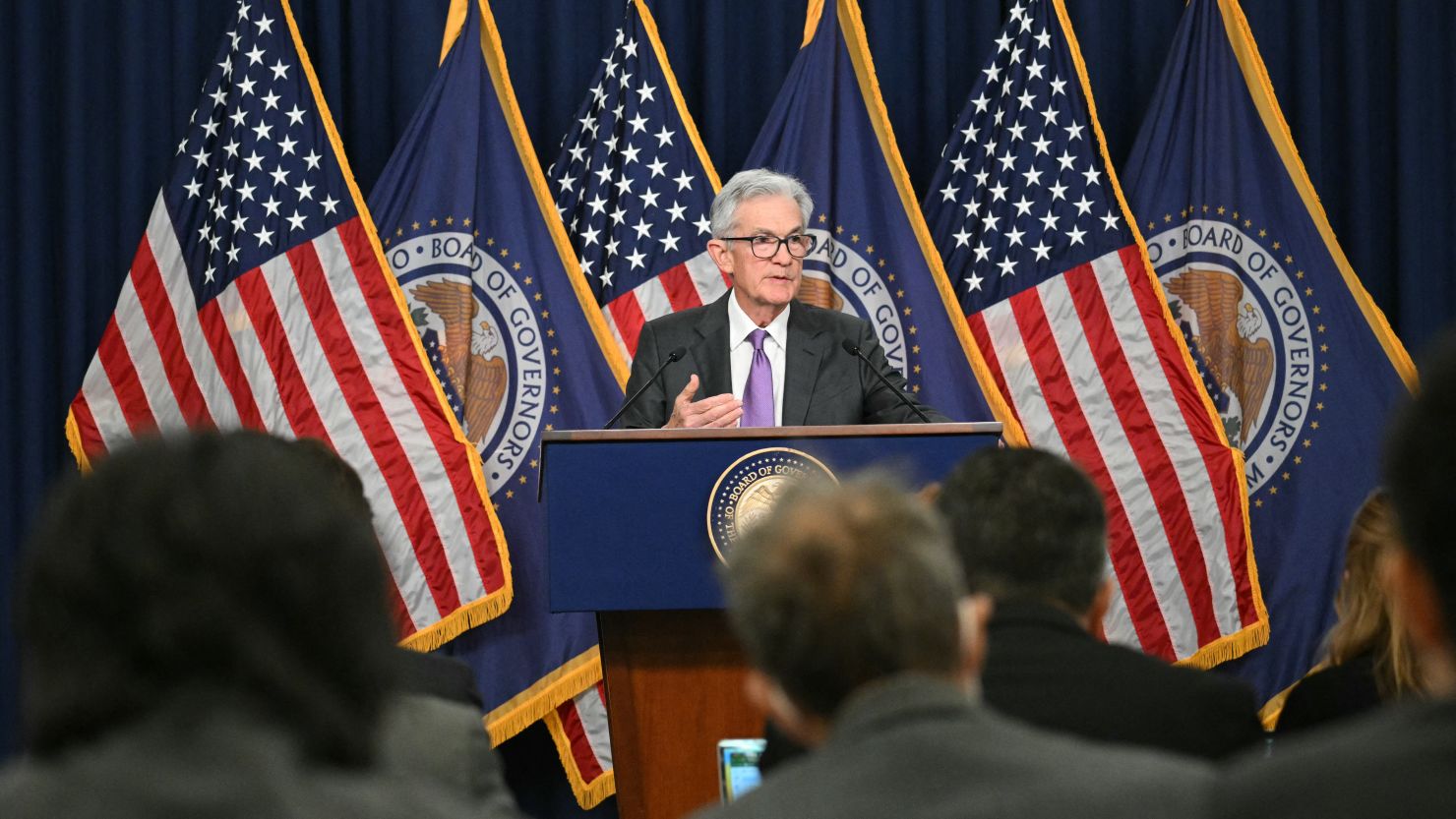
The San Francisco Fed research provides robust quantitative validation for what many market participants intuitively understood: the Fed chair’s press conference has evolved beyond a simple communication vehicle into an independent market-moving event with measurable impact on Treasury yields, equity prices, and currency valuations. The 70-minute press conference window generates information effects distinct from the policy statement itself, suggesting that the Q&A format and unscripted responses carry significant information content that markets actively price.
The current market environment presents a confluence of factors that amplify the importance of this research. An expected rate hold combined with unusual political pressure on Fed leadership creates conditions where any unexpected element in Powell’s communication could generate outsized market reactions. The research also highlights an important consideration for institutional risk assessment: policy credibility risk manifests through elevated risk premiums and wider credit spreads before any actual policy deviation occurs. Markets are forward-looking and incorporate probability-weighted scenarios, meaning current term premiums may not fully reflect potential communication surprises from this week’s meeting.
The sector dispersion observed in current market data—with Healthcare and Technology outperforming while Consumer Defensive and Utilities lag—suggests investors are positioning based on anticipated Fed communication implications. This differential sector response aligns with the research finding that risk assets exhibit strong sensitivity to monetary policy surprises, with growth-oriented and innovation-sensitive sectors potentially benefiting from dovish signals while defensive sectors face headwinds from inflation-sensitive positioning.
The analysis reveals several risk categories that warrant attention from market participants. Fed independence concerns represent a high concern level with potential for higher risk premiums, volatile term premia, and wider credit spreads [9]. The ongoing DOJ investigation into Powell creates unprecedented uncertainty about leadership continuity that could affect market pricing regardless of actual policy outcomes [3][4]. Policy error risk remains elevated as tightened financing conditions could emerge despite potential rate cuts if markets interpret communication as inconsistent with economic fundamentals.
Inflation expectations could force repricing if Fed credibility weakens, particularly given the current elevated levels reflected in Treasury yields and inflation compensation rates [6]. Leadership transition uncertainty around potential Powell replacement adds another dimension of market volatility potential. The combination of these factors creates an environment where communication tone carries enhanced market significance, even when the underlying policy decision appears fully anticipated.
Users should be aware that policy credibility risk represents the most significant emerging concern. When investors incorporate even a small probability that monetary policy can be influenced through non-economic pressure, institutional risk premiums tend to rise across asset classes. Volatility clustering around Fed communication events appears amplified during periods of political uncertainty, suggesting larger-than-normal market reactions should be anticipated for this week’s press conference.
The 10-year term premium’s current level (0.87%) may not fully reflect potential communication surprises from this week’s meeting [6]. This suggests positioning for increased volatility could be prudent, particularly in interest-rate-sensitive segments of the market. Credit spread evolution in investment-grade corporate bonds serves as a useful indicator of policy-error risk perception among sophisticated investors. The research indicates that once such credibility concerns enter market pricing, they tend to persist until concrete evidence of policy independence reassures investors.
Key items to monitor include Wednesday’s press conference for any deviation from expected wait-and-see messaging, FOMC statement language for subtle changes in forward guidance phrasing, TIPS breakeven rates post-meeting as inflation expectations indicators, and credit spread evolution as a policy-error risk indicator. The combination of expected rate stability with unusual political pressure creates an environment where communication carries enhanced significance. Markets will be particularly sensitive to any indication that the Fed’s policy path might be influenced by non-economic considerations.
The Federal Reserve Bank of San Francisco’s new research provides robust quantitative evidence that Fed communications—particularly press conferences—remain powerful market movers despite apparent certainty about near-term policy direction. The U.S. Monetary Policy Event-Study Database documents that monetary policy news from press conferences generates strong effects on Treasury yields and prices of risk assets, validating the market significance of Wednesday’s post-meeting press conference [1][2].
Current market conditions reflect a complex interplay of factors: 10-year Treasury yields at approximately 4.24% with term premiums near 0.87%, equity indices showing mixed performance with sector dispersion, and unusual political pressures creating elevated uncertainty about Fed institutional continuity [5][6][7]. The combination of these elements suggests heightened market sensitivity to any unexpected elements in Powell’s communication.
For decision-makers, the research supports prioritizing monitoring of press conference tone for deviation from expected messaging, FOMC statement language for forward guidance changes, market-based inflation expectations through TIPS breakeven rates, and credit spread evolution as an indicator of policy credibility assessment. The 70-minute press conference window represents an independent information event that can generate immediate and significant market reactions regardless of the underlying policy decision.
Insights are generated using AI models and historical data for informational purposes only. They do not constitute investment advice or recommendations. Past performance is not indicative of future results.
About us: Ginlix AI is the AI Investment Copilot powered by real data, bridging advanced AI with professional financial databases to provide verifiable, truth-based answers. Please use the chat box below to ask any financial question.