Nvidia CEO's China AI Race Comments: Strategic Analysis and Long-Term Implications
Unlock More Features
Login to access AI-powered analysis, deep research reports and more advanced features
About us: Ginlix AI is the AI Investment Copilot powered by real data, bridging advanced AI with professional financial databases to provide verifiable, truth-based answers. Please use the chat box below to ask any financial question.
Related Stocks
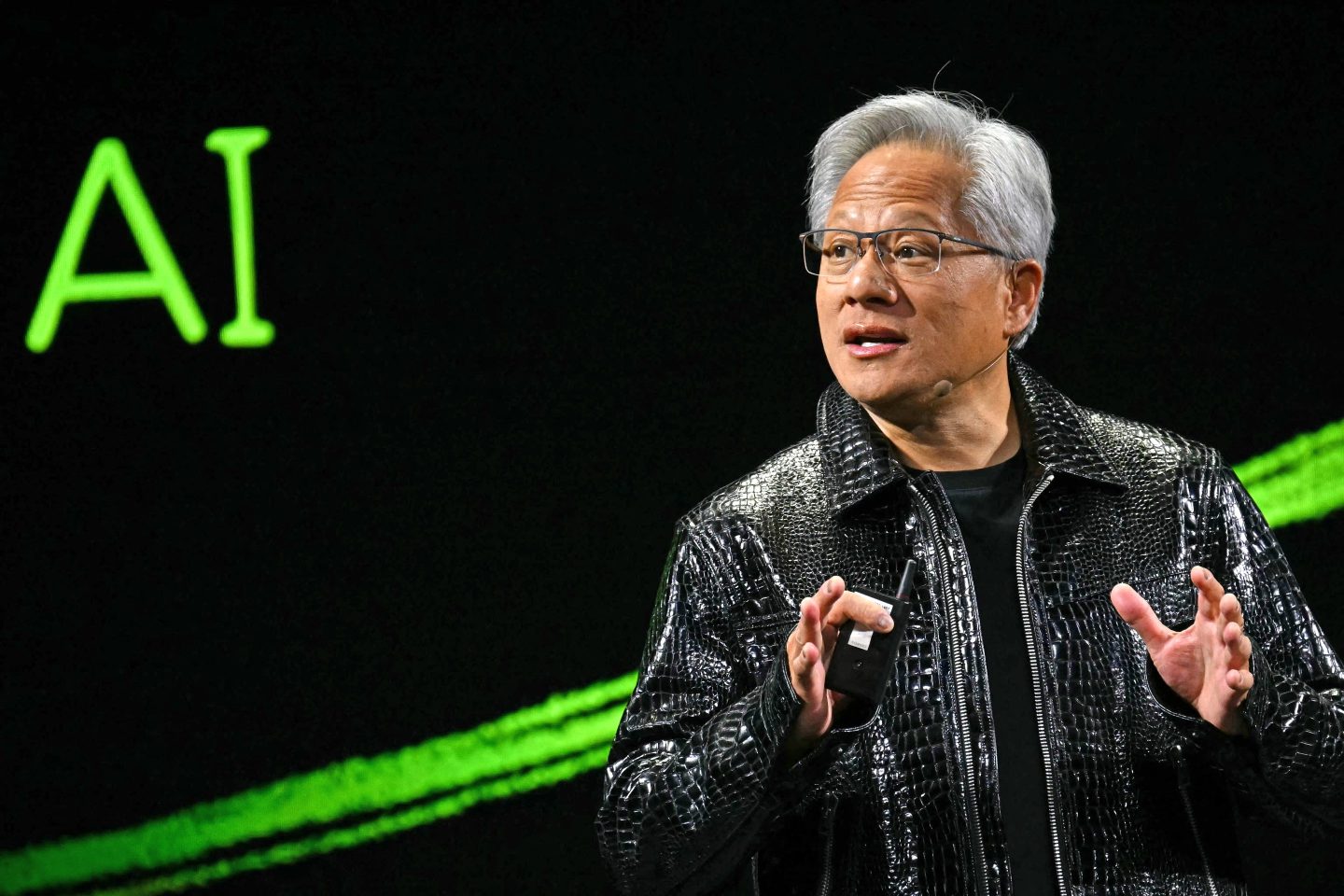
This analysis examines the market impact and strategic implications of Nvidia CEO Jensen Huang’s reported comments about China winning the AI race, initially reported during the Financial Times’ Future of AI Summit on November 5, 2025 [1][2][3]. The comments, later clarified on Huang’s official X account stating “China is nanoseconds behind America” [2][4], have intensified investor concerns about Nvidia’s long-term positioning amid escalating U.S.-China tech tensions. The situation is compounded by recent U.S. export controls targeting Nvidia’s H20 chips for China [5] and China’s mandate requiring domestically-made AI chips in new state-funded data centers [6].
Nvidia’s stock is currently trading at $186.05, down 4.00% on November 13, 2025, reflecting broader tech sector weakness with the Nasdaq Composite plunging 2.5% amid AI bubble fears [0][7]. The stock has experienced significant volatility with a 52-week range of $86.62 - $212.19, despite reaching recent highs of $212.19 [0]. The current decline occurs within a challenging market environment where investors are fleeing high-flying technology shares including Nvidia, Broadcom, and Alphabet [7].
From a financial perspective, Nvidia demonstrates exceptional fundamentals with a market cap of $4.53 trillion, net profit margin of 52.41%, and data center revenue representing 88.3% of total revenue at $115.19B [0]. However, the elevated P/E ratio of 53.01x suggests high growth expectations are already priced in, creating limited room for disappointment [0].
The timing of Huang’s comments is particularly significant given recent regulatory developments. The U.S. government has imposed indefinite export license requirements on Nvidia’s H20 chips to China and D:5 countries [5], while China has responded with guidance requiring new state-funded data center projects to exclusively use domestically made AI chips [6]. This creates a bifurcated global AI market that threatens Nvidia’s access to one of the world’s largest AI markets.
China represents 13.1% of Nvidia’s total revenue at $17.11B [0], making the export controls and domestic chip mandate a material concern. The situation is further complicated by reports of Chinese technological breakthroughs, including analog AI chips from Peking University that reportedly run 1,000 times faster than Nvidia’s H100 while using significantly less power [7].
Despite these challenges, Nvidia maintains several strategic advantages. The company’s CUDA software platform creates a durable moat as the default AI development platform outside China. Analyst consensus remains strongly bullish with 75.9% Buy/Strong Buy ratings and a consensus price target of $235.00, representing 26.3% upside potential [0]. Recent analyst actions have been predominantly positive with maintained Buy ratings [0].
Technical indicators suggest short-term weakness, with the current trading price below the 20-day moving average of $192.51 and elevated daily volatility of 2.68% [0]. However, trading volume of 178.44M indicates active investor interest and liquidity [0].
The convergence of geopolitical tensions, technological competition, and market valuation concerns creates a complex risk-reward scenario. Huang’s comments, despite clarification, highlight a fundamental strategic challenge: Nvidia faces the risk of losing access to China’s market while simultaneously confronting rising competition from Chinese domestic alternatives. The company’s heavy reliance on the data center segment (88.3% of revenue) makes it particularly vulnerable to geopolitical disruptions [0].
The situation reveals a broader trend toward technological decoupling between the U.S. and China in the AI sector. Nvidia’s challenge extends beyond immediate revenue concerns to long-term market positioning in a potentially bifurcated global AI ecosystem. The company’s ability to maintain its technological lead while navigating geopolitical constraints will be critical for long-term success.
The broader tech sell-off reflects growing concerns about AI sector valuations and sustainability of the artificial intelligence boom [7]. Nvidia’s situation serves as a bellwether for the broader AI industry, highlighting how geopolitical factors can impact even the most dominant technology companies.
-
Geopolitical Escalation Risk: The ongoing U.S.-China tech war could significantly impact Nvidia’s growth trajectory, particularly if export controls continue to tighten and China accelerates its domestic chip development [5][6]. Users should be aware that this represents a material threat to revenue streams and market positioning.
-
Market Concentration Risk: With 88.3% of revenue coming from data centers and 13.1% from China [0], Nvidia faces significant exposure to both sector-specific and geographic concentration risks that could amplify the impact of adverse developments.
-
Valuation Risk: The elevated P/E ratio of 53.01x suggests high growth expectations are already priced in, leaving little room for disappointment and creating vulnerability to earnings misses or guidance reductions [0].
-
Competitive Disruption Risk: Reports of Chinese breakthroughs in analog AI chips could represent a technological threat if scalable, potentially challenging Nvidia’s technological superiority [7].
-
Market Leadership Outside China: Nvidia’s CUDA platform and established ecosystem provide strong positioning in markets outside China, potentially offsetting losses in the Chinese market.
-
Strategic Pivot Potential: The company may develop new strategies for the bifurcated global market, including specialized products for different regions and accelerated innovation in unaffected markets.
-
Upcoming Earnings Catalyst: The November 19, 2025 earnings report could provide clarity on China impact and management’s strategic response, potentially serving as a catalyst if guidance exceeds expectations [7].
The analysis reveals that Nvidia faces a complex strategic environment characterized by geopolitical tensions, competitive pressures, and valuation concerns. While the company maintains strong fundamentals with exceptional profitability and analyst support, the combination of export controls, China’s domestic chip mandate, and potential technological competition from Chinese alternatives creates significant uncertainty.
Investors should monitor several key factors: the upcoming earnings report on November 19, 2025 for guidance on China impact [7]; further developments in U.S. export control policy; progress of Chinese domestic AI chip alternatives; Nvidia’s strategic pivots and new market initiatives; and broader AI sector valuation trends. The company’s ability to navigate these challenges while maintaining its technological leadership will be critical for long-term performance.
The current market weakness may present opportunities for investors with longer time horizons, particularly if the company can successfully execute strategic pivots and maintain its competitive advantages outside China. However, the elevated valuation and concentration risks warrant careful consideration of position sizing and risk management.
Insights are generated using AI models and historical data for informational purposes only. They do not constitute investment advice or recommendations. Past performance is not indicative of future results.
About us: Ginlix AI is the AI Investment Copilot powered by real data, bridging advanced AI with professional financial databases to provide verifiable, truth-based answers. Please use the chat box below to ask any financial question.