Tariff Concerns Fail to Deter Investors as Markets Show Resilience Amid South Korea Trade Tensions
Unlock More Features
Login to access AI-powered analysis, deep research reports and more advanced features
About us: Ginlix AI is the AI Investment Copilot powered by real data, bridging advanced AI with professional financial databases to provide verifiable, truth-based answers. Please use the chat box below to ask any financial question.
Related Stocks
The market reaction to the South Korea tariff announcement reveals a complex interplay of geopolitical risk, legal uncertainty, and investor sentiment that merits multi-dimensional examination. The initial market response diverged from traditional tariff-related selloffs, with major indices demonstrating resilience that warrants deeper analysis.
The S&P 500 gained 0.39% and the Dow Jones Industrial Average rose 0.56% on January 26, while the NASDAQ Composite advanced 0.31% to close at 23,601.36 [0]. More significantly, the market showed its capacity for rapid recovery, with the S&P 500 jumping 0.95% and the Dow Jones surging 1.09% on January 21 following earlier weakness—clear evidence of dip-buying behavior [0]. This pattern suggests investors have developed a nuanced view of tariff announcements, potentially discounting rhetoric that may not translate into sustained policy implementation.
The technology sector led market gains, with the sector advancing +1.04% on January 26, while healthcare added +1.10% [0]. Consumer defensive stocks lagged at -0.67%, indicating a rotation toward growth exposure rather than pure defensive positioning [0]. This sector rotation pattern suggests investors maintain risk appetite while selectively adjusting exposure based on tariff impact assessments.
Individual Magnificent Seven stocks showed mixed performance that reflects varied tariff exposure narratives [0]. Meta Platforms (META) closed at $672.36, up +2.06% with a market capitalization of $1.69 trillion, suggesting strong investor confidence in digital advertising and artificial intelligence growth trajectories [0]. Microsoft (MSFT) advanced +0.93% to $470.28, maintaining its position among the world’s most valuable companies with a $3.50 trillion market cap [0]. Tesla (TSLA), however, declined -3.09% to $435.20, potentially reflecting sector-specific concerns about automotive supply chains and competition dynamics [0].
The Russell 2000’s underperformance—declining 0.48% on January 26—indicates smaller-cap stocks faced relatively more pressure from tariff uncertainties [0]. This divergence between large-cap tech resilience and small-cap weakness suggests investors are making discriminating bets based on individual company fundamentals rather than applying broad-based risk aversion.
The MSCI Asia-Pacific (excluding Japan) index rallied 1% to reach a new record high, demonstrating remarkable regional investor confidence despite tariff headwinds [1]. South Korea’s KOSPI initially declined over 1% but quickly attracted dip buyers, reflecting the country’s position as Asia’s strongest-performing market of 2025 [1]. This pattern of initial weakness followed by buying interest mirrors behavior observed in U.S. markets and suggests coordinated global dip-buying strategies among institutional investors.
Gold prices rose approximately 1% to reach $5,063 per ounce, while silver surged about 5% to $109 per ounce [1]. This precious metals rally indicates multiple investor motivations: ongoing inflation hedging demand in anticipation of potential consumer price increases from tariff-driven cost pass-through, safe-haven flows amid trade policy uncertainty, and currency diversification strategies [1]. The magnitude of silver’s rally—outperforming gold by a factor of five—suggests industrial demand considerations may be influencing precious metals allocation alongside traditional safe-haven dynamics.
The market’s muted reaction to the South Korea tariff announcement reveals several structural insights about contemporary investor behavior and policy effectiveness.
A significant factor in the market’s resilience appears to be legal uncertainty surrounding presidential tariff authority. The Supreme Court is currently reviewing the International Economic Emergency Powers Act (IEEPA), a 1970s emergency law that Trump has used to impose tariffs [3][4]. If the Court rules against the administration, the president’s ability to adjust tariff rates could be substantially constrained [3]. Markets may be pricing in a reduced probability of sustained tariff implementation, given the legal proceedings underway. This interpretation suggests equity markets are functioning as prediction markets for legal outcomes rather than purely as asset allocation mechanisms.
The selective nature of tariff threats and implementation creates uncertainty that may paradoxically reduce market impact. The administration has issued tariff threats against multiple parties—including a proposed 100% tariff on Canadian goods and additional 10% levies on countries opposing Greenland ambitions (subsequently walked back)—but actual implementation has been inconsistent [3]. This pattern of threats followed by selective enforcement or reversal may be training investors to treat initial tariff announcements as negotiating positions rather than immutable policy outcomes.
The market’s resilience may also reflect expectations of supply chain adaptation rather than permanent margin compression. Companies with Korean dependencies have had notice of potential tariff increases since the July 2025 trade agreement, providing time to evaluate sourcing alternatives, negotiate with suppliers, or absorb costs [2][4]. The market’s forward-looking nature suggests investors are assessing adjusted earnings trajectories rather than applying static tariff impact models.
The consistent pattern of dip-buying across both U.S. and Asian markets suggests a structural shift in investor sentiment since the tariff policy announcements began. Rather than treating trade tensions as existential risks requiring portfolio de-risking, investors appear to be identifying buying opportunities in temporary weakness. This behavioral pattern may reflect confidence in underlying economic fundamentals, expectations of Federal Reserve accommodation, or simply elevated cash levels seeking deployment.
The tariff increase on South Korea represents a pattern of aggressive trade negotiations that could expand to other trading partners [2][4]. Companies with significant Korean supply chain exposure—including automotive, technology, and pharmaceutical sectors—may face margin pressures if tariffs are fully implemented. Investors should assess supply chain concentration risks, particularly for companies dependent on Korean semiconductors, automotive parts, active pharmaceutical ingredients, or finished goods.
The Supreme Court case regarding tariff authority under IEEPA creates significant unpredictability [3][4]. Markets may be underestimating the potential for legal challenges to alter trade policy implementation timelines or scope. This uncertainty could generate volatility around court proceedings and oral arguments.
Tariff increases typically result in cost pass-through to consumers or margin compression for importers. Companies with Korean sourcing dependencies may provide earnings guidance adjustments in upcoming quarterly reports that could reset market expectations. Currency hedging strategies and pricing power will be key differentiators among affected companies.
The combination of tariff threats, territorial discussions (Greenland), and trade deal renegotiations suggests elevated geopolitical risk that could affect market volatility going forward [3]. Investors should consider hedging strategies for portfolios with significant international equity exposure.
Dip-buying behavior suggests continued opportunity to acquire quality equities during tariff-related volatility. Technology sector leadership and Asian market record highs indicate sector rotation opportunities, particularly in companies with limited Korean supply chain exposure or established domestic sourcing alternatives.
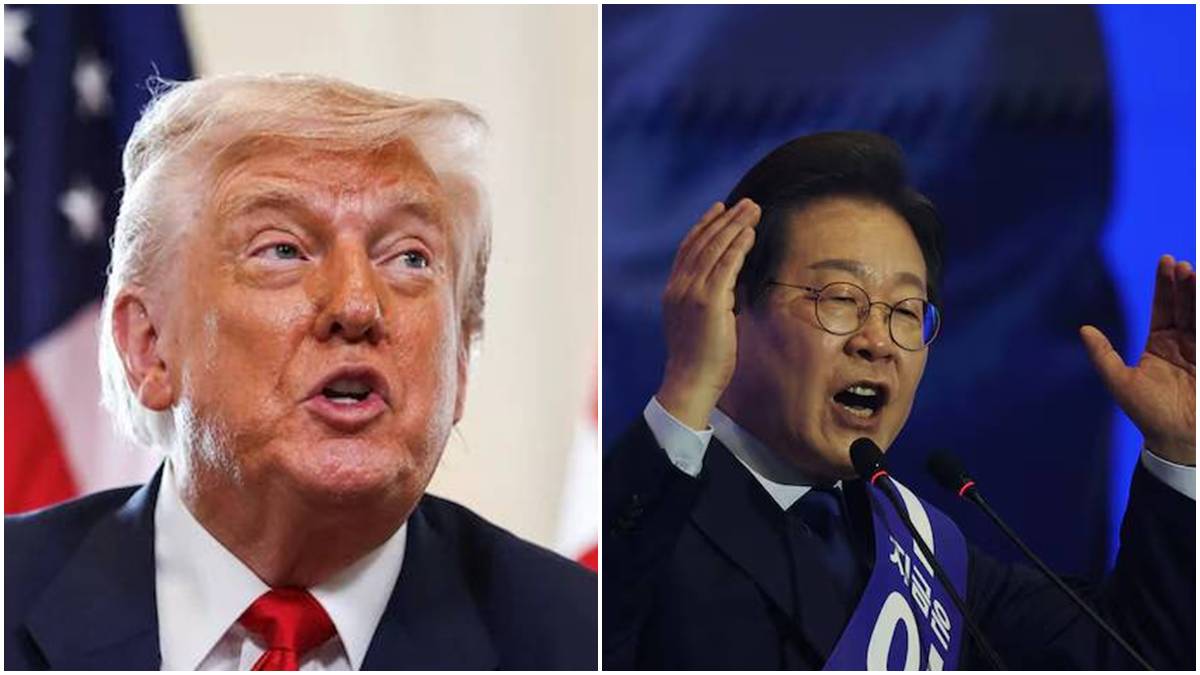
This analysis is based on the Reuters “Morning Bid” column [1] published on January 27, 2026, reporting that despite U.S. tariff increases on South Korean goods from 15% to 25%, investors demonstrated resilience and capitalized on market dips. The tariff announcement followed South Korea’s failure to ratify a trade deal reached in July 2025 [2][3][4].
Key market data indicates U.S. indices showed resilience, with the S&P 500 gaining 0.39% and the Dow Jones rising 0.56% on January 26 [0]. Technology and healthcare sectors led gains, while consumer defensive stocks lagged [0]. Meta Platforms rose +2.06% to $672.36, Microsoft advanced +0.93% to $470.28, and Tesla declined -3.09% to $435.20 [0]. The MSCI Asia-Pacific (excluding Japan) index reached a new record high, gaining 1% [1]. Precious metals rallied, with gold reaching approximately $5,063 per ounce and silver surging to $109 per ounce [1].
Legal uncertainty surrounding tariff authority under the IEEPA may be contributing to muted market reactions, as the Supreme Court considers cases that could constrain presidential tariff-setting power [3][4]. Companies with Korean supply chain exposure in automotive, technology, healthcare, and lumber sectors should be monitored for earnings guidance adjustments and supply chain adaptations.
Insights are generated using AI models and historical data for informational purposes only. They do not constitute investment advice or recommendations. Past performance is not indicative of future results.
About us: Ginlix AI is the AI Investment Copilot powered by real data, bridging advanced AI with professional financial databases to provide verifiable, truth-based answers. Please use the chat box below to ask any financial question.