Federal Reserve January 2026 Meeting: Powell Faces DOJ Investigation Amid Policy Decision
Unlock More Features
Login to access AI-powered analysis, deep research reports and more advanced features
About us: Ginlix AI is the AI Investment Copilot powered by real data, bridging advanced AI with professional financial databases to provide verifiable, truth-based answers. Please use the chat box below to ask any financial question.
Related Stocks
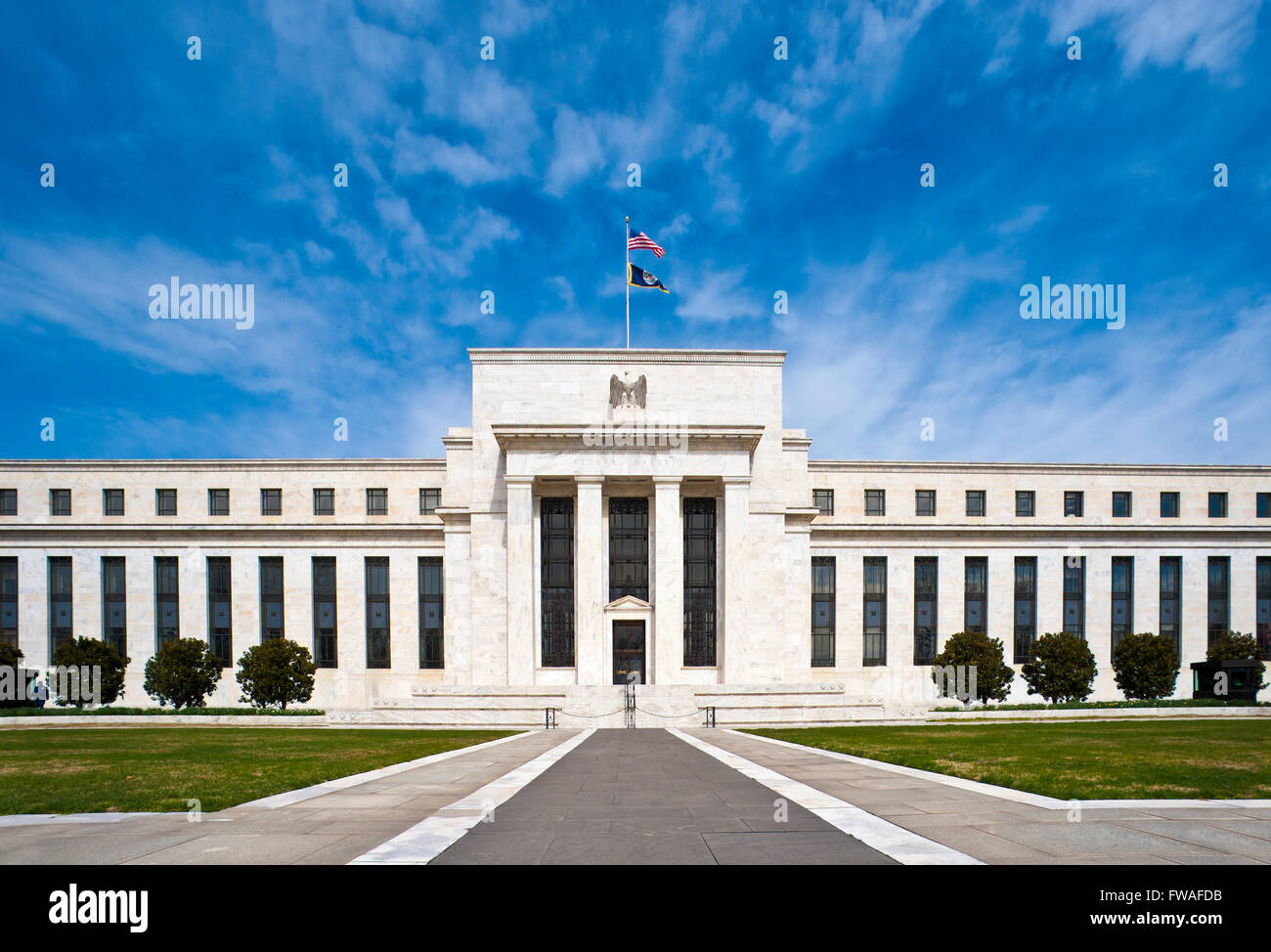
The January 2026 Federal Reserve FOMC meeting represents a critical juncture for U.S. monetary policy, occurring at the intersection of ongoing economic challenges and an unprecedented institutional crisis. Chair Jerome Powell presides over this meeting while navigating a DOJ criminal investigation—the first of its kind targeting a sitting Fed chair—adding a layer of political complexity that complicates an already challenging policy environment [1][3].
The Fed enters this meeting having implemented three quarter-point rate cuts in 2025, bringing the federal funds rate to its current 3.5-3.75% range [1][2]. The economic backdrop presents conflicting signals that justify a cautious approach. Consumer price index data shows inflation holding at 2.7% in December—above the Fed’s 2% target but showing relative stability compared to earlier periods of elevated price growth [1]. Simultaneously, the labor market exhibits weakness with unemployment persisting above 4%, while GDP growth remains robust at 4.4% in Q3 and 3.8% in Q2 [1][2].
This mixed picture places the Fed in a familiar dilemma: whether to prioritize inflation concerns or labor market weakness. The CME FedWatch tool currently indicates near-total certainty of a rate hold at this meeting, with market participants pricing in only a single rate cut throughout the remainder of 2026 [1]. This repricing reflects growing skepticism that the Fed will have significant room to ease policy given persistent inflationary pressures.
The criminal investigation launched by the DOJ introduces an unprecedented dimension to this meeting. Grand jury subpoenas were served on January 9, 2026, focusing on allegations that Powell provided false testimony during a June 2025 Senate Banking Committee hearing regarding the Fed’s $2.5 billion headquarters renovation project [1][3]. The investigation’s timing—immediately preceding a critical FOMC meeting—has drawn bipartisan criticism and raised substantial concerns about potential political interference in monetary policy.
Powell’s response to the investigation has been notably defiant. In public statements, he characterized the probe as “a consequence of the Federal Reserve setting interest rates based on our best assessment of what will serve the public, rather than following the preferences of the president” [1]. This framing positions the investigation as politically motivated retaliation for monetary policy decisions that have conflicted with the Trump administration’s preferences for lower interest rates.
The Wall Street Journal editorial board described the investigation as “in the annals of political lawfare there’s dumb, and then there’s the criminal subpoena federal prosecutors delivered to Federal Reserve Chairman Jerome Powell,” reflecting significant institutional concern across the political spectrum [3].
Beyond the immediate DOJ investigation, the Fed faces additional institutional challenges. The Trump administration is actively seeking Powell’s successor ahead of his May 2026 term expiration, creating uncertainty about the future direction of monetary policy [1]. Simultaneously, the Supreme Court is weighing arguments regarding Trump’s attempt to fire Fed board member Lisa Cook—a case that could fundamentally reshape the governance structure of the Federal Reserve system [3].
These concurrent pressures create a complex web of institutional risks that extend well beyond the immediate interest rate decision. The independence of the central bank—a cornerstone of U.S. financial stability since the system’s’s 1913 founding—faces unprecedented challenges that could have long-lasting implications for market confidence and policy credibility.
The DOJ investigation represents a potential watershed moment for the constitutional separation between monetary policy and political control. While historical administrations have occasionally clashed with Fed leadership over policy preferences, the launching of a criminal probe marks an escalation that tests the boundaries of institutional independence. The outcome of this investigation, regardless of its ultimate resolution, could establish precedent that affects future interactions between political actors and central bank officials.
Despite the serious institutional implications, equity markets have demonstrated remarkable resilience. As of January 26, 2026, major indices showed modest gains—S&P 500 up 0.39%, Nasdaq up 0.31%, and Dow Jones up 0.56%—rebounding from earlier selloffs triggered by political uncertainty [0]. This pattern suggests that markets may be differentiating between short-term political noise and fundamental economic conditions, though the sustainability of this resilience remains uncertain.
Powell’s response to the investigation reveals a calculated strategy to frame the conflict in institutional rather than personal terms. By characterizing the probe as retribution for evidence-based monetary policy decisions, Powell positions himself as a defender of Fed independence rather than a target of political retribution. This positioning could prove critical in shaping congressional and market reactions, particularly if the investigation continues to escalate.
The economic data presents a genuinely ambiguous policy environment. Inflation above target supports a cautious stance, while labor market weakness would typically argue for accommodation. This ambiguity provides the Fed with some tactical flexibility—it can justify either a hold or a cut depending on which data point it chooses to emphasize. However, this same ambiguity means that any policy deviation from market expectations could trigger significant market reaction.
The Federal Reserve enters its January 2026 FOMC meeting facing a uniquely challenging environment that combines persistent economic uncertainties with unprecedented political pressure. The decision to hold rates steady at 3.5-3.75% appears all but certain given current market pricing and the mixed economic data landscape [1][2].
Chair Powell’s position represents the most significant test of Federal Reserve independence in the institution’s 113-year history. The DOJ criminal investigation—focused on alleged false testimony regarding the Eccles building renovation—creates legal, political, and institutional risks that extend far beyond the immediate policy decision [1][3].
Economic fundamentals present a genuinely ambiguous picture. Inflation at 2.7% remains above the Fed’s 2% target but has stabilized from earlier elevated levels. The labor market’s weakness, with unemployment above 4%, provides some justification for accommodative policy, though the strong GDP growth of 4.4% in Q3 complicates the case for easing [1][2].
Market participants should focus closely on the FOMC statement language, particularly any shifts in the characterization of inflation risks or labor market conditions. Powell’s subsequent press conference will be scrutinized for signs of confrontation with or deference to political pressure. The statement’s vote count—revealing any dissent within the committee—could provide important signals about the Fed’s internal cohesion.
The coming weeks will bring additional critical developments: Trump’s Fed chair nomination (expected before Powell’s May term expiration), the Supreme Court ruling on the Lisa Cook removal case, the January jobs report on February 7, and December PCE data providing the core inflation measure the Fed prioritizes [1]. Each of these events could materially shift the policy landscape and market expectations.
The situation warrants continued monitoring of Treasury yield movements, dollar index volatility, Fed official speeches, and congressional oversight activity. The intersection of monetary policy decisions, legal proceedings, and political dynamics creates a complex environment that demands careful assessment of multiple interconnected factors.
Insights are generated using AI models and historical data for informational purposes only. They do not constitute investment advice or recommendations. Past performance is not indicative of future results.
About us: Ginlix AI is the AI Investment Copilot powered by real data, bridging advanced AI with professional financial databases to provide verifiable, truth-based answers. Please use the chat box below to ask any financial question.