Trump Administration Policy Impact: Steel and Healthcare Stocks Show Divergent Performance
Unlock More Features
Login to access AI-powered analysis, deep research reports and more advanced features
About us: Ginlix AI is the AI Investment Copilot powered by real data, bridging advanced AI with professional financial databases to provide verifiable, truth-based answers. Please use the chat box below to ask any financial question.
Related Stocks
This analysis is based on the CNBC report published on January 27, 2026, in which Jim Cramer discussed the differential market impact of Trump administration policies across various sectors [1]. The assessment reveals a clear pattern of sector-specific winners and losers driven by recent regulatory and policy announcements, particularly in the steel and healthcare industries.
The Trump administration’s policy agenda has created distinct market winners and losers through several key mechanisms. The implementation of Section 232 tariffs on imported steel—set at 50% for most countries with a reduced 25% rate for UK origin—has significantly altered the competitive landscape for domestic steel producers [2]. Simultaneously, the proposed flat Medicare Advantage reimbursement rates for 2027, which depart significantly from the 4-6% annual increases analysts had anticipated, have created substantial uncertainty for health insurers with significant Medicare Advantage exposure [1].
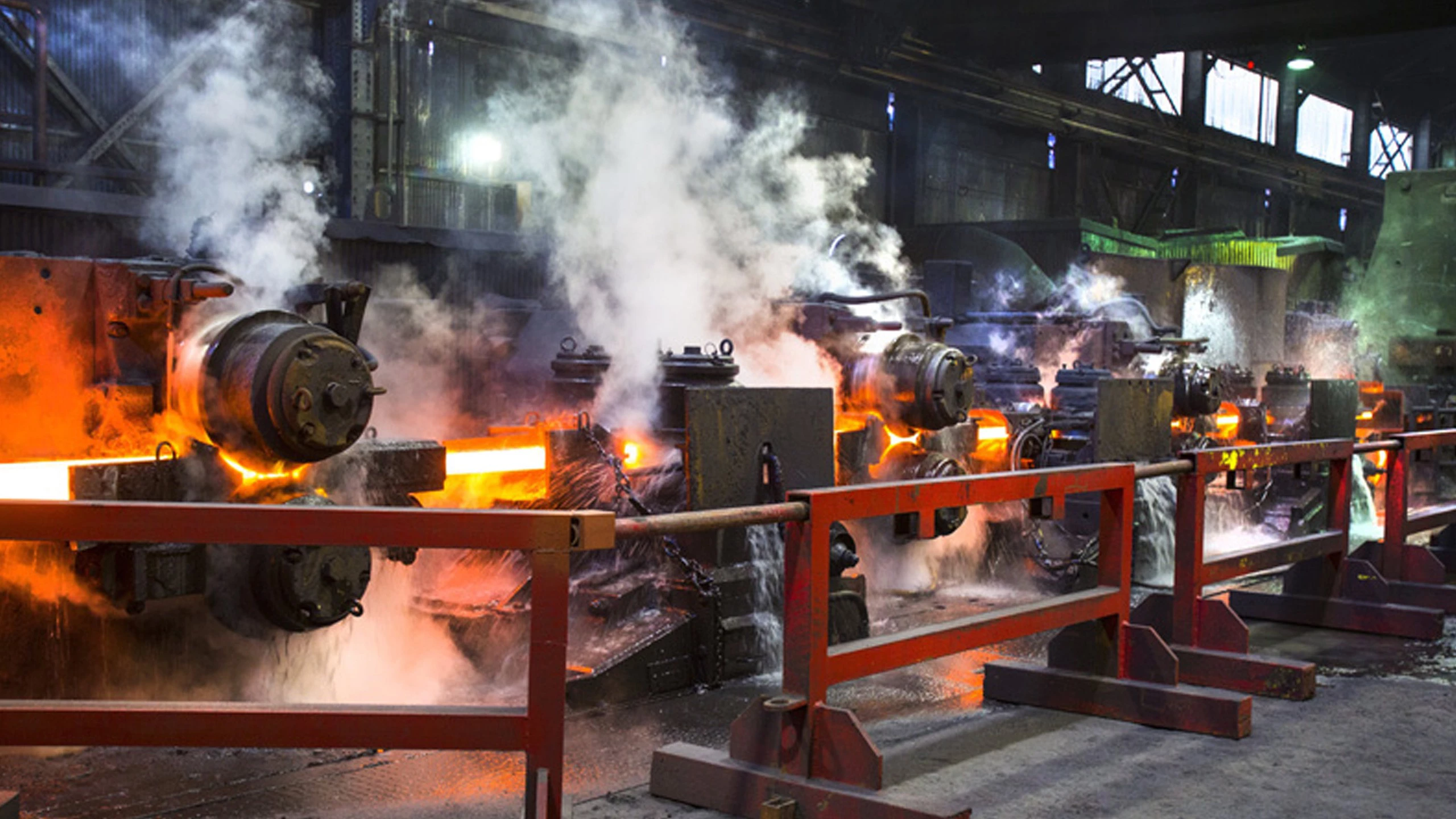
Nucor Corporation (NUE) represents a clear beneficiary of the current trade policy regime. Despite a modest pullback of 2.30% in after-hours trading on January 27, the stock remains up approximately 42% year-to-date, demonstrating the substantial cumulative benefit from tariff protection [1]. The company’s Q4 2025 earnings call revealed expectations for a 5% increase in steel mill shipments for 2026, supported by major growth project advancements [3]. This production outlook, combined with reduced import competition from the tariff regime, has supported premium valuations with a current P/E ratio of 24.38.
The steel tariff structure provides meaningful competitive advantage to domestic producers like Nucor by effectively reducing finished-steel imports and expanding domestic market share opportunities. However, the current valuations may already incorporate these tariff benefits, introducing consideration of whether further appreciation depends on sustained tariff enforcement or fundamental earnings improvement beyond current expectations.
General Motors (GM) experienced a significant rally of 8.75% on January 27, reaching $86.38 and approaching its 52-week high of $87.31 [1]. Cramer identified the Trump administration’s relaxation of environmental regulations as the primary catalyst, allowing GM to continue selling gas-powered vehicles without mandatory expensive electric vehicle credit purchases. This regulatory relief directly improves near-term profitability by reducing compliance costs and preserving product mix flexibility.
The automotive sector benefit appears primarily sentiment-driven in the immediate term, with the sustainability of the rally depending on whether actual earnings improvements materialize from reduced regulatory compliance requirements. Additionally, GM’s international market exposure could face headwinds from potential retaliatory tariffs in response to broader trade policy actions.
The most pronounced market impact emerged in the healthcare insurance sector, where UnitedHealth Group (UNH) declined 19.61% to $282.70 and Humana Inc. (HUM) fell 21.11% to $207.99 [1]. CVS Health also experienced approximately a 14% decline related to Medicare Advantage concerns. The trading volume patterns were particularly striking—UnitedHealth traded 65.27 million shares, nearly 8.7 times its daily average, while Humana’s volume reached 10.03 million shares at 7.1 times average volume [0].
These volume spikes indicate extreme investor concern and suggest significant institutional portfolio rebalancing away from the sector. The proposed flat Medicare Advantage reimbursement rates for 2027 could potentially cut federal payments by billions of dollars, fundamentally altering revenue projections for insurers with significant Medicare Advantage exposure. The gap between analyst expectations of 4-6% rate increases and the proposed flat rates represents a substantial negative revision to projected profitability.
The broader market showed relatively muted reaction to these sector-specific developments, with the S&P 500 advancing 0.18%, the NASDAQ Composite rising 0.35%, and the Russell 2000 gaining 0.25%, while the Dow Jones Industrial Average declined 0.20% [0]. This mixed performance suggests the market is digesting sector-specific policy impacts rather than responding with unified directional movement, indicating a rotation rather than a broad risk-off event.
The market reaction demonstrates clear transmission mechanisms from policy announcements to equity valuations. For steel producers, the tariff mechanism operates through competitive advantage—reduced import pressure and expanded domestic market share translate to improved volume and pricing power. For healthcare insurers, the transmission occurs through direct revenue impact—federal reimbursement rates determine a substantial portion of Medicare Advantage revenue, making policy changes immediately material to profitability projections.
The environmental regulatory relaxation for automotive represents a compliance cost reduction mechanism, preserving product mix flexibility and avoiding forced investment in electric vehicle credits or production capacity. This policy benefit differs structurally from the tariff-driven advantages in steel, as it removes constraints rather than creating competitive protection.
The divergent performance patterns reveal important investment implications regarding policy sensitivity across sectors. Healthcare insurance demonstrates the highest policy sensitivity, with regulatory decisions directly affecting revenue streams through government reimbursement mechanisms. Steel producers occupy an intermediate sensitivity position, where tariff protection provides meaningful but potentially temporary competitive advantage subject to trade negotiation outcomes. Automotive exposure appears more nuanced, with regulatory relief providing near-term benefit but leaving longer-term competitive positioning dependent on global EV adoption trajectories.
The extraordinary trading volumes in UnitedHealth and Humana—8.7x and 7.1x average daily volume respectively—signal more than typical rebalancing. Such volume spikes typically accompany fundamental reassessment events where investors rapidly adjust positions based on new information. The magnitude of price movement combined with volume intensity suggests institutional conviction regarding the Medicare Advantage policy headwind.
The analysis reveals significant risk factors for healthcare insurers that warrant careful attention. The 19-21% single-day decline represents substantial repricing of Medicare Advantage exposure, with further downside possible if the proposed flat reimbursement rates are finalized without modification [0]. The volume patterns suggest continued institutional pressure until clarity emerges on the final rate structure.
However, opportunity may emerge if the proposed rates face Congressional opposition or if CMS ultimately sets rates higher than the current proposal. Historically, proposed reimbursement rates are often modified during the comment period, creating potential for recovery in currently oversold positions.
Nucor’s strong year-to-date performance raises questions about whether current valuations adequately incorporate tariff benefits. The P/E ratio of 24.38 reflects premium pricing that depends partially on sustained tariff enforcement [0]. Trade negotiation developments, particularly regarding potential tariff relief or exemptions, could introduce volatility to current valuations. The 42% year-to-date gain may also attract profit-taking pressure.
GM’s 8.75% rally may represent short-term sentiment rather than fundamental revaluation, and the sustainability of this advance depends on demonstrable earnings improvement from regulatory cost reduction [0]. The company may face longer-term competitive challenges if EV adoption accelerates globally despite U.S. regulatory relief, potentially positioning GM advantageously in domestic markets while creating international competitive disadvantages.
The Trump administration’s policy agenda as of January 27, 2026, has created distinct market bifurcations across sectors. Steel producers like Nucor benefit from Section 232 tariff protection, though current valuations may already incorporate these advantages. Automotive manufacturers such as General Motors receive regulatory relief through relaxed environmental requirements, reducing compliance costs and preserving product mix flexibility. Healthcare insurers face significant headwinds from proposed flat Medicare Advantage reimbursement rates, with UnitedHealth and Humana experiencing 19-21% single-day declines amid concerns about federal payment reductions.
The proposed Medicare Advantage rate freeze for 2027 remains subject to finalization, with CMS announcements expected in coming weeks representing a critical catalyst for healthcare sector direction. Trade negotiations affecting tariff structures and regulatory implementation details represent additional monitoring factors for steel and automotive sectors respectively. The broader market’s muted reaction suggests sector rotation rather than broad-based risk sentiment changes, indicating opportunities for sector-focused positioning based on policy outlook assessment.
[0] Ginlix Analytical Database – Real-time market data, index performance, trading volume analysis
[1] CNBC – “Jim Cramer names 3 stocks bearing the brunt of Trump’s agenda – and 2 others benefiting”
URL: https://www.cnbc.com/2026/01/27/jim-cramer-trumps-stock-market-impact-winning-stocks.html
Published: 2026-01-27
[2] Trade Compliance Resource Hub – “Trump 2.0 tariff tracker”
URL: https://www.tradecomplianceresourcehub.com/2026/01/27/trump-2-0-tariff-tracker/
Accessed: 2026-01-27
[3] Seeking Alpha – “Nucor targets 5% increase in steel mill shipments for 2026”
URL: https://seekingalpha.com/news/4543235-nucor-targets-5-percent-increase-in-steel-mill-shipments-for-2026
Published: 2026-01-27
Insights are generated using AI models and historical data for informational purposes only. They do not constitute investment advice or recommendations. Past performance is not indicative of future results.
About us: Ginlix AI is the AI Investment Copilot powered by real data, bridging advanced AI with professional financial databases to provide verifiable, truth-based answers. Please use the chat box below to ask any financial question.