Powell on Tariffs' Impact on Prices: Fed Holds Rates, Signals Policy Easing Contingent on Goods Price Normalization
Unlock More Features
Login to access AI-powered analysis, deep research reports and more advanced features
About us: Ginlix AI is the AI Investment Copilot powered by real data, bridging advanced AI with professional financial databases to provide verifiable, truth-based answers. Please use the chat box below to ask any financial question.
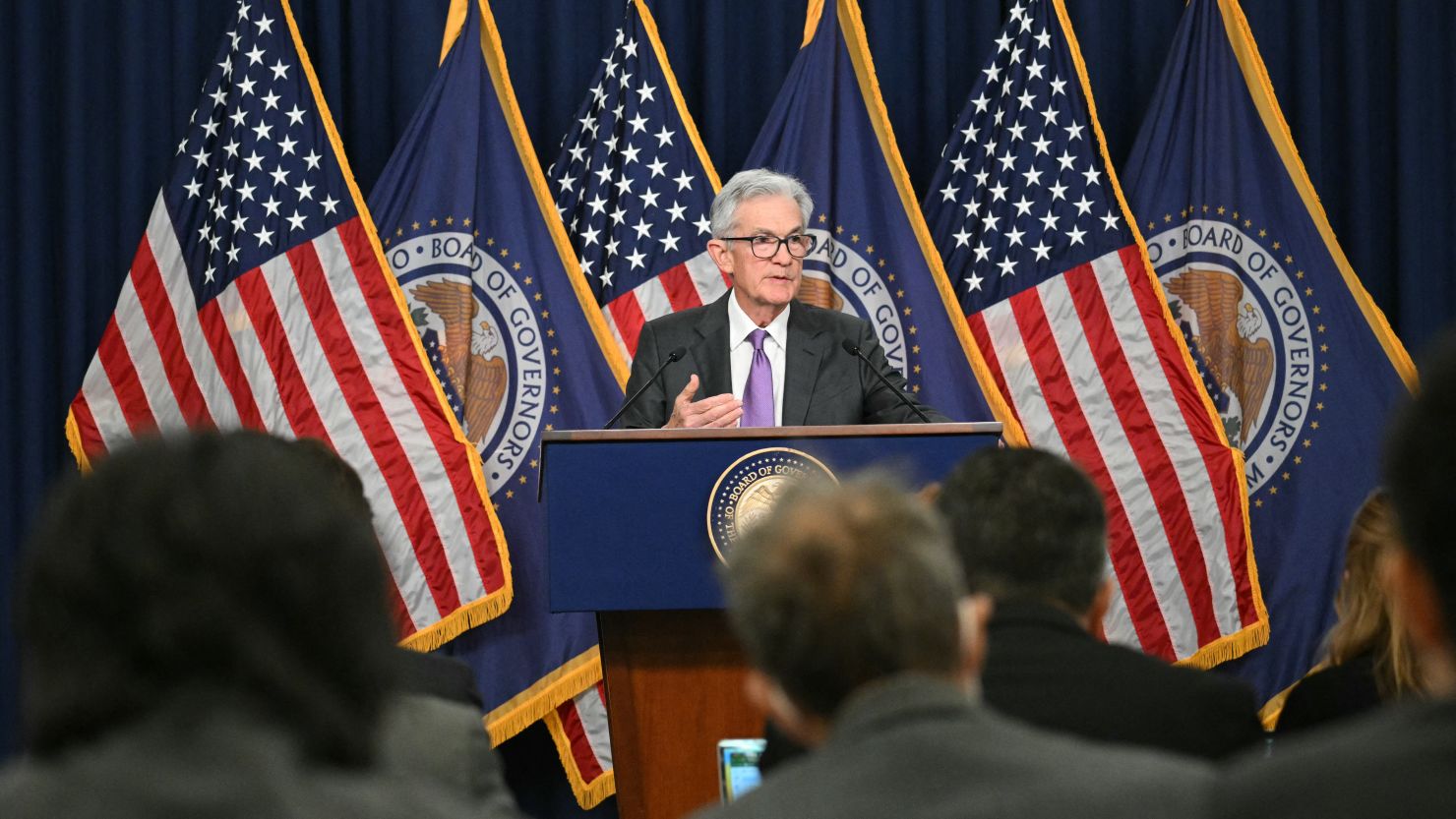
This analysis is based on Federal Reserve Chair Jerome Powell’s statements during the January 28, 2026 FOMC press conference [1][2], where he characterized tariff-driven price increases on consumer goods as a “one-time price increase” expected to “peak and then start coming down” barring new major tariff escalations. The Fed maintained its benchmark interest rate at 4.25%-4.50% while acknowledging that goods sector inflation remains elevated due to tariff effects, in contrast to continued disinflation in the services sector. Market reaction was muted, with minor selloffs across major indices [0]. Powell’s comments signal that the timing of future policy easing remains directly linked to the subsiding of tariff-driven price pressures.
The January 28, 2026 Federal Reserve meeting resulted in no change to the federal funds rate, maintaining the target range of 4.25%-4.50% [1][2]. During the subsequent press conference, Chair Powell addressed the lingering impact of tariffs on consumer goods prices, providing the most direct Fed commentary on trade policy inflation effects since tariff implementations intensified. His statements represent a significant calibration of Fed messaging regarding the transitory versus persistent nature of tariff-driven inflation.
Powell emphasized that the elevated inflation readings observed in recent economic data “largely reflect inflation in the goods sector, which has been boosted by the effects of tariffs” [1]. This acknowledgment represents an important attribution of goods-price inflation to trade policy rather than broader macroeconomic demand factors. The distinction is critical for understanding the Fed’s monetary policy calculus, as it suggests that goods-price pressures may be more contained and temporary than generalized inflation drivers.
The most notable analytical dimension of Powell’s comments is the explicit dichotomy between goods and services sector inflation trajectories. According to the Fed Chair, “disinflation appears to be continuing in the services sector” [1] while goods prices remain elevated. This sectoral divergence has significant implications for both inflation forecasting and policy timing.
The goods-services inflation split suggests that supply-side trade policies (tariffs) are primarily affecting manufactured and imported goods, while demand-side factors driving services inflation have continued to moderate. This pattern aligns with economic theory regarding tariff pass-through: tariffs directly increase landed costs for imported goods, which producers and retailers partially pass on to consumers, creating discrete price level adjustments rather than sustained inflationary spirals.
Powell linked future monetary policy easing directly to the resolution of tariff-driven price pressures, stating that the Fed can “loosen policy once prices fall” [1][2]. This conditional framing establishes a clear forward guidance mechanism: rate cuts are contingent upon demonstrable progress in goods price normalization rather than arbitrary calendar dates or unemployment thresholds.
The Fed’s “meeting-by-meeting” approach with “no preset course” [1][2] maintains flexibility while providing investors and market participants with a qualitative framework for anticipating policy shifts. The explicit conditioning on “no new major tariff increases” [2] introduces a material policy uncertainty that could extend the current rate hold duration if trade tensions escalate.
Immediate market reaction to Powell’s tariff comments showed limited volatility, with equity indices experiencing minor declines: the S&P 500 fell 0.37%, the NASDAQ declined 0.45%, and the Russell 2000 dropped 1.02% [0]. The disproportionate impact on small-cap indices (Russell 2000) reflects the sectoral sensitivity of smaller, domestically-focused companies to both tariff costs and interest rate considerations.
The muted reaction suggests markets had largely priced in Fed caution regarding tariff inflation, with Powell’s comments serving as confirmation rather than surprise. Trading volume and volatility metrics during the announcement period indicate no significant repricing of rate cut expectations or sector valuations [0].
Powell’s characterization of tariff effects as a “one-time price increase” that will peak and decline represents a reinforcement of the transitory inflation framework, though with important qualifications. Unlike the pandemic-era supply chain inflation that the Fed initially characterized as transitory (and subsequently faced criticism for underestimating), the current tariff-driven goods inflation has clearer structural origins and more predictable unwinding trajectories.
The transitory classification depends critically on two assumptions: first, that tariff rates remain at current levels or decline, and second, that supply chains successfully adapt to tariff environments without embedding permanent cost structures. The Fed’s conditionality regarding “no new major tariff increases” [2] acknowledges the policy-dependent nature of this inflation outlook.
The January 28 comments occur amid ongoing discussions regarding Federal Reserve independence and the appropriate interface between monetary policy and trade policy. By explicitly attributing goods inflation to tariff effects while maintaining policy focus on price stability, Powell navigates a delicate political landscape where trade policy decisions create macroeconomic consequences outside the Fed’s direct control.
This dynamic creates a structurally challenging policy environment: the Fed’s inflation mandate is affected by trade policy decisions made by other branches of government, yet the Fed’s tools (interest rates) are poorly suited to address supply-side price shocks. Powell’s approach—acknowledging tariff impacts while maintaining focus on downstream inflation outcomes—represents a careful calibration that preserves Fed credibility while avoiding direct confrontation on trade policy.
The goods-services inflation divergence highlighted by Powell has material implications for sector allocation and economic forecasting. Import-dependent sectors—retail, manufacturing, technology hardware—face margin pressure from tariff costs, though the expectation of peak effects suggests the worst of cost pass-through may be approaching. Services sectors, conversely, benefit from continued disinflation trends that support consumer purchasing power and sector margins.
This sectoral asymmetry suggests potential opportunities for relative value positioning as markets digest the Fed’s assessment. Companies with tariff exposure may be undervalued if peak effects materialize as Powell expects, while services-oriented businesses may warrant premium valuations reflecting disinflation tailwinds.
[0] Ginlix InfoFlow Analytical Database / Market Indices Data
[1] New York Times - Live Updates: Fed Keeps Rates Steady (https://www.nytimes.com/live/2026/01/28/business/federal-reserve-interest-rates)
[2] CNBC - Fed Meeting Live Updates (https://www.cnbc.com/2026/01/28/fed-meeting-today-live-updates.html)
[3] Fortune - Jerome Powell Federal Reserve Independence (https://fortune.com/2026/01/28/jerome-powell-says-federal-reserve-independence-donald-trump/)
Insights are generated using AI models and historical data for informational purposes only. They do not constitute investment advice or recommendations. Past performance is not indicative of future results.
About us: Ginlix AI is the AI Investment Copilot powered by real data, bridging advanced AI with professional financial databases to provide verifiable, truth-based answers. Please use the chat box below to ask any financial question.