Fed Chair Powell Defends Central Bank Independence Amid Trump Pressure Campaign
Unlock More Features
Login to access AI-powered analysis, deep research reports and more advanced features
About us: Ginlix AI is the AI Investment Copilot powered by real data, bridging advanced AI with professional financial databases to provide verifiable, truth-based answers. Please use the chat box below to ask any financial question.
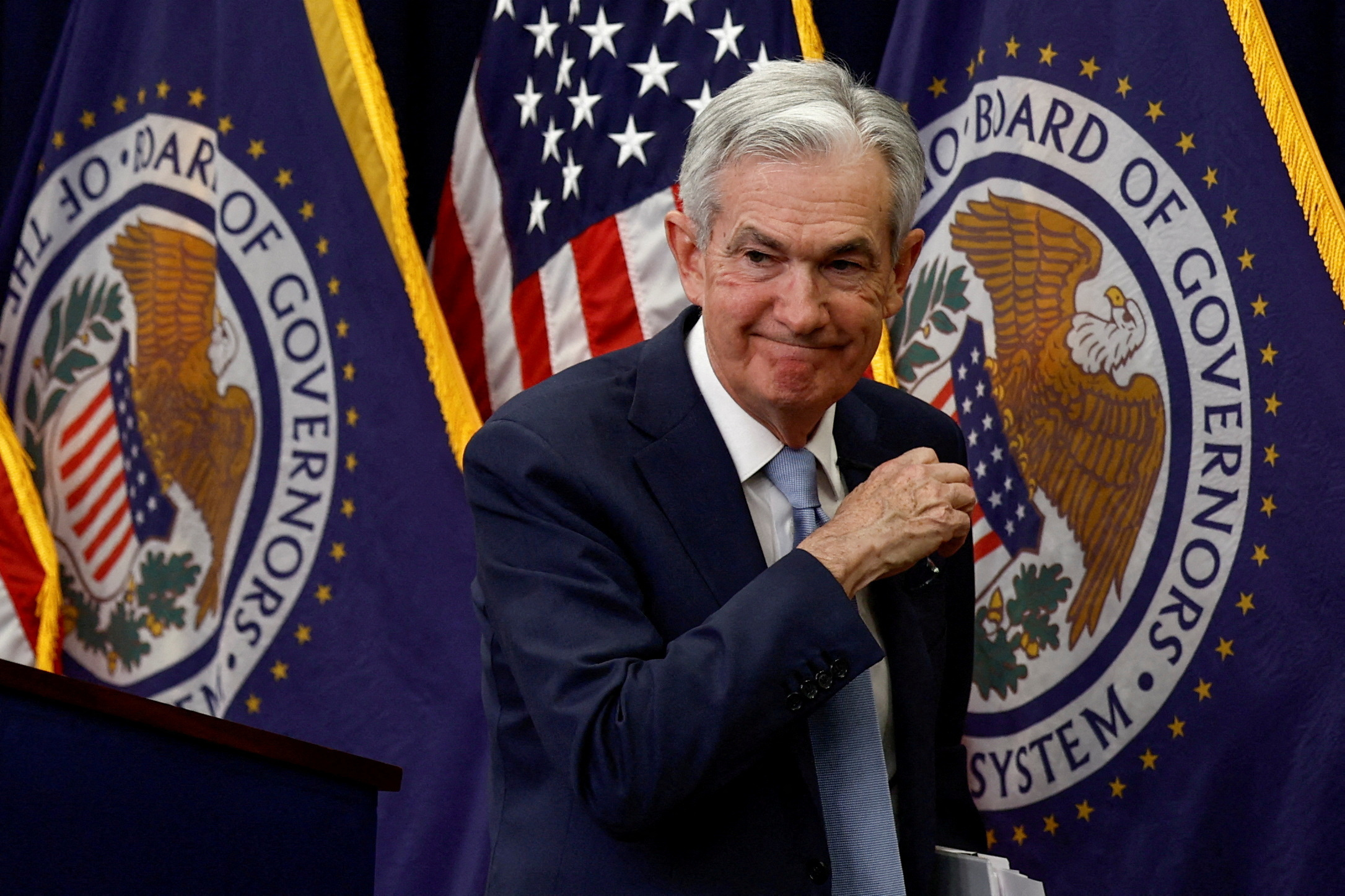
The January 28, 2026 FOMC meeting represents a pivotal moment in the tension between the Federal Reserve and the Trump administration, manifesting as an open confrontation over the fundamental principle of central bank independence. During the post-meeting press conference, Chair Powell articulated a comprehensive defense of institutional autonomy, stating unequivocally that independence is “very important” and serves as a cornerstone of modern democratic economies [1][2]. His remarks directly countered President Trump’s increasingly aggressive pressure campaign, which has included public attacks calling Powell a “stubborn MORON” and demands that the Fed “assume control” over monetary policy decisions [1].
The FOMC’s policy decision itself reflected relative internal consensus, with the committee voting 10-2 to maintain the federal funds rate in the 3.50%-3.75% range. Only two dissenting governors, Stephen Miran and Christopher Waller, advocated for an immediate rate cut [1]. This substantial majority support for the hold decision suggests that the FOMC membership broadly shares Powell’s assessment of current economic conditions and the appropriate policy stance, providing institutional backing for the independence defense. The committee has already implemented 175 basis points of rate cuts since September 2024, demonstrating that the Fed has responded to changing economic conditions while maintaining its independent judgment on timing and magnitude [1].
The market reaction to this confrontation was notably muted, with equities showing limited movement—S&P 500 approximately 0.1% lower, Dow Jones little changed, and Nasdaq slightly positive around +0.2%—while Treasury yields edged higher (10-year up approximately 3 basis points to 4.26%, 2-year up approximately 2 basis points to 3.59%) [2]. This restrained market response suggests investors are adopting a wait-and-see approach, monitoring for concrete developments rather than reacting to rhetorical confrontation.
The confrontation between Powell and Trump extends beyond personal friction to address fundamental questions about the separation of monetary policy from political control. Powell explicitly articulated the core rationale for central bank independence during his press conference, explaining that “every advanced economy, democracy in the world has come around to this common practice… to have a separation between — to not have direct elected official control over the setting of monetary policy” [2]. This statement positioned the independence debate not merely as a procedural preference but as an essential governance structure that distinguishes modern democratic economies.
The timing of this confrontation carries particular significance given Powell’s impending term expiration in May 2026. President Trump has reportedly narrowed his list of potential successors to four contenders, raising questions about whether the succession process will become politicized and potentially result in the appointment of a more compliant Fed chair [1]. This leadership transition represents a critical inflection point where the independence norm could either be reinforced or substantially weakened depending on the selection process and the eventual nominee’s commitment to institutional autonomy.
The Justice Department’s investigation into the Fed’s $2.5 billion headquarters renovation adds another dimension to the tensions, with serving subpoenas suggesting potential leverage or pressure mechanisms [1]. While the specifics of this investigation remain unclear, its existence during a period of heightened political tension raises concerns about the use of regulatory or investigative tools to influence central bank behavior.
Powell’s direct assertion—“We haven’t lost it. I don’t believe we will. I certainly hope we won’t”—represents an unusually personal and forward-looking statement about institutional integrity [1]. The phrasing suggests awareness that independence faces genuine threats and requires active defense, while the expression of hope indicates recognition that ultimate outcomes remain uncertain.
The constitutional and governance tensions between the Fed and the executive branch present significant risks to established economic policy frameworks. If political pressure on the Fed succeeds in influencing rate decisions, it could undermine decades of precedent that has contributed to U.S. economic stability and international confidence in American monetary policy. The precedent-setting nature of this confrontation means that outcomes may shape future relationships between central banks and political leaders both domestically and internationally.
The upcoming leadership succession process represents a concentrated risk window. Trump’s narrowed successor list and the current tensions raise the possibility that nominees may be evaluated partly on their willingness to accommodate political preferences rather than purely on their economic credentials and commitment to institutional independence. Any perception that the succession process has been compromised could affect market confidence in Fed policy decisions going forward.
The Justice Department investigation introduces legal and reputational uncertainty that could constrain Fed operational independence or divert institutional attention from core monetary policy responsibilities. The intersection of legal pressure with political criticism creates a complex environment where institutional capacity may be tested.
The Fed’s demonstrated unity—with 10 of 12 FOMC members supporting the hold decision and Powell’s clear articulation of independence principles—provides a strong foundation for institutional resilience [1]. This internal cohesion represents organizational capital that can be leveraged to maintain policy credibility regardless of external pressures.
The muted market reaction indicates that investors are maintaining confidence in the Fed’s institutional framework, providing a stabilizing factor that may constrain extreme policy departures. Continued calm in financial markets could reinforce the message that independence serves important economic functions.
The public debate about central bank independence, while uncomfortable in the short term, may ultimately strengthen democratic understanding of why monetary policy separation from political control serves broader societal interests. If the Fed successfully navigates this challenge while maintaining policy effectiveness, it could reinforce institutional legitimacy for future periods.
This analysis is based on the original YouTube short published on January 28, 2026, along with comprehensive coverage from Fortune [1], CNBC [2], and The Guardian [3] regarding the FOMC meeting and Powell’s press conference statements.
The Federal Reserve maintained its benchmark interest rate at 3.50%-3.75% with strong committee support (10-2 vote) [1][2]. Chair Powell’s defense of central bank independence directly countered President Trump’s escalating criticism, including calls for the Fed to lower rates and assertions that the Fed board should “assume control” [1][3]. Powell characterized independence as essential to modern democracies and emphasized the institutional commitment to objectivity and integrity [1][2].
Key forthcoming developments warranting monitoring include the May 2026 expiration of Powell’s term and the presidential succession process, the outcome of the Justice Department investigation into the Fed headquarters renovation, upcoming inflation data and its influence on future rate decisions, and any congressional response to the executive-Fed tensions [1]. The fundamental question at stake is whether the established norm of central bank independence—which has been adopted by virtually all advanced democracies—can withstand direct political pressure in the United States.
Markets have的反应表明 investors are adopting a cautious but not alarmist posture, with equity markets relatively flat and Treasury yields showing modest increases consistent with continued confidence in the Fed’s current policy stance [2][3]. The resolution of these tensions will likely have implications extending beyond the immediate policy environment to affect broader perceptions of U.S. economic governance and institutional resilience.
Insights are generated using AI models and historical data for informational purposes only. They do not constitute investment advice or recommendations. Past performance is not indicative of future results.
About us: Ginlix AI is the AI Investment Copilot powered by real data, bridging advanced AI with professional financial databases to provide verifiable, truth-based answers. Please use the chat box below to ask any financial question.