Federal Reserve January 2026 FOMC Decision: Rates Held Steady Amid Economic Strength and Political Tensions
Unlock More Features
Login to access AI-powered analysis, deep research reports and more advanced features
About us: Ginlix AI is the AI Investment Copilot powered by real data, bridging advanced AI with professional financial databases to provide verifiable, truth-based answers. Please use the chat box below to ask any financial question.
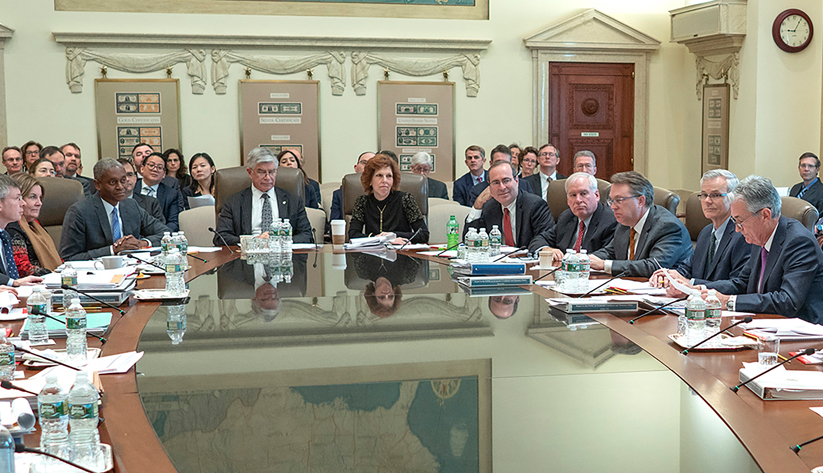
The Federal Open Market Committee’s January 2026 decision to maintain interest rates at 3.50%-3.75% marked a significant shift in monetary policy stance, terminating a streak of three consecutive quarter-point reductions that had characterized the previous meetings [1][2]. The vote of 10-2 to hold, with two members favoring a cut, reflected ongoing debate within the committee while demonstrating broad consensus around the pause decision. This outcome aligned closely with market expectations, where the CME FedWatch tool showed an 86% probability of rates remaining unchanged at the March meeting, indicating that investors had largely priced in the likelihood of an extended pause [4].
Chair Jerome Powell’s press conference centered on several key themes that illuminate the Fed’s current thinking and forward guidance. His assertion that “the best thing we can do for affordability is keep inflation at 2%” encapsulated the central bank’s prioritizaton of price stability as the foundation for sustainable economic growth [1][2]. This messaging reflects a deliberate strategy to communicate the long-term benefits of maintaining discipline on inflation, even as consumers continue to face elevated costs for housing, goods, and services. Powell acknowledged that many consumers may need to “wait longer” for relief from higher borrowing costs, signaling that the path to rate reductions remains contingent on continued progress toward the 2% inflation target [1].
The FOMC statement characterized economic activity as expanding at a solid pace, representing an optimistic assessment of conditions despite ongoing challenges [2][3]. The committee removed language describing risks to the labor market as having “moved into better balance,” reflecting a nuanced view that the job market has stabilized following the pandemic-era disruptions and subsequent normalization period. This shift suggests growing confidence that the labor market can sustain its current strength without requiring aggressive monetary easing to support employment.
Inflation remains the primary concern underlying the Fed’s cautious approach, with core Personal Consumption Expenditures (PCE) persisting at approximately 3%—well above the 2% target that Powell repeatedly emphasized as the benchmark for policy normalization [1][2]. Powell expressed confidence that inflationary pressures would ease as the impacts of tariffs and other transitional factors diminish, but he maintained the committee’s data-dependent, meeting-by-meeting approach to policy adjustments. The characterization of the current policy rate as “loosely neutral” indicates that the Fed believes its current stance neither significantly restrains nor stimulates economic activity, suggesting limited urgency for either tightening or easing in the near term [1][2].
Equity markets responded with modest declines to the FOMC decision and accompanying communications. The S&P 500 fell 0.37%, the NASDAQ declined 0.45%, and the Russell 2000 experienced the most pronounced drop at 1.02% [0]. These relatively muted movements suggest that market participants had largely anticipated the pause and were not significantly surprised by the committee’s actions. The Russell 2000’s underperformance may reflect sensitivity to the extended higher-rate environment, as smaller companies tend to be more sensitive to borrowing costs and economic conditions.
The bond market’s reaction provided additional insight into investor expectations for the policy path forward. Market pricing implied that the first rate cut is unlikely to occur before June 2026 at the earliest, representing a meaningful shift from earlier expectations that had anticipated more aggressive easing [4]. This recalibration reflects the Fed’s successful communication of its commitment to fighting inflation and its willingness to maintain restrictive conditions until there is sustained evidence that price pressures are abating in a durable manner.
An unprecedented dimension of the January 2026 FOMC meeting was the backdrop of political tension between the Federal Reserve and the Trump administration. Reports of a Department of Justice probe into Chair Powell, combined with public criticism from administration officials regarding Fed policy, introduced a layer of political risk that has characterized the institutional environment surrounding monetary policy decisions [3][4]. These developments raise questions about the independence of the Federal Reserve and its ability to conduct policy based purely on economic considerations without political interference.
Powell’s responses during the press conference demonstrated careful navigation of these political sensitivities, maintaining focus on the Fed’s dual mandate and its commitment to data-driven decision-making. The significance of this political context cannot be understated, as it represents a potential threat to the institutional framework that has underpinned Federal Reserve autonomy for decades. Market participants and economic analysts will need to monitor these developments closely, as any erosion of Fed independence could have far-reaching implications for monetary policy credibility and inflation expectations.
Powell’s emphasis on the relationship between inflation control and affordability represents a strategic communication approach designed to connect monetary policy decisions to everyday consumer concerns. While higher interest rates increase borrowing costs for mortgages, auto loans, and credit cards in the short term, the Fed’s argument is that allowing inflation to remain elevated would erode purchasing power more persistently over time. This framing attempts to shift public attention from the immediate pain of higher rates to the longer-term benefits of price stability, though the political environment and consumer sentiment may limit the effectiveness of this messaging.
The inflation trajectory will be critical in determining the timing and magnitude of future rate adjustments. The persistence of core PCE at 3% suggests that the final leg of the disinflation process may prove more challenging than the initial progress achieved over the past two years. Factors including ongoing tariff implementations, potential fiscal policy changes, and structural shifts in labor markets will all influence the path back to the 2% target.
The characterization of current policy as “loosely neutral” carries significant implications for the policy outlook. If the Fed’s assessment of the neutral rate is accurate, the current stance provides neither substantial stimulus nor restraint, creating what Powell described as appropriate conditions for observing how the economy evolves. This assessment implies that the Fed has considerable flexibility to respond to incoming data in either direction, though the emphasis on ongoing inflation risks suggests greater sensitivity to upside price pressures than to downside economic risks in the current environment.
The 10-2 vote to hold, with two members preferring a cut, reveals important dynamics within the FOMC. While the overwhelming majority supported the pause, the presence of dissenting voices indicates that the committee is not operating with complete unanimity regarding the appropriate policy stance. These dissenting views may provide insight into how the committee might evolve its thinking as economic conditions change, and they represent potential future pressure for policy adjustments as economic data evolves.
The analysis reveals several risk dimensions that warrant attention from market participants and economic stakeholders. First, the persistence of inflation above the 2% target creates risk that the Fed may need to maintain its restrictive stance longer than currently anticipated, potentially well into 2026 or beyond. This could prolong elevated borrowing costs and constrain economic growth in interest-sensitive sectors including housing, commercial real estate, and capital-intensive industries.
Second, the political risks surrounding Fed independence represent an unprecedented challenge to the institutional framework of monetary policy. The DOJ probe and political criticism introduce uncertainty that could affect market confidence in the Fed’s ability to maintain policy continuity and credibility. While the immediate market reaction was muted, these developments could have longer-term implications for inflation expectations and term premiums in bond markets.
Third, consumer affordability concerns continue to mount as higher rates persist. While the Fed’s argument that inflation control supports long-term affordability has theoretical merit, the practical reality for consumers facing elevated mortgage rates and credit card costs creates political and social pressures that could influence the policy debate. The tension between maintaining restrictive policy until inflation is sustainably at target and the desire to provide relief to struggling consumers represents an ongoing challenge for the Fed’s communication strategy.
Despite the risks, the current environment also presents opportunities for policy and market positioning. The solid economic footing that Powell emphasized provides a foundation for continued expansion without the need for aggressive policy support. Businesses and households that have adapted to higher rate environments may find that the extended pause allows for greater planning certainty and investment confidence.
The data-dependent approach provides flexibility for the Fed to respond appropriately as conditions evolve, whether that means maintaining the pause longer if inflation proves sticky or beginning to ease if price pressures diminish more rapidly than currently anticipated. This optionality represents value for both policymakers and market participants who can adjust their expectations based on incoming information.
The Federal Reserve’s January 2026 FOMC decision to hold rates steady at 3.50%-3.75% reflects a cautious approach to monetary policy in an environment characterized by solid economic growth, persistent inflation above target, and unprecedented political tensions. Chair Powell’s emphasis on the 2% inflation target as the foundation for affordability represents a strategic communication effort to connect policy decisions to consumer welfare, though the effectiveness of this messaging remains uncertain given current political dynamics.
Market indicators suggest investor acceptance of an extended pause, with an 86% probability assigned to rates remaining unchanged through the March meeting. Equity market reactions were modest, with the Russell 2000 showing particular sensitivity to the higher-rate environment. The path forward remains highly data-dependent, with upcoming releases including the January jobs report and PCE inflation data expected to provide additional guidance on the economic trajectory.
The political dimension surrounding Fed independence represents a structural risk that extends beyond any single meeting cycle. The DOJ probe and administration criticism introduce uncertainty that could affect long-term policy credibility and market confidence in institutional arrangements. Stakeholders across the economic spectrum should monitor these developments carefully, as they may have implications that extend far beyond the immediate policy decision.
Insights are generated using AI models and historical data for informational purposes only. They do not constitute investment advice or recommendations. Past performance is not indicative of future results.
About us: Ginlix AI is the AI Investment Copilot powered by real data, bridging advanced AI with professional financial databases to provide verifiable, truth-based answers. Please use the chat box below to ask any financial question.