Fed Chair Powell: U.S. Economy "Once Again Surprised Us" with AI Data Centers and Consumer Resilience
Unlock More Features
Login to access AI-powered analysis, deep research reports and more advanced features
About us: Ginlix AI is the AI Investment Copilot powered by real data, bridging advanced AI with professional financial databases to provide verifiable, truth-based answers. Please use the chat box below to ask any financial question.
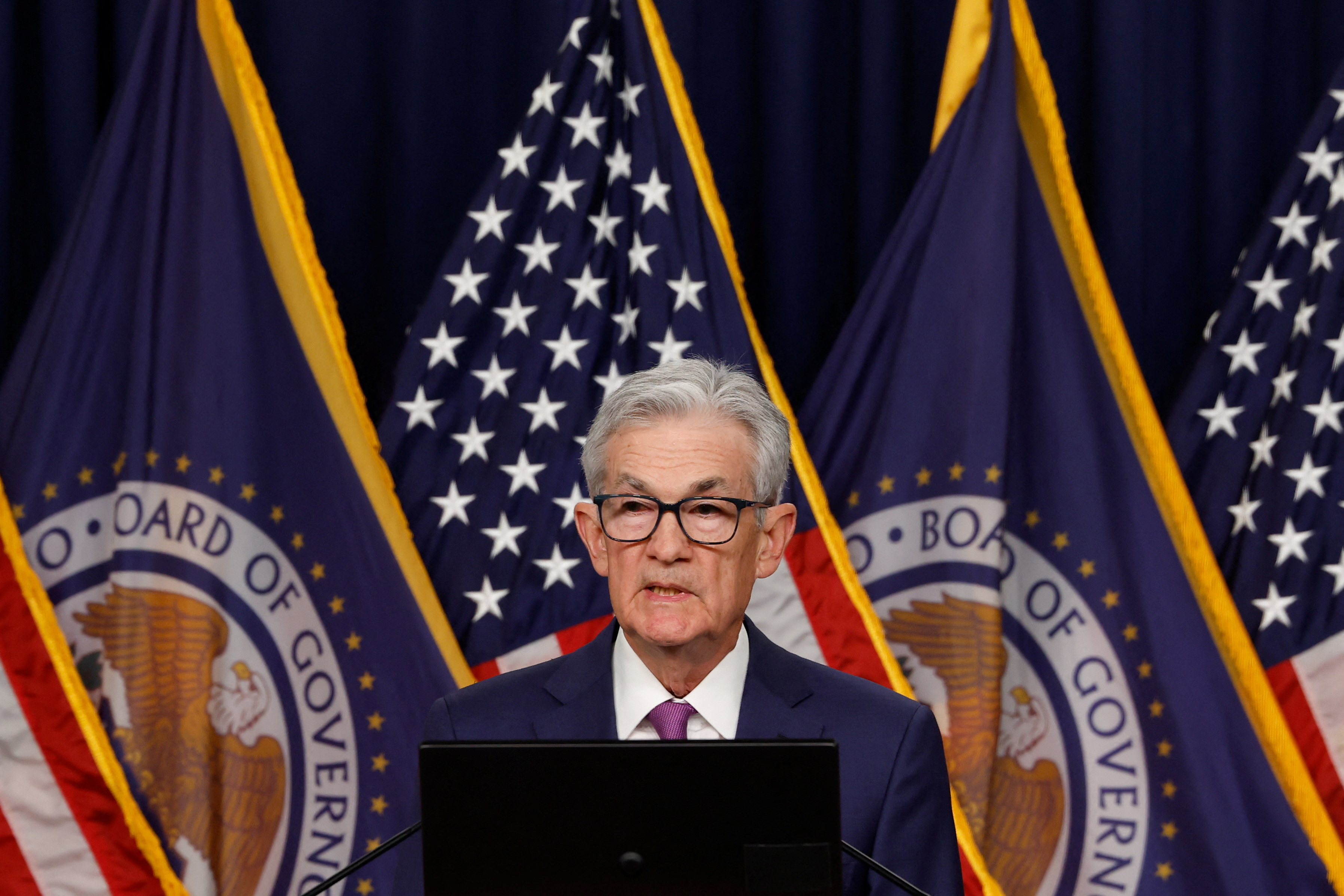
The January 28, 2026 FOMC press conference marked a significant moment in the Federal Reserve’s monetary policy trajectory, representing a deliberate pause following three consecutive rate cuts at the end of 2025. Fed Chair Jerome Powell’s characterization of the economy as having “surprised us with its strength, not for the first time” signals a substantial shift in the central bank’s assessment from the cautious stance that prompted late-2025 easing [1][2].
The explicit acknowledgment of AI data center buildout as a primary economic driver represents a notable departure from traditional Fed commentary, which typically focuses on macroeconomic indicators rather than specific sectoral growth engines. Powell’s remarks indicate that the Federal Reserve views artificial intelligence infrastructure investment as sufficiently material to influence aggregate economic activity and, by extension, monetary policy considerations. This sector-specific recognition coincides with elevated market valuations for AI-related technology companies and substantial corporate capital expenditure announcements from major technology firms [1].
The consumer spending resilience cited by Powell presents a nuanced picture. While household spending has exceeded expectations, the Fed Chair acknowledged that this resilience partially depends on savings buffers accumulated during the post-pandemic period. This qualification suggests potential vulnerability if labor market conditions deteriorate or if inflationary pressures erode real disposable income. The “firm footing” language indicates the Fed views the current expansion as sustainable, but with implicit conditionality tied to incoming economic data [1][2].
Market reaction to the announcement revealed differentiated performance across equity indices. The Russell 2000’s 1.02% decline outperformed on a relative basis despite absolute weakness, as smaller domestically-focused companies may benefit from sustained economic activity. However, the NASDAQ’s 0.45% decline and the S&P 500’s 0.34% retreat suggest investors are processing the implications of extended higher-for-longer rate expectations, particularly for growth-oriented sectors. The 10-year Treasury yield’s climb to 4.26% reflects market repricing of the policy rate trajectory based on the upbeat economic assessment [0][3].
The Federal Reserve’s January 2026 FOMC decision to hold interest rates steady at 3.5%-3.75% reflects the central bank’s assessment of an economy on “firm footing,” driven primarily by AI data center buildout and resilient consumer spending. Chair Powell’s characterization of the economy as having “surprised us with its strength” represents a significant update to the policy outlook following three consecutive rate cuts in late 2025 [1][2].
Market indicators show modest risk-off positioning, with equity indices declining across major benchmarks and Treasury yields rising on expectations of extended higher rates. The 10-year Treasury yield reaching 4.26% and the Russell 2000’s 1.02% decline represent the most significant daily movements, indicating market participants are processing the implications of an economy stronger than previously anticipated [0].
The Fed’s “loosely neutral” policy characterization and meeting-by-meeting approach preserve flexibility while constraining speculation about aggressive future rate movements. Major economic data releases over the coming weeks—including the January jobs report, PMI readings, and PCE inflation data—will serve as critical inputs for the Fed’s next policy assessment [1][3].
The explicit Fed recognition of AI infrastructure as an economic growth driver validates the investment thesis surrounding artificial intelligence capital expenditure while reinforcing sector concentration considerations for diversified portfolio construction.
Insights are generated using AI models and historical data for informational purposes only. They do not constitute investment advice or recommendations. Past performance is not indicative of future results.
About us: Ginlix AI is the AI Investment Copilot powered by real data, bridging advanced AI with professional financial databases to provide verifiable, truth-based answers. Please use the chat box below to ask any financial question.